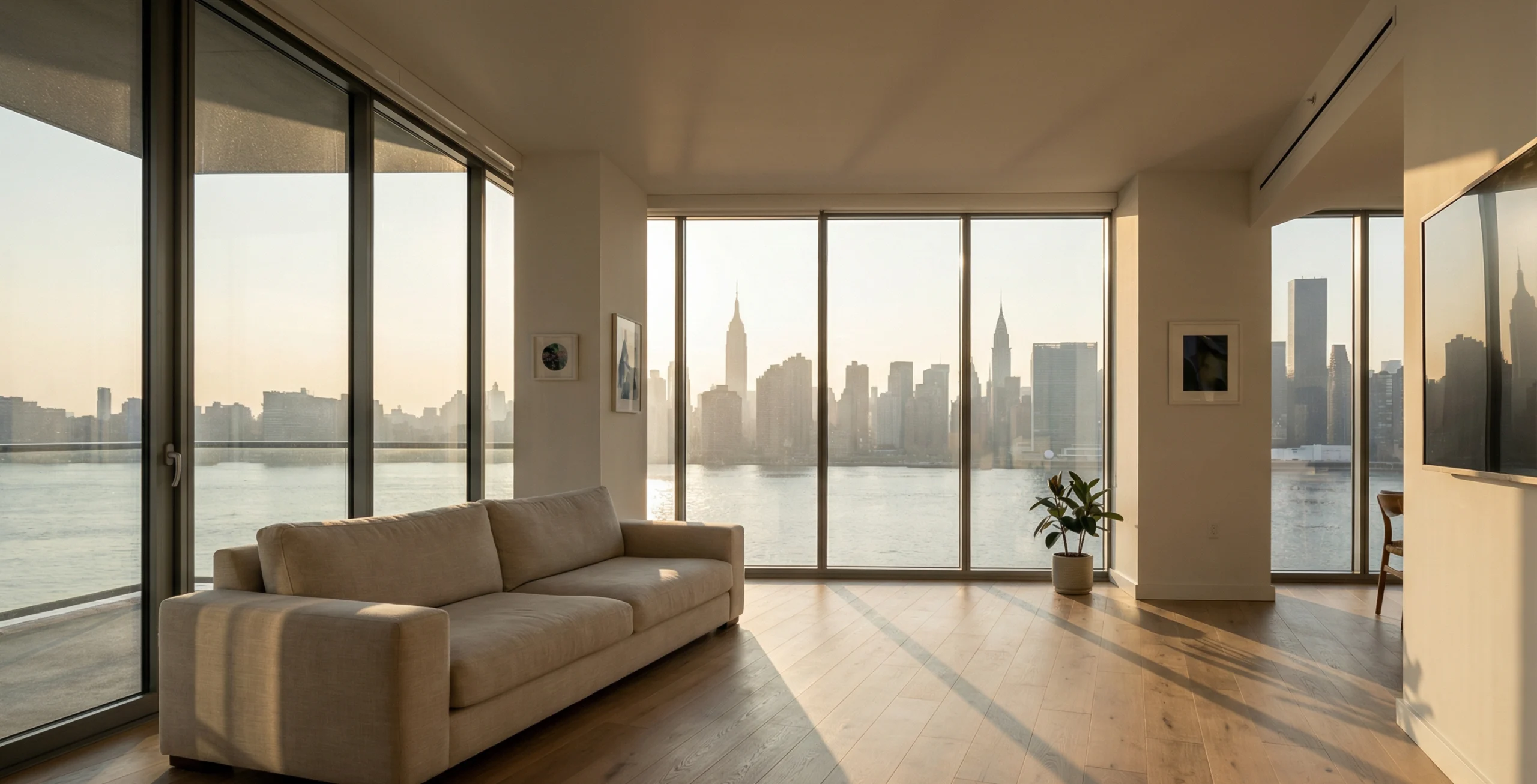
Your apartment has floor-to-ceiling windows, a killer view of the skyline, and sunlight streaming in all afternoon. Sounds like a dream – until you notice the hardwood is two shades lighter near the window, your leather sofa has a strange bleached patch, and that gallery-quality print you bought in Chelsea is slowly washing out.
Welcome to the hidden cost of unfiltered sunlight. And if you live in New York City, where south-facing apartments are practically a luxury tax, this problem hits harder than most people expect.
The culprit is ultraviolet radiation – specifically UVA rays – that pass straight through standard window glass. A UV protection window film is one of the simplest and most cost-effective ways to stop this damage before it starts. Here is what the science says, what your options are, and why this matters particularly for NYC homeowners and renters.

What Actually Gets Through Your Windows
Most people assume glass protects them from the sun. It does – partially. Standard residential glass blocks the majority of UVB rays (the type responsible for sunburn), but allows up to 74% of UVA rays to pass through freely (The Conversation). UVA rays are the ones that penetrate deep into skin tissue, accelerate aging, and contribute to skin cancer risk over time.
The same UVA radiation that quietly damages your skin is also responsible for 40–60% of all interior fading. Your furniture fabrics, hardwood floors, rugs, artwork – they are all absorbing UV energy every hour sunlight reaches them. Visible light and infrared heat account for another 25% each, while humidity and artificial lighting chip in the remaining 10%.
“The sun in New York doesn’t charge rent – but it absolutely destroys everything in your apartment like a bad roommate.”
Here is a detail that surprises most homeowners: even energy-efficient double-pane windows only block about 85% of UV rays. That sounds decent until you realize the relationship between UV exposure and material degradation is not linear. The gap between 85% and 99.9% protection is enormous when measured over years of daily exposure. A window film with UV protection closes that gap entirely, bringing rejection rates to 99% or higher.
Why This Matters More in New York City
New York City apartments present a unique set of challenges when it comes to UV exposure. The “canyon effect” created by dense high-rise construction means that upper-floor units – especially those facing south or west – receive intense, direct sunlight for hours each day. In winter, the low sun angle actually drives light deeper into rooms than during summer, meaning UV damage is a twelve-month problem rather than a seasonal one.
Anyone who has lived in a south-facing Manhattan apartment knows the phenomenon. You move in, arrange your furniture, and within a few months notice that the sofa arm closest to the window looks like it belongs to a different piece entirely. Rugs develop visible fade lines. Hardwood planks near the glass take on a completely different tone from the rest of the floor.
The financial stakes are real. New York City residents tend to invest significantly in their interiors – custom furniture, curated art, quality flooring – and unfiltered UV light quietly degrades all of it. Installing a UV protection window film is preventive care for everything inside your home.
There is also a health dimension that most people overlook entirely. The Skin Cancer Foundation specifically recommends window film as part of a complete UV protection strategy. Their reasoning is straightforward: if you spend extended time near windows – working from home, reading, sitting at your desk – cumulative UVA exposure adds up. A 2024 U.S. study of indoor workers linked melanoma risk directly to lifetime ambient UVA exposure, including the kind that comes through ordinary glass.
For New Yorkers who have been working remotely since 2020, that sun-drenched home office setup may look great on Zoom calls, but the hours spent next to a bright window are adding to your lifetime UV exposure whether you realize it or not.
How a UV Protection Window Film Actually Works
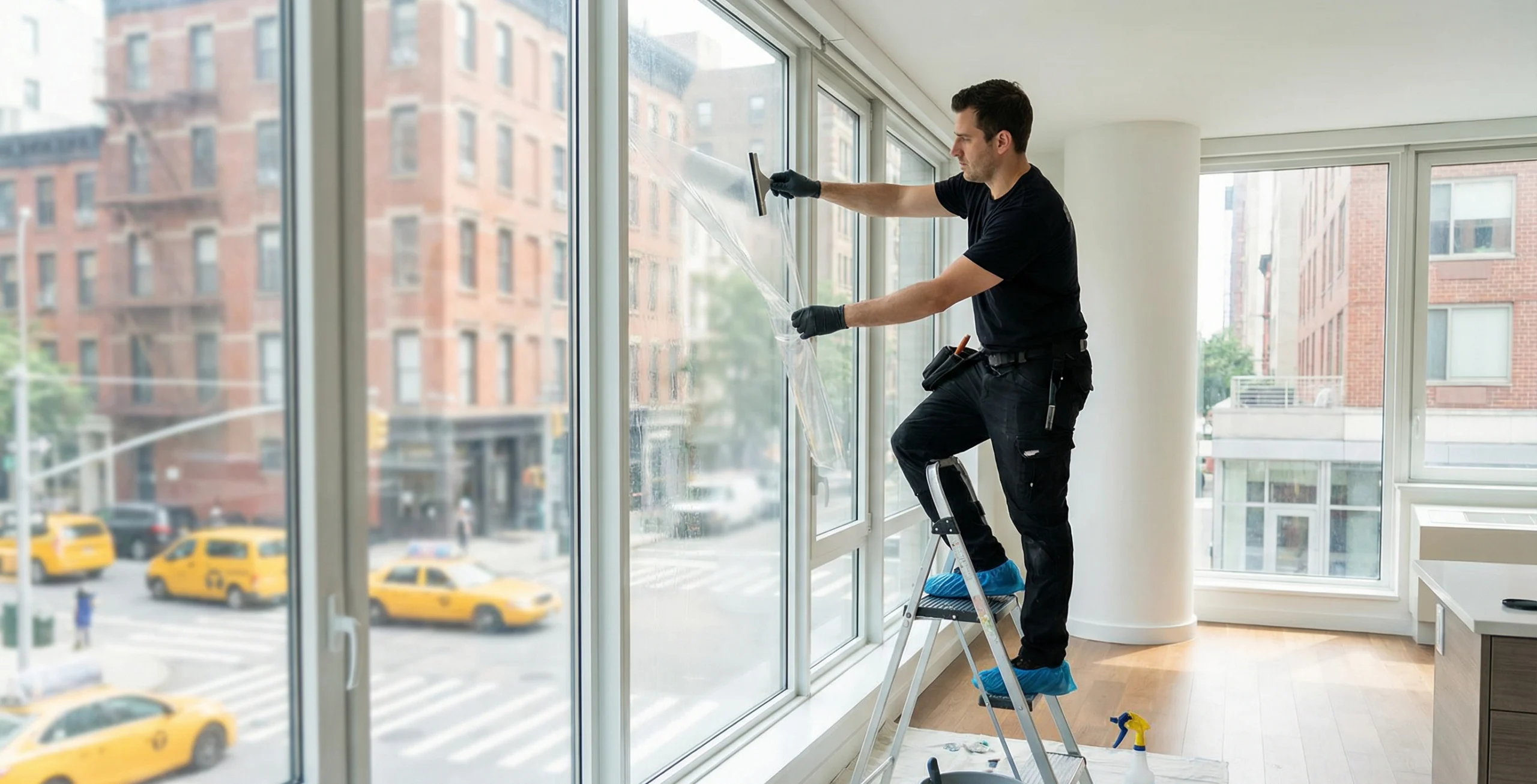
A UV protection window film is a thin, multilayered polyester film applied to the interior surface of existing windows. The key functional layer contains UV-absorbing compounds – typically benzophenones or triazines – that capture and neutralize ultraviolet radiation before it enters the room.
Higher-end films add a ceramic or metalized layer that also reflects infrared heat, giving you temperature control on top of UV rejection. The result: your windows still look the same, natural light still fills the room, but 99% or more of harmful UV radiation is stopped at the glass.
What makes this solution especially practical is the installation process. Unlike window replacement – which is costly, disruptive, and often complicated by co-op board approvals and landmark restrictions – a window film with UV protection can be applied to your existing glass in a matter of hours with no structural changes required.
Types of UV Window Film: Choosing the Right One
Not all films deliver the same performance. The technology ranges from basic dyed films to advanced ceramic formulations, and the differences matter in terms of longevity, clarity, and compatibility with your specific needs.
| Feature | Dyed Film | Metalized Film | Carbon Film | Ceramic Film |
| UV Blocking | Up to 99% | Up to 99% | Up to 99% | Up to 99% |
| Heat Rejection | Low–Moderate | High | Moderate–High | High |
| Visible Light Clarity | Good | Moderate (reflective) | Good (matte finish) | Excellent |
| Signal Interference (Wi-Fi, Cell) | None | Possible | None | None |
| Lifespan | 3–5 years | 5–7 years | 7–10 years | 10+ years |
| Fade Resistance of Film Itself | Low | Moderate | High | High |
| Price Range | $ | $$ | $$ | $$$ |
For most New York City apartments, ceramic film is the strongest choice. It delivers top-tier UV and heat rejection without the reflective appearance that metalized films produce – which can be an issue with co-op building aesthetics and landmark regulations. It also does not interfere with Wi-Fi or cell signals, a practical consideration in a city where your wireless connection is already fighting through concrete and steel.
“Choosing the cheapest window film to save money is like buying a three-dollar umbrella in Midtown – it works for about ten minutes, and then you’re right back where you started.”
If budget is the primary concern, a carbon film offers a strong middle ground: solid UV protection, no signal interference, and a significantly longer lifespan than dyed alternatives.
The Numbers Behind the Investment
The U.S. Department of Energy considers window film a top-tier energy conservation technology with one of the fastest payback periods – approximately three years. For New York City residents dealing with high summer electricity costs, that number carries real weight.
A controlled experiment conducted on a commercial building showed that rooms with a UV protection window film installed were up to 9°F cooler than identical untreated rooms during peak afternoon heat. In some test configurations, the temperature difference reached 16°F. For apartment dwellers relying on window AC units or mini-splits, that kind of reduction translates directly into lower energy bills and more consistent indoor comfort.
The broader economics are compelling. Window film costs roughly one-third of what full window replacement would run, requires no building permits in most residential applications, and does not add structural weight to the building envelope. For older NYC buildings where window replacement involves co-op board votes, Landmarks Preservation Commission reviews, and six-figure project budgets, a window film with UV protection is often the only realistic option that delivers meaningful results.
Professional Installation vs. DIY
The DIY question comes up often, so it is worth addressing directly. UV blocking window film is available at hardware stores, and the idea of saving on installation is understandable.
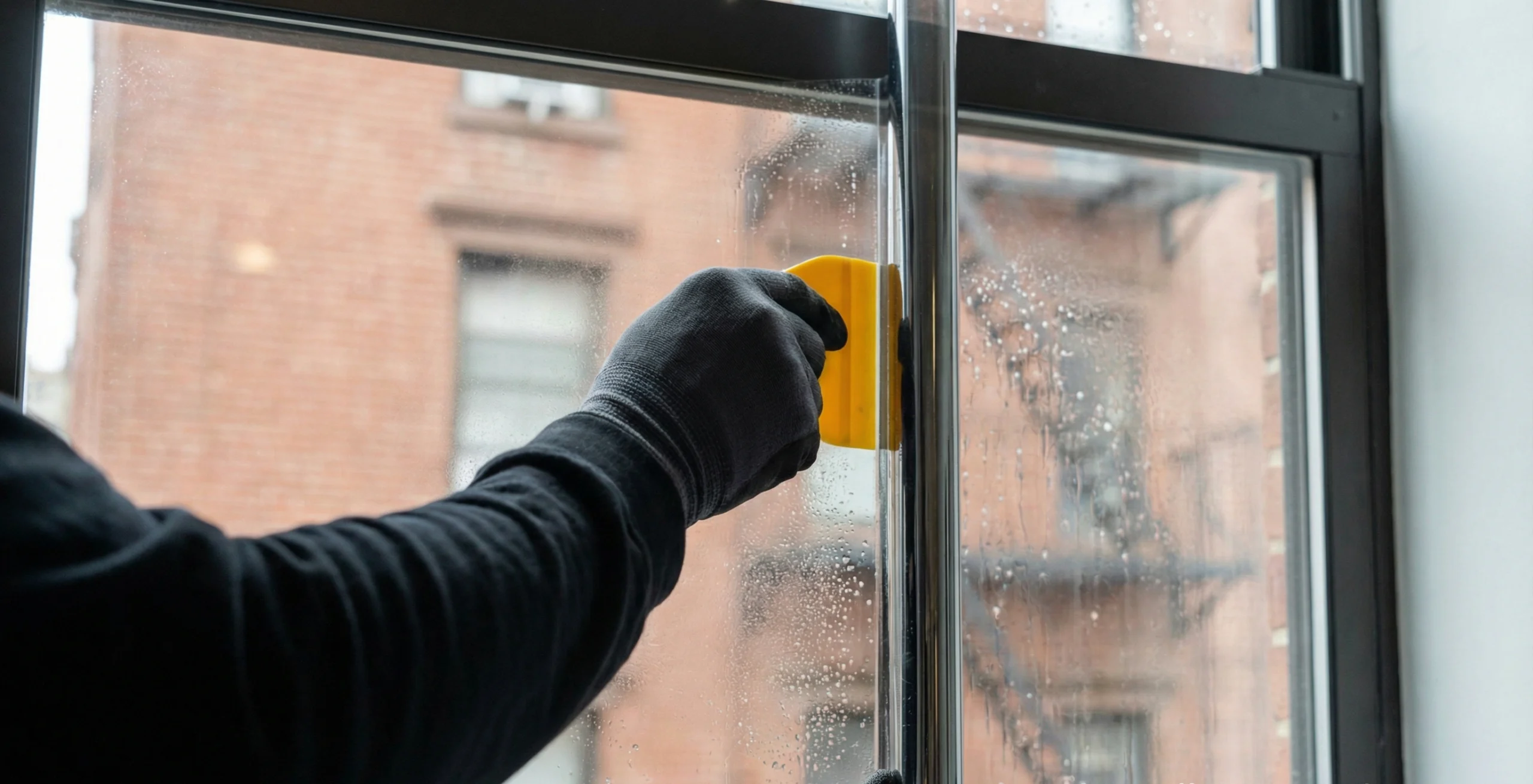
The reality is that professional installation makes a measurable difference in the final result. Common problems with self-applied film include trapped air bubbles, misaligned edges, visible creases, and premature peeling – all of which reduce both the visual quality and the actual UV-blocking performance of the product. Professional installers ensure proper edge sealing, correct film tension, and can advise on product selection based on your specific glass type, window orientation, and building requirements.
If you are considering a UV protection window film for your home, a company like Big Apple Window Cleaning can help you both select the right film specifications for your windows and handle the installation professionally. Having glass that is clean and properly prepared before film application is critical to a lasting result – which is exactly where working with a window service company that handles both cleaning and film installation becomes a practical advantage.
What to Expect After Installation
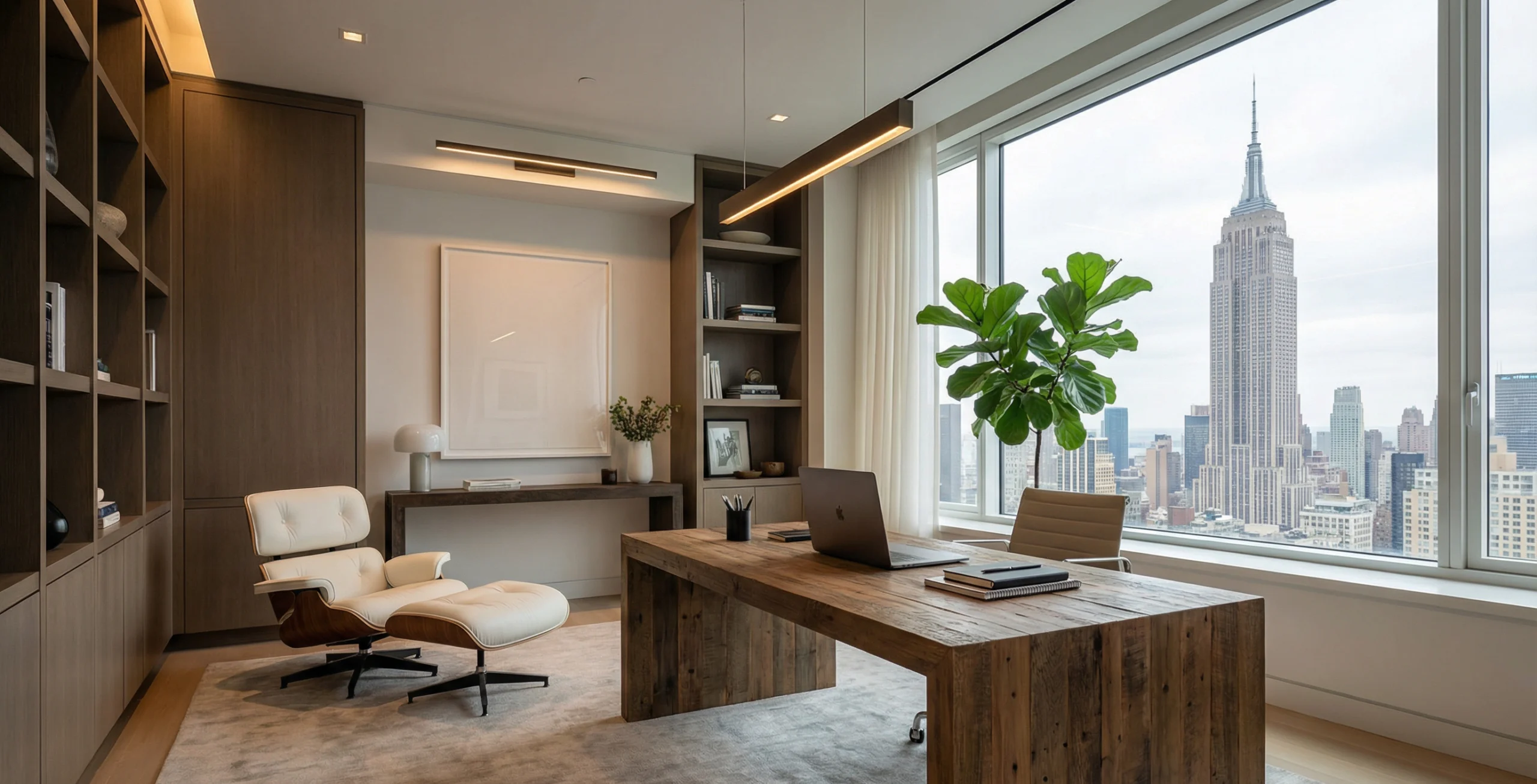
Once a UV protection window film is in place, the changes are immediate but subtle. Your windows look the same. Natural light still fills the room. The difference shows up in what does not happen over the months and years that follow.
Fabrics hold their color. Hardwood retains its original tone. Artwork stays true. The slow, invisible degradation that was happening every sunny day has effectively stopped.
The film itself requires minimal maintenance – standard window cleaning with a soft cloth and an ammonia-free cleaner is all it takes. Avoid washing the filmed surface for the first 30 days after installation to allow the adhesive to cure fully.
Most quality films carry manufacturer warranties ranging from 10 to 15 years, and many professional installers add workmanship guarantees on top of that. If you are in the New York City area, Big Apple Window Cleaning provides both consultation on film selection and professional installation services with guaranteed results.
A window film with UV protection is not a luxury upgrade – it is practical maintenance for any home with windows and sunlight. For New York City residents specifically, where real estate prices mean your interiors represent a serious financial investment and where building constraints often rule out window replacement entirely, a professional-grade UV protection window film is one of the most cost-effective improvements you can make.
The science is clear, the Skin Cancer Foundation endorses it, the economics favor it, and the installation is straightforward. The only thing UV rays are good at once the film is in place is giving up.
https://www.google.com/maps?cid=10117434971902366926
420 Lexington Ave #2440, New York, NY 10170, United States