

Boom lift rental in NYC
Cherry picker & aerial lift rental with operator
Access up to 300 feet with certified operators, owned fleet, and same-day response across all five boroughs.
Owned Fleet no third-party rental markups or scheduling delays
IPAF-Certified Operators every lift is operated by a trained professional for tight NYC streets and complex access setups
Extreme Reach aerial platforms with reach up to 300 feet
$11M Coverage DOT/DOB-compliant sidewalk deployment and strong liability coverage for your project

The mechanics of
aerial access failure
Wrong equipment, late mobilization, and underqualified operators can turn a simple access job into delays, liability exposure, and added cost.
UNDERSTANDING THE RENTAL TRAP
You call for aerial access. They promise availability. Then the equipment is “delayed at another job,” the operator calls out, or the lift arrives without the reach you specified.
THE HIDDEN COSTS OF WRONG EQUIPMENT:
Insufficient Reach Creates Repeated Mobilization:
You plan for 75-foot access, but the aerial lift on-site only reaches 60 feet. The crew sets up, hits the limit, and the job stops. Now you’re paying demobilization, re-rental, and another lost day on the schedule.
Uncertified Operators Trigger Liability Exposure:
Many access providers send undertrained operators without proper credentials. If an incident occurs, your general liability insurance can deny the claim, and you face Labor Law §240 exposure – personal injury lawsuits with limited defenses.
Equipment Breakdowns Strand Your Crew Mid-Job:
Poorly maintained aerial lifts fail at the worst moment – hydraulic leaks, basket malfunctions, control failures. Your crew is stranded at height, emergency services are called, and OSHA investigates.
THE BIG APPLE aerial access protocol
We own our fleet, provide IPAF-certified operators, and plan each lift around NYC’s tight streets, setbacks, and building access constraints.
Schedule a site visit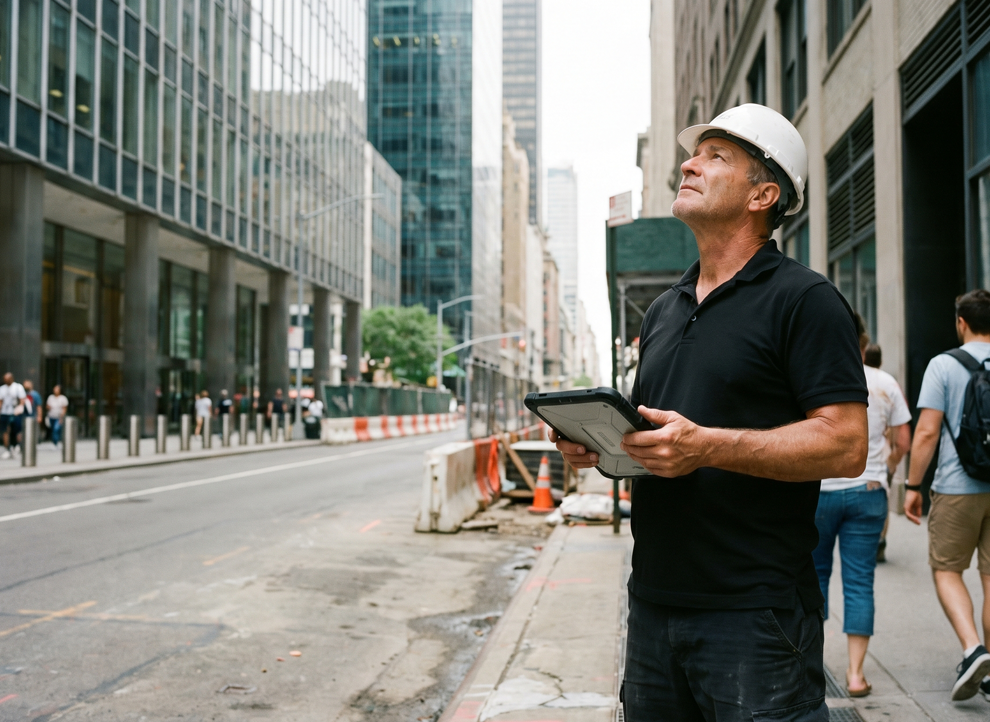
Pre-deployment site assessment & lift planning
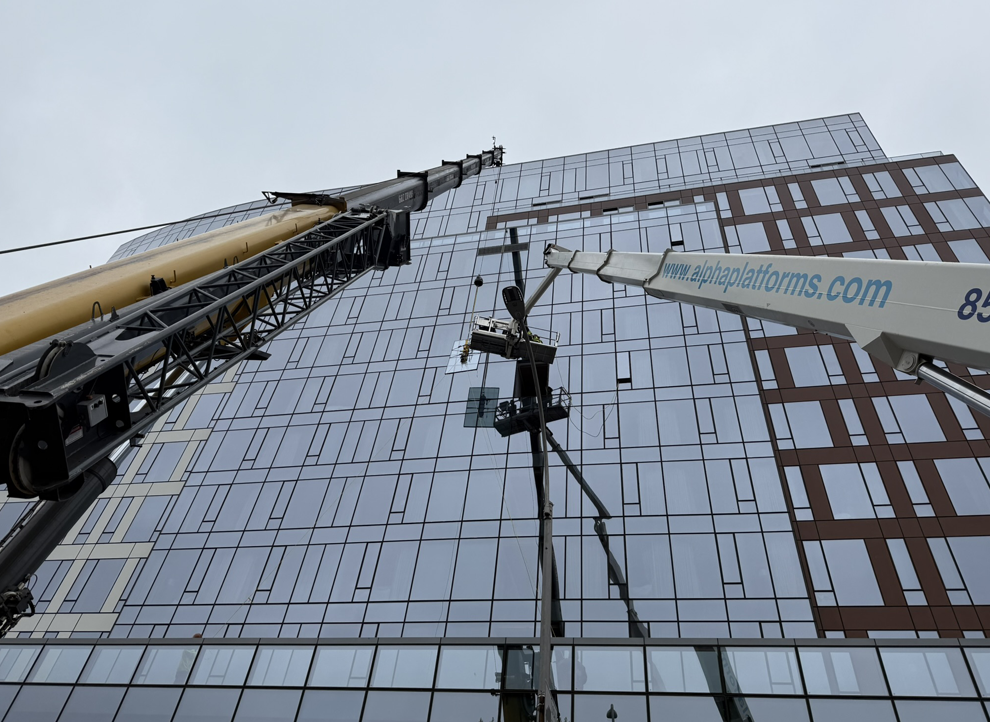
Before any boom lift deployment, we conduct site reconnaissance - measuring vertical reach requirements, evaluating ground stability, identifying overhead obstructions (power lines, awnings, tree canopies), and confirming street access for truck positioning. For high-rise window cleaning or facade work, we calculate working radius and basket load capacity. For tight Manhattan locations, we specify articulating boom lifts that can reach around building setbacks.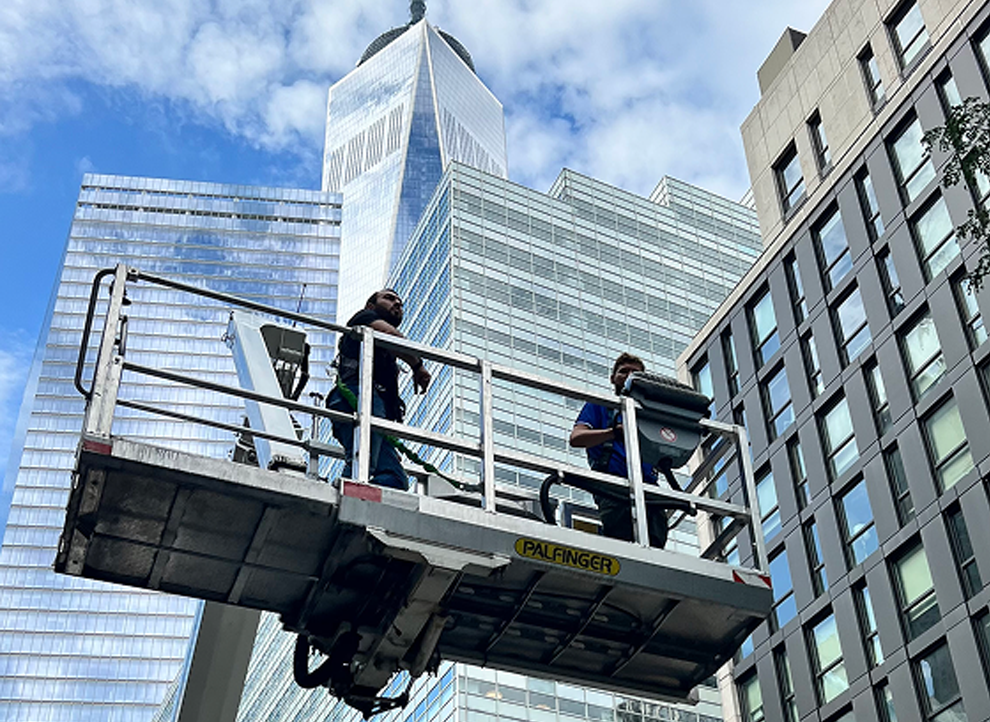
Certified operator deployment & safety protocols
Every aerial lift operator carries personal fall arrest systems, follows NYC DOB safety bulletins, and conducts pre-operational inspections per ANSI A92 standards. For cherry picker operations near power lines, we maintain OSHA 1926.1408 clearance distances. For work on landmark buildings, we coordinate with Landmarks Preservation Commission requirements.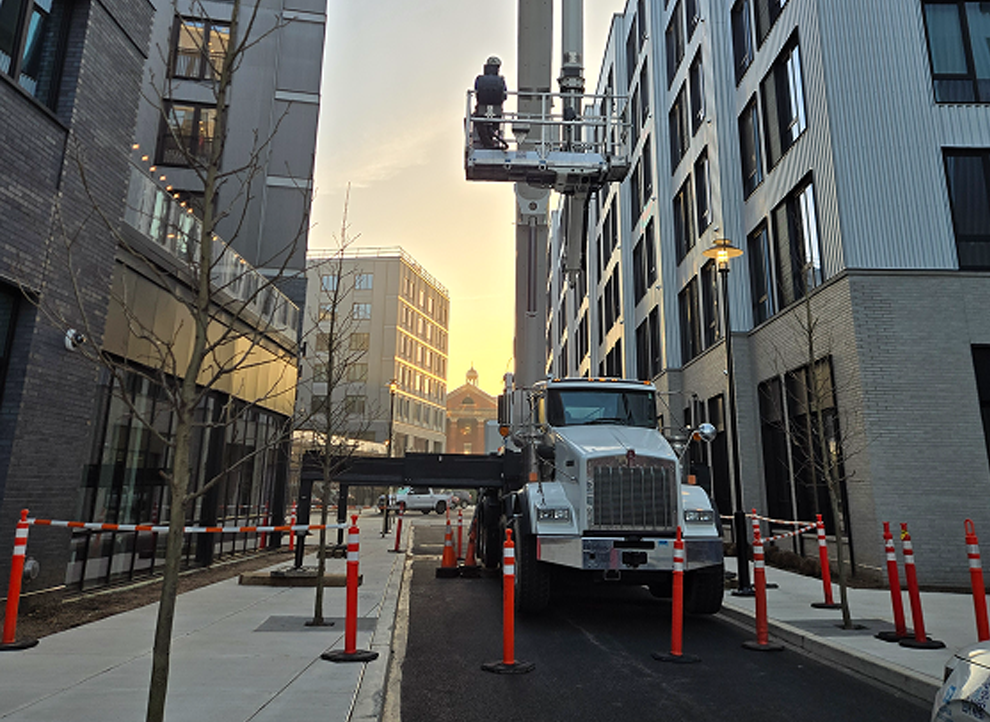
Real-time logistics & same-day response
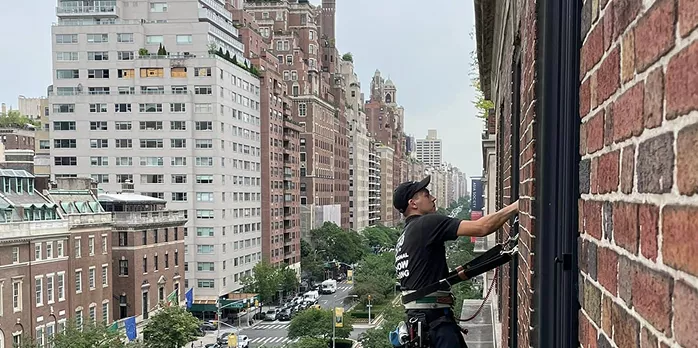
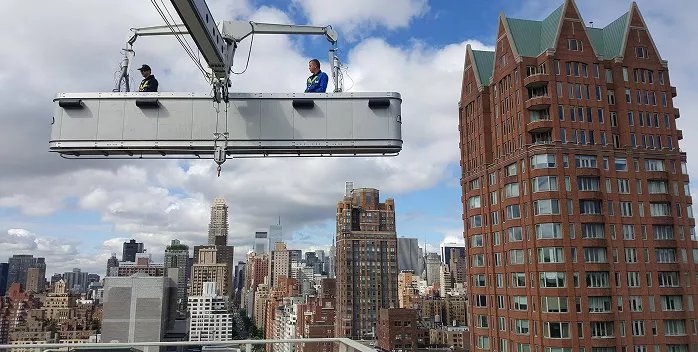
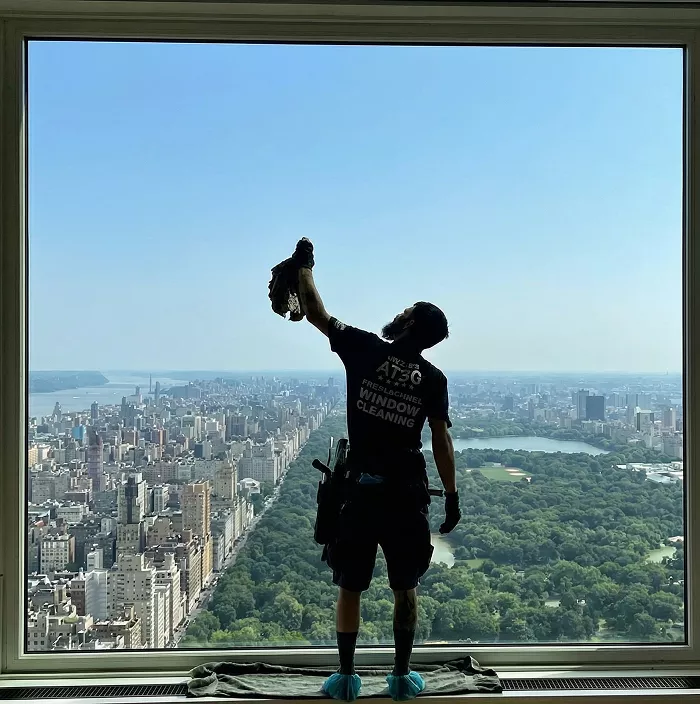
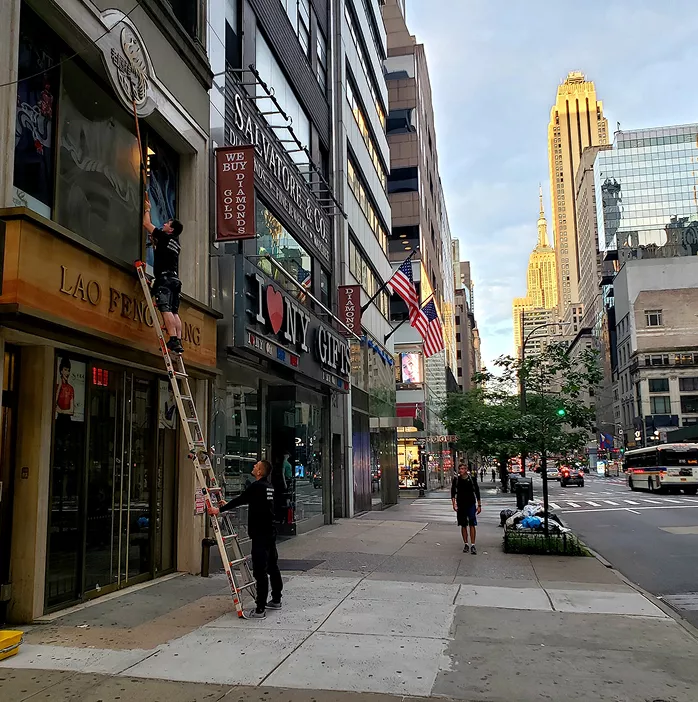
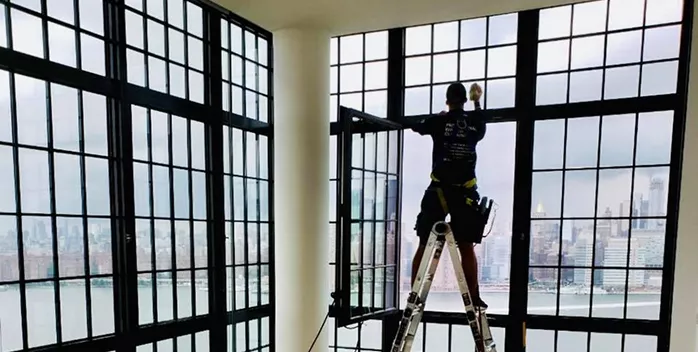
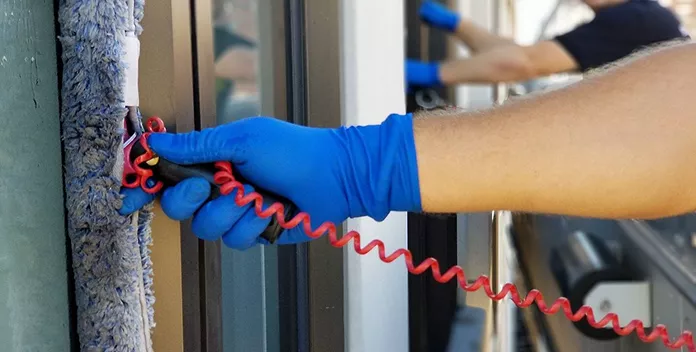
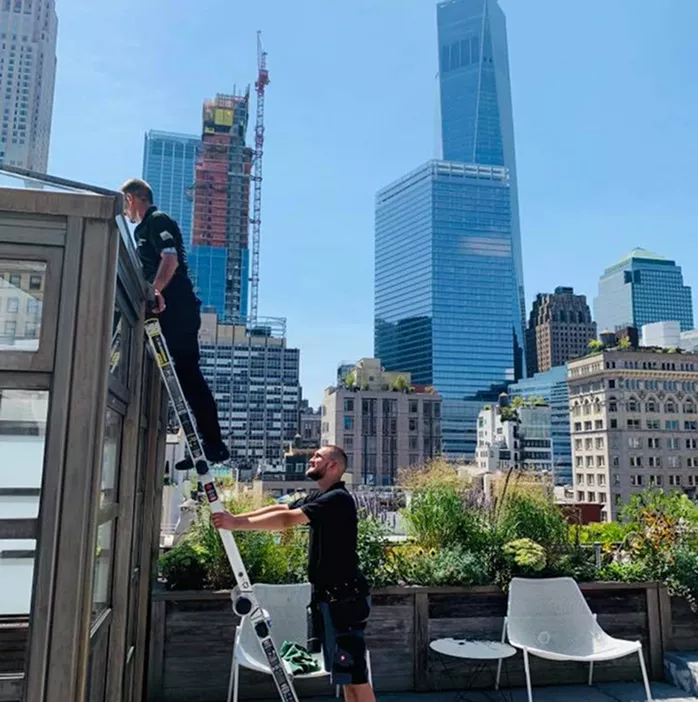
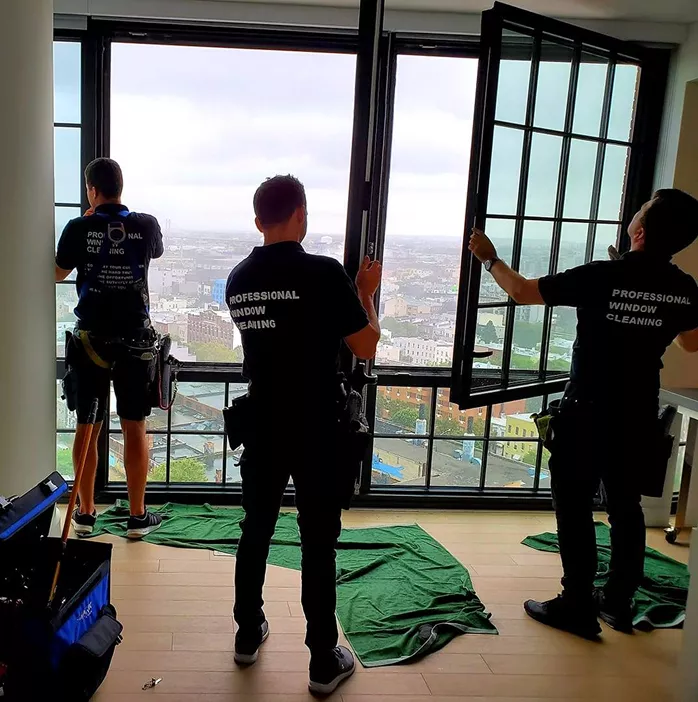
We maintain our own fleet across NYC - no waiting for third-party availability. Need a boom lift today? We dispatch from outer-borough staging locations with 2–4 hour emergency response.Big Apple Window Company at work
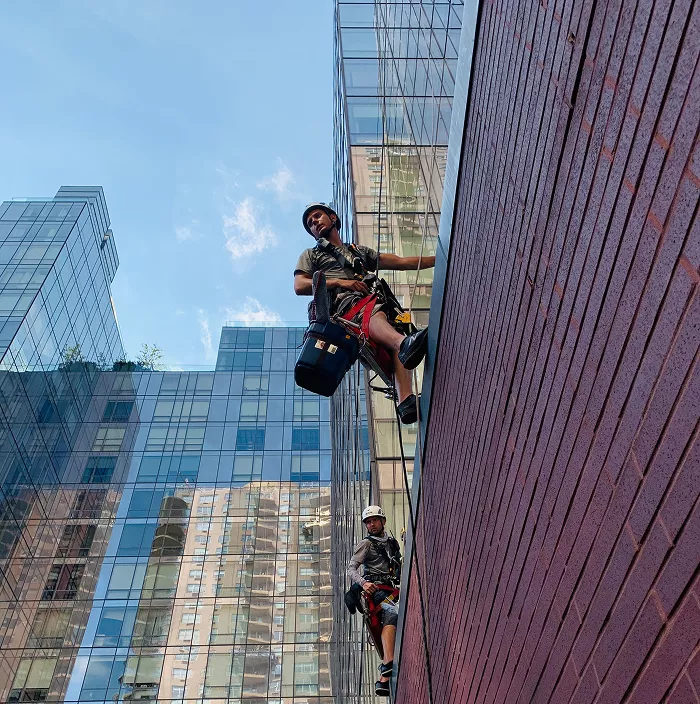
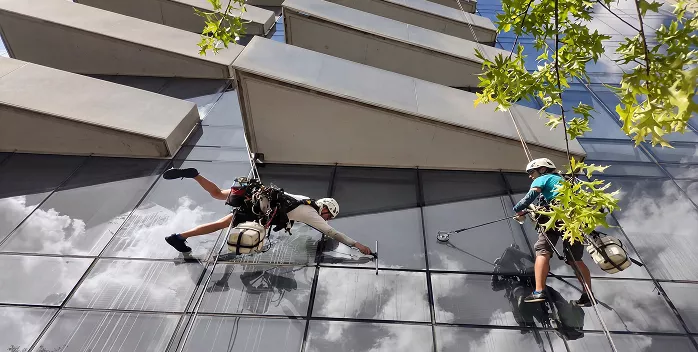
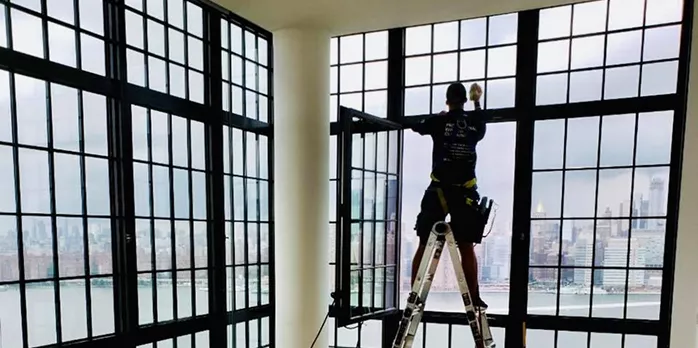
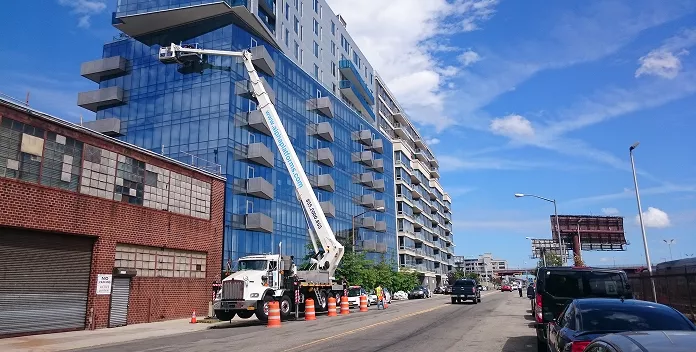
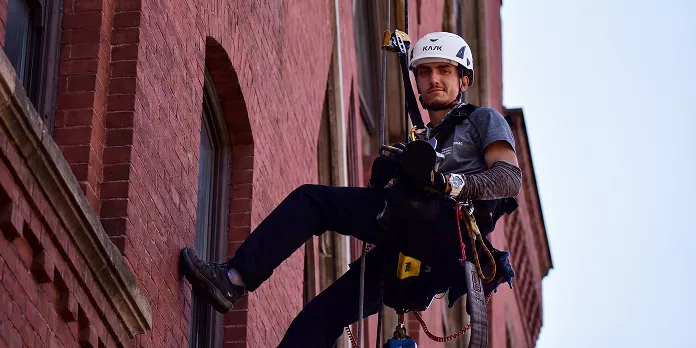
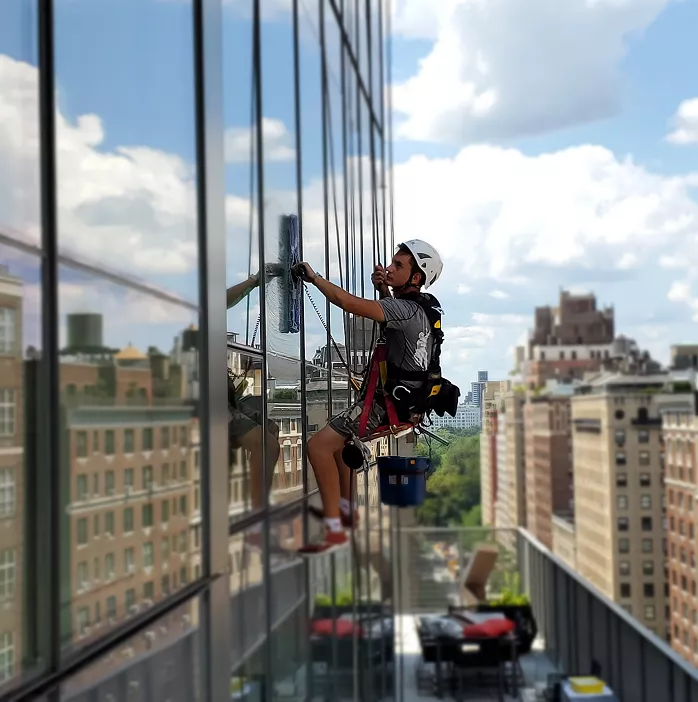
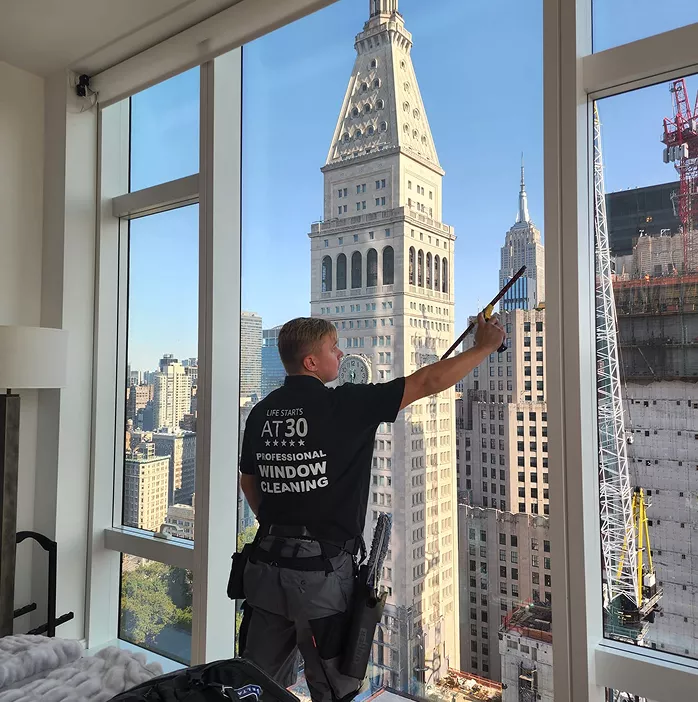
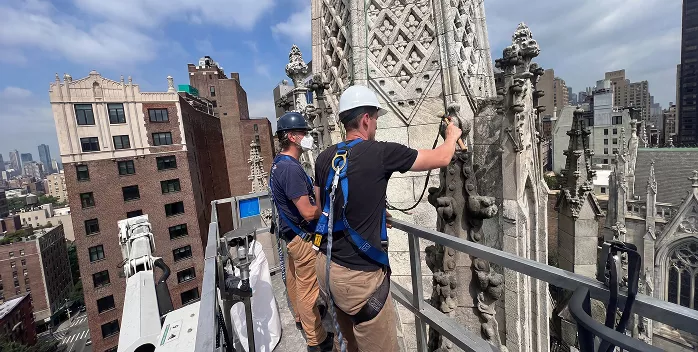
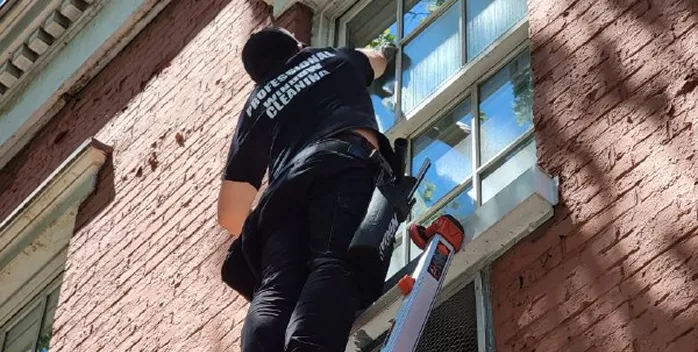
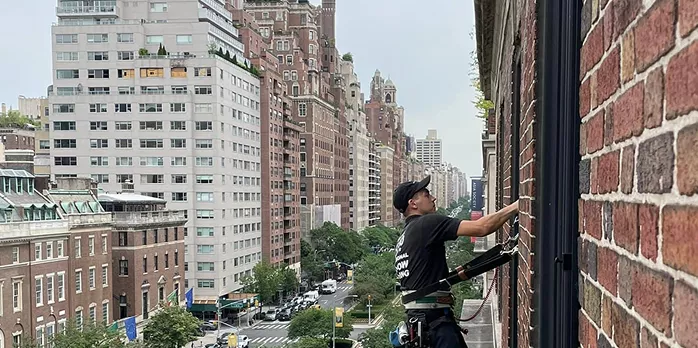
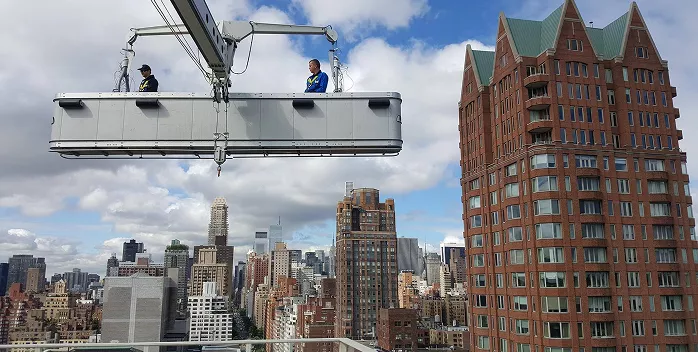
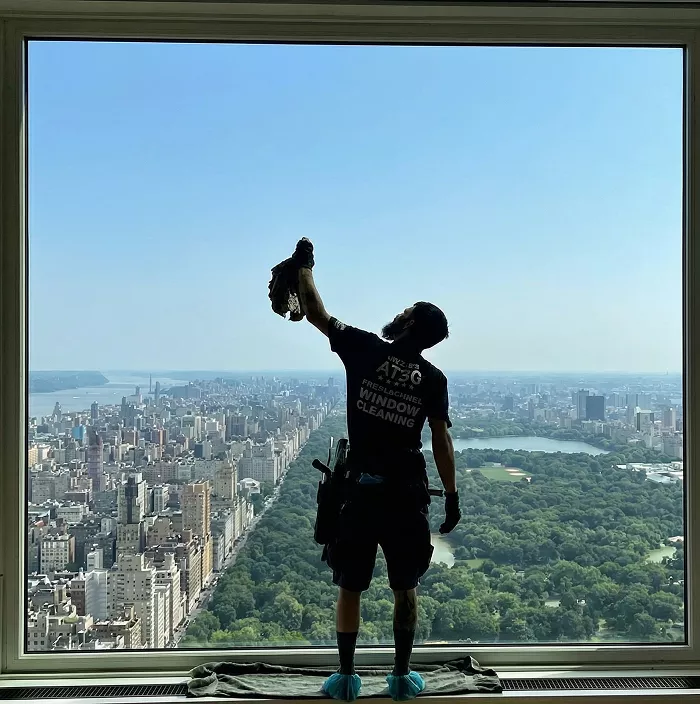
More than 2 decades of experience in property maintenance.




Execute flawlessly under pressure
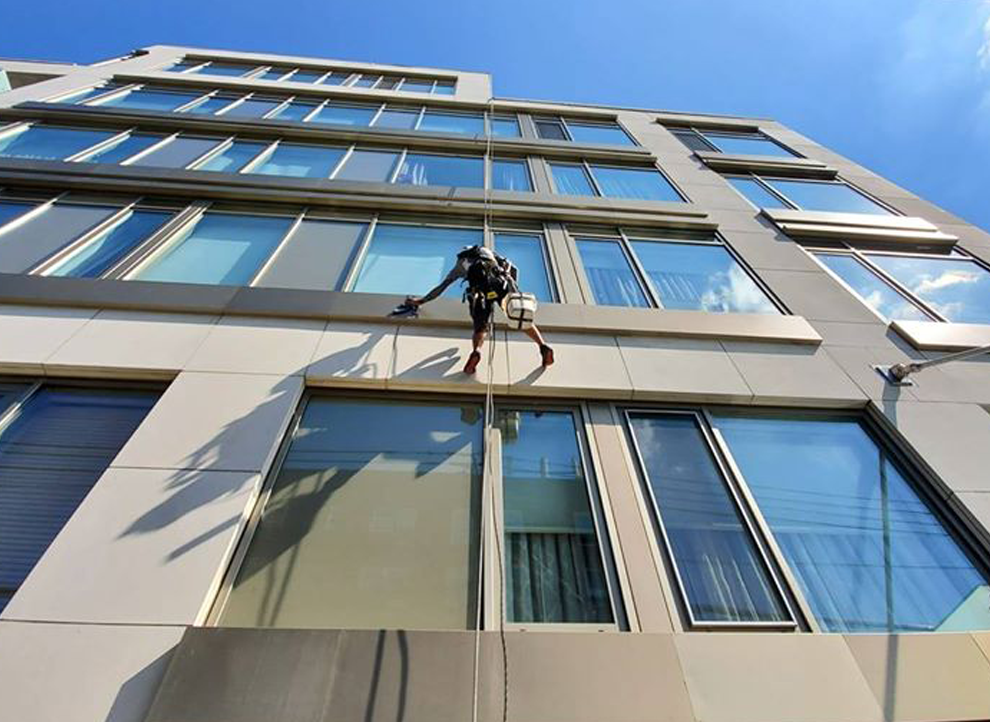
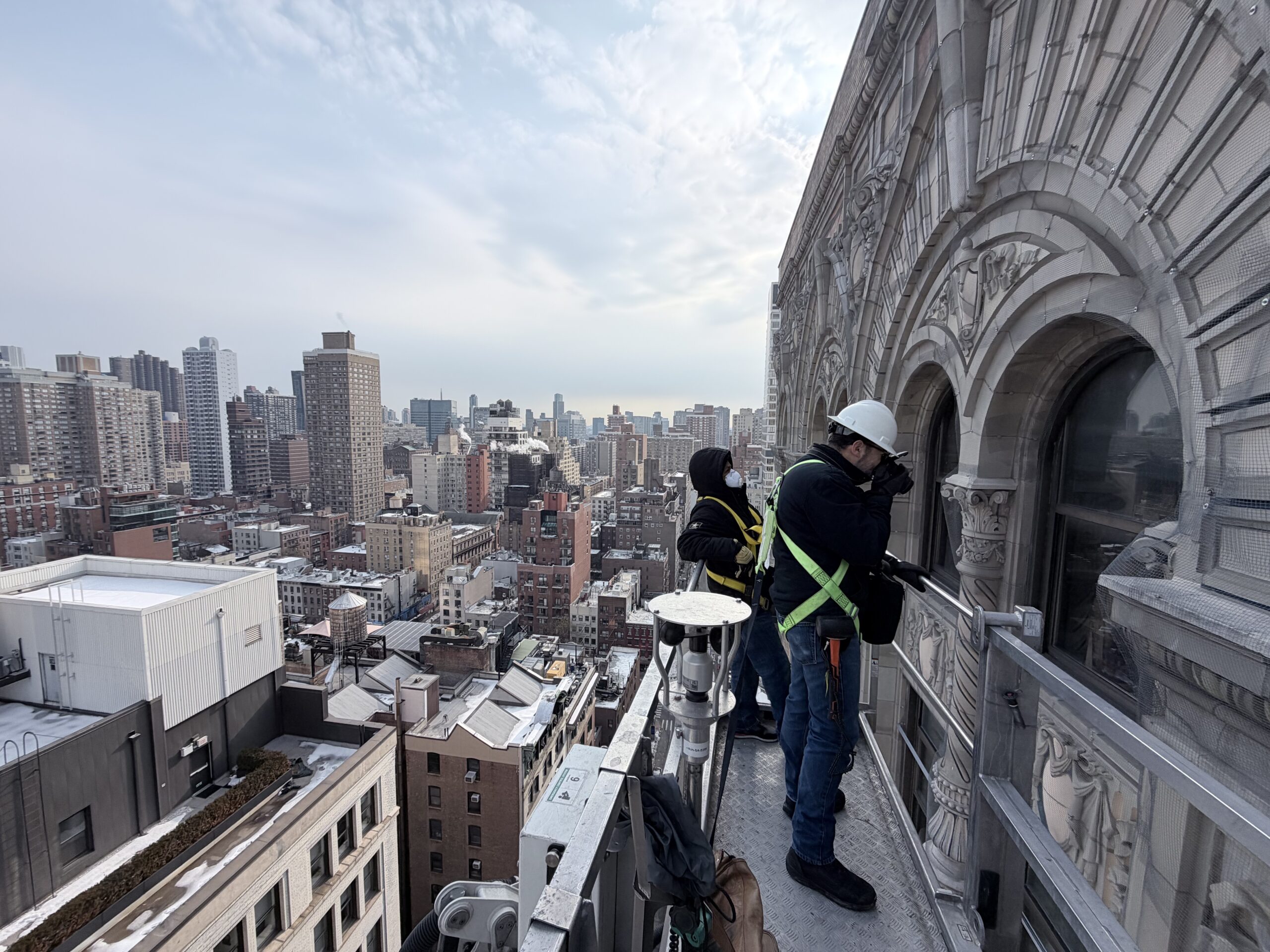
See the difference. We delivered emergency facade access for a Local Law 11 inspection - navigating tight Midtown constraints with zero delays.

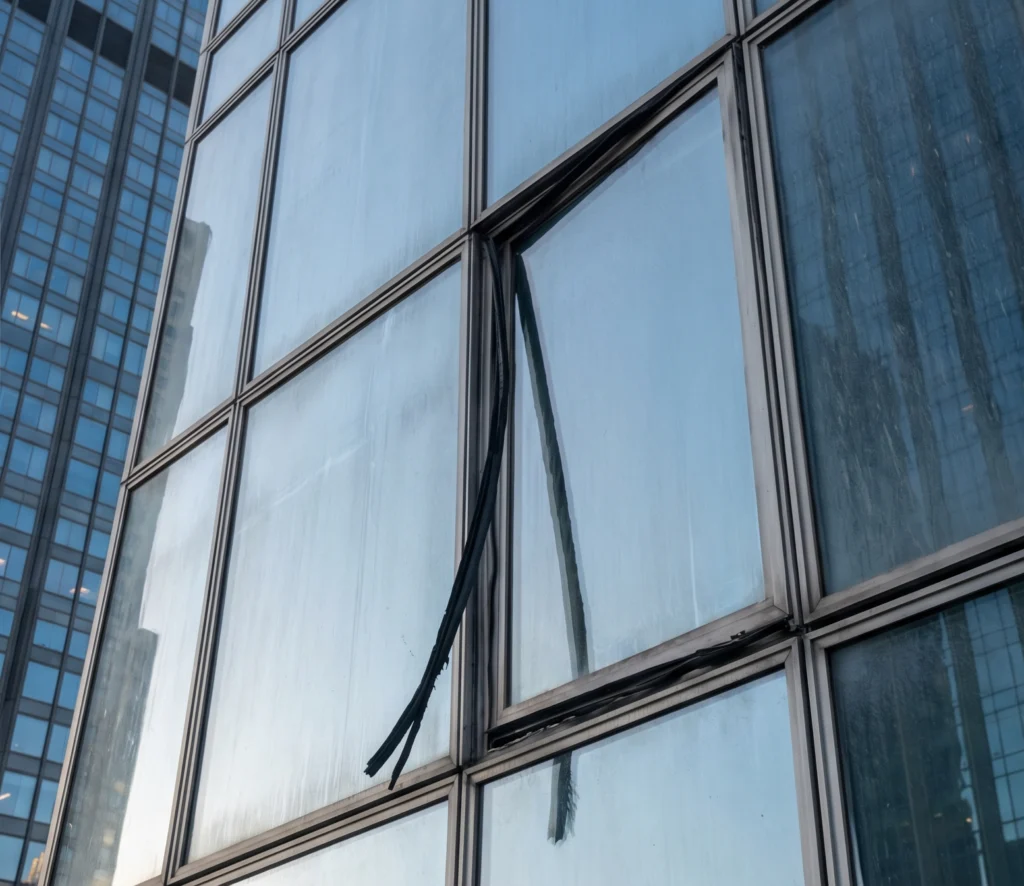 BEFORE
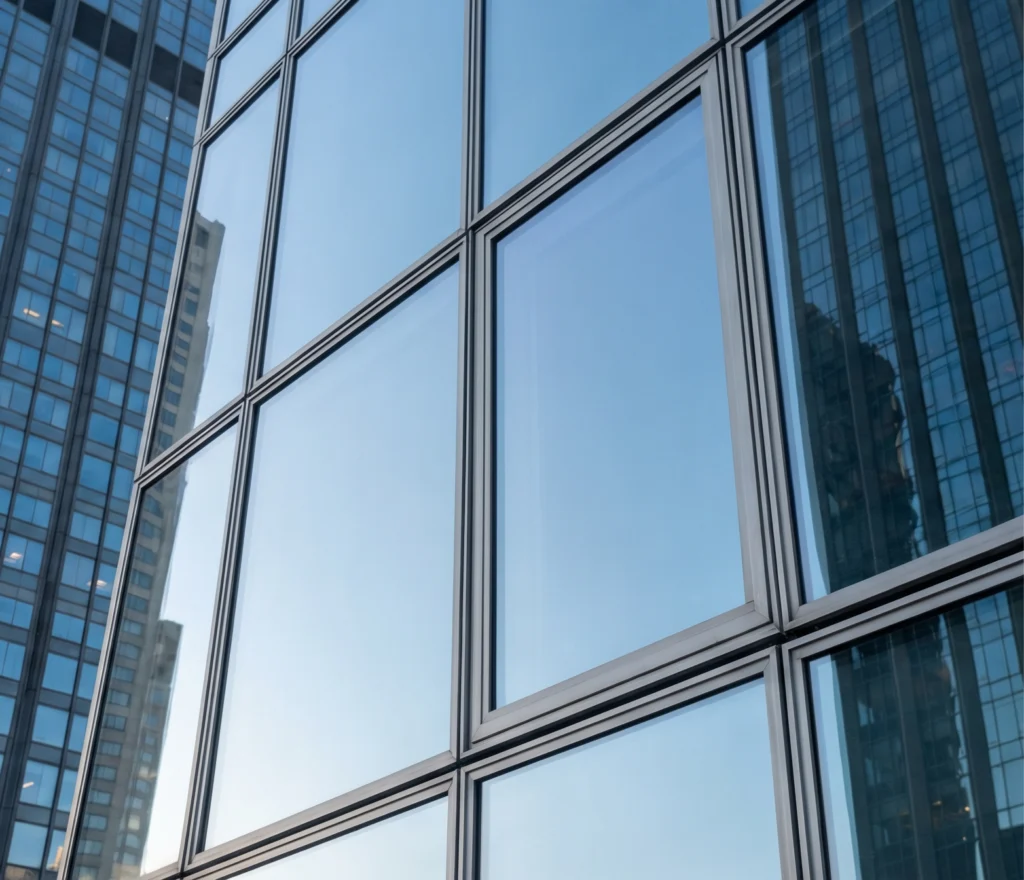 AFTER
AFTER
Engineering specifications & guarantees
Clear specs. Straight answers. Compare our process against any boom lift rental company in NYC. We don’t cut corners on equipment, certification, or liability coverage.
Fleet & equipment standards
Owned fleet: 45–300 ft reach. Articulating and telescopic booms. Electric and diesel units. Maintained per ANSI A92.20 standards. GPS-tracked dispatch.
Operator certification requirements
OSHA 1926 Subpart L certified. SPRAT Level 2/3 credentials. Fall protection trained. Current CPR/First Aid. NYC DOB-compliant documentation provided.
Warranty protection
Equipment failure during rental? We replace it at no charge. Operator error causes damage? Our insurance covers it. Project delays caused by us? We refund.
Risk management
$11M Umbrella Coverage. Full NY Labor Law §240/241 coverage. No Action Over exclusions. COI provided within 24 hours. GL waiver available.

EXPERIENCE THE NEW STANDARD
Join 200+ landmark buildings and 10,000+ homeowners.
While we’re on-site
Our operators are trained to spot facade issues during aerial lift and cherry picker work on-site.
Useful information
-
What types of boom lifts can you rent in New York, and how high do they reach?
A boom lift rental in New York is not one machine – it is a category, and picking the right reach class is half the job. The main types we run across the city:
- Articulating boom lifts – the “knuckle” booms that bend in sections to reach up and over parapets, awnings and setbacks. Ideal for tight Manhattan courtyards and facade work.
- Telescopic (straight) boom lifts – a single straight boom for maximum height and horizontal outreach on open sites.
- Truck-mounted boom lifts – driven in, set on outriggers and ready fast; the workhorse for street-side facade and FISP access where a self-propelled unit can’t stage.
- Towable boom lifts and man lifts – lighter units for lower, lighter-duty access.
People also call these cherry pickers, aerial lifts, boom trucks or powered lifts – the same family in different configurations.
Reach is described three ways, and all three matter:
Measure What it means Typical range Working height How high the platform goes 40 – 300 ft Side (horizontal) reach How far out you can extend up to ~135 ft Up-and-over clearance Reaching over a parapet or barrier up to ~100 ft We size the lift to the job, not the other way around – the wrong reach class is the most common reason an access day has to be repeated.
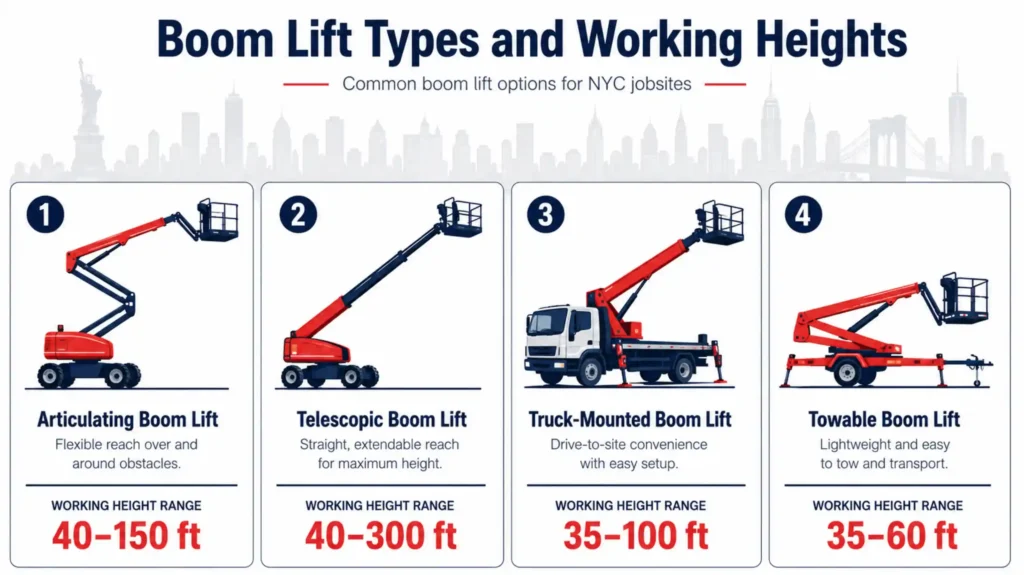
Common boom lift options for New York jobsites – articulating, telescopic, truck-mounted and towable, with their working height ranges.
-
Boom lift, scissor lift or cherry picker - what's the difference, and which do I need?
Short version: a boom lift (cherry picker) raises one or two workers on an arm that can reach up, out and over – best for facade, signage and spot work at height. A scissor lift rises straight up on a folding base and carries more people and material, but only goes vertically – best for open interior or flat exterior work. The words overlap in daily use: “cherry picker” almost always means a boom lift, while “aerial lift” covers both.
What you need Best tool Reach over a parapet or around a setback Articulating boom lift Maximum height on an open site Telescopic boom lift Lots of people and material, straight up Scissor lift Fast street-side facade access Truck-mounted boom lift Tell us the height, the obstruction and the ground, and we’ll tell you whether your job is really a boom lift rental, an aerial lift rental, a cherry picker rental or a scissor lift – and why.
-
Do I need a permit to put a boom lift on a New York street or sidewalk?
Often, yes – and this is where a New York boom lift rental differs from anywhere else. If the lift, its outriggers or its truck occupy a traffic lane, a sidewalk or a curb, the work usually needs a New York City Department of Transportation (DOT) permit for street or sidewalk occupancy, and sometimes a stipulated permit or a temporary lane closure with traffic control. Landmarked blocks and certain districts add their own conditions on top.
Skipping the permit is how a “simple” access day turns into a stop-work order and a fine. We build the permit into every boom lift rental from the start – identifying which DOT permit class the setup needs, the curb space required, and any after-hours window the block demands – so the lift is legal the moment it lands.
A boom lift without the right street permit isn't aerial access - it's a very expensive parked truck.
-
Should I rent a boom lift with an operator, or without?
Both exist, but in New York the answer leans heavily toward with operator, for two reasons.
First, liability. Under New York Labor Law 240/241 (the “Scaffold Law”), elevated-work injuries carry steep, owner-and-contractor-side exposure. A certified operator on an insured, owned machine keeps that risk where it belongs – with the provider, not with you. An operated boom lift rental moves the height risk off your project.
Second, the city itself. Tight streets, overhead wires, setbacks and curb limits make New York one of the hardest places to position a lift. An operator who runs these machines daily sets up faster and safer than an occasional user.
A bare, operator-less boom lift rental can make sense for a contractor with their own OSHA-certified, IPAF-trained crew and their own insurance. If that is not you, an operated aerial lift rental is almost always the cheaper choice once the risk is priced in.
-
Does the operator need to be certified, and which certifications matter?
Yes. OSHA requires anyone operating an aerial lift to be trained and authorized, and training on one machine class does not automatically carry to another. The credentials that actually matter in New York:
- OSHA 1926 Subpart L / 1910 – the baseline for aerial work.
- IPAF (PAL Card) – the international powered-access standard for boom and scissor operators.
- ANSI A92 – the design and operating standard current machines are built and run to.
- OSHA 1926.1408 – clearance rules for working near power lines, which come up constantly on New York streets.
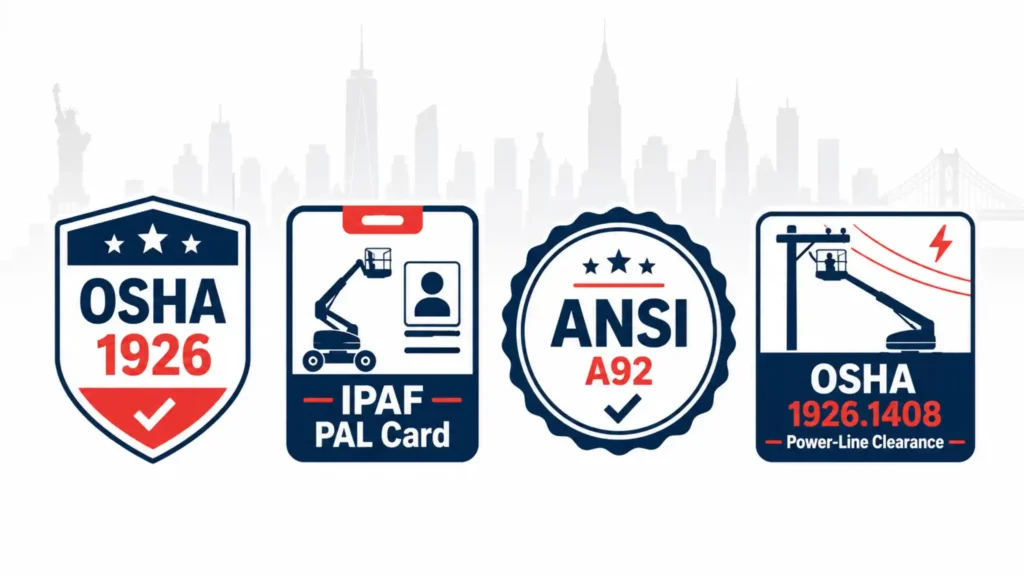
The credentials that matter for aerial lift operators in New York – OSHA 1926, IPAF PAL Card, ANSI A92 and OSHA 1926.1408 power-line clearance.
Every operated boom lift rental we send out carries these as a matter of course, and we provide the documentation building management and general contractors ask for. If a provider can’t produce operator credentials and a current COI on request, that is your signal to walk.
-
How much does a boom lift rental cost in NYC, and what drives the price?
There is no flat number, because the machine is often the smaller part of the bill. As a rough 2026 market guide, day rates in New York commonly run from the low hundreds for a compact electric unit to over a thousand dollars for tall telescopic classes – but the all-in cost is driven by these levers:
- Reach class – a 40 ft electric boom and a 120 ft telescopic boom are different worlds of price.
- Powertrain – electric versus diesel (more below).
- Operator – operated rentals include the certified operator’s time.
- Delivery and staging – New York curb access, tolls and off-hour windows add real cost per trip.
- Permits – DOT street or sidewalk permits and traffic control, where required.
- Duration and minimums – daily, weekly and four-week rates differ, and a one-day minimum is standard.
- Damage waiver or insurance – a percentage of the rental, or proof of your own coverage.
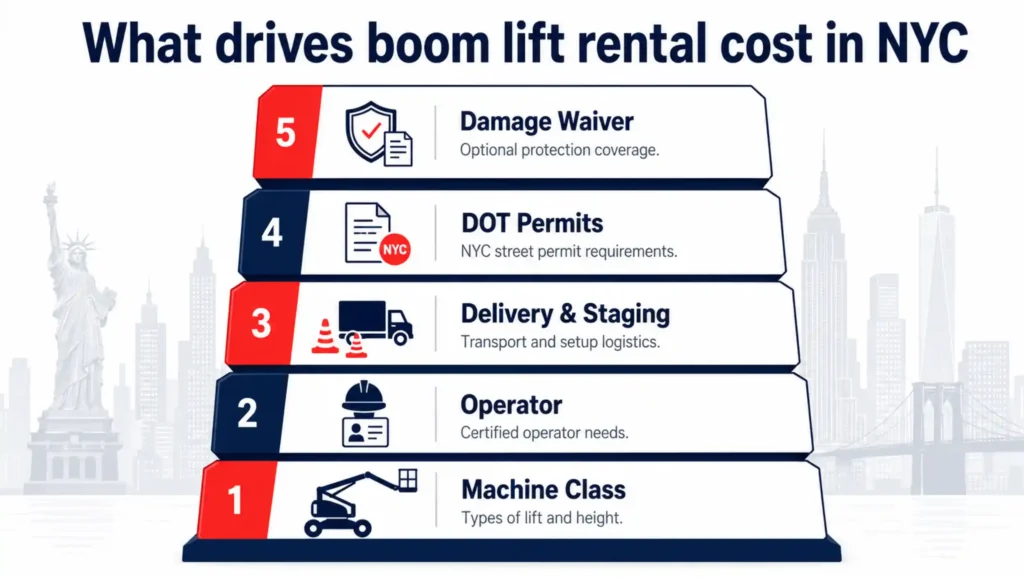
The five levers behind boom lift rental cost in New York – machine class, operator, delivery and staging, DOT permits and damage waiver.
The honest way to budget is to price the class plus the logistics, not just the daily rate. We quote per job, so the number you see is the number you pay – tell us the building, the height and the access, and we’ll scope it.
-
Electric or diesel boom lift - which should I choose?
It comes down to where the lift works. Electric and hybrid booms run clean and quiet, so they are the right call for indoor work, enclosed atriums, hospitals, occupied buildings and anywhere emissions or noise are a problem. Diesel booms deliver more power and rough-terrain capability for open exterior sites, construction ground and the tallest reach classes.
In dense New York settings, electric units are often preferred for the same reasons the city likes them – no exhaust against the facade, less noise for neighbors, and easier approval for interior or occupied-building work. We match the powertrain on every boom lift rental to the site, rather than to whatever happens to be sitting on the yard.
-
How do you handle tight New York streets, curb access and overhead obstructions?
This is the part a national call center can’t price. Before any boom lift rental is deployed we run a site assessment: measuring the reach actually required, checking ground and curb load, mapping overhead obstructions (power lines, awnings, scaffolding, tree canopies), and confirming the truck can stage and the lift can swing without hitting a neighbor’s building.
From there we handle the New York realities – curb lane occupation, the DOT permit, traffic control, and after-hours or weekend windows when a block won’t allow a daytime setup. For tight Manhattan and brownstone-Brooklyn locations we specify articulating boom lifts that bend around setbacks where a straight boom simply can’t fit.
The result is fewer surprises on the day, which is the whole point of working with a New York operator instead of a generic equipment rental desk.
-
What is a boom lift rental actually used for?
In New York the same machine serves very different jobs. The ones we support most often:
- Facade inspection and FISP / Local Law 11 work – getting engineers hands-on to the wall for the cyclical inspection. (See our Local Law 11 / FISP support.)
- High-rise window cleaning and facade washing – reaching glass and cladding a pole can’t. (See our high-rise window cleaning.)
- Glass and panel replacement at height – swapping cracked units on the facade. (See glass replacement.)
- Signage, lighting and film – installs, changeovers and aerial camera positions.
- Construction, HVAC and tree work – embeds, rooftop units and canopy trimming.
Because we run the lift and the facade trades under one roof, a boom lift rental with Big Apple can roll straight into the cleaning, inspection or repair it was brought in for – across Manhattan, Brooklyn, Queens and the rest of the five boroughs.
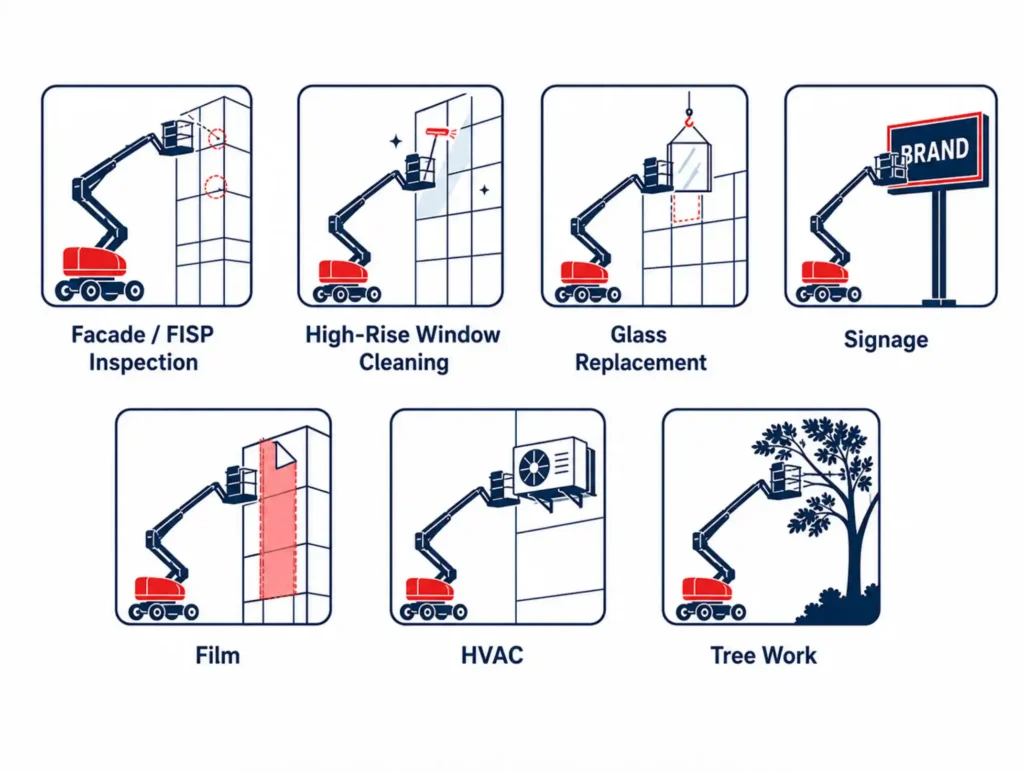
What a boom lift rental is used for in New York – facade and FISP inspection, high-rise window cleaning, glass replacement, signage, film, HVAC and tree work.
-
Where in Manhattan is boom lift rental most in demand, and how do the streets change the job?
Manhattan is the busiest market for boom lift rental in New York, and it is not close. Three forces stack up here: the densest concentration of high-rise glass and stone facades in the country, a Local Law 11 / FISP inspection cycle that puts thousands of buildings on a recurring facade-work calendar, and near-constant construction and signage turnover. Together they create steady demand for aerial access – on a street grid that makes every setup its own puzzle. The corridor you are working almost always decides the machine before anyone talks price.
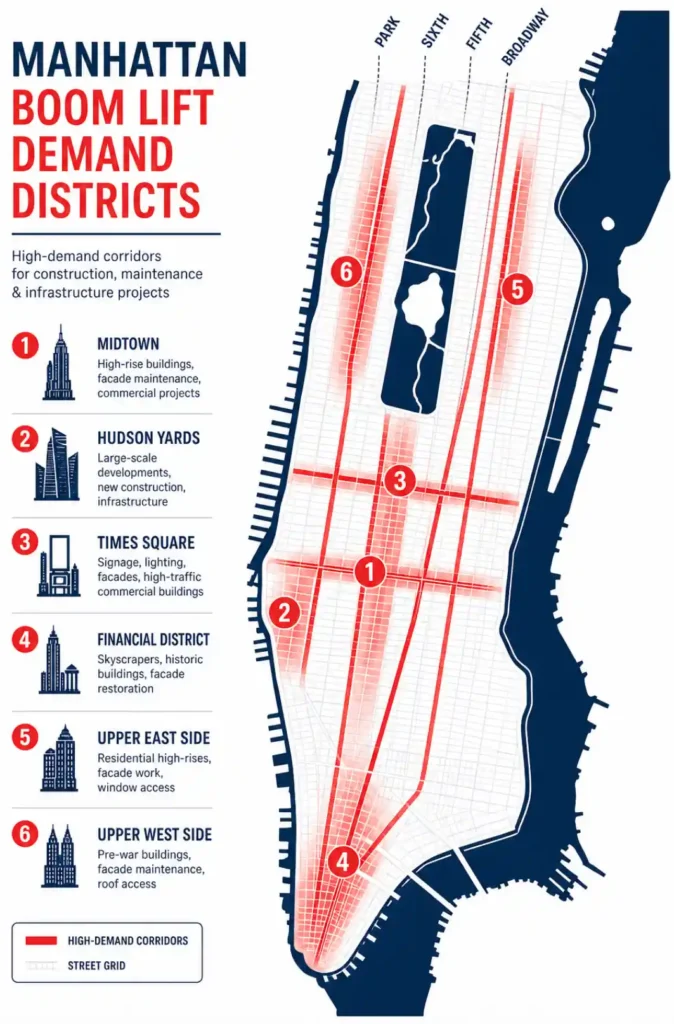
High-demand boom lift corridors in Manhattan, from the Midtown core to the Financial District, Hudson Yards and the Upper East and West Sides.
Where the work concentrates, district by district:
Midtown is the core. The commercial towers line the great avenues – Sixth Avenue (Avenue of the Americas), Park Avenue, Madison Avenue, Lexington Avenue, Fifth Avenue and Broadway – through the Plaza District and the Grand Central area. The avenues are wide, but the cross-streets are tight and the traffic is relentless, so most Midtown boom lift rental jobs run on articulating or truck-mounted booms with a DOT curb permit and, often, an after-hours window.
The Financial District and Lower Manhattan are the opposite kind of hard. Wall Street, Water Street, Broad Street and Maiden Lane follow a colonial street pattern – narrow, canyon-like and packed with pedestrians. Here compact articulating boom lifts and weekend or off-hour setups are the rule, because a wide telescopic unit simply cannot stage.
Hudson Yards and the Far West Side, around the West 30s and Tenth and Eleventh Avenues, are the newest cluster. Newer blocks leave more room to stage, but the towers are tall, so this is telescopic-boom and high-reach territory.
Times Square and the Theater District combine signage and facade work with the heaviest pedestrian and permit constraints in the city – night work and tight traffic control are standard.
The Upper East Side and Upper West Side are residential at heart: prewar co-ops and condos on Fifth, Madison, Park, Central Park West and West End Avenue, where FISP facade repair runs constantly and the side streets add tree canopies and parked-car constraints.
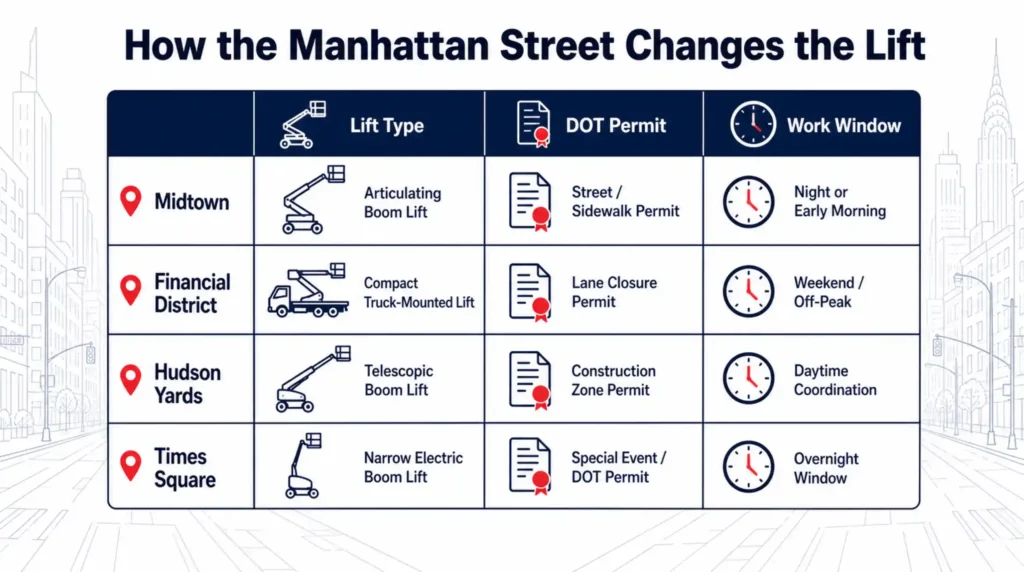
In Manhattan the corridor decides the machine – how lift type, DOT permit and work window change across Midtown, the Financial District, Hudson Yards and Times Square.
Manhattan area Streets / corridors What the job usually needs Midtown Sixth, Park, Madison, Lexington, Fifth, Broadway Articulating or truck-mounted, DOT permit, after-hours Financial District Wall, Water, Broad, Maiden Lane Compact articulating, weekend / off-hour setup Hudson Yards West 30s, 10th-11th Ave Telescopic, high-reach classes Times Square Broadway, Seventh Ave Night work, heavy traffic control Upper East / West Side Fifth, Madison, Park, CPW, West End Articulating, tree and parking constraints The practical takeaway: in Manhattan the corridor decides the machine, the permit and the time of day. A Wall Street job and a Park Avenue job can use the same reach but need completely different setups, permits and windows. We plan all three up front for every Manhattan boom lift rental, and you can see our full coverage on the Manhattan service area page.
-
Which other New York neighborhoods rent boom lifts the most, and what changes outside Manhattan?
Manhattan leads, but the outer-borough market for boom lift rental is the fastest-growing part of the city’s skyline – and the rules of the game shift the moment you cross a bridge. Demand now clusters in a handful of districts where new towers and dense commercial strips have appeared:
Downtown Brooklyn is the second-densest high-rise market in the city. Work concentrates around the Flatbush Avenue Extension, Fulton Street, Jay Street and Schermerhorn Street, anchored by The Brooklyn Tower and a wave of new residential towers. Transit-dense, tight streets call for articulating booms and carefully timed curb permits.
Williamsburg and Greenpoint run along the waterfront – Kent Avenue, Wythe Avenue and Franklin Street – where mid-rise residential and converted industrial buildings keep facade and window work steady.
Long Island City, Queens has the tallest skyline outside Manhattan. Jackson Avenue, Vernon Boulevard, Queens Plaza and Court Square frame a cluster led by the Skyline Tower, with enough new construction to keep high-reach booms busy year-round.
The South Bronx, especially Mott Haven, is the newest growth edge – Bruckner Boulevard and Third Avenue are lined with new waterfront high-rises and the facade work that follows them.
Staten Island’s North Shore – Bay Street and Richmond Terrace – sits earlier in the curve, with emerging mid-rise development and steady commercial facade work.
Long Island (Nassau and Suffolk) is a different animal: office parks and mixed-use corridors on open sites that often suit diesel or rough-terrain booms, with fewer street-canyon constraints but their own county and town permit rules instead of NYC DOT.
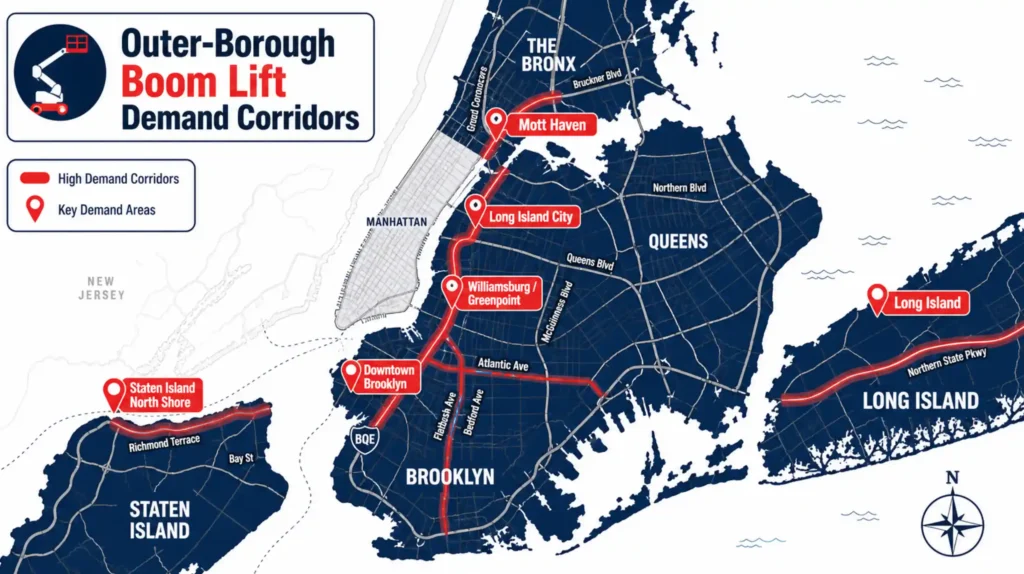
Area Streets / corridors What changes vs Manhattan Downtown Brooklyn Flatbush Ext, Fulton, Jay, Schermerhorn Tall reach, transit-dense curb permits Williamsburg / Greenpoint Kent, Wythe, Franklin Waterfront mid-rise, lighter classes Long Island City Jackson, Vernon, Queens Plaza, Court Sq High-reach, heavy new construction Mott Haven (Bronx) Bruckner Blvd, Third Ave New waterfront towers, rising demand Staten Island North Shore Bay St, Richmond Terrace Emerging mid-rise, more open staging Long Island Nassau / Suffolk corridors Open sites, county/town permits, diesel/rough-terrain In Manhattan the corridor decides the machine – how lift type, DOT permit and work window change across Midtown, the Financial District, Hudson Yards and Times Square.
Two things change most outside Manhattan. First, mobilization – getting an outer-borough boom lift rental across a bridge or through a tunnel adds time, tolls and congestion cost that has to be planned into the day, not discovered on it. Second, permits – each borough and the Long Island counties run their own street-occupancy and traffic rules, so the DOT process that governs a Midtown setup is not the one that governs a job in Nassau. We run all five boroughs and Long Island, so the same crew and the same standard cover Brooklyn, Queens, the Bronx, Staten Island and Long Island alike.
