

Hard water stain removal in NYC
Remove hard water stains, mineral deposits, and limescale from glass with professional treatment - eliminate spots that won’t come off with standard cleaning.

Chemical Removal we dissolve hard water buildup, calcium deposits, and masonry runoff using targeted, non-abrasive commercial compounds
100% Clarity Restored remove cloudy mineral stains and permanent water spots, saving thousands on full glass replacement
Future Protection optional hydrophobic sealants applied after cleaning to help repel future water spots, rain, and urban pollution
$11M Coverage fully insured, certified technicians providing white-glove care for your NYC property
The mechanics of
mineral bonding
Hard water stains bond calcium, magnesium, and silica to the glass surface - creating cloudy buildup that standard cleaning won’t remove.
UNDERSTANDING MINERAL DEPOSITS
They’re mineral deposits – primarily calcium carbonate, magnesium hydroxide, and dissolved silicates – that bond to the glass surface as water evaporates.
NYC’s municipal water contains 120–180 ppm dissolved minerals.
THE HIDDEN COSTS OF WAITING:
Progressive Glass Etching:
Mineral deposits create micro-pitting that traps more contamination. What starts as removable surface buildup can become permanent frosting after 6–12 months of exposure.
Tenant & Customer Complaints:
Office tenants file maintenance requests. Retail storefronts lose curb appeal – customers see neglect and avoid walking in. Property managers face lease disputes over “reasonable wear.”
Corrosion Risk:
In NYC’s freeze-thaw cycles, trapped water corrodes aluminum, oxidizes steel, and rots wood. Hard water spots on windows create runoff paths that concentrate weathering damage.
THE BIG APPLE mineral restoration protocol
We use professional-grade acidic solutions and mechanical polishing systems to dissolve minerals and restore optical clarity.
Schedule a site visit
Mineral analysis & deposit mapping
Using conductivity testing and angled-light inspection, we identify mineral composition - calcium-heavy deposits require different treatment than silica-heavy staining. Hard water stain removal on upper-floor exterior windows often involves irrigation overspray.
Controlled acid treatment & mineral dissolution
We use calibrated acidic solutions - typically diluted phosphoric-based formulations - applied with controlled contact time. These solutions break down carbonate buildup and dissolve mineral deposits without damaging the glass surface. For severe limescale, we apply multiple passes with neutralization between stages to prevent etching.
Mechanical polishing & surface restoration
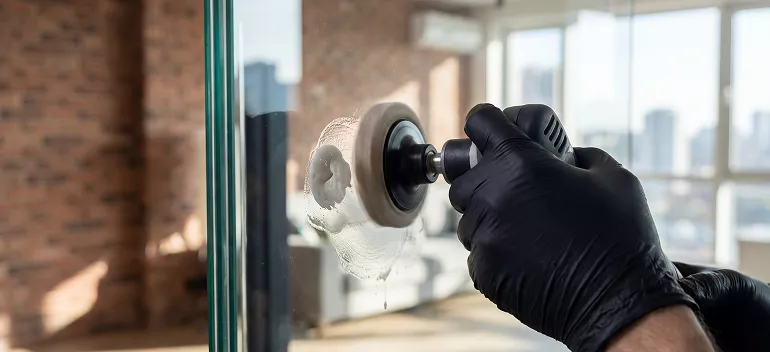
For water-stained windows with embedded deposits, we use variable-speed buffing equipment to remove etched material layer by layer. This eliminates haze that remains after chemical treatment.Big Apple Window Company at work
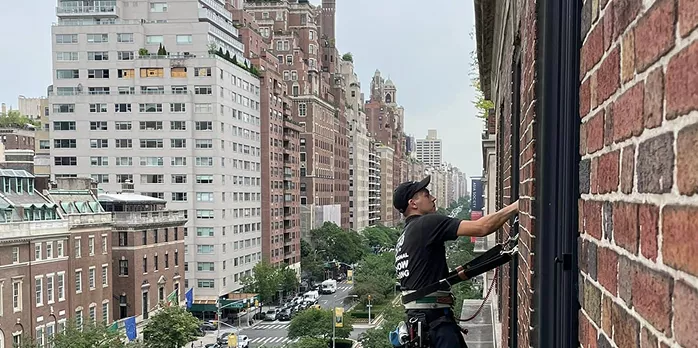
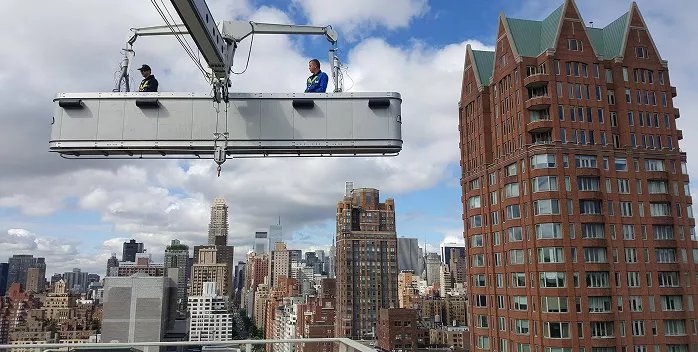
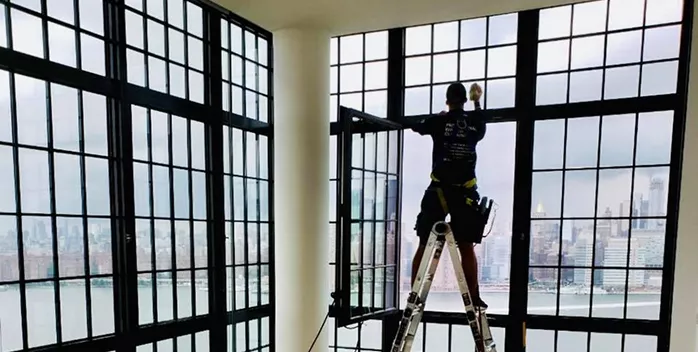
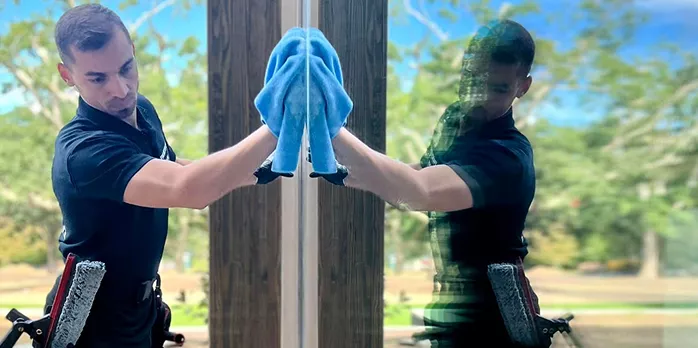
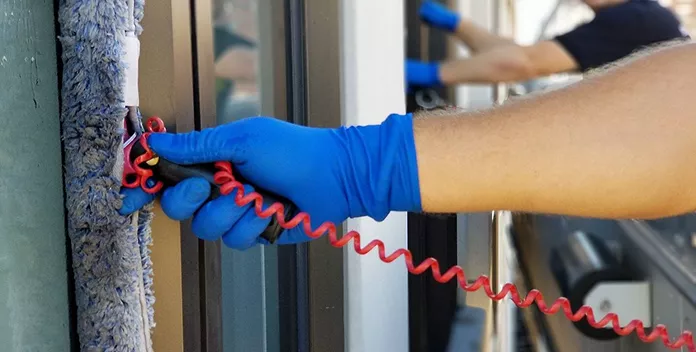
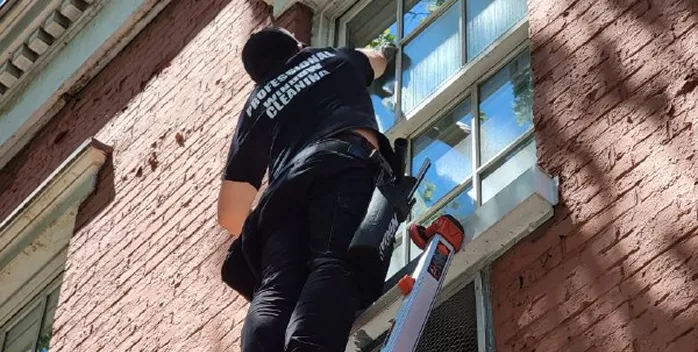
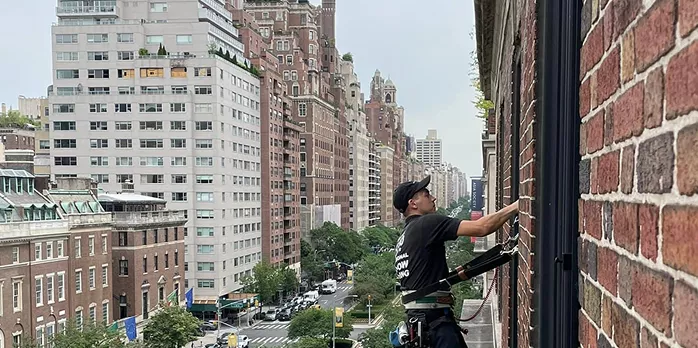
More than 2 decades of experience in property maintenance.


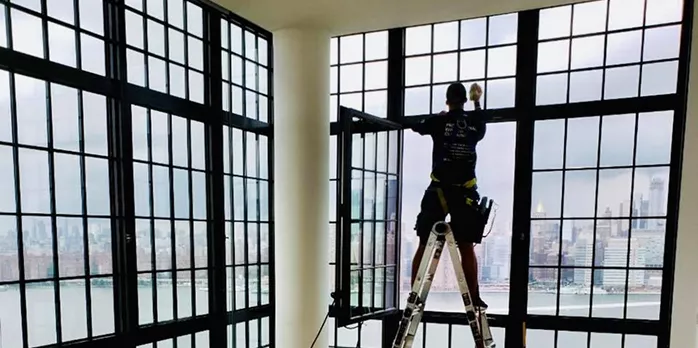



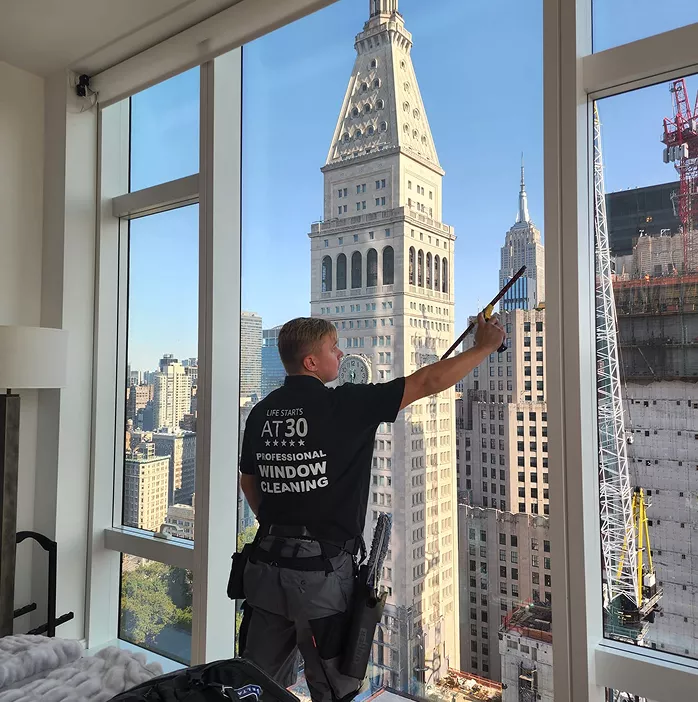
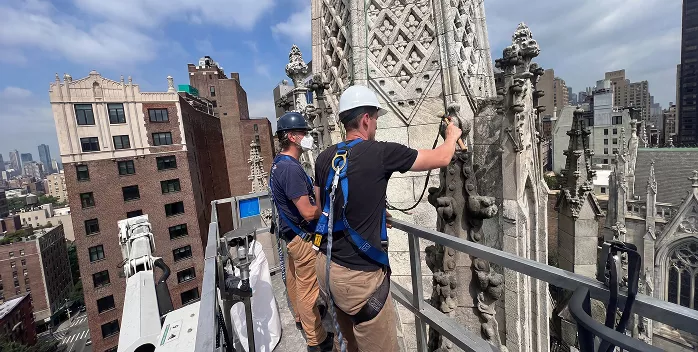








Clean hard water stains
See the difference. We removed years of mineral buildup from a high-rise façade - avoiding replacement and restoring clear glass.

 BEFORE
 AFTER
AFTER
Engineering specifications & guarantees
Clear specs. Straight answers. Compare our process against any hard water stain removal company in NYC. We don’t use household vinegar or abrasive scrapers.
Acidic treatment chemistry
Phosphoric Acid 10-15% Solution. pH 1.5–2.0 for carbonate dissolution. Calibrated contact time prevents glass etching. Neutralization with an alkaline rinse between passes.
Polishing compound standards
Optical-grade Cerium Oxide (CeO₂). 99.5% purity, 1.0–2.5 micron particle size. Removes mineral-etched surface layers without heat distortion or orange-peel texture.
Warranty protection
1-Year Clarity Guarantee. If mineral stains reappear due to incomplete removal, we re-treat at no charge. Does not cover new mineral buildup from ongoing water exposure.
Risk management
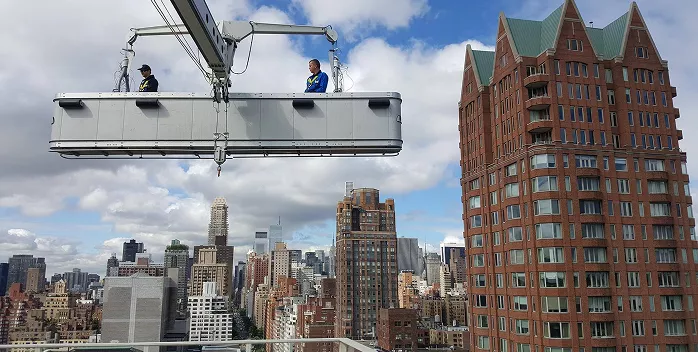
$11 Million Umbrella Coverage. Comprehensive liability coverage, including glass breakage during treatment. SPRAT-certified rope access teams for high-rise exterior window service.

EXPERIENCE THE NEW STANDARD
Join 200+ landmark buildings and 10,000+ homeowners.
While we’re on-site
Our glass restoration technicians identify related issues that often come with mineral staining.


Useful information
-
Can hard water stains be permanently removed from glass?
Yes, but it depends on severity. Surface mineral deposits respond well to acidic treatment. Deep etching from years of buildup may require professional polishing to restore clarity. DIY vinegar attempts rarely work on established stains and can damage glass if applied incorrectly. Professional hard water stain removal uses calibrated acid solutions and cerium oxide polishing for permanent results.
-
Does vinegar damage glass?
Vinegar (5% acetic acid) won’t etch glass with brief exposure, but extended contact or repeated applications can degrade window seals, corrode metal frames, and damage tinted or coated glass. It’s too weak for heavy mineral deposits and too risky for improper use. Professional services use pH-controlled solutions that remove stains without collateral damage.
-
How do you remove limescale from glass?
Limescale requires acidic dissolution – typically diluted hydrochloric or phosphoric acid applied in controlled contact times. Household cleaners lack sufficient strength. Mechanical scraping risks scratching. Professional limescale removal combines chemical treatment to break carbonate bonds with polishing to eliminate residual etching that causes cloudiness even after deposits dissolve.
-
What's the difference between hard water stains and mineral deposits?
Type Composition Appearance Removal Difficulty Hard Water Stains Calcium carbonate, magnesium White cloudy spots Moderate – acidic treatment Mineral Deposits Silicates, iron, manganese Rainbow haze, rust tints High – requires polishing Limescale Calcium carbonate buildup Thick white crust Very High – multi-stage treatment Hard water stains are surface deposits. Mineral deposits often etch into glass structure, requiring professional polishing for complete removal.
-
Is CLR better than vinegar for hard water stains on glass?
CLR is stronger than vinegar but still risky for DIY use. It contains harsh acids that can etch glass with improper dwell time, damage seals, and corrode frames. Neither product addresses the etching that remains after deposits dissolve. Professional services calibrate acid strength, contact time, and follow with polishing to restore clarity completely.
-
How do you remove calcium deposits from windows?
Calcium deposits bond chemically with glass and require acidic solutions (pH 1.5-2.0) to dissolve carbonate structures. After dissolution, polishing removes the etched surface layer. Attempting removal with abrasive pads scratches glass. Improper acid use damages frames and seals. Professional calcium removal ensures complete elimination without collateral damage to surrounding components.
-
Why do hard water stains come back after cleaning?
Three reasons: incomplete mineral removal leaves nucleation sites for redeposition, ongoing water exposure from sprinklers or runoff continues mineral delivery, or glass etching remains that traps new deposits. Surface cleaning doesn’t remove embedded minerals or restore etched surfaces. Professional treatment eliminates existing damage and applies protective coatings to prevent recurrence.
