
Basement Window Replacement in NYC: What Every Homeowner Needs to Know Before Spending a Dollar
By Dayne Watkins
Contents
- Why NYC Basements Destroy Windows Faster Than Anywhere Else
- Basement Window Types: Which One Fits Your Space?
- NYC Egress Requirements You Cannot Ignore
- How Much Does Basement Window Replacement Actually Cost in NYC?
- Choosing the Right Frame Material
- Should You DIY or Hire a Professional?
- Cellar Window Replacement Red Flags: When to Act Now
DO YOU HAVE AN URGENT NEED?
Our fast response service can fix your urgent problem. We have teams ready for action.
AND GET A FREE QUOTE
Get monthly window insight
Your basement window is cracked, rusted shut, or letting in more cold air than a broken subway door in January. You already know a basement window replacement is overdue – but where do you start? In a city where building codes, co-op boards, and century-old foundations all have opinions about your renovation plans, changing basement windows is never as simple as the national DIY blogs make it sound.
This guide covers everything NYC homeowners need to know – from the real basement window replacement cost to the types of windows that actually make sense for a Brooklyn brownstone or a Queens row house.
Why NYC Basements Destroy Windows Faster Than Anywhere Else
Most basement window replacement guides are written for suburban homes with poured concrete foundations and easy driveway access. That is not New York City.
Here is what accelerates window failure in NYC buildings:
| Factor | How It Damages Your Windows |
| Steam heat radiators | Extreme temperature swings stress seals and warp frames within 10 – 15 years |
| Subway vibrations | Constant micro-movement loosens frames from masonry over decades |
| Salt air exposure | Waterfront neighborhoods like Red Hook and Rockaway corrode metal frames faster |
| Urban pollution and acid rain | Degrades sealant and glazing compound on older windows |
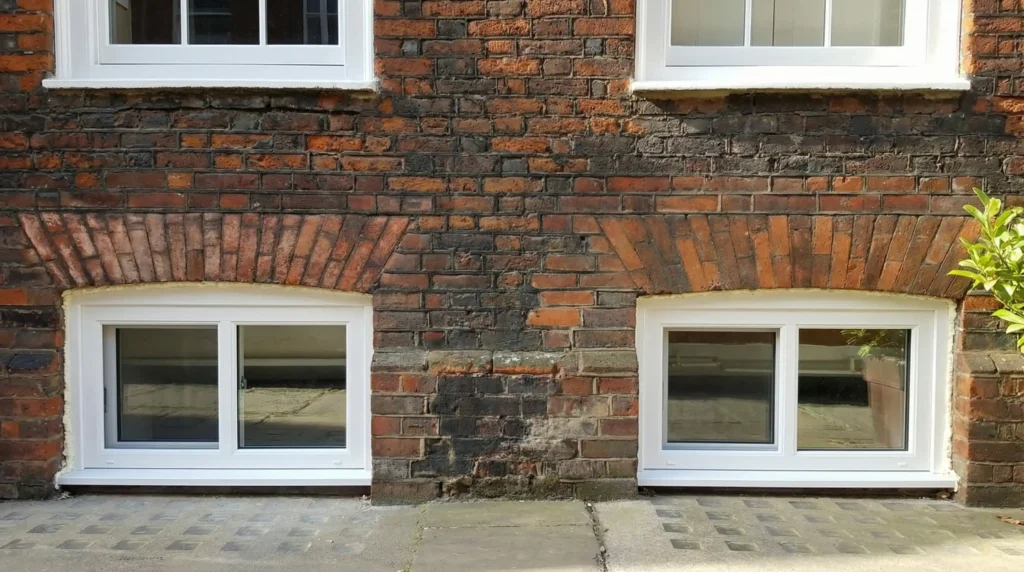
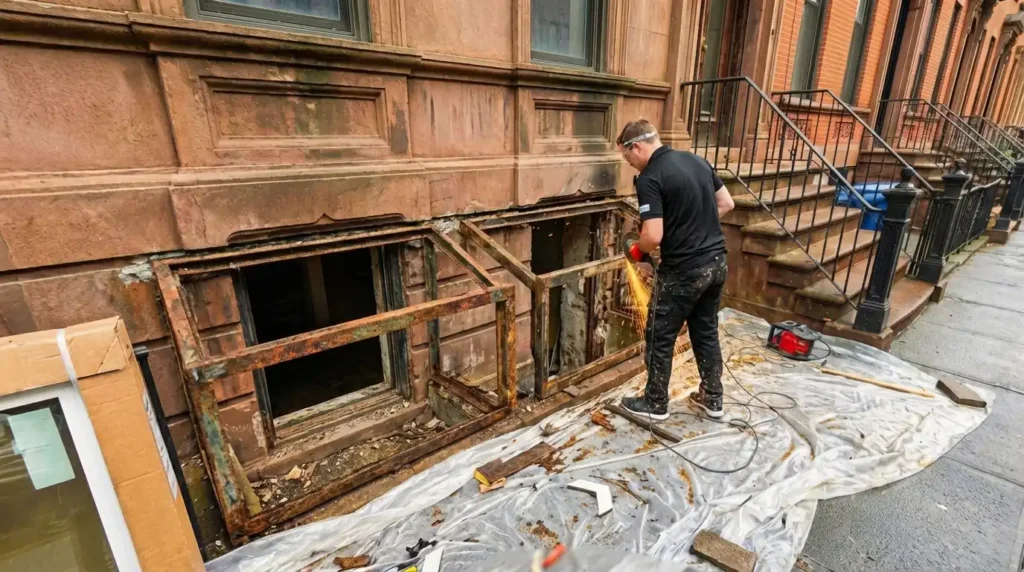
Pre-war buildings from the 1920s through 1960s often have steel-frame basement windows embedded directly in concrete or brick. You cannot simply pull these out. A contractor must cut through the frame with an angle grinder, remove it in sections, and then prepare a clean rough opening for the new unit. If your building is in a landmark district, the Landmarks Preservation Commission (LPC) must approve any changes to the primary facade – and yes, that includes basement-level windows.
"A New York basement window has three natural enemies: rust, rats, and the MTA rumbling underneath at 3 a.m."
Basement Window Types: Which One Fits Your Space?
Not every window style works in every basement. Your choice depends on the available wall height above grade, whether you need egress compliance, and how much natural light you want.
| Window Type | Typical Cost (Unit Only) | Opens For Ventilation | Meets Egress Code | Best For |
| Hopper | $100 – $250 | Yes, inward from top | No | Unfinished basements, laundry rooms |
| Awning | $100 – $250 | Yes, outward from bottom | No | Ventilation even during rain |
| Sliding | $150 – $700 | Yes, horizontal | Yes, if sized correctly | Low wall height above grade |
| Casement | $200 – $500 | Yes, outward on side hinge | Yes | Maximum airflow and light |
| In-swing casement | $300 – $800 | Yes, inward on side hinge | Yes | Below-grade with window well |
| Glass block | $100 – $300 | No (fixed) | No | Privacy and security only |
| Double-hung | $250 – $500 | Yes, vertical slides | Yes, if large enough | Brownstone-style aesthetics |
For most NYC homeowners who are changing basement windows to meet code or improve a finished living space, a sliding or in-swing casement window offers the best balance of egress compliance, durability, and cost. The in-swing casement is especially practical when there is a window well – the sash opens inward and does not block your escape route or get buried under snow.
NYC Egress Requirements You Cannot Ignore
If you are converting your basement into a bedroom, home office, or rental unit, New York State Residential Code Section R310 requires at least one egress window. The key specifications are:
- Minimum clear opening area of 5.7 square feet (5.0 square feet for below-grade openings)
- Minimum opening height of 24 inches
- Minimum opening width of 20 inches
- Sill height no more than 44 inches above the finished floor
- Must open from the inside without keys, tools, or special knowledge
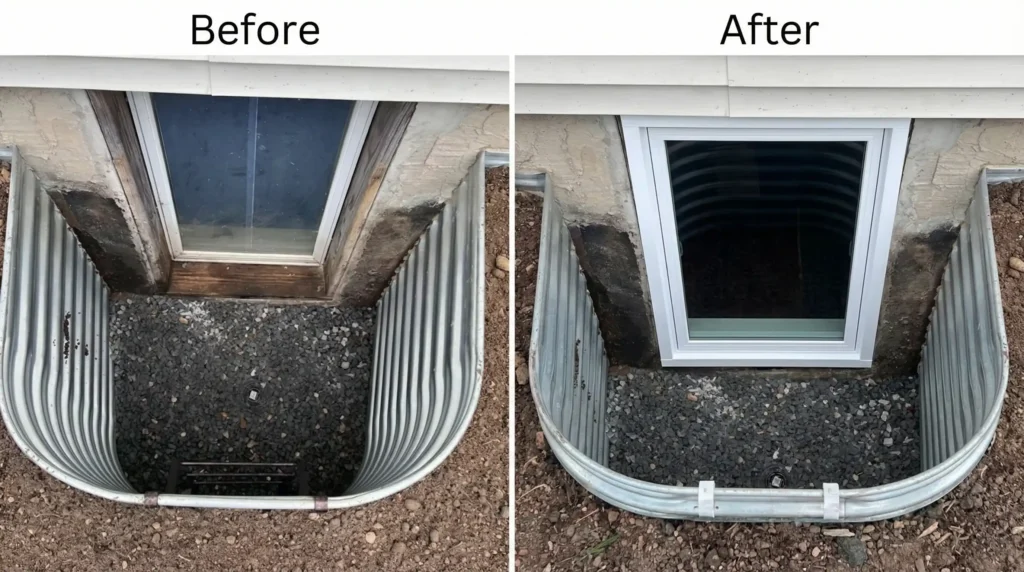
Window wells for below-grade egress must be at least 9 square feet with a minimum 36-inch projection. If the well is deeper than 44 inches, a permanently installed ladder or steps are required. The International Code Council publishes the full IRC standards that form the basis for New York’s residential code.
Keep in mind that NYC has an additional layer of regulation. The Administrative Code distinguishes between a “basement” and a “cellar” based on how much of the wall height sits below grade. If more than half the wall is underground, you have a cellar – and the rules for habitable use become significantly stricter.
"In NYC, even your basement needs a permit, a board meeting, and a therapist."
How Much Does Basement Window Replacement Actually Cost in NYC?
National averages paint an incomplete picture. Here is a more realistic breakdown of basement window replacement cost for New York City homeowners:
| Service | National Average | NYC Realistic Range |
| Standard window replacement (per unit, installed) | $500 – $1,000 | $700 – $1,500 |
| Custom window replacement | $1,000 – $2,500 | $1,500 – $3,500 |
| New egress window with well | $2,500 – $5,000 | $4,000 – $7,500 |
| Steel frame removal from concrete | Rarely quoted | $200 – $500 per window |
Why is the basement window replacement cost higher in NYC? Labor rates run 30 to 50 percent above the national average. Access is often limited – there is no driveway, the areaway is three feet wide, and a permit from the Department of Buildings may be required. If your building is a co-op or condo, the board approval process can add weeks. And if you are in a landmark district, LPC review adds another layer of time and expense.
The cost goes up further when the existing opening needs to be enlarged for egress compliance. Cutting through a concrete foundation wall in a Park Slope brownstone is not a weekend project – it requires diamond-blade saws, structural engineering review, and proper waterproofing afterward.
At Big Apple Window Cleaning, we handle basement window replacement for residential and commercial properties across all five boroughs and Long Island, so we see these cost variables firsthand every week.
Choosing the Right Frame Material
When changing basement windows in a humid, below-grade environment, the frame material matters more than it does for upper-story windows. Here is how the options compare:
| Material | Moisture Resistance | Maintenance | Insulation | Price Range |
| Vinyl | Excellent | None | Good | $100 – $650 |
| Fiberglass | Excellent | Minimal | Excellent | $300 – $900 |
| Aluminum | Good | Low | Poor | $300 – $675 |
| Wood | Poor without treatment | High | Good | $400 – $1,000+ |
- Vinyl is the most popular choice for basement window replacement. It resists moisture, never needs painting, and offers solid thermal performance at the lowest price point. Most prefab basement windows from retailers like The Home Depot are vinyl.
- Fiberglass delivers superior strength and insulation but costs more. It is worth considering for egress windows that need to withstand decades of use.
- Aluminum is durable and slim-profiled but conducts heat poorly – not ideal for an already cold basement.
- Wood looks authentic in a brownstone context but requires constant maintenance in a damp basement environment. It is generally not recommended unless you are restoring a landmark property.
For most cellar window replacement projects in NYC, vinyl with double-pane Low-E glass and argon fill is the sweet spot between performance and budget.
Should You DIY or Hire a Professional?
The national home improvement blogs love to frame basement window replacement as a simple weekend project. In suburban homes with standard vinyl windows in wood-framed openings, that can be true. In New York City? Almost never.
Here is why cellar window replacement in NYC usually requires a professional:
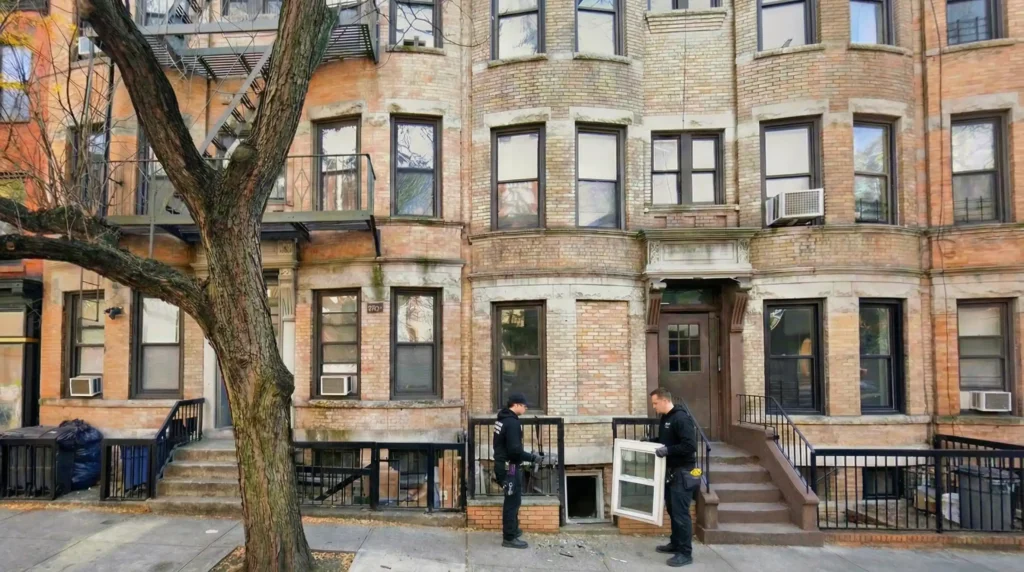
Older buildings present masonry or concrete openings that demand specialized cutting tools. Non-standard sizes are common – you may need a custom-ordered window rather than something off the shelf. Building codes require proper flashing, waterproofing, and drainage around below-grade installations. And if your building management or co-op board requires licensed and insured contractors, a DIY approach is simply not an option.
“I once watched my neighbor try to replace his own basement window in Astoria. Three YouTube videos and a trip to the ER later, he called a glazier.”
With 20 years of experience serving NYC homeowners, Big Apple Window Cleaning provides professional basement window replacement that accounts for the unique challenges of urban buildings – from pre-war masonry to modern high-rise foundations.
Cellar Window Replacement Red Flags: When to Act Now
Some signs mean you need to stop putting off this project:
- Visible rust eating through a steel frame
- Daylight visible around the frame edges
- Water pooling on the sill or floor after rain
- Window painted or rusted completely shut
- Single-pane glass with no insulation value
- Pest entry points – gaps large enough for mice or roaches
After Hurricane Ida flooded thousands of NYC basements in 2021, many homeowners learned the hard way that deteriorated basement windows are a direct path for water intrusion. Changing basement windows before the next major storm is not just an upgrade – it is flood prevention.
Basement window replacement in NYC is more complicated and more expensive than the national average suggests, but it is also more important. Between egress safety requirements, energy savings, pest prevention, and flood protection, new basement windows pay for themselves faster than most home improvements. Whether you are finishing a cellar bedroom in Bay Ridge or upgrading a laundry room window in a Forest Hills colonial, investing in a quality cellar window replacement is one of the smartest moves you can make for your property.
The real basement window replacement cost is not just what you pay the contractor. It is also what you save on heating bills, avoid in water damage repairs, and gain in peace of mind every time the forecast calls for heavy rain.
FURTHER READING

Article by Dayne Watkins


How to Clean the Outside of Your Apartment Windows in NYC
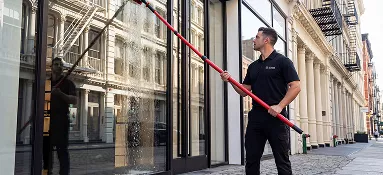
In most New York apartments the outside of the glass is cleaned from inside. Double-hung windows put in since the 1980s usually tilt in, and once the sash tilts, the outside face is a foot from your hands. When a window won’t tilt, the reason is usually a seized latch or a dead balance, not […]
Explore more
Six Windows, One $350 Minimum: Three Ways NYC Residents Get Exterior Glass Cleaned Without Overpaying
If you asked for a quote on your apartment and the number came back higher than you expected for six windows, nothing went wrong. You are running into a visit minimum, and in New York most apartments sit below it. Ours is published: $350 for residential work. That is not a markup for small jobs. […]
Explore more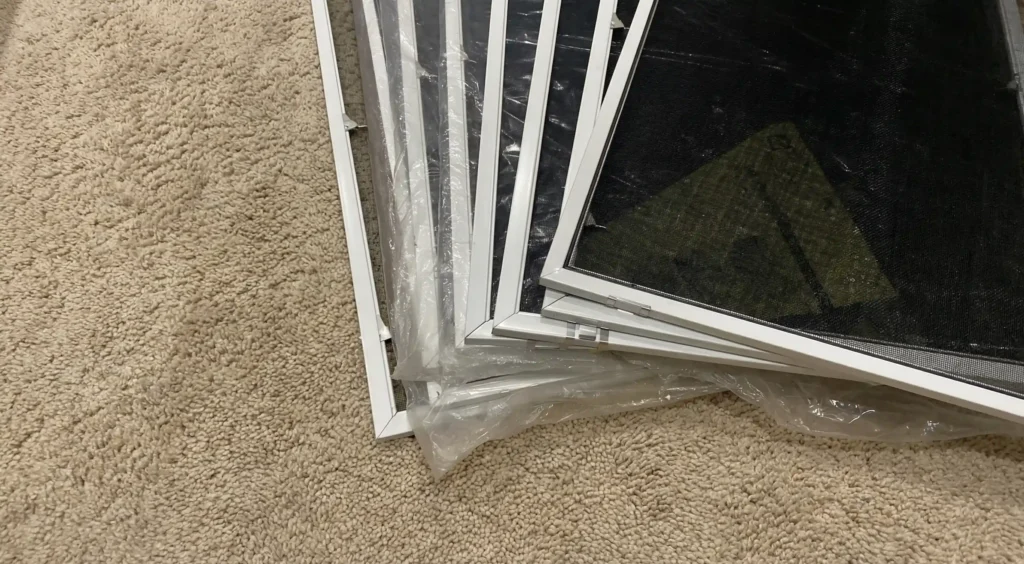
Your Building Replaced the Windows and Left You With No Screens: Whose Bill Is It, and How to Get Custom Screens (NYC)
You are not crazy, and you are not stuck: the “screen orphan” problem explained It usually happens like this. Your building runs a window replacement project, the crew swaps your old slide-up windows for shiny new casement or crank-out windows, and then they leave. No screens. No paperwork. No phone number for where to buy […]
Explore more