
Casement Window Crank Mechanism: How It Works, Why It Breaks, and What to Do About It
By Dayne Watkins
Contents
- What Is Actually Inside a Casement Window Crank Mechanism
- Seven Signs Your Casement Window Crank Mechanism Needs Attention
- Casement Window Crank Replacement or Simple Crank Window Repair?
- Not All Cranks Are Created Equal
- Keeping Your Casement Window Crank Mechanism Alive
- When Fixing Crank Windows Is Not a DIY Job
DO YOU HAVE AN URGENT NEED?
Our fast response service can fix your urgent problem. We have teams ready for action.
AND GET A FREE QUOTE
Get monthly window insight
You turn the handle. Nothing happens. You turn it harder – still nothing, or worse, the handle spins freely like it is not connected to anything at all. If you live in a pre-war walkup in Brooklyn or a mid-rise co-op in Manhattan, chances are you have dealt with a broken casement window crank mechanism at least once. These devices are everywhere in residential buildings across the five boroughs, and they fail more often than most people expect.
The good news is that a casement window crank mechanism is not a mysterious piece of engineering. Once you understand what is inside and what goes wrong, you can make a smart decision about whether to fix it yourself, replace a part, or call a professional for crank window repair.
What Is Actually Inside a Casement Window Crank Mechanism
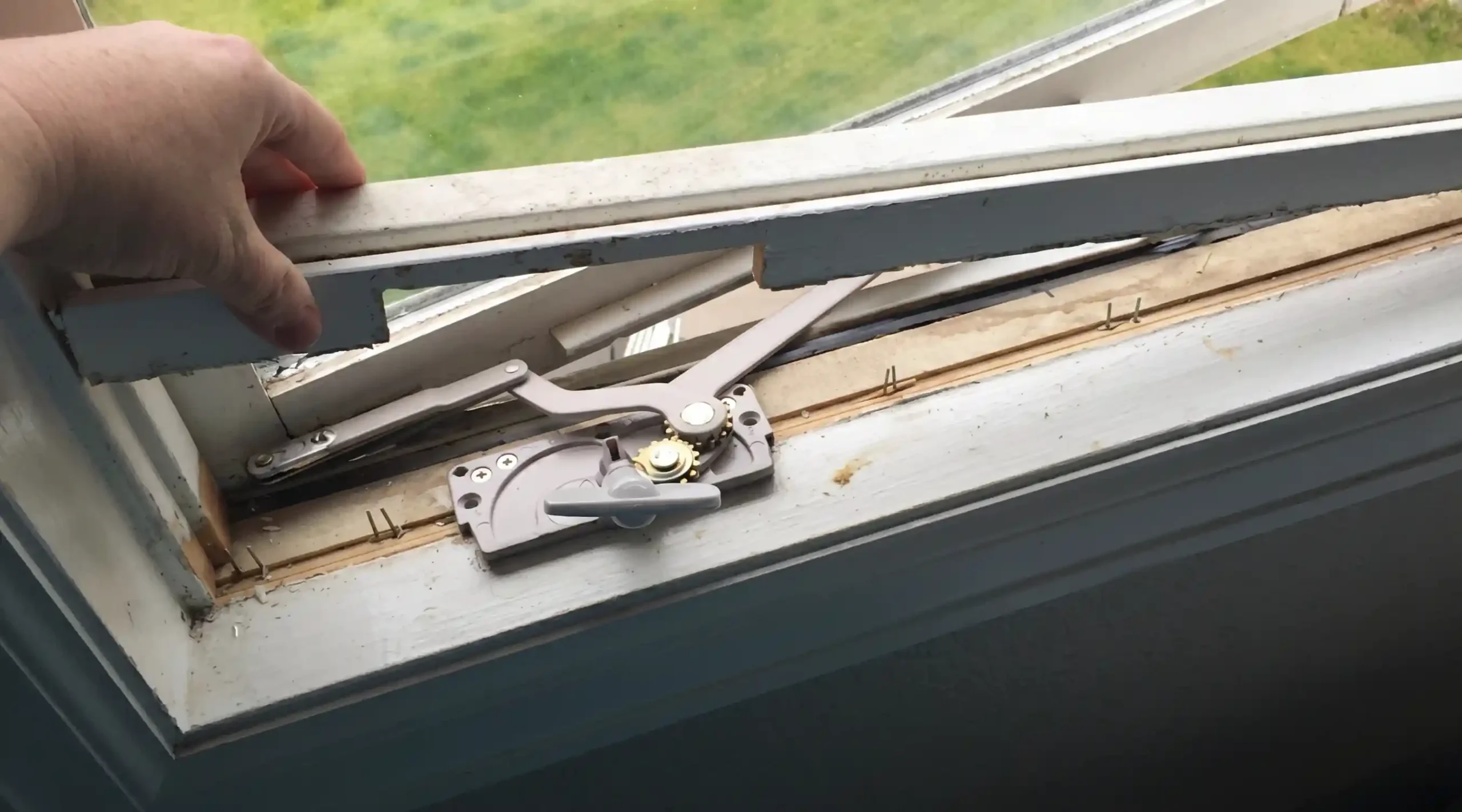
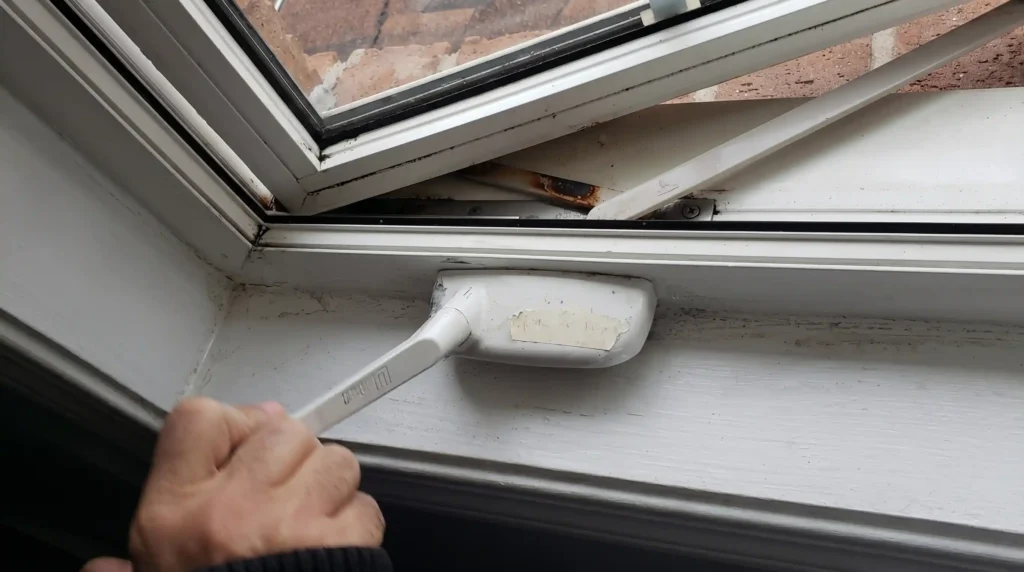
A casement window opens outward on hinges – like a door, but mounted on the side of the frame. The crank mechanism is what controls that movement from the inside, and it is essentially a small gearbox bolted to the window sill or frame.
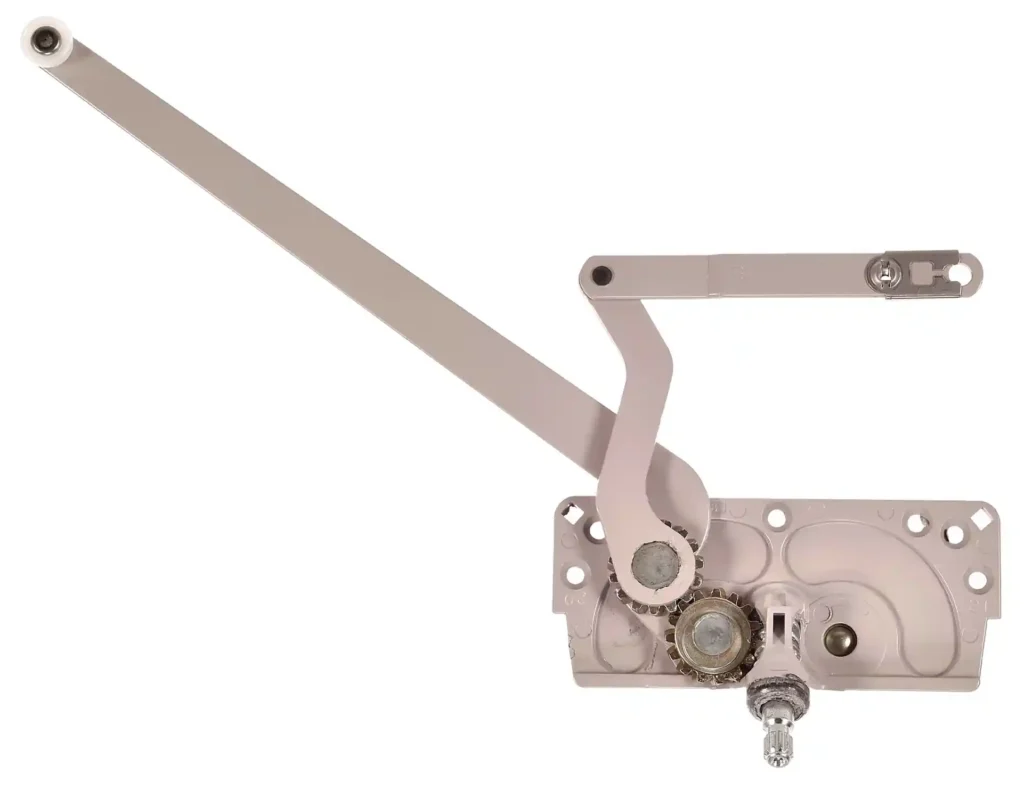
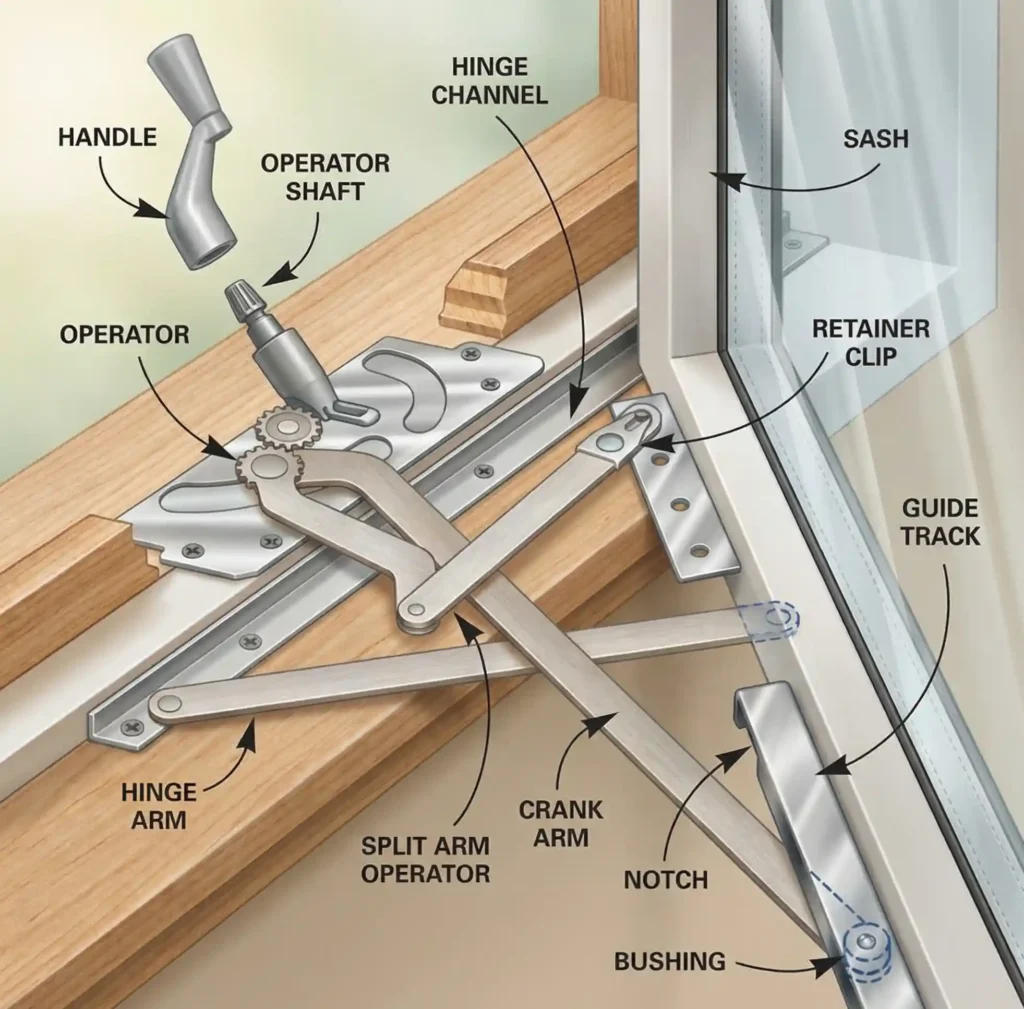
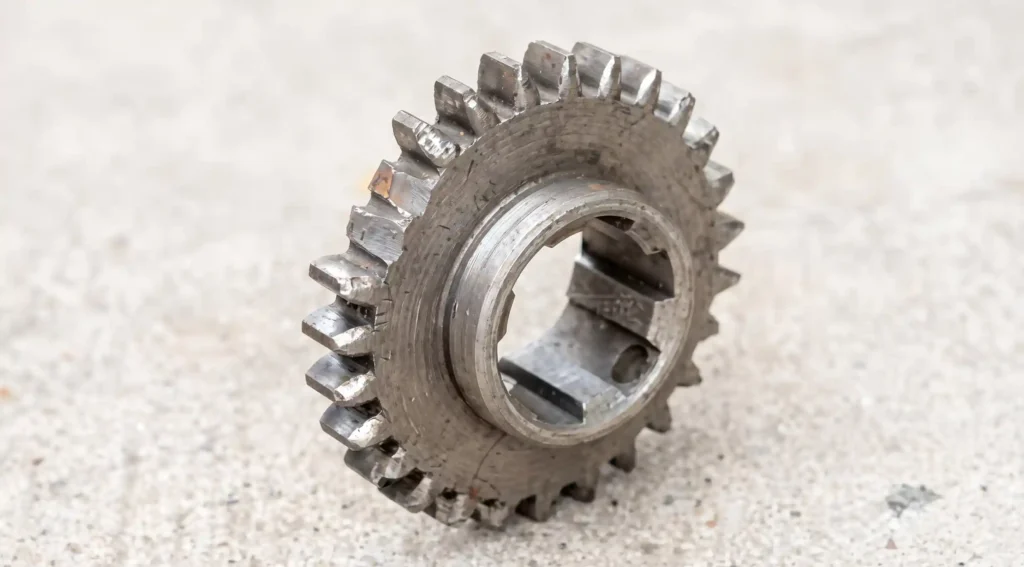
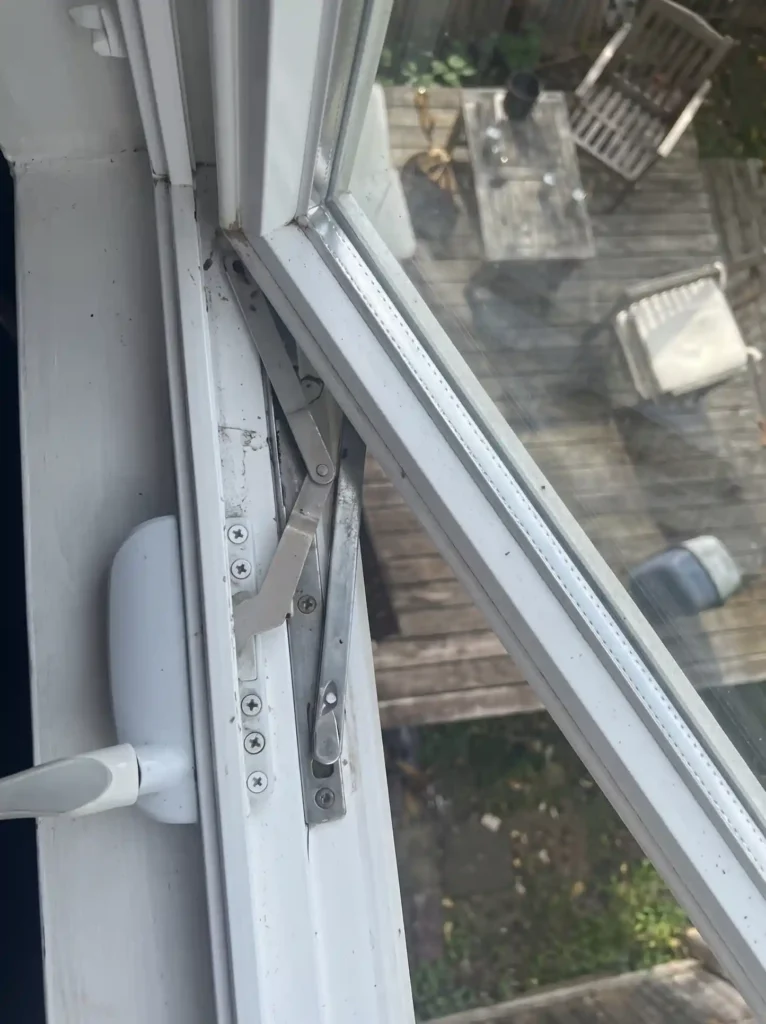
Here is how it works. The handle you turn is connected to a metal shaft called a worm gear. That worm gear meshes with a toothed gear inside a compact housing made of die-cast zinc. When you rotate the handle, the worm gear spins the internal gear, which moves one or two metal arms attached to the bottom of the window sash. Those arms push the sash outward along a guide track – and the window opens.
The casement window crank mechanism comes in a few different configurations. A single arm operator uses one straight arm and is typically found on narrower, lighter windows. A dual arm operator distributes the force across two arms and handles heavier sashes better – this design is common in older residential buildings where windows tend to be large. A split arm (sometimes called a dyad) operator uses one straight and one offset arm for a tighter seal when the window is closed.
One detail that trips people up during casement window crank replacement is handedness. Operators come in left-hand and right-hand versions. To figure out which one you need, stand inside and look at the window. If the lock is on the left side, you have a left-hand operator. Simple enough, but ordering the wrong hand is one of the most common mistakes homeowners make.
Seven Signs Your Casement Window Crank Mechanism Needs Attention
Not every crank problem means you need a full replacement. Some symptoms point to an easy fix, while others signal that the whole operator has to go. Here is what to look for:
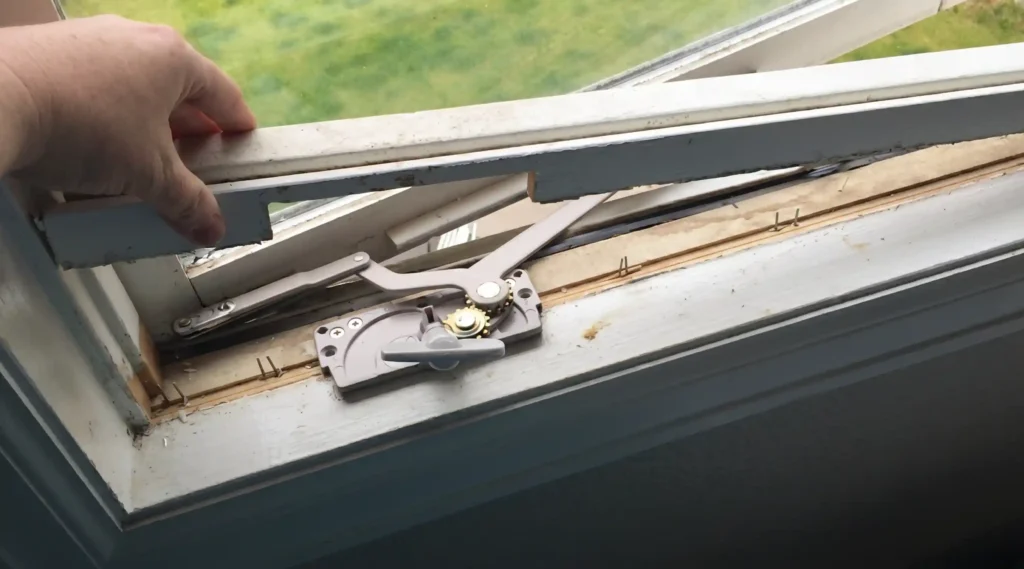
- The handle spins freely without moving the window. This almost always means the internal gears are stripped. The worm gear and the toothed gear no longer mesh, and no amount of lubricant will fix it. You need a complete casement window crank replacement.
- The handle will not turn at all. A seized mechanism is often caused by dried-out lubricant, rust, or debris packed into the gears. Cleaning and lubrication may solve it – but if the gears are corroded through, the operator needs to go.
- The window opens but will not close all the way. Check for a bent arm, debris in the guide track, or a sagging sash that is putting uneven pressure on the operator.
- The handle feels loose with excessive play before engaging. The splines on the operator shaft are worn down. A temporary fix involves filing a flat spot on the shaft and using a longer set screw, but this buys you months, not years.
- You hear grinding or crunching when turning the handle. Dry or damaged gears are the most likely cause. Try lubricating first.
- The worm gear shaft backs out of the housing when you crank. This is a common issue in older apartments, and despite what some forums suggest, hammering it back in is not a real solution. The internal retention has failed, and a casement window crank replacement is the only reliable fix.
- The window drifts shut on its own or will not stay open. This may indicate worn hinges rather than a crank problem, but it is worth inspecting the entire operator assembly.
Casement Window Crank Replacement or Simple Crank Window Repair?
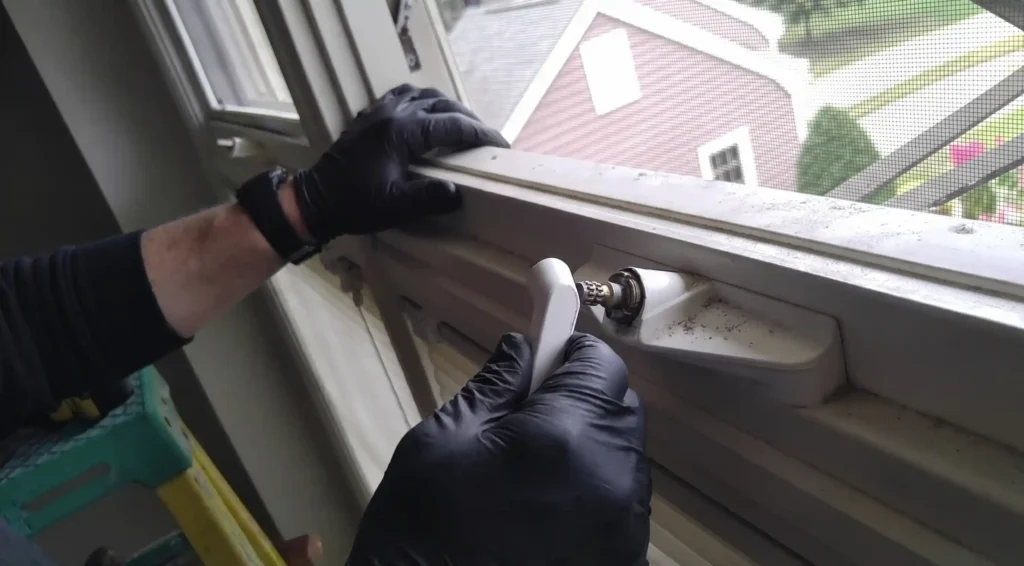
Here is the honest breakdown. If only the handle is damaged – cracked plastic, broken-off knob – you can replace just the handle for under fifteen dollars. That is a crank window repair you can do in ten minutes with a screwdriver.
If the gears are stripped, the arms are bent, or the housing is cracked, you are looking at replacing the entire operator assembly. Replacement operators run anywhere from twenty to fifty dollars depending on the brand and style. The labor is straightforward for someone comfortable with basic tools – remove the old operator, clean the mounting area, and install the new one. Family Handyman has a well-known tip for this: if the old screw holes in a wood frame are stripped, push a toothpick or two dipped in wood glue into each hole, let them dry, and then drive the new screws.
But here is where the math matters for apartment owners. A full casement window replacement in the five boroughs can easily run seven hundred to over two thousand dollars per window once you factor in materials, installation, and any approvals required by your building. A professional casement window repair that restores the crank mechanism for fifty to two hundred dollars is an obvious choice when the rest of the window is in solid condition. Companies like Big Apple Window Cleaning deal with these situations daily and can often diagnose the issue within minutes.
Not All Cranks Are Created Equal
Different window manufacturers use different operator systems, and this matters when you need a replacement crank for a window in your home.
Truth Hardware – now operating as AmesburyTruth – is the dominant manufacturer. Their operators are used as original equipment in windows by dozens of brands, including BiltBest, Caradco, Hurd, Milgard, and Windsor. If your building was constructed between the 1980s and today, there is a good chance your casement window crank mechanism was made by Truth. Their Ellipse (15 Series) and Encore (50 Series) operators are widely available.
Andersen uses proprietary operators and considers them a non-repairable part – meaning they sell the full assembly only, not individual gears. Prices can be steep compared to generic replacements. Pella casement windows, including the 250 Series, often use Truth-based operators underneath Pella-branded covers. Caradco windows – common in homes built in the 1970s and 1980s – also rely on Truth hardware, though some specific models have been discontinued and require cross-referencing at specialty suppliers like SWISCO.
If you cannot identify your operator, look for stamped numbers on the housing or the arms, or check the metal spacer between the glass panes for the window manufacturer’s name.
Keeping Your Casement Window Crank Mechanism Alive
Preventive maintenance takes five minutes twice a year and can extend the life of your operator by a decade.
Apply a silicone-based lubricant or white lithium grease to the gears, arms, and pivot points. Avoid petroleum-based oils – they attract dust and eventually gum up the works. Clean the guide track on the underside of the sash with a stiff brush and wipe it down before applying white grease. Tighten any loose screws at the base of the operator and where the arms connect to the sash bracket.
In buildings near the waterfront – parts of Queens, Staten Island, and coastal Brooklyn – salt air accelerates corrosion significantly. For these environments, Truth manufactures a CoastGard line with enhanced corrosion resistance, and stainless steel hardware is available for severe conditions.
One more thing: if layers of old paint are making the sash stick, scrape the vertical edges of the frame rather than forcing the crank. Forcing it is exactly how gears get stripped.
When Fixing Crank Windows Is Not a DIY Job
Some crank window repair situations genuinely require a professional. If your building is landmarked, the Landmarks Preservation Commission controls what you can and cannot change on the exterior, including window hardware and frame profiles. An incorrect repair can result in violations. If you are a renter, your landlord is responsible for keeping windows operational under the warranty of habitability – a broken crank mechanism that prevents you from opening or closing a window is absolutely something you can report through 311 or address through Housing Court.
For residents in high-rise buildings, casement windows on upper floors face serious wind loads. Manufacturers recommend limit devices above the second story for a reason – an unsecured sash in a strong gust can damage the operator, the hinges, or the frame itself. Working on these windows without proper safety measures is not worth the risk.At Big Apple Window Cleaning, we handle casement window crank replacement and crank window repair across all five boroughs and Long Island. If your casement window crank mechanism is giving you trouble and you would rather have it diagnosed and fixed correctly the first time, our team has the experience with every operator type – from vintage steel casement frames in pre-war buildings to modern vinyl and fiberglass units. Give us a call before you replace the whole window. The fix is usually simpler and far less expensive than you think.
FURTHER READING

Article by Dayne Watkins


How to Clean the Outside of Your Apartment Windows in NYC
In most New York apartments the outside of the glass is cleaned from inside. Double-hung windows put in since the 1980s usually tilt in, and once the sash tilts, the outside face is a foot from your hands. When a window won’t tilt, the reason is usually a seized latch or a dead balance, not […]
Explore more
Six Windows, One $350 Minimum: Three Ways NYC Residents Get Exterior Glass Cleaned Without Overpaying
If you asked for a quote on your apartment and the number came back higher than you expected for six windows, nothing went wrong. You are running into a visit minimum, and in New York most apartments sit below it. Ours is published: $350 for residential work. That is not a markup for small jobs. […]
Explore more
Your Building Replaced the Windows and Left You With No Screens: Whose Bill Is It, and How to Get Custom Screens (NYC)
You are not crazy, and you are not stuck: the “screen orphan” problem explained It usually happens like this. Your building runs a window replacement project, the crew swaps your old slide-up windows for shiny new casement or crank-out windows, and then they leave. No screens. No paperwork. No phone number for where to buy […]
Explore more