
Double Pane Window Glass Replacement: What Every NYC Homeowner Needs to Know Before Calling Anyone
Contents
- Why Double Pane Windows Fail (And Why NYC Accelerates the Process)
- Five Signs You Need Double Pane Window Glass Replacement
- Glass-Only Replacement vs. Full Window Replacement: What Actually Makes Sense
- The NYC-Specific Maze: Co-op Boards, Landmarks, and Building Logistics
- What the Replacement Process Actually Looks Like
- The Pre-War Building Factor
- Energy Savings and Tax Credits Worth Knowing About
- When to Call a Professional (And When Not to DIY)
DO YOU HAVE AN URGENT NEED?
Our fast response service can fix your urgent problem. We have teams ready for action.
AND GET A FREE QUOTE
Get monthly window insight
If you live in New York City long enough, your windows will eventually talk to you. Not literally – but that foggy haze between the panes, the draft sneaking past the frame on a January night, or the mysterious spike in your ConEd bill? That’s your double pane window telling you something is wrong. And if you’re reading this, chances are you’ve already started Googling “double pane window glass replacement” from your couch while staring at a cloudy window that no amount of Windex can fix.
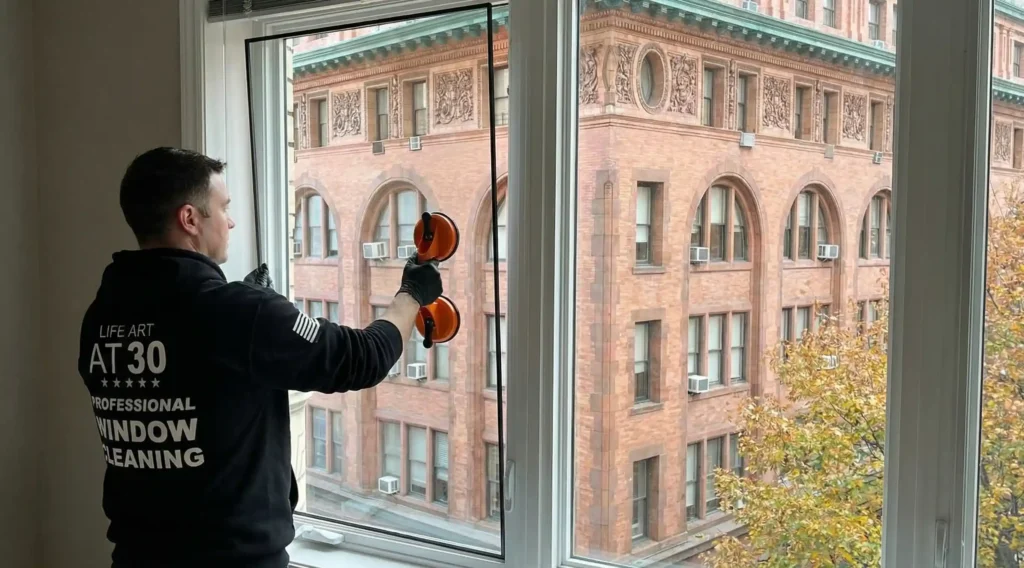
Here’s the thing: double pane window glass replacement in New York City is a completely different game than it is in the suburbs of New Jersey or a ranch house in Texas. Between co-op boards, landmark regulations, pre-war building quirks, and the simple logistical nightmare of getting an insulated glass unit up to the 14th floor of a doorman building, there are layers to this process that most online guides completely ignore.
This article breaks it all down. Think of it as your NYC-specific guide to double pane window glass replacement – not a sales pitch, but genuine advice from people who’ve been replacing glass across all five boroughs since 2008.
Why Double Pane Windows Fail (And Why NYC Accelerates the Process)
A double pane window – also called a dual pane window or thermopane – is technically an insulated glass unit, or IGU. Two sheets of glass are separated by a spacer filled with moisture-absorbing desiccant, sealed around the edges with butyl and silicone, and the gap between the panes is filled with argon or krypton gas for insulation. When everything works, it’s a beautiful system. When it fails, you know it.
The most common killer is a process engineers call “solar pumping.” Every sunny day, your window glass absorbs heat and expands slightly. Every night, it cools down and contracts. This endless cycle gradually weakens the perimeter seal. According to ClimatePro, only about 1% of double pane windows experience seal failure within 10 years – but that number jumps to 15% after 15 years. Most IGUs last somewhere between 15 and 20 years before the seal gives out – and that’s when double pane window glass replacement becomes unavoidable.
Now here’s where living in New York City changes the equation. Your windows deal with conditions that a house in the suburbs simply doesn’t face:
South- and west-facing apartments in Manhattan high-rises get hammered by direct sun for hours, accelerating solar pumping far beyond what ground-level suburban windows experience. The temperature swing between a steam-heated apartment in winter and the freezing air outside creates enormous thermal stress on seals. Subway vibrations, heavy truck traffic on avenues, and construction activity generate micro-vibrations that stress glass-to-frame connections over time. Urban air pollution deposits acidic particles on seals, slowly degrading their integrity. And let’s not forget the window-unit AC – that beloved summer survival tool creates a concentrated temperature differential right at the seal line.
“In New York, your windows don’t just look out at the city – they fight it every single day. And eventually, the city wins.” – A glass installer with 20 years of NYC experience who asked to remain anonymous (but definitely wasn’t wrong).
Five Signs You Need Double Pane Window Glass Replacement
Not every window problem means you need a full replacement. Sometimes re-caulking or weatherstripping does the trick. But certain symptoms specifically point to IGU failure, and when you see them, it’s time to seriously consider double pane window replacement. Here’s what to watch for:
- Foggy or hazy glass that won’t clean off. This is the number one sign. If you’ve wiped both the inside and outside surfaces and the cloudiness remains, moisture has penetrated between the panes. It often starts in the corners and gradually spreads across the entire window.
- Visible condensation or water droplets between panes. Especially noticeable on cold mornings or when your heat kicks on. This means the seal is breached and humid air is flowing into the gap where dry argon gas used to be.
- Distorted view through the glass. When argon or krypton gas leaks out of a failed IGU, the panes can actually bow inward slightly under atmospheric pressure. If objects outside look wavy or bent compared to your other windows, the gas fill is gone.
- Drafts you can feel near the window. A failed IGU loses roughly 25-30% of its insulating capacity. You’ll feel it – particularly on north-facing walls or higher floors where wind exposure is greater.
- Mineral deposits or white staining between panes. Over months and years, moisture cycling in and out of a failed seal leaves mineral residue. Once you see this, the seal has been compromised for a while.
If you’re noticing two or more of these symptoms, you almost certainly need to fix your double pane window rather than attempt a temporary patch. Defogging services – where a technician drills a tiny hole, removes moisture, and reseals – are a temporary band-aid at best. They don’t restore the insulating gas, and the fogging almost always returns. When the seal is truly gone, double pane window glass replacement is the only permanent solution.
Glass-Only Replacement vs. Full Window Replacement: What Actually Makes Sense
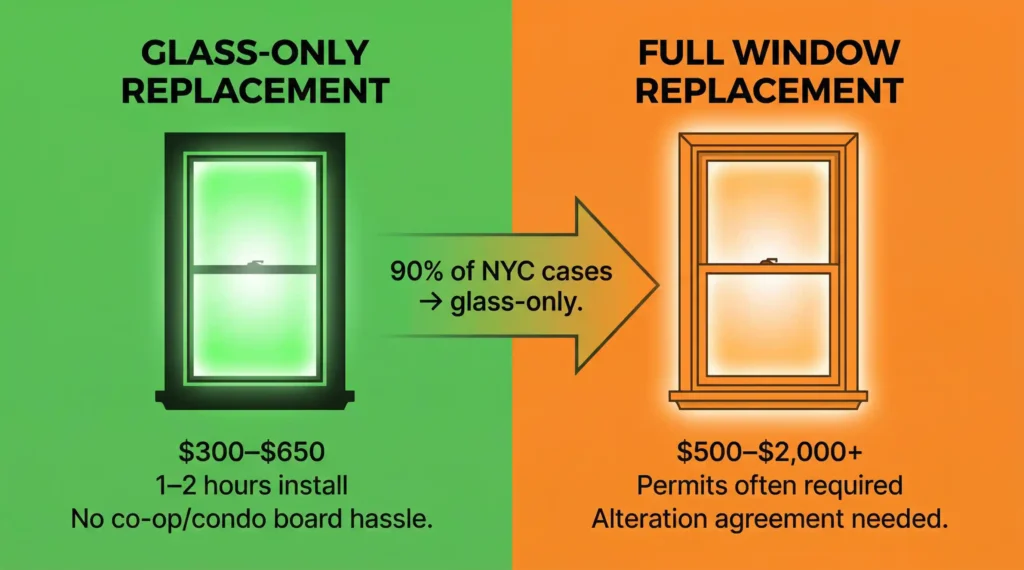
Here’s where a lot of homeowners – and even some contractors – get confused. When your double pane window fails, you usually don’t need to rip out and replace the entire window. In most cases, you can replace just the insulated glass unit while keeping your existing frame and sash. This is what professionals mean by “double pane window glass replacement” as opposed to “window replacement.”
The difference in cost is significant. According to This Old House, glass-only replacement for a standard double pane window typically runs between $300 and $650 per window, including labor. A full window replacement, by contrast, can cost $500 to $2,000 or more per window in the NYC market – and that’s before you factor in the co-op board process, permits, and finishing work. This is precisely why targeted double pane window glass replacement is the preferred approach for most NYC apartments.
Glass-only replacement makes sense when your frame is structurally sound, the window hardware operates properly, and the issue is limited to the IGU itself. This approach – true double pane window glass replacement rather than full window swap – is the bread and butter of professional glass work in New York City. Full replacement becomes necessary when the frame is rotted, warped, or damaged, when you want to change window styles, or when the window is so old that replacement parts simply aren’t available anymore.
For most NYC apartment owners dealing with foggy or failed double pane windows, the glass-only route is the smarter move. It’s faster, less disruptive to your home, avoids the headache of major alteration agreements, and delivers the same energy efficiency improvement.
The NYC-Specific Maze: Co-op Boards, Landmarks, and Building Logistics
This is the section that no national window company’s blog will ever write for you – because they don’t deal with it. But if you live in a New York City co-op or condo, dual pane window glass replacement comes with a bureaucratic dimension that can easily double your project timeline if you’re not prepared. Understanding these requirements before you start is what separates a smooth double pane window glass replacement from a months-long headache.
Co-op board approval is required in the vast majority of buildings before any window work can begin. Your board will typically require an alteration agreement, proof of contractor insurance with the building listed as additionally insured, and sometimes detailed drawings or specifications. Co-op boards generally meet once a month, and if you miss the submission deadline by even a day, your approval gets pushed back four to six weeks. Administrative fees range from $1,000 to $5,000, and refundable security deposits can run $5,000 to $20,000 for larger projects.
If your building is in a historic district or is individually landmarked, the Landmarks Preservation Commission adds another layer. The LPC controls exterior appearance, including window glass-to-frame proportions, frame color, and materials. You can’t simply swap in whatever looks good – the replacement must maintain historical accuracy.
Department of Buildings permits may also be required, depending on the scope of work. Most straightforward glass replacements fall under Alteration Type 3, which typically takes two to four weeks for approval.
And then there’s the physical reality of working in a New York City building. Getting materials up to your floor requires coordinating elevator time with the superintendent. Doorman buildings have delivery windows and protocols. Many buildings restrict construction noise to weekdays between 9 AM and 5 PM. If you’re on a high floor, the logistics of safely handling large sheets of glass in a cramped elevator and narrow hallway are non-trivial.
This is exactly why working with a company that has deep experience in NYC buildings matters so much. At Big Apple Window Cleaning, we’ve handled double pane window glass replacement and repair in over 200 landmark buildings and more than 10,000 residential units across all five boroughs and Long Island. We understand the co-op board process, know how to navigate LPC requirements, and have the logistical experience to execute these projects smoothly in any type of NYC building – from a sixth-floor walkup in the East Village to a 40th-floor condo in Midtown.
What the Replacement Process Actually Looks Like
If you’ve never been through a professional double pane window glass replacement, the process is more involved than you might expect – but less disruptive than you probably fear. Here’s how it works when done properly:
- A technician visits your home to assess the failed window and take precise measurements – width, height, glass thickness, overall unit thickness, spacer color, and glass coating type (Low-E, tinted, etc.).
- The type of glass is identified. If the original broke into large jagged pieces, it’s annealed glass. If it shattered into small cubes, it’s tempered safety glass. This determination affects what gets ordered.
- Measurements are sent to a glass manufacturer, who fabricates a custom IGU to your exact specifications. This typically takes one to three weeks, though non-standard sizes common in pre-war NYC buildings can take longer.
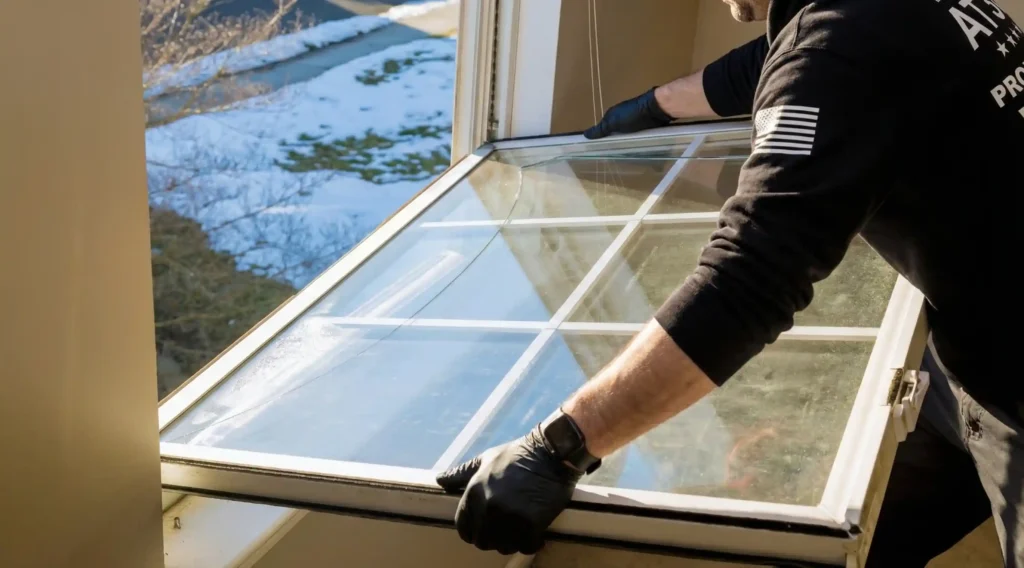
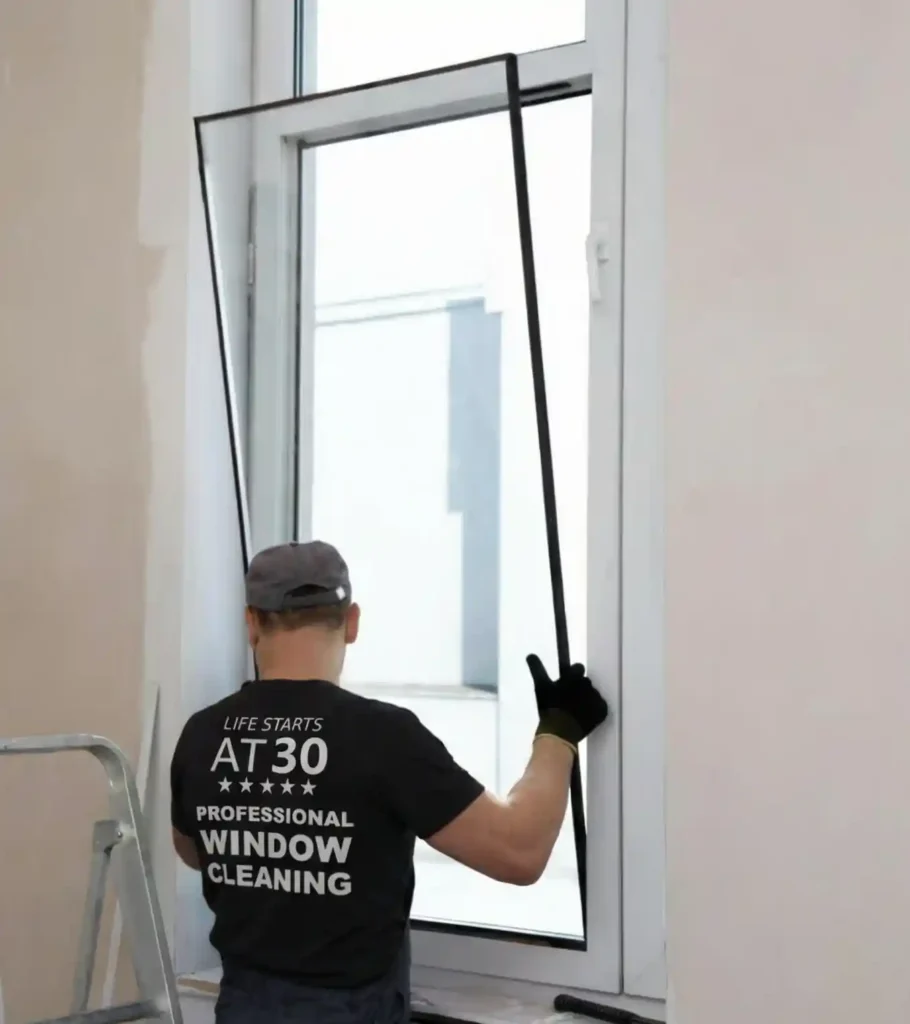
- On installation day, the technician removes the window sash from the frame and lays it flat on a protected work surface.
- The old IGU is carefully removed – the sealant is cut, trim or stops are pried off, and the damaged unit is lifted out using suction cup grips.
- The sash channel is cleaned and prepped.
- Fresh silicone sealant is applied, the new IGU is set in place, and the sash is reassembled and reinstalled.
For a standard window, the actual hands-on installation takes about one to two hours. The result is a crystal-clear, properly sealed, energy-efficient window that looks and performs like new – without the cost or hassle of replacing the entire unit. This is what makes double pane window glass replacement such an appealing option for NYC homeowners: minimal disruption with maximum results.
The Pre-War Building Factor
New York City’s pre-war buildings present their own particular challenges when it comes to replacing one double pane window or even a full apartment’s worth. These gorgeous old structures – the brownstones, the Art Deco towers, the classic six apartments – were built in an era when window openings were hand-crafted, which means they’re almost never perfectly square or uniform in size.
A window opening that measures 36 inches on the left side might be 35 and seven-eighths on the right. The sill might slope slightly. The frame might have settled unevenly over decades. This is why precise on-site measurement is critical for any double pane window glass replacement in a pre-war building – and why ordering replacement glass based on “standard” sizes from a catalog is a recipe for a bad fit.
Pre-war windows also frequently hide surprises behind their frames: deteriorating plaster, old lead paint, and occasionally asbestos-containing materials in the surrounding caulk or glazing compound. A professional experienced in double pane window glass replacement in older NYC buildings will spot these issues during the initial assessment and plan accordingly, rather than discovering them mid-installation.
Energy Savings and Tax Credits Worth Knowing About
Beyond fixing the foggy eyesore, there are real financial reasons to prioritize double pane window glass replacement sooner rather than later. The U.S. Department of Energy estimates that upgrading from single-pane to double-pane glass can save homeowners between $101 and $583 per year in heating and cooling costs. Even replacing a failed double pane IGU with a new one restores the insulating performance you’ve been missing.
There’s also a federal tax incentive worth noting. The Energy Efficient Home Improvement Credit allows homeowners to claim 30% of the cost of installing Energy Star-certified windows, up to a maximum credit of $600. This credit is available through December 31, 2032, and applies to your primary residence.
For NYC residents specifically, the energy savings can be even more significant. Steam-heated buildings lose enormous amounts of energy through failed window seals, and in buildings where residents pay their own electric for cooling, a properly sealed IGU means your AC unit works less hard during those brutal July and August stretches. When you factor in both the tax credit and the ongoing energy savings, double pane window glass replacement often pays for itself within a few years.
When to Call a Professional (And When Not to DIY)
There’s a reason every reputable source – from This Old House to Bob Vila to the glass manufacturers themselves – advises against DIY double pane window glass replacement. Unlike replacing a single pane of glass in an old wooden sash, working with insulated glass units requires specialized tools, precise measurements, and the ability to handle large, heavy, fragile panels safely.
In an NYC apartment, the stakes are even higher. A dropped IGU in a hallway means broken glass in a common area. An improperly sealed unit means you’ll be back to foggy windows within months. And an incorrectly measured replacement means an expensive piece of custom glass that doesn’t fit and can’t be returned. Attempting to fix a double pane window yourself in these conditions is a gamble most people regret. Even experienced DIYers acknowledge that the tools, precision, and safety considerations involved make it wiser to call in a professional. If you need to fix double pane window issues in your NYC apartment, professional help is the way to go.
The better move is to work with experienced professionals who specialize in this exact type of work. Big Apple Window Cleaning provides double pane window glass replacement across Manhattan, Brooklyn, Queens, the Bronx, Staten Island, and Long Island. Our SPRAT-certified technicians carry $11 million in insurance coverage – which, incidentally, is exactly the kind of documentation your co-op board wants to see.
Failed double pane windows are more than a cosmetic nuisance. They’re an energy drain, a comfort killer, and – in a city where every dollar of your heating and cooling bill matters – a financial leak that gets worse every month you ignore it.
The good news is that double pane window glass replacement is usually simpler and more affordable than most people expect. In the majority of cases, you can replace just the glass rather than the entire window, saving significant money while restoring full performance. You don’t necessarily need to fix every double pane window in your apartment at once either – prioritizing the worst-performing units first is a perfectly valid strategy that many NYC homeowners follow. The key is working with someone who understands the unique demands of New York City buildings and can navigate the entire double pane window glass replacement process from first measurement through final installation.
Your windows have been fighting the city for years. It might be time to give them some backup.
FURTHER READING

Article by Dayne Watkins


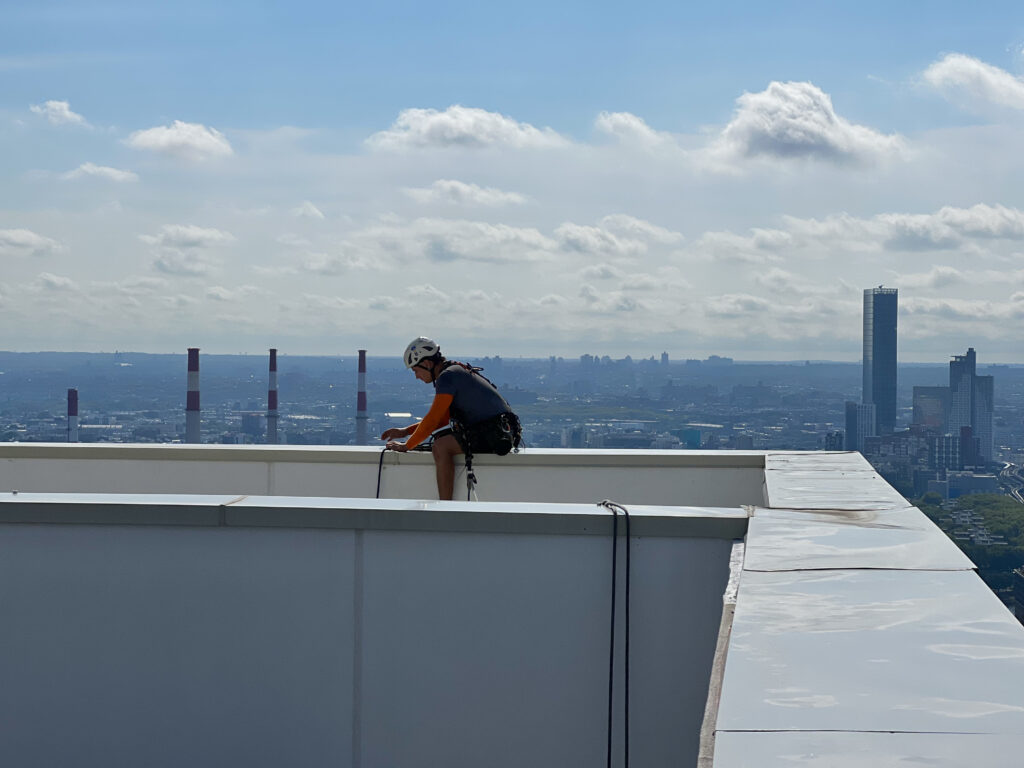
Six Windows, One $350 Minimum: Three Ways NYC Residents Get Exterior Glass Cleaned Without Overpaying
If you asked for a quote on your apartment and the number came back higher than you expected for six windows, nothing went wrong. You are running into a visit minimum, and in New York most apartments sit below it. Ours is published: $350 for residential work. That is not a markup for small jobs. […]
Explore more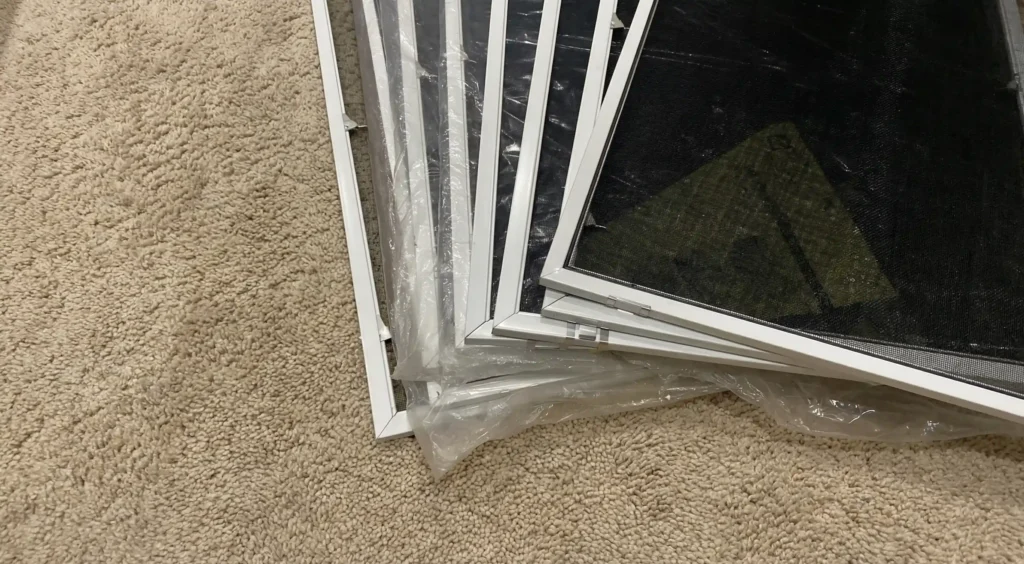
Your Building Replaced the Windows and Left You With No Screens: Whose Bill Is It, and How to Get Custom Screens (NYC)
You are not crazy, and you are not stuck: the “screen orphan” problem explained It usually happens like this. Your building runs a window replacement project, the crew swaps your old slide-up windows for shiny new casement or crank-out windows, and then they leave. No screens. No paperwork. No phone number for where to buy […]
Explore more
How Much Does Window Cleaning Cost in NYC? Real Prices by Building Type
The Short Answer: What NYC Window Cleaning Actually Costs A condo owner above the 20th floor asked Reddit whether the $100 per window his building’s cleaner charges is fair. The top reply: that “sounds insane.” Meanwhile, a Brooklyn brownstone owner on a local forum remembered paying $12 to $15 per window, then got quoted double […]
Explore more