
Roof Power Washing in NYC: What Every Homeowner Should Know Before Hiring a Pro
Contents
- Why NYC Roofs Get Dirtier Faster
- Roof Power Washing vs. Soft Washing: The Difference That Matters
- What Type of Roof Do You Have? It Changes Everything
- Signs Your NYC Roof Needs Professional Cleaning
- What Happens During Professional Roof Power Washing
- Timing, Frequency, and Cost of Roof Power Washing in NYC
- Protect Your Investment
DO YOU HAVE AN URGENT NEED?
Our fast response service can fix your urgent problem. We have teams ready for action.
AND GET A FREE QUOTE
Get monthly window insight
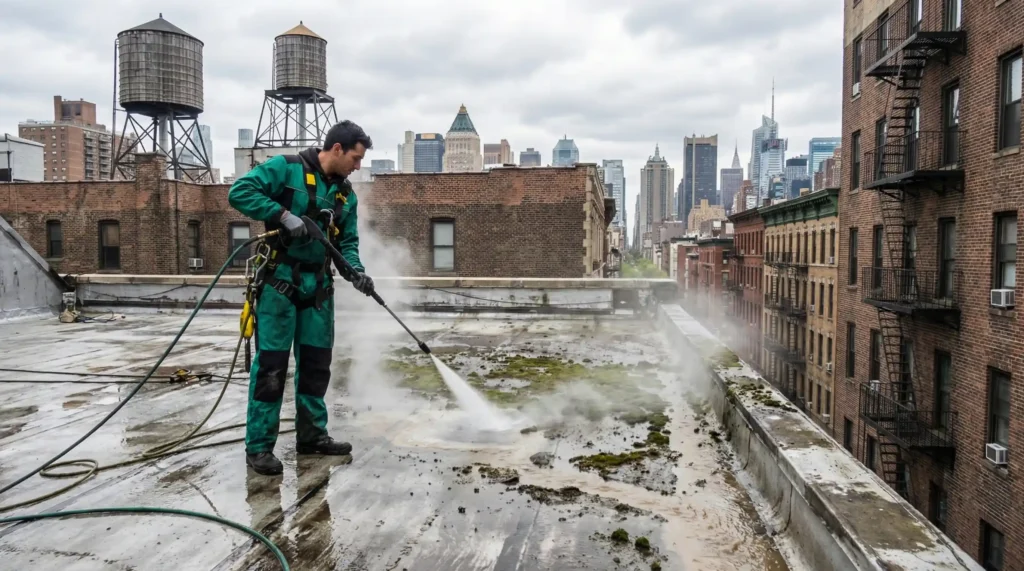
If you live in New York City and have ever looked up at your roof only to notice dark streaks, green patches, or a layer of grime that was not there a few years ago, you are not alone. Between the city’s humidity, pollution, and sheer density of buildings packed side by side, NYC roofs take a beating that most homeowners in the suburbs never have to think about. Roof power washing has become one of the most searched services among New York homeowners – and for good reason. Whether you own a brownstone or a detached house, roof power washing is often the first solution that comes to mind when you notice your roof looking neglected. But a dirty roof is not just ugly. It can shorten the lifespan of your roofing materials, drive up energy costs, and even lower your property value.
But before you grab a pressure washer or hire the first contractor you find on Google, there are some critical things you need to understand. Not all cleaning methods are created equal, and the wrong approach can do far more damage than the dirt itself.
Why NYC Roofs Get Dirtier Faster
New York City creates a uniquely hostile environment for rooftops. Understanding why your roof looks the way it does is the first step toward fixing it.
The biggest culprit behind those dark streaks is not dirt at all – it is a cyanobacterium called Gloeocapsa magma. According to Atlas Roofing, this organism feeds on the limestone filler in asphalt shingles and produces a dark pigmented coating to protect itself from UV rays. That dark coating is what you see from the street. NYC falls within what roofing manufacturers call the “algae danger zone” – the Eastern Seaboard, where hot and humid summers create ideal breeding conditions.
Here is what makes New York particularly bad:
- Dense row house construction in Brooklyn, Queens, and the Bronx means roofs practically touch each other. Gloeocapsa magma is airborne – if one roof in your block is infected, spores travel to every neighboring rooftop within months. Think of it like dandelions spreading across a lawn, except the lawn is your entire neighborhood.
- Urban pollution deposits soot and particulate matter onto roofing surfaces year-round. Engine exhaust and industrial emissions leave a film that dries out shingles, making them brittle and more vulnerable to cracking.
- Coastal salt air accelerates deterioration for homes in southern Brooklyn – Brighton Beach, Sheepshead Bay, Coney Island – as well as Staten Island waterfront communities and parts of Queens near the water.
- Flat roofs dominate the NYC landscape, especially on brownstones, townhouses, and multi-family buildings. Unlike sloped roofs that shed water quickly, flat roofs allow moisture to pool. That standing water becomes a breeding ground for algae, moss, and mold.
The combination of biological growth, urban grime, and environmental stress means NYC roofs need attention more frequently than roofs in most other parts of the country. It also explains why roof power washing services are in such high demand across all five boroughs.
Roof Power Washing vs. Soft Washing: The Difference That Matters
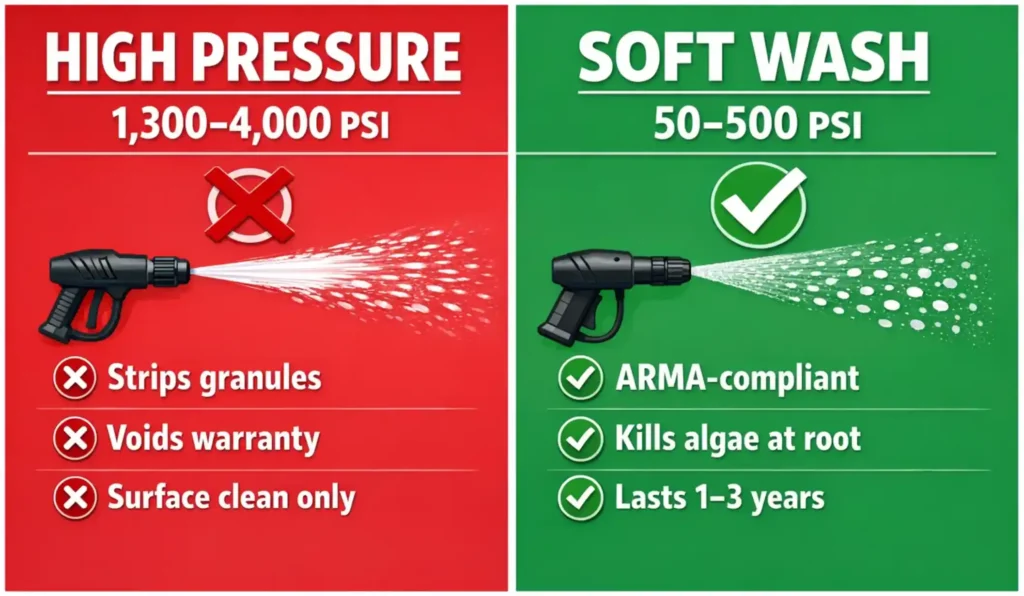
Many homeowners search for roof power washing without realizing that there are fundamentally different approaches to roof cleaning – and choosing the wrong one can void your warranty or destroy your shingles. The reality of modern roof power washing is that it rarely involves high pressure at all.
The Asphalt Roofing Manufacturers Association (ARMA) is explicit on this point: never use a pressure washer on asphalt shingle roofs. High-pressure water strips away the protective granules on shingles, weakens adhesive bonds, and can force water underneath roofing materials into your attic. ARMA recommends a 50:50 mix of liquid chlorine bleach and water, applied at low pressure and rinsed gently after 15 to 20 minutes.
So what is the difference between all these terms you see online? Here is a clear breakdown:
| Feature | High-Pressure Washing | Soft Washing | Chemical-Only Treatment |
| Water pressure (PSI) | 1,300 – 4,000 | 50 – 500 | Garden hose only |
| Cleaning agent | Water only or mild detergent | Specialized biodegradable solutions | Bleach/water mix or commercial cleaners |
| Safe for asphalt shingles | No – causes granule loss | Yes – ARMA-compliant | Yes – ARMA-recommended |
| Safe for flat membranes (EPDM, TPO) | No – can puncture membrane | Yes – with proper technique | Yes |
| Safe for metal roofs | Yes – at controlled settings | Yes | Yes |
| Safe for slate and tile | Tile only at low PSI | Yes | Yes |
| Kills algae at the root | No – surface cleaning only | Yes – solutions penetrate growth | Yes – bleach kills organisms |
| Results longevity | Months | 1 – 3 years | 1 – 2 years |
| Risk of roof damage | High | Low | Minimal |
The bottom line is that what most people call roof power washing should actually be performed as a soft wash – low pressure combined with professional-grade cleaning solutions. The term “power washing” has stuck in everyday language, but the actual roof power washing technique that professionals use on your roof bears little resemblance to the high-pressure blasting you might use on a concrete driveway.
What Type of Roof Do You Have? It Changes Everything
NYC’s architectural diversity means there is no one-size-fits-all approach to roof power washing. Before anyone touches your roof with any equipment, the first question should be: what material are we working with?
Asphalt shingles are common on single-family homes across Queens, Staten Island, and parts of Brooklyn and the Bronx. These are the most vulnerable to pressure damage. Only soft washing or chemical treatment should be used. According to GAF, one of the largest roofing manufacturers in North America, regular cleaning extends shingle life significantly, but improper methods can void the manufacturer’s warranty entirely.
Flat membrane roofs – EPDM rubber, TPO, and modified bitumen – are the standard on Brooklyn brownstones, Manhattan townhouses, and countless multi-family buildings across all five boroughs. These membranes require extremely gentle handling. A puncture from aggressive cleaning means water infiltration, and on a flat roof, even a small leak can cause serious interior damage before anyone notices.
Slate roofs on historic properties in Brooklyn Heights, Greenwich Village, and other landmark districts demand specialized care. These roofs can last over a century, but slate is brittle and irreplaceable in many cases. Pressure of any kind is out of the question.
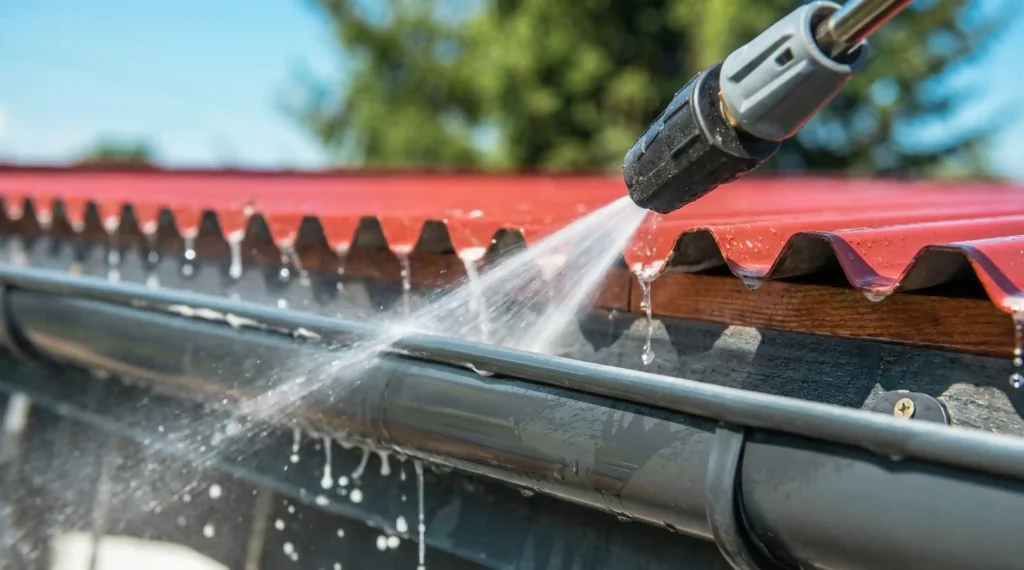
Metal roofs on commercial and some residential buildings can tolerate moderate pressure – typically up to 1,200 PSI – but still benefit from chemical pre-treatment to address biological growth effectively.
Signs Your NYC Roof Needs Professional Cleaning
Not every dark spot means you need to schedule roof power washing immediately. But there are clear indicators that roof pressure cleaning has become necessary rather than optional:
- Black or dark brown streaks running vertically down your roof – the telltale signature of Gloeocapsa magma.
- Green patches of moss, especially on north-facing slopes or shaded areas near taller neighboring buildings.
- A noticeable accumulation of dark grime that makes your roof look years older than it actually is.
- Visible lichen – a crusty, light-colored growth that anchors into shingle surfaces and is much harder to remove than algae.
- Clogged gutters filled with granules from your shingles, suggesting that granule loss has already begun.
- Your co-op or condo board has flagged the roof condition during an inspection or in anticipation of a building sale.
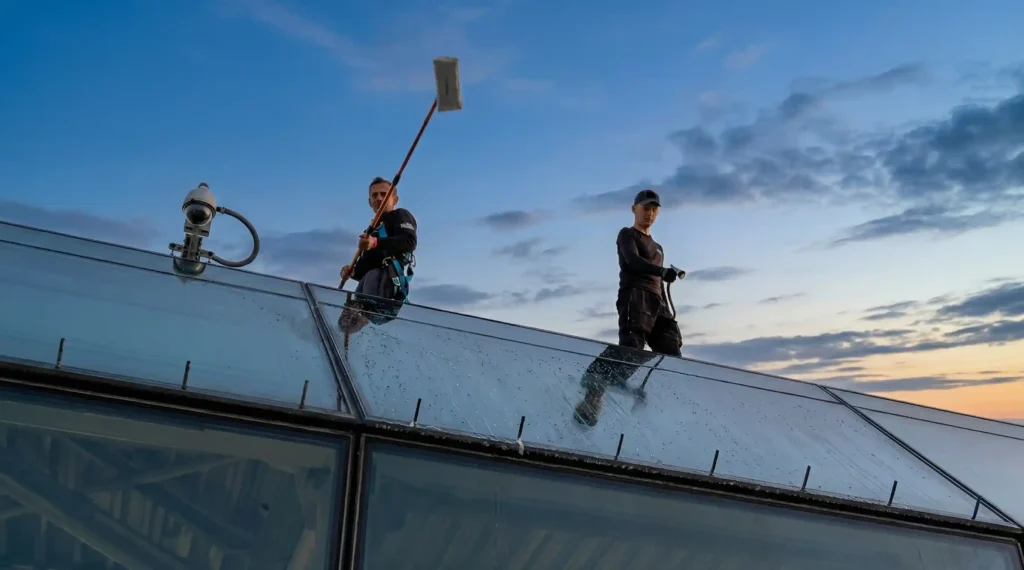
If you are seeing two or more of these signs, it is time to act. And for NYC homeowners, this is really a job for professionals – not a weekend DIY project. The combination of heights, rooftop access challenges, chemical handling, and the risk of damaging expensive roofing materials makes professional roof power washing a smart investment. Companies like Big Apple Window Cleaning, which provide professional roof pressure washing services across all five boroughs and Long Island, bring the equipment, insurance, and experience to handle the unique conditions that NYC rooftops present.
What Happens During Professional Roof Power Washing
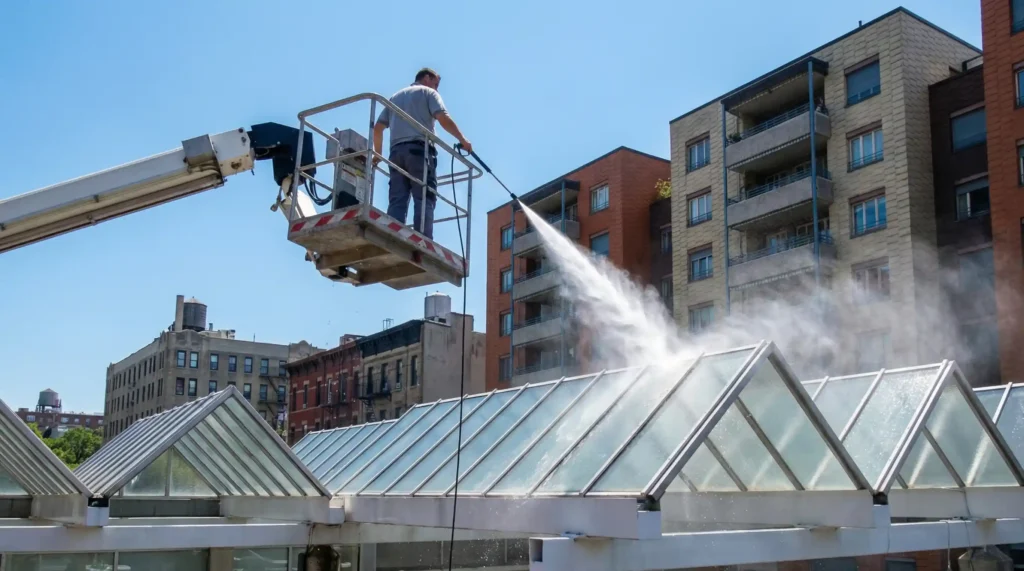
If you have never hired someone to clean your roof, here is what a proper roof power washing job looks like when done by experienced technicians:
- Inspection and assessment. A qualified crew examines your roof type, identifies the specific contaminants present – algae, moss, lichen, soot, or debris – and determines the safest cleaning method for your material.
- Protection of surroundings. Plants, outdoor furniture, and neighboring property are covered or pre-soaked with water to prevent damage from cleaning solution runoff. In dense NYC neighborhoods where buildings share walls and yards are small, this step is critical.
- Application of cleaning solution. A biodegradable, professional-grade solution is applied using low-pressure equipment. The solution is formulated to kill biological growth at the root level, not just wash it off the surface.
- Dwell time. The solution sits on the roof for 15 to 30 minutes, depending on the severity of contamination. This is where the real cleaning happens – the chemicals break down algae colonies, loosen moss, and dissolve grime.
- Low-pressure rinse. The roof is gently rinsed, starting from the ridge and working downward. No high-pressure blasting. The water pressure used is comparable to a strong garden hose.
- Final inspection and cleanup. The crew checks for any missed spots, ensures gutters and downspouts are clear, and removes all protective coverings from the surrounding area.
The entire process typically takes two to five hours for a standard residential roof.
Timing, Frequency, and Cost of Roof Power Washing in NYC
The best time to schedule roof power washing in New York is late spring – after the freeze-thaw cycles have ended but before summer humidity kicks algae growth into high gear. Early fall is another good window, allowing you to clear accumulated summer growth before winter weather sets in.
For frequency, most roofing professionals recommend cleaning every two to three years. However, NYC properties with heavy tree cover, north-facing exposure, or proximity to water may need annual attention. Flat roofs with drainage issues should be inspected and cleaned more frequently, as ponding water accelerates biological growth dramatically.
Cost in New York City runs higher than national averages due to labor rates, equipment logistics, and access challenges. For professional roof power washing, expect to pay roughly $0.30 to $0.75 per square foot, depending on roof size, pitch, material, and condition. A typical 1,500-square-foot residential roof might cost between $450 and $1,100 – a fraction of the $10,000 to $25,000 you would spend on premature roof replacement caused by neglect.
One more thing worth mentioning – if you need to power wash roof moss or tackle stubborn lichen that has been growing for years, the cost may be slightly higher due to the additional treatment time and possibly a follow-up visit. Established moss with deep root structures often requires a second application to fully eliminate.
Protect Your Investment
Your roof is one of the most expensive components of your home, and in NYC, replacing it costs significantly more than in most other markets. Regular cleaning is not a luxury – it is preventative maintenance that pays for itself many times over.
Whether you own a brownstone in Park Slope, a two-family home in Astoria, or a house in Staten Island, keeping your roof clean protects both the structure above your head and the value of your property. When it comes to power washing roof tiles or cleaning any other roofing material – the difference between a knowledgeable contractor and an amateur can mean the difference between a roof that lasts decades and one that fails years ahead of schedule.
At Big Apple Window Cleaning, we have spent years working on rooftops across all five boroughs and Long Island, maintaining over 200 landmark buildings and serving more than 10,000 residential clients. If your roof is overdue for attention, a professional assessment is the smartest first step you can take.
FURTHER READING
Article by Dayne Watkins


When Your NYC Windows Start Talking: A Complete Guide to Window Seals Replacement
If you live in New York City long enough, your windows will eventually send you a message. It might come as a cold draft sneaking past a closed sash on a January morning. Or maybe it is that mysterious fog trapped between the panes – the kind no amount of Windex can fix. Either way, […]
Explore more
How to Clean Outside Windows From Inside: A New Yorker’s Real-World Guide
Living in New York City means accepting a few universal truths. Your apartment is never big enough. Somebody on your block is always jackhammering something. And your windows – no matter which borough you call home – are filthy. Between construction dust, exhaust from idling delivery trucks, and whatever mystery grime the wind carries in […]
Explore more
When Glass Breaks in New York City, the Whole Game Changes
Walk down any block in Brooklyn or Midtown on a Monday morning and you’ll probably spot it: a storefront patched with cardboard, a crack sealed with packing tape, a fogged insulated panel that hasn’t been clear in years. Most business owners treat damaged glass like a low-priority problem – something to deal with next week, […]
Explore more