
When Glass Breaks in New York City, the Whole Game Changes
Contents
DO YOU HAVE AN URGENT NEED?
Our fast response service can fix your urgent problem. We have teams ready for action.
AND GET A FREE QUOTE
Get monthly window insight
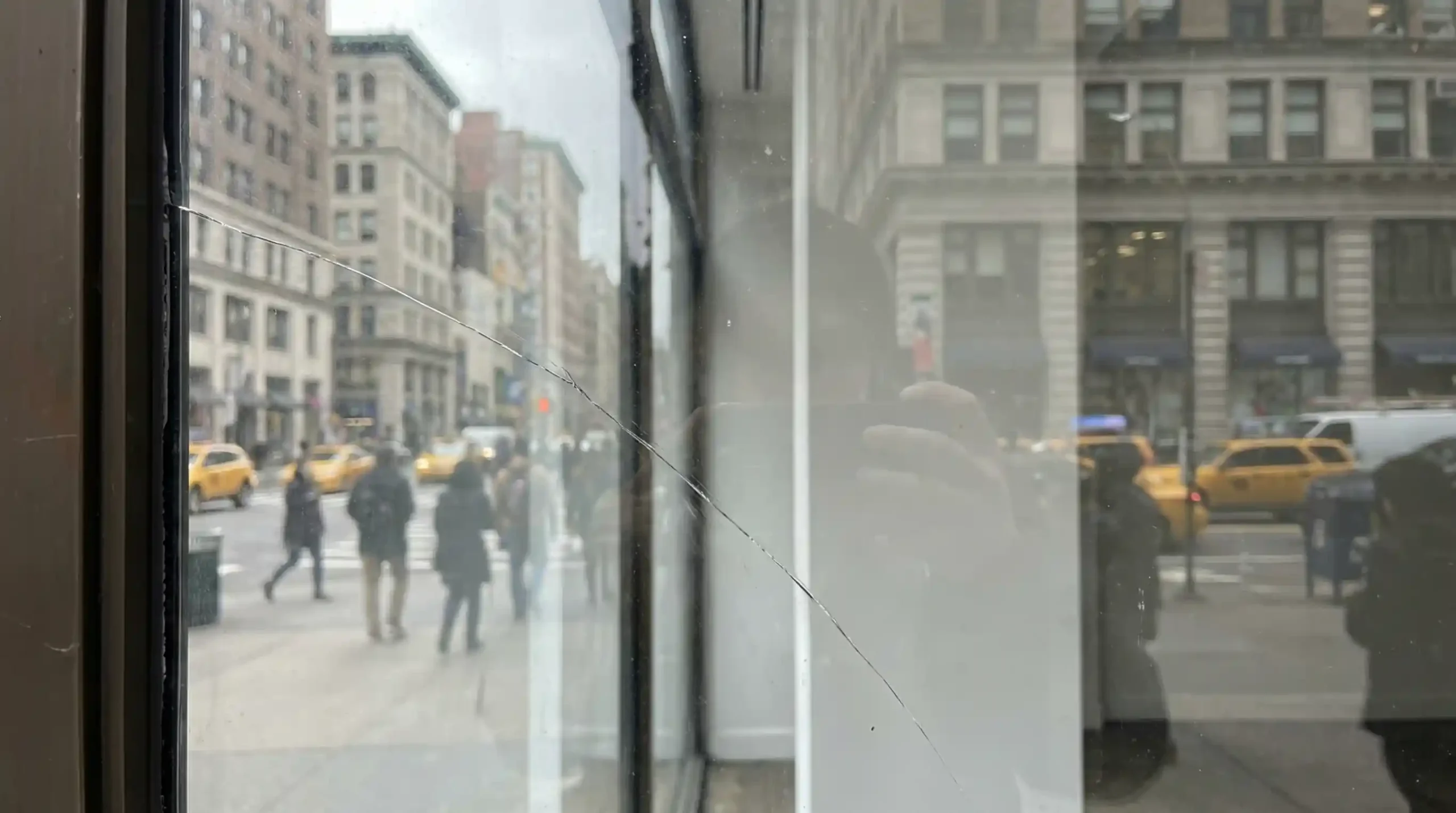
Walk down any block in Brooklyn or Midtown on a Monday morning and you’ll probably spot it: a storefront patched with cardboard, a crack sealed with packing tape, a fogged insulated panel that hasn’t been clear in years. Most business owners treat damaged glass like a low-priority problem – something to deal with next week, after payroll, after the delivery situation gets sorted out.
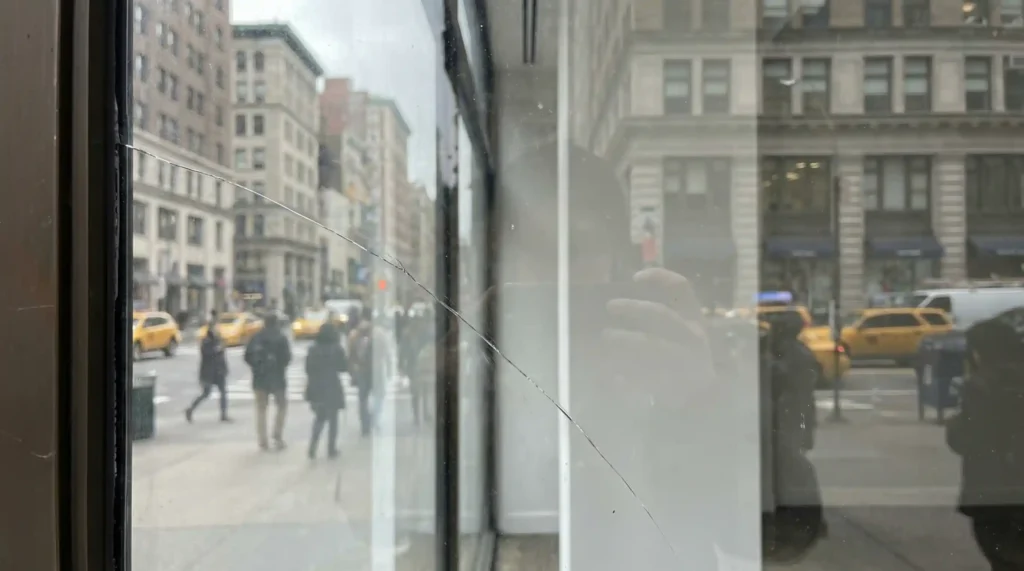
In New York City, that attitude can cost you a lot more than a repair bill.
Commercial glass repairs in this city are a completely different challenge compared to, say, Dallas or Phoenix. The climate, the density, the regulations, the pace of everything – it all conspires to make glass maintenance more urgent and more complex than most business owners realize. Here’s what every NYC business owner actually needs to know.
Why NYC Destroys Commercial Glass Faster Than Almost Anywhere Else
This is probably the section most NYC business owners have never thought about – and it’s the most important one.
New York City experiences roughly 40 to 65 freeze-thaw cycles every single year. According to tracking data published by SUPERSTRUCTURES Engineers and Architects, a firm that monitors frost jacking events in NYC buildings, this constant cycle is one of the primary drivers of facade and glazing deterioration across the city. Every freeze-thaw event is a microattack on your commercial glass. Water seeps into hairline gaps around window frames and sealants, freezes overnight, expands by up to 9%, then thaws again the next afternoon. Repeat that 50 times through a single winter, and you start to understand why glass seals fail, frames separate, and insulated window units go foggy.
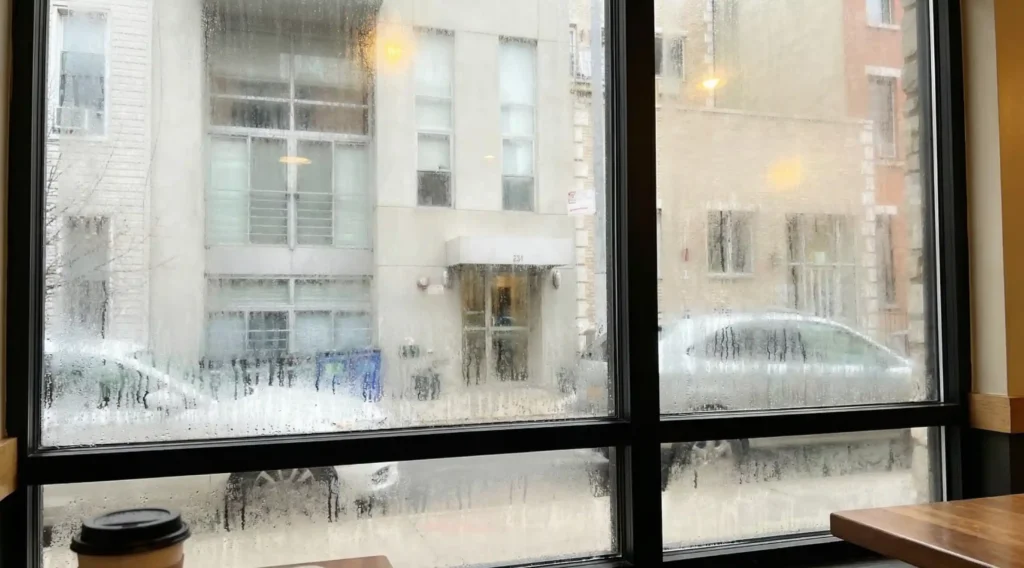
That fogging between the panes, by the way, is not a cosmetic issue. It means the seal on your insulated glass unit has permanently failed, moisture is trapped inside, and the only real fix is full replacement. There’s no resealing an IGU from the outside.
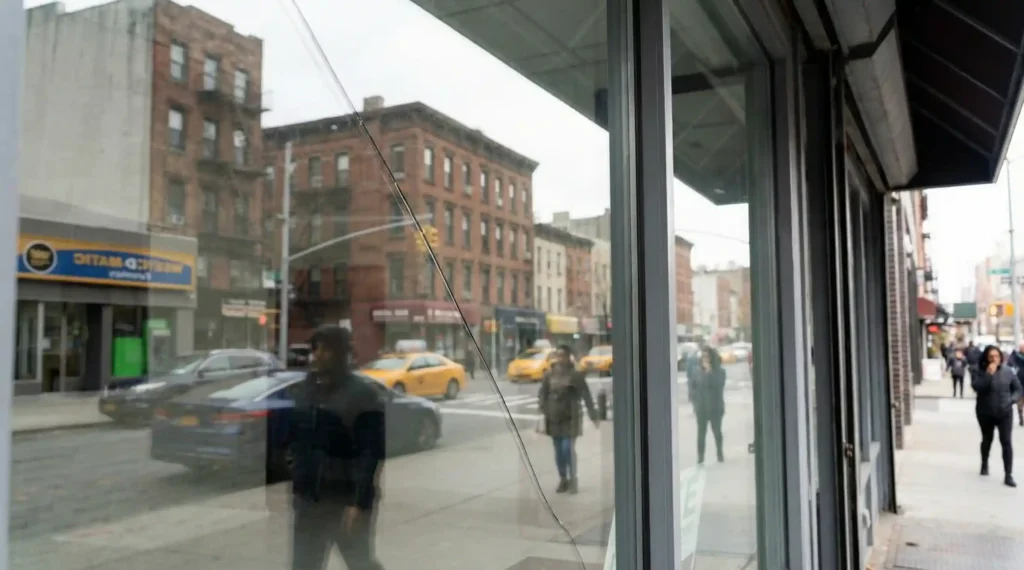
Then there’s urban pollution. New York’s air carries acidic compounds from vehicle exhaust and industrial activity that slowly etch into glass surfaces and attack the silicone sealants holding frames together. Buildings near the BQE in Brooklyn, the FDR Drive in Manhattan, or the elevated sections of the 7 train in Queens see accelerated degradation – often significantly faster than buildings on quieter side streets. You won’t notice it at first. But it compounds over years.
And here’s something nobody really talks about: subway vibration. If your business sits above or near underground subway lines – which in Midtown, Downtown Brooklyn, or Long Island City is almost a given – that constant low-frequency mechanical stress works quietly on glazing joints over time. It’s subtle. But month after month, it accelerates seal failures and frame connection issues that eventually require professional attention.
Add vandalism to the picture. Standard commercial annealed glass – the kind used in most older NYC storefronts – can be shattered with a single strike. Smash-and-grab criminals in this city know it and count on it. Research analyzing 85 real retail crime incidents found that businesses hit once are more than three times as likely to be targeted again within 90 days. Fast, professional commercial glass repairs after a break-in aren’t just about appearance. They’re a deterrent signal to anyone thinking about coming back.
The Real Price of Waiting
A cracked storefront window isn’t just ugly. In New York’s commercial landscape, it sends a message to every potential customer walking past: that this business isn’t paying attention, or isn’t doing well. For a restaurant in Hell’s Kitchen or a boutique in Nolita, that perception problem translates directly into lost revenue.
There’s also the energy angle, which has become genuinely urgent under NYC Local Law 97. This 2019 legislation requires buildings over 25,000 square feet to reduce greenhouse gas emissions by 40% before 2030 – with real financial penalties for non-compliance. The U.S. Department of Energy estimates that windows account for 25 to 30% of all commercial heating and cooling energy use. Cracked glass, failed seals, and outdated single-pane units all push those numbers in the wrong direction.
Deferred commercial glass repairs don’t save money. They defer costs while steadily adding new ones.
Repair or Replace? Here’s How to Actually Decide
This is the question every property manager and business owner eventually faces, and it deserves a clear answer rather than vague “it depends.” Here’s a practical decision framework built specifically for NYC commercial properties.
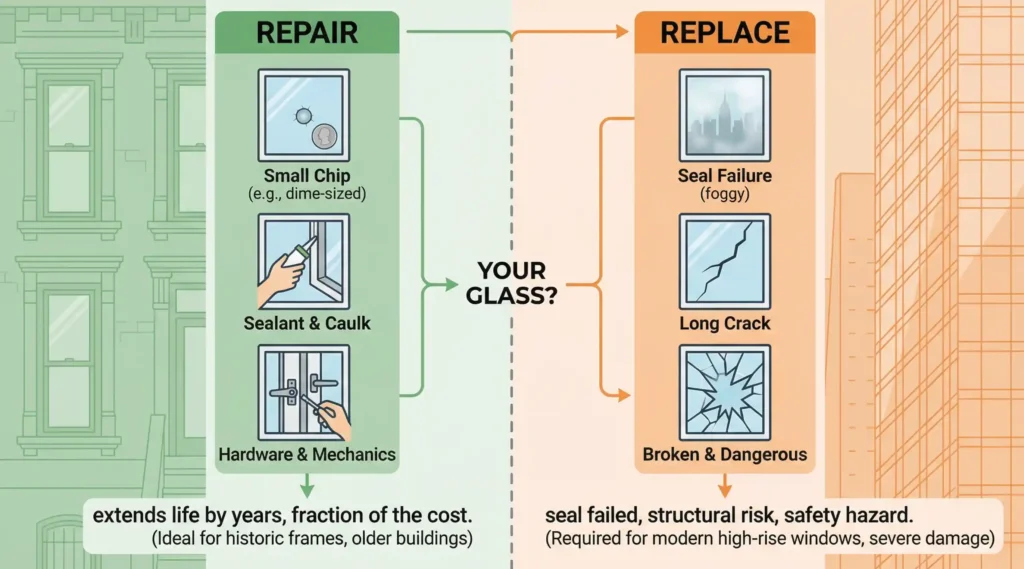
Replace when you see:
- Fogging or condensation between panes of an insulated unit – the seal is gone and cannot be fixed from outside
- A crack that runs to the edge of the glass or extends more than a few inches – structural integrity is compromised
- Glass that is shattered or significantly broken and poses an immediate safety risk
- The same window or door failing repeatedly over a short period of time
- Glass older than 15 to 20 years showing multiple defects at once
- Any glass that no longer meets current NYC safety glazing requirements – especially in high-traffic zones or hazardous locations
Repair is the right call when you’re dealing with small surface chips or hairline cracks away from the glass edge, deteriorated caulking or weatherstripping, loose hardware on frames or doors, or early-stage seal issues caught before full failure. Proper business window repair done at this stage can extend the life of commercial glass by years and cost a fraction of replacement.
One thing worth knowing in NYC’s specific climate: a crack that looks manageable today can spread faster than you’d expect once freeze-thaw cycles start working on it. If you’re on the fence, get an on-site assessment sooner rather than later.
The Glass You Choose Actually Matters
Not all commercial glass performs equally, and in New York City, the type you install has real consequences for security, energy costs, and long-term maintenance.
Tempered glass is the standard for high-traffic doors and storefronts – four to five times stronger than regular annealed glass, and designed to break into small blunt fragments rather than dangerous shards. Laminated glass adds a PVB interlayer that holds the pane together even after impact, making it the smarter choice for businesses in higher-risk corridors. For pharmacies, electronics retailers, and jewelry stores throughout NYC, this kind of upgrade turns a vulnerable surface into a meaningful delay barrier – and smash-and-grab operations depend on speed. Glass that holds together for even a few extra minutes often stops the attempt entirely.
For property owners dealing with Local Law 97 compliance, Low-E insulated glass units reduce heat transfer significantly and improve indoor comfort year-round. A business window replacement project that upgrades from pre-1980 single-pane to modern double-pane insulated glass can begin paying back in energy savings within six to eight years. For buildings where full replacement isn’t practical – and that’s a lot of NYC buildings – interior secondary glazing retrofits offer roughly 90% of the energy benefit at a fraction of the cost, with no tenant disruption required.
What NYC Regulations Actually Say
This part matters especially when your glass gets damaged overnight and you need to act immediately.
Under NYC Administrative Code, emergency commercial glass work can begin before a permit is issued – but the contractor must file an Emergency Work Notification with the Department of Buildings within two business days. For buildings in landmark districts or historic areas, even replacing broken glass requires checking with the Landmarks Preservation Commission, though like-for-like replacements that don’t alter the facade’s appearance are typically straightforward. Interior glass replacement – swapping panes from inside the building – doesn’t require a permit in most cases. Exterior storefront work often requires a contractor with specialized licensing and, in some situations, a Registered Design Professional for DOB filings.
The practical takeaway: always work with a contractor who actually knows NYC’s regulatory environment. A job done fast but without proper compliance documentation can create headaches that outlast the repair itself by years.
What Happens at 2 AM
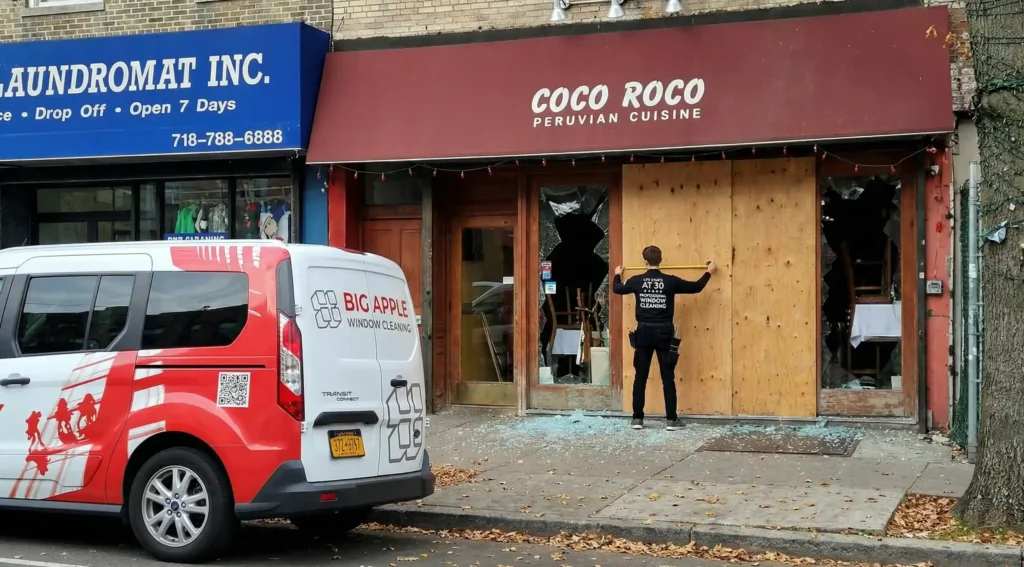
It happens constantly in this city. A break-in. A car that loses control on wet pavement and hits your storefront. A piece of debris in a nor’easter. When it does, the answer is never “wait until morning and figure it out.”
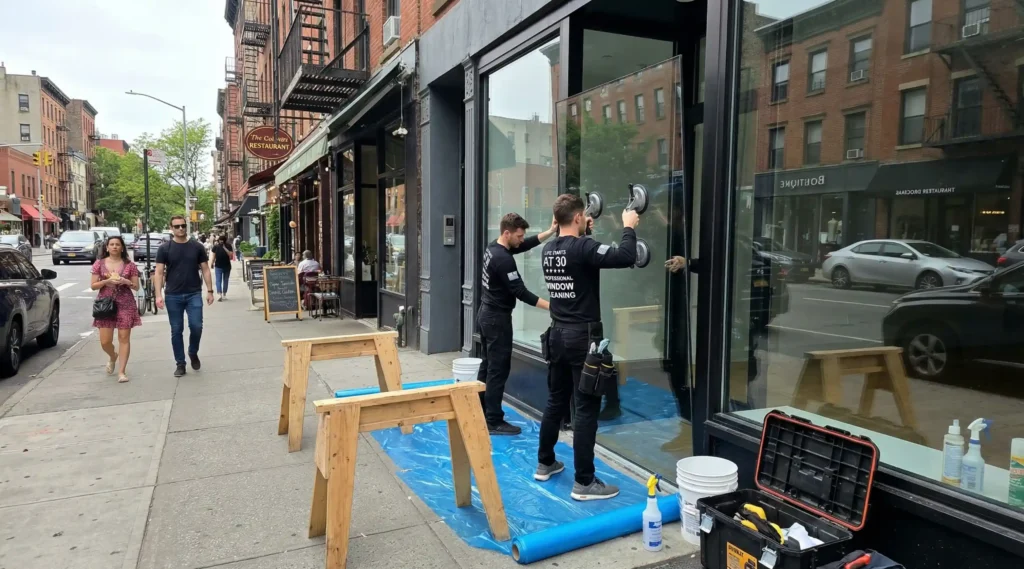
You need emergency board-up within hours, a damage assessment that gives you real options, and a crew ready to handle proper storefront glass repair fast enough that your business can open the next morning.Big Apple Window Cleaning provides commercial window glass repair and emergency glazing services across all five boroughs – from broken ground-floor retail panels to multi-floor office glazing systems. We know NYC building types, DOB requirements, and the pace this city demands from contractors. If you’re looking at damaged commercial glass right now, reach out. We’ll tell you straight what needs to be done and get it handled right.
FURTHER READING

Article by Dayne Watkins


Roof Lantern Cleaning: A Professional Guide for New York Homeowners
Your roof lantern was supposed to flood the room with light. Instead, it is flooding the room with guilt every time you look up and see a layer of grime that could double as modern art. If you live in Brooklyn or Manhattan, you already know that city air does not play fair with glass […]
Explore more
House Facade Cleaning: A No-Nonsense Guide for Homeowners Who’d Rather Not Watch Their Walls Crumble
Your home’s facade does a thankless job. Day after day, it stands between your family and everything the urban environment throws at it – diesel exhaust from delivery trucks, pigeon droppings with the pH of battery acid, mysterious black streaks that seem to appear overnight, and that persistent green fuzz on the north-facing wall that […]
Explore more
Commercial Facade Cleaning: What Every Building Owner in New York City Needs to Know
Your building talks about you before you ever open your mouth. A grimy exterior covered in soot, pigeon souvenirs, and mysterious streaks tells visitors, tenants, and potential buyers exactly one thing – nobody here cares. Research shows it takes roughly seven seconds to form a first impression, and in a city where commercial real estate […]
Explore more