
Decorative Window Film in NYC: What Every Apartment Owner and Renter Should Know in 2026
Contents
- What Exactly Is Decorative Window Film?
- The NYC Privacy Problem That Film Solves Better Than Anything Else
- Types of Decorative Film for Windows: A Practical NYC Guide
- Decorative Window Film vs. Etched Glass: The Real Cost Comparison
- What NYC Co-op and Condo Boards Actually Approve
- 2026 Design Trends and Where Decorative Film Fits
- Why Professional Decorative Window Film Installation Matters in NYC
- Maintenance: Getting the Most from Your Investment
- How to Choose the Right Film for Your NYC Space
DO YOU HAVE AN URGENT NEED?
Our fast response service can fix your urgent problem. We have teams ready for action.
AND GET A FREE QUOTE
Get monthly window insight
Living in New York City means navigating a set of challenges that most people elsewhere simply don’t face. Your windows are simultaneously your greatest asset – natural light in a dense urban grid is precious – and your biggest vulnerability. Whether you’re on the ground floor of a Brooklyn brownstone with pedestrians walking past every few minutes, or in a Manhattan co-op where the building across the street sits close enough to read a newspaper through your glass, privacy is a constant tension.
Decorative window film has emerged as one of the smartest, most versatile solutions available to NYC residents right now. It’s not just about aesthetics – though the design possibilities in 2026 have never been more compelling. It’s about reclaiming your space, controlling light, and making a long-term upgrade without touching the glass itself. This guide covers everything you need to know before making a decision: the main types of decorative window film, real costs, board approval realities, current design trends, and why professional decorative window film installation matters more than most people assume.
What Exactly Is Decorative Window Film?
Decorative window film is a thin layer of polyester or vinyl applied directly to the smooth surface of existing glass. It transforms a plain window into something functional and visually intentional – without altering the glass underneath. Unlike acid-etched or sandblasted glass, which permanently modifies the surface, film can be removed cleanly and completely. That distinction matters enormously in New York City, where renters make up a majority of residents and building rules often restrict structural modifications.
The term “deco window film” is sometimes used informally, but the product category covers an enormous range: frosted and matte films, stained glass effects, gradient panels, geometric patterns, textured finishes, and fully custom-printed designs. It is applied to windows, interior glass partitions, glass-front cabinetry, shower doors, and entry sidelights – essentially any smooth, flat glass surface.
Film comes in two main adhesion types: static cling, which holds through electrostatic attraction with no adhesive at all, and pressure-sensitive adhesive, which creates a more permanent bond. Static cling options are especially popular in the NYC rental market precisely because they leave zero residue – no security deposit complications, no damage to the glass.
The NYC Privacy Problem That Film Solves Better Than Anything Else
Decorative privacy window film isn’t a luxury in New York – it’s often a practical daily necessity. In neighborhoods like the West Village, Astoria, Crown Heights, or Greenpoint, apartment buildings sit within feet of one another. Ground-floor and second-floor residents frequently live in direct view of neighbors, pedestrians, and street traffic. Closing the curtains solves the privacy problem but creates a new one: it blocks the natural light that makes small NYC apartments livable.
A well-chosen frosted or textured decorative film diffuses sightlines completely while allowing light to pass through. The room stays bright. The view in is gone. It’s a straightforward exchange that curtains and blinds can’t offer.
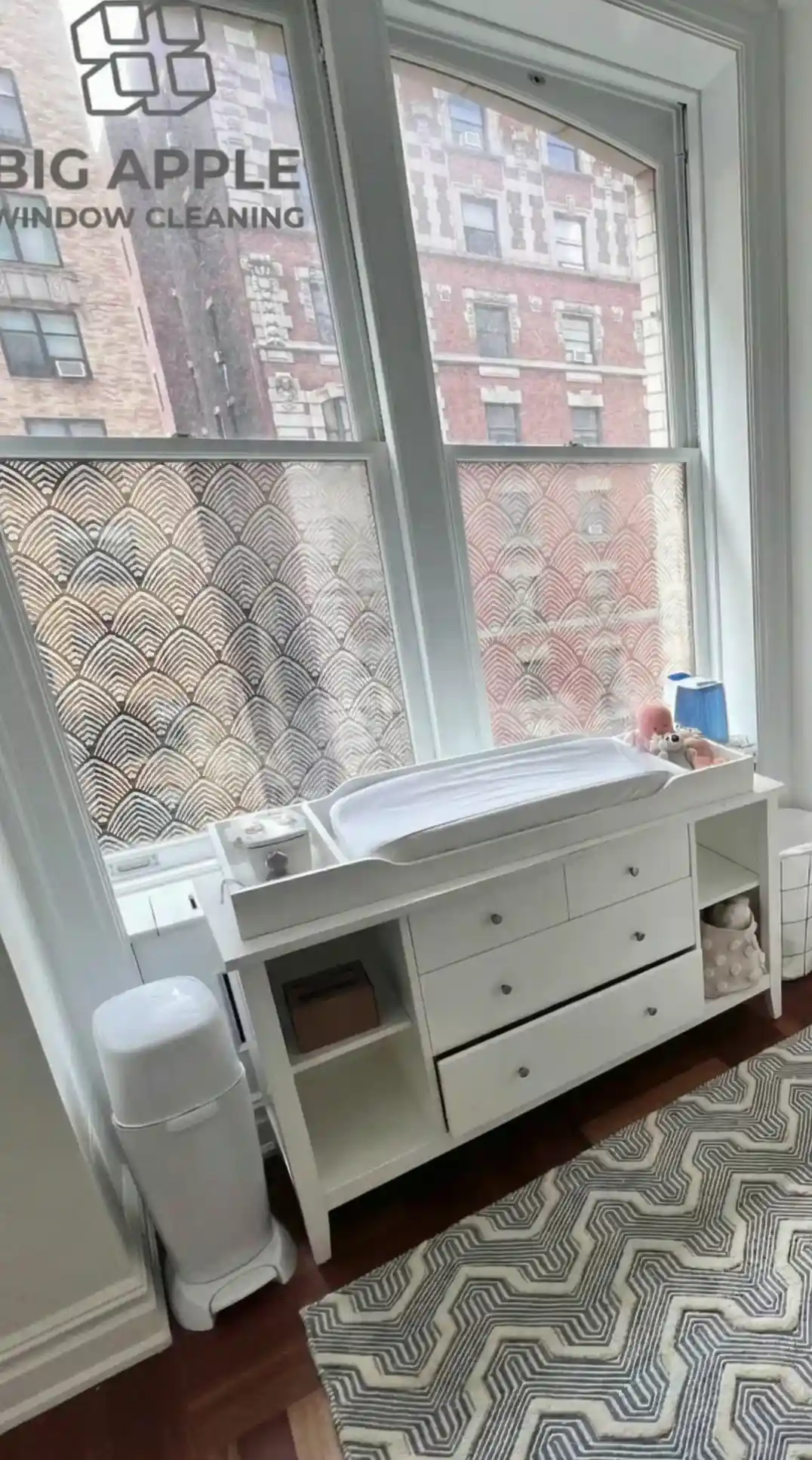
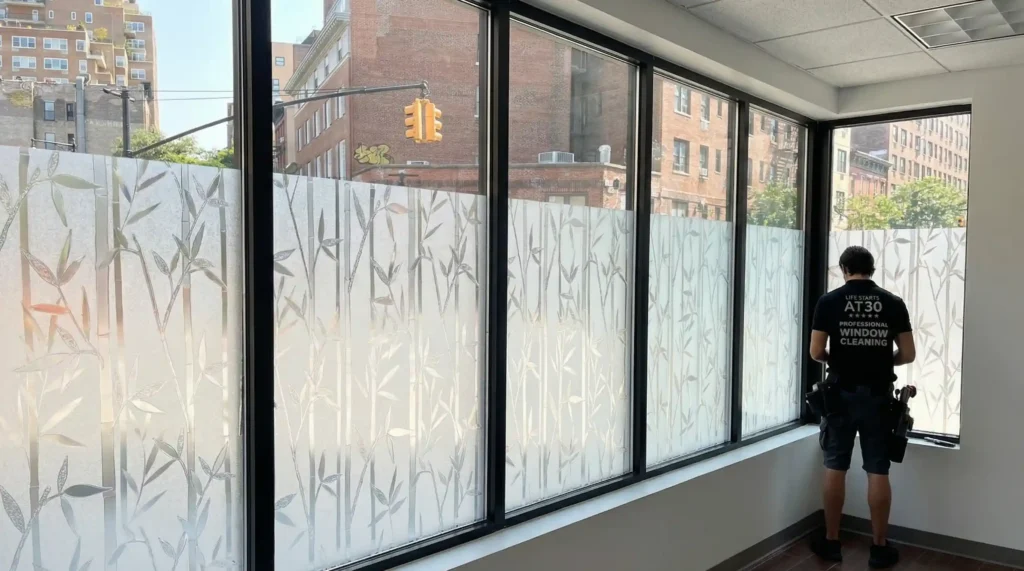
There’s a technique particularly popular in Brooklyn and the Lower East Side: applying decorative film only to the lower half of a street-level window. The bottom half – at eye level from the sidewalk – gets full coverage from a gradient or frosted panel. The upper half remains clear, flooding the room with light from above. It reads as intentional design from both inside and out, and it’s one of the first things an experienced installer will suggest for ground-floor apartments.
Types of Decorative Film for Windows: A Practical NYC Guide
In 2026, the variety of decorative films for windows available for residential installation is broader than most homeowners realize. Understanding your options is the foundation of choosing correctly.
Frosted and matte films remain the most widely installed category. They create a clean, diffused surface that reads as intentional design rather than a privacy patch. Opacity levels vary widely – from barely-there translucency to near-complete coverage. They work well in bathrooms, bedrooms facing neighboring buildings, and sidelight panels around front doors.
Sandblast film replicates the textured appearance of factory-etched glass with one critical advantage: removability. Worth noting for NYC residents – decorative film cannot be applied over already-textured glass surfaces. It must go on smooth, clear glass. If you have factory etched glass and want to change the look, the film is not compatible; that’s a conversation to have with an installer before purchasing anything.
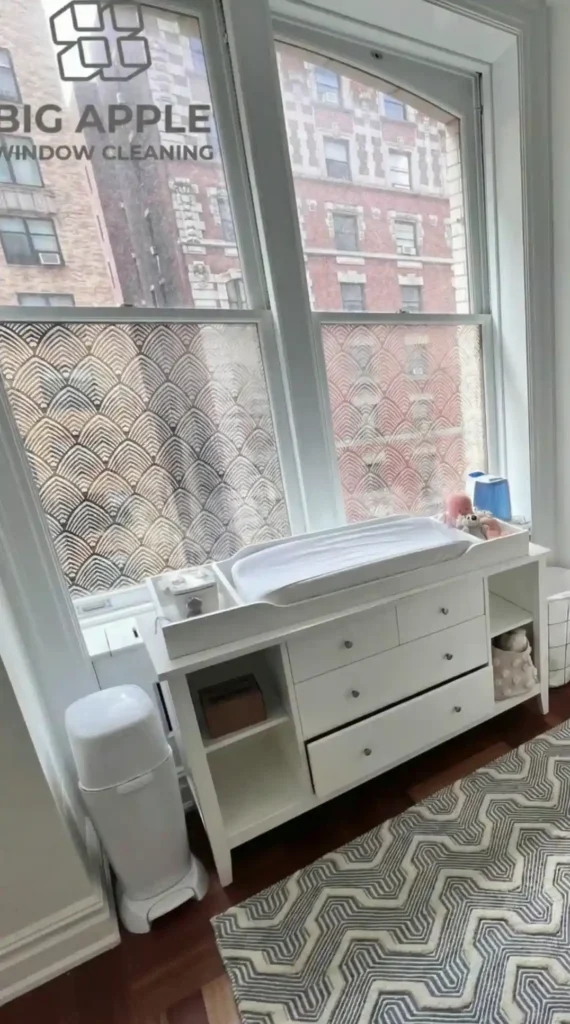
Stained glass and colored film bring pattern and ambient color into the room. When daylight passes through a decorative transparent window film in amber or blue, it creates a shifting glow that moves with the sun. This works beautifully in entryways and on sidelights in pre-war buildings – the kind of architectural detail that defines so much of NYC’s residential character.
Decorative glass door film is worth separating out as its own category. Interior glass doors, glass-front kitchen cabinets, and French doors all respond exceptionally well to patterned or frosted film. A decorative glass door film can transform a dated interior door into a design element without replacement – and in NYC apartments where every square foot matters, that kind of visual upgrade carries real weight.
Gradient film transitions from opaque at the bottom to clear at the top. Applied to street-level windows, it provides privacy where you need it most while keeping the upper panes open and light-filled. Geometric and nature-inspired pattern films have surged in demand as interior design has moved toward textured, layered surfaces – a trend that aligns strongly with the Japandi aesthetic dominant in 2026.
Decorative Window Film vs. Etched Glass: The Real Cost Comparison
One of the most persistent misconceptions is that etched or frosted glass is inherently superior to film. The reality is more nuanced – and financially, the difference is significant.
| Feature | Etched / Frosted Glass | Decorative Window Film |
| Cost (36×36″ panel) | $329 – $495+ (wholesale to retail) | $25 – $60 (film only) |
| Installation | Full glass replacement required | Applied to existing glass |
| Reversibility | Permanent | Fully removable |
| UV blocking | Minimal | Up to 99% UV rejection |
| Cleaning | Texture traps dust and oils | Smooth surface, easy to clean |
| Renter-friendly | No | Yes (static cling options) |
| Design flexibility | Fixed at installation | Can be changed or updated |
| Lifespan (professional install) | Permanent (with glass) | 10 – 15 years |
The cost difference alone – often exceeding 90% in favor of film – would be compelling enough on its own. Add UV protection of up to 99%, easier maintenance, and the flexibility to update the design over time, and decorative window film becomes the genuinely superior choice for the vast majority of NYC residential situations. The one scenario where etched glass holds an advantage is permanent, high-traffic commercial installations where longevity over decades outweighs all other concerns.
What NYC Co-op and Condo Boards Actually Approve
For co-op and condo residents, the question of board approval is often the first obstacle. The good news: decorative window tint is among the most board-compatible upgrades available.
Most NYC co-op and condo boards draw the line at modifications that visibly change the exterior appearance of the building. Heavily reflective or mirrored films – the kind that create a one-way mirror effect from the street – tend to draw scrutiny. Frosted, textured, and patterned decorative privacy window film, applied to the interior glass surface, typically does not change the exterior appearance in any way that’s detectable from the facade.
Real-world examples: a co-op on the Upper West Side approved frosted film for lower-floor residents after reviewing sun exposure data and film specifications. A Brooklyn co-op greenlit static cling privacy film specifically for bathroom windows, with explicit requirements around residue-free removal. The pattern holds across buildings – interior-facing, light-diffusing film tends to be approved. Films that create a reflective exterior effect face more resistance.
If you are preparing a board application, bringing physical samples of the proposed decorative glass film and written product specifications – including adhesion type, reversibility, and exterior visibility – can address most concerns before they become objections. An experienced installer who has worked with NYC building management will know exactly what documentation boards typically require.
2026 Design Trends and Where Decorative Film Fits
Interior design in 2026 has moved in a direction that makes decorative window film more relevant than at any previous point. Two converging trends are particularly significant for NYC residents.
Japandi design – the fusion of Japanese minimalism and Scandinavian warmth – has become the dominant residential aesthetic. Research indicates it resonates with nearly half of all homebuyers and renters across every age group. Central to Japandi is the quality of light: soft, diffused, non-glare illumination associated with shoji screens and washi paper. Textured and frosted decorative films for windows replicate exactly this quality inside an apartment. The room feels quieter and more intentional – a genuine refuge from the city’s constant stimulation.
Biophilic design is the second force shaping how New Yorkers think about their interiors in 2026. The movement has expanded well beyond adding houseplants; it now encompasses materials, textures, and the quality of light itself. Leaf-pattern films, reeded glass effects that mimic natural surfaces, and organic gradient films all respond directly to this impulse. For NYC residents working within building restrictions and limited square footage, these films offer significant design impact with minimal intervention.
The combination is powerful: a frosted or textured decorative window film that softens street noise visually, diffuses harsh direct sunlight into something gentler, and introduces a tactile quality to a surface that was previously just clear glass – all without a renovation permit, a contractor, or a building board application for structural work.
Why Professional Decorative Window Film Installation Matters in NYC
Decorative window film installation is one of those tasks that looks straightforward and isn’t. The gap between a professional result and a DIY attempt is significant – particularly given the window types common in New York’s building stock.
The most common DIY failure point is surface preparation. Even a thin layer of dust or residue trapped under the film creates bubbles that spread over time. Once bubbling starts, it cannot be reversed – the entire panel must be removed and reinstalled. Professional decorative window film installation begins with a systematic cleaning protocol using appropriate, non-ammonia-based solutions that won’t interfere with the adhesive bond.
NYC-specific complications add another layer of difficulty. Pre-war casement windows, arched transoms, and divided light configurations all require precise cutting and professional-grade tools to produce clean, accurate edges. Large applications – floor-to-ceiling glass in a converted loft, a wide bay window in a brownstone parlor floor – need experienced hands to prevent alignment drift and surface wrinkles across a long run of film.
There is also a warranty consideration that most people overlook. Major manufacturers – including 3M’s FASARA decorative film line – require professional application to honor product warranties. A DIY decorative window film installation, regardless of how carefully executed, voids coverage. A failed installation that requires removal and reinstallation often costs more than the original professional job would have.
Big Apple Window Cleaning provides professional decorative window film installation across all five boroughs – from Brooklyn brownstones and Queens multi-family homes to Manhattan co-ops and Staten Island houses. Our team is familiar with building management requirements and co-op board specifications, so the process runs smoothly from first consultation to final inspection.
Maintenance: Getting the Most from Your Investment
A professional decorative window film installation is a long-term investment when maintained correctly. The rules are simple but consistent.
- Wait 30 days before any wet cleaning. The adhesive cures fully during this period, and early cleaning can disturb the bond at the edges.
- Use mild soap and water only. Never use ammonia-based glass cleaners – the majority of commercial window sprays fall into this category and will degrade the adhesive layer over time.
- Wipe with a soft microfiber cloth in gentle, linear strokes. Paper towels, rough sponges, and abrasive pads can scratch the film’s surface coating, reducing clarity.
- Inspect edges every six months. A corner beginning to lift is a minor repair when caught early; left alone, edge lifting spreads and eventually requires full replacement.
Professionally installed decorative glass film, properly maintained, consistently reaches the upper range of its expected lifespan – 12 to 15 years in typical NYC residential applications. Improperly maintained or poorly installed film often fails within three to five years. The difference is not the product; it’s the preparation and the care.
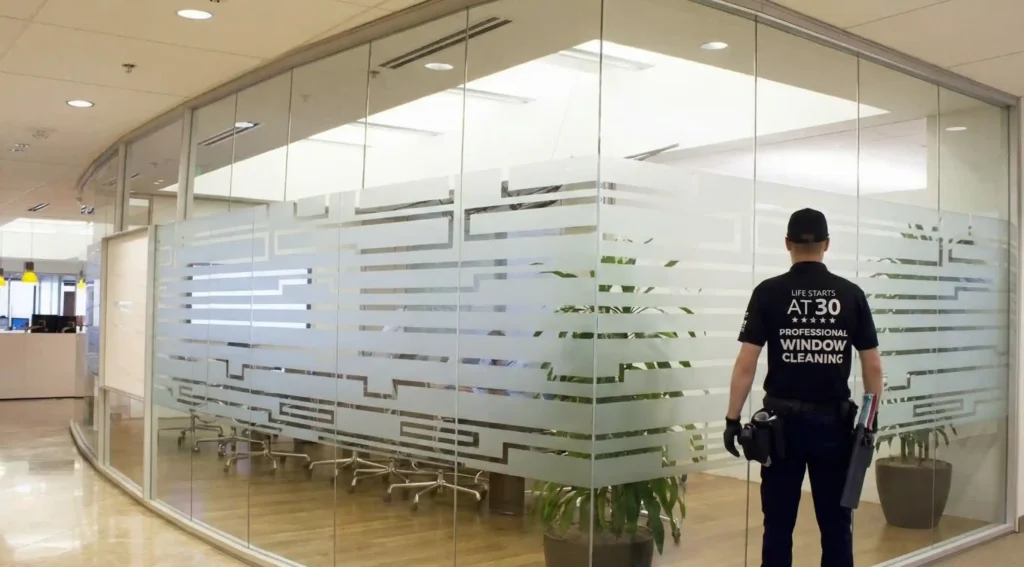
Big Apple Window Cleaning:
Decorative Film
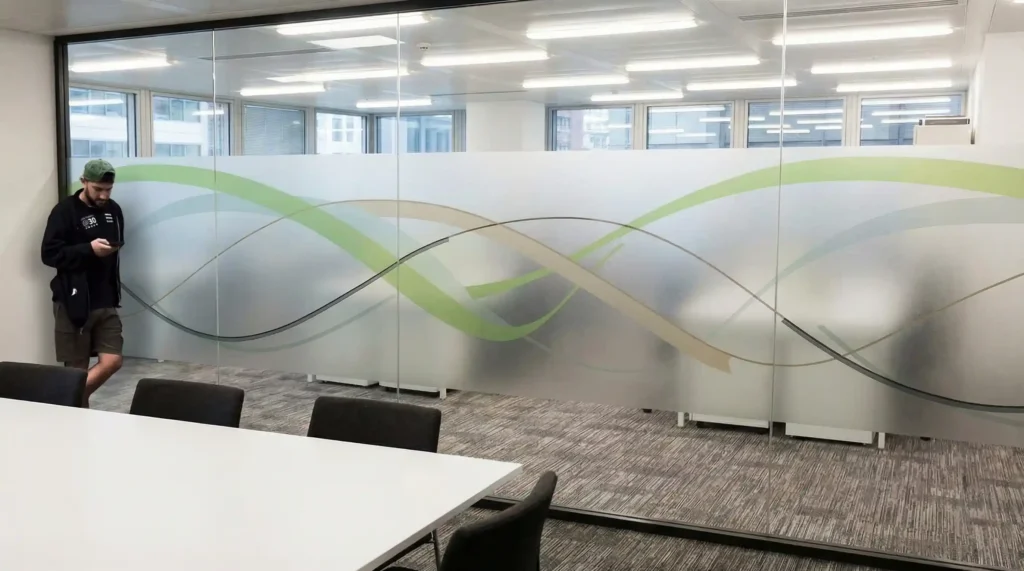
for a Mini Conference Room
How to Choose the Right Film for Your NYC Space
Every NYC space is different, and the right decorative window film depends on three questions: How much privacy do you need? How much light do you want to preserve? And what does the rest of the room look like?
For bathrooms and bedrooms facing neighboring buildings, a high-opacity frosted or sandblast film provides full privacy without sacrificing light. For living rooms with street-level exposure, a gradient or lower-half decorative window film application maintains both the view above and your comfort below. For kitchens with glass-front cabinets, decorative glass door film adds a design layer that conceals without closing off. For entryways, hallways, and interior glass panels, decorative transparent window film with a subtle pattern introduces visual interest while keeping spaces feeling open.
In 2026, the trend toward Japandi-aligned and biophilic interiors makes textured, nature-inspired, and organic-pattern films especially compelling for NYC apartments being thoughtfully redesigned. Reeded glass effects, dusted crystal finishes, and leaf motifs work directly with the aesthetic direction that currently dominates residential design – and they do it without a renovation permit or a structural change.
If you are unsure where to start, a consultation with an installer who has worked across NYC’s building types – pre-war, mid-century, glass-tower – will identify possibilities that aren’t obvious from a product catalog. The right decorative window film for your specific windows, orientation, and building rules is out there. Professional decorative window film installation is the most reliable path to a result that lasts, holds its warranty, and looks exactly the way you intended.
Considering decorative window film installation for your home or apartment? Big Apple Window Cleaning serves all five NYC boroughs with professional film installation tailored to local building requirements. Contact us for a free on-site consultation.
FURTHER READING

Article by Dayne Watkins


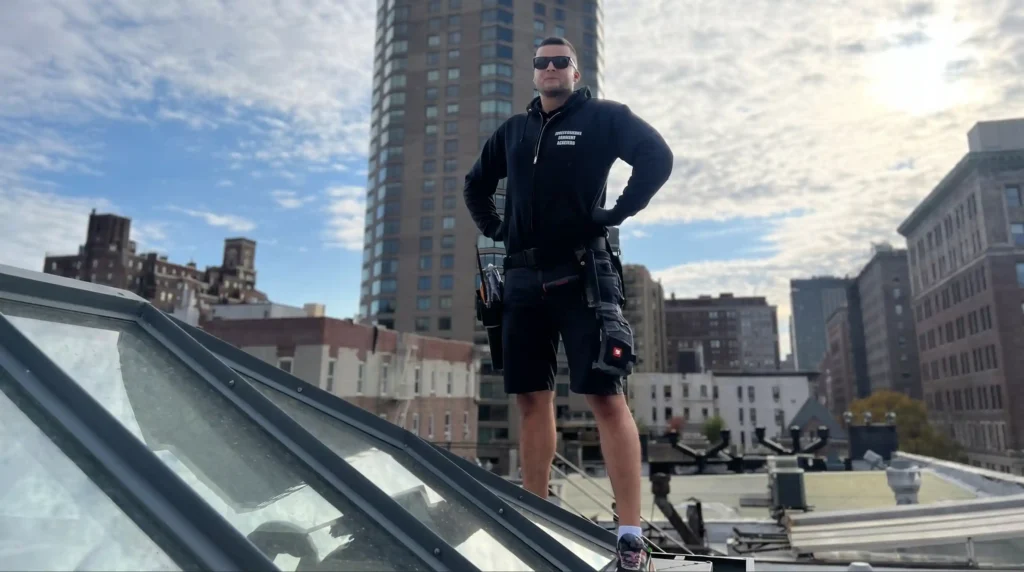
Roof Lantern Cleaning: A Professional Guide for New York Homeowners
Your roof lantern was supposed to flood the room with light. Instead, it is flooding the room with guilt every time you look up and see a layer of grime that could double as modern art. If you live in Brooklyn or Manhattan, you already know that city air does not play fair with glass […]
Explore more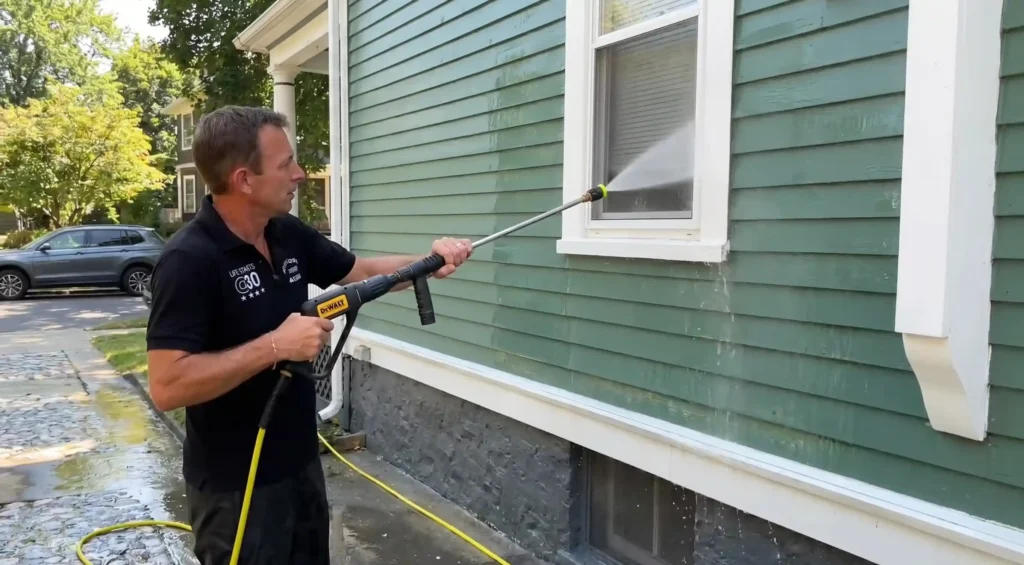
House Facade Cleaning: A No-Nonsense Guide for Homeowners Who’d Rather Not Watch Their Walls Crumble
Your home’s facade does a thankless job. Day after day, it stands between your family and everything the urban environment throws at it – diesel exhaust from delivery trucks, pigeon droppings with the pH of battery acid, mysterious black streaks that seem to appear overnight, and that persistent green fuzz on the north-facing wall that […]
Explore more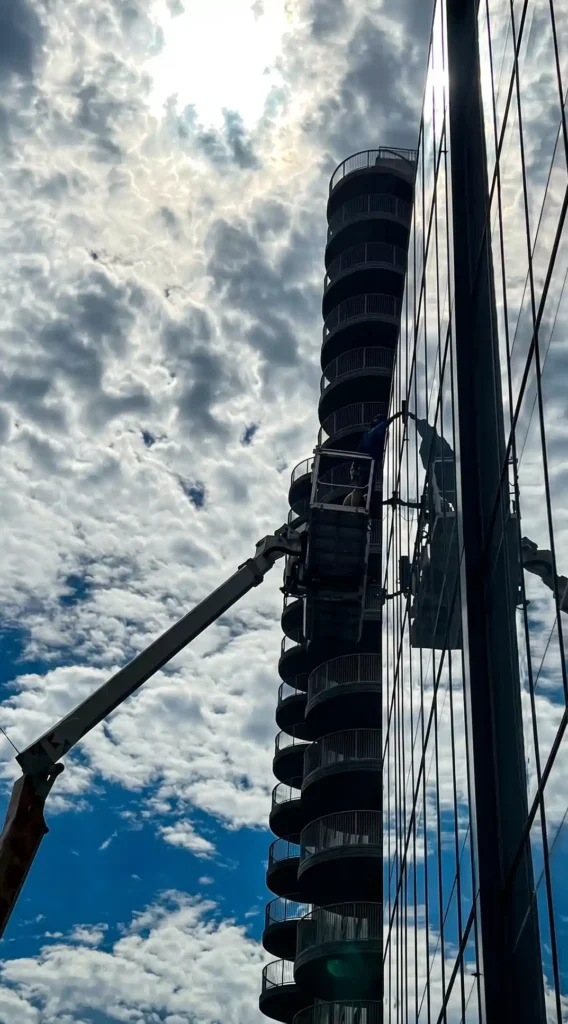
Commercial Facade Cleaning: What Every Building Owner in New York City Needs to Know
Your building talks about you before you ever open your mouth. A grimy exterior covered in soot, pigeon souvenirs, and mysterious streaks tells visitors, tenants, and potential buyers exactly one thing – nobody here cares. Research shows it takes roughly seven seconds to form a first impression, and in a city where commercial real estate […]
Explore more