
Roof Lantern Cleaning: A Professional Guide for New York Homeowners
By Dayne Watkins

Contents
DO YOU HAVE AN URGENT NEED?
Our fast response service can fix your urgent problem. We have teams ready for action.
AND GET A FREE QUOTE
Get monthly window insight
Your roof lantern was supposed to flood the room with light. Instead, it is flooding the room with guilt every time you look up and see a layer of grime that could double as modern art. If you live in Brooklyn or Manhattan, you already know that city air does not play fair with glass surfaces. Between construction dust, pigeon contributions, and vehicle exhaust from bumper-to-bumper traffic, roof lanterns in urban environments get dirty two to three times faster than those in suburban areas.
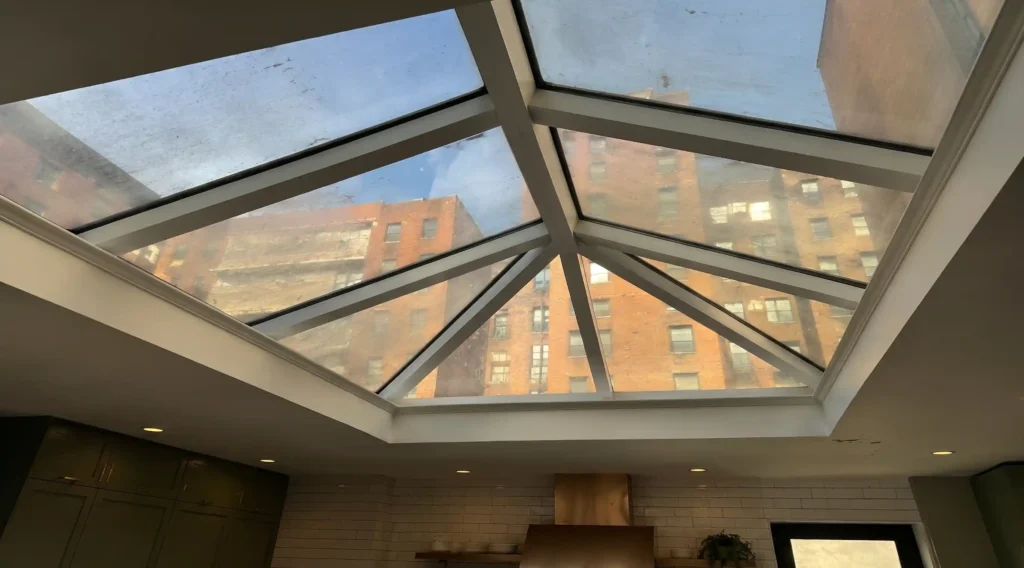
If you have been searching for how to clean a roof lantern without scratching the glass or voiding your warranty, this guide covers everything you need to know about roof lantern cleaning – from choosing the right tools to understanding why that fancy self-cleaning glass is not as self-sufficient as the brochure promised. Whether you handle the job yourself or hire a professional, keeping your lantern spotless is about more than aesthetics. A dirty roof lantern can lose up to 40 percent of its light transmission, which means you are essentially paying for natural light and then blocking it with neglect.

How to Clean a Roof Lantern From the Inside
Learning how to clean a roof lantern starts with the interior, and for good reason. It is safer, easier, and gives you immediate visual results without climbing onto the roof. Before you begin, move any furniture sitting directly beneath the lantern and lay a drop cloth on the floor to catch drips and debris.
Grab a sturdy step ladder and have someone hold it steady while you work. Start with a dry duster or an extendable microfibre duster to sweep away cobwebs, dust, and loose particles from the corners and ridges. Roof lanterns with traditional Victorian-style frames have more rafters and decorative detailing, which means more nooks for dust to accumulate.
Once you have removed the dry debris, mix warm water with a small amount of mild dish soap. Dip a non-abrasive sponge into the solution, wring it out well – you want damp, not dripping – and gently wipe each glass panel. Work from the top downward. For the finishing touch, dry the glass with a clean microfibre cloth using smooth, overlapping strokes. This prevents streaks and leaves the panes crystal clear.
“Pure water dries spot free, meaning there is no residue left on the window. Left over detergent also attracts more dust and grime, so using pure water keeps windows cleaner longer.” – Nick’s Window Cleaning, New York City.
A quick tip for interior roof lantern cleaning in kitchens: cooking grease and steam create a sticky film that bonds with airborne dust, forming a stubborn haze on the glass. If warm soapy water alone does not cut through it, a small amount of white vinegar in the solution works wonders without damaging the glass or the frame.
Tackling the Exterior: Where the Real Challenge Lives
The exterior of your roof lantern faces rain, pollution, bird droppings, tree sap, pollen, and – if you are anywhere near a construction site in Queens – a constant shower of concrete dust. Understanding how to clean a roof lantern on the outside requires a different mindset and a stronger focus on safety.
First, verify that your roof can support your weight. Never stand or lean on the lantern frame or glass, regardless of how sturdy it appears. Use a specialist roof ladder, not your regular household stepladder, and always work with a partner. Check the weather forecast and choose an overcast day. Direct sunlight causes cleaning solutions to dry too quickly, leaving streaks that defeat the entire purpose.
Before applying any liquid, remove loose debris by hand. Moss and lichen tend to build up around frame edges – put on garden gloves and pick away visible growths. Then wash the exterior glass the same way you handled the interior: mild soapy water, non-abrasive sponge, and a microfibre cloth for drying.
Here is what you should never do during roof lantern cleaning:
- Use a pressure washer anywhere near the lantern – it will damage seals, glazing units, and decorative cappings
- Apply cleaning products containing silicone – they permanently deactivate self-cleaning glass coatings
- Scrub with abrasive pads, steel wool, or cream cleaners – they scratch glass and destroy protective coatings
- Use metal-edged squeegees on self-cleaning glass – stick to soft rubber blades only
- Clean in direct sunlight or during windy conditions
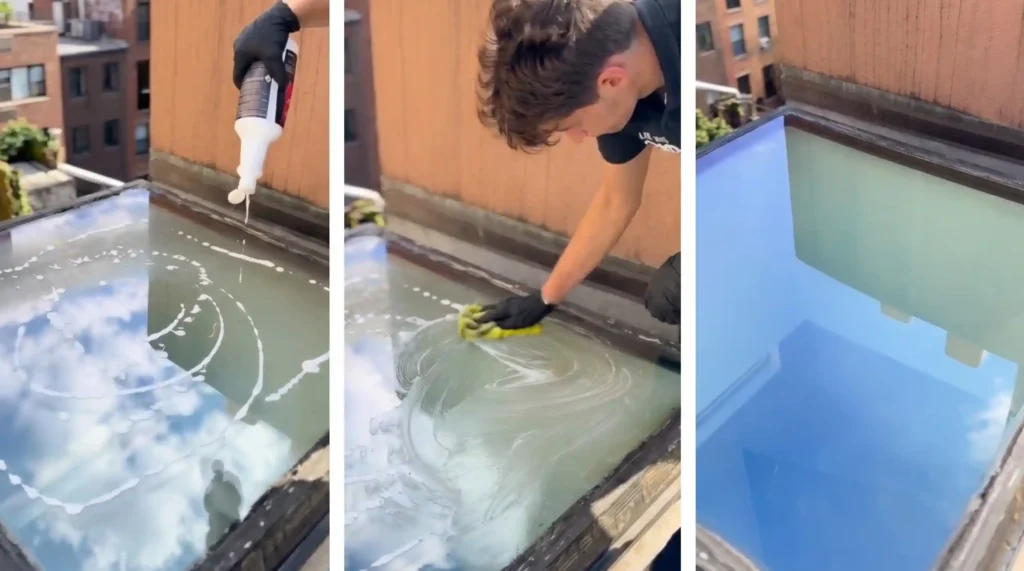
The Essential Roof Lantern Cleaning Tools
Investing in proper roof lantern cleaning tools pays for itself quickly. Having the right roof lantern cleaning tools makes the difference between a frustrating chore and a 30-minute job. Many homeowners underestimate how much easier the process becomes with proper equipment. Here is a breakdown of roof lantern cleaning tools organized by experience level and cleaning scenario.
| Tool | Best For | Approximate Cost |
| Non-abrasive sponge + microfibre cloth | Basic interior cleaning | $5 – $15 |
| Extendable duster (telescopic) | Reaching interior corners without a ladder | $15 – $30 |
| Soft rubber-blade squeegee | Streak-free drying on both sides | $10 – $25 |
| Telescopic cleaning pole (15 – 30 ft) | Exterior cleaning from ground level | $40 – $120 |
| Water-fed pole system | Professional-grade exterior cleaning without ladders | $200 – $800+ |
| De-ionised water supply | Eliminating mineral streaks entirely | $10 – $30 per container |
| Karcher window vac with pole attachment | Drip-free interior cleaning on painted surfaces | $80 – $150 |
Water-fed pole systems deserve special attention as roof lantern cleaning tools because they eliminate the need for ladder access entirely. These telescopic poles pump purified water through a brush head, scrubbing and rinsing simultaneously. The purified water – with a total dissolved solids reading below 10 parts per million – dries without leaving any streaks or spots. Professional window cleaners rely on these systems daily, and models from manufacturers like Ionic Systems and Gardiner can reach heights of up to 70 feet from ground level.
For homeowners who prefer a simpler approach, a telescopic pole with interchangeable attachments – a scrubber head for washing and a squeegee head for drying – handles most exterior roof lantern cleaning jobs effectively. Just remember to use separate clean attachments for the interior to avoid transferring outdoor grime onto indoor surfaces.
The Truth About Self-Cleaning Glass
If your roof lantern came with self-cleaning glass, you might be wondering why it still looks dirty. The honest answer is that self-cleaning glass is better described as low-maintenance glass. The technology, pioneered by Pilkington with their Activ product line, uses a titanium dioxide coating roughly 15 to 30 nanometres thick. Ultraviolet light from the sun breaks down organic dirt on the surface through a process called photocatalysis, and then rainwater spreads into an even sheet that rinses the loosened particles away.
That sounds brilliant in theory. In practice, the system has real limitations that most manufacturers downplay. The coating requires consistent UV exposure, so shaded lanterns or those facing north perform poorly. It only breaks down organic contaminants – inorganic pollutants like construction dust, mineral deposits, and vehicle soot remain untouched. The glass also needs a minimum installation angle of 10 to 15 degrees for rainwater to sheet off effectively.
"The term 'self-cleaning' can be misleading, as these surfaces still require periodic maintenance to preserve optical clarity and functional integrity." - EnduroShield, glass coating manufacturer.
For New York homeowners specifically, urban pollution creates a greasy, hydrophobic film from vehicle exhaust that rain cannot wash away. In fact, rain often redistributes this film into streaked patterns that look worse than uniform grime. So even with self-cleaning glass, you should plan on manual roof lantern cleaning at least three to four times a year in the city – more frequently if you live near a busy road or active construction zone.

When to Call a Professional
Knowing how to clean a roof lantern yourself is valuable, but there are situations where calling a professional is the smarter choice. If your roof lantern sits above a third-floor extension, if the roof access involves a steep pitch, or if you are simply not comfortable working at heights, do not take unnecessary risks.
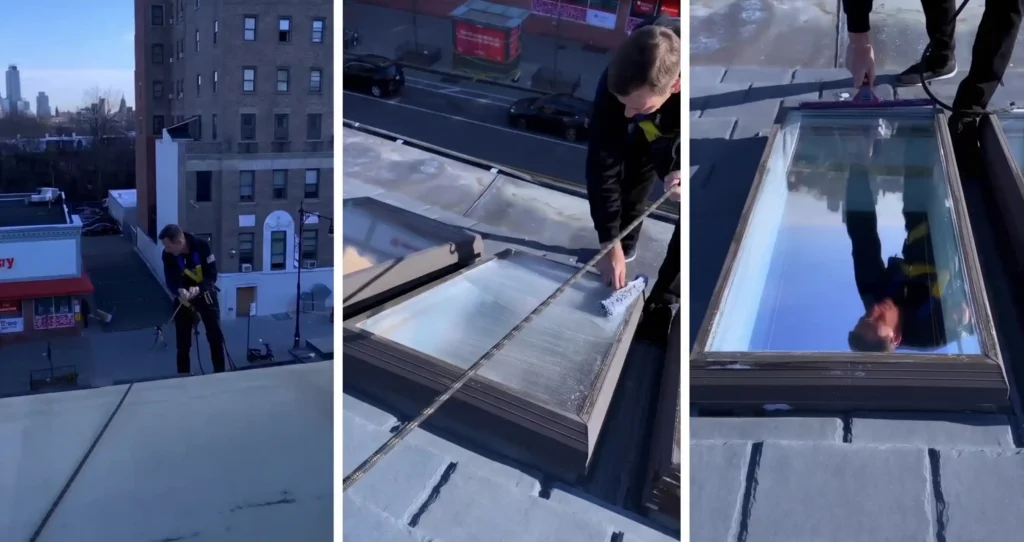
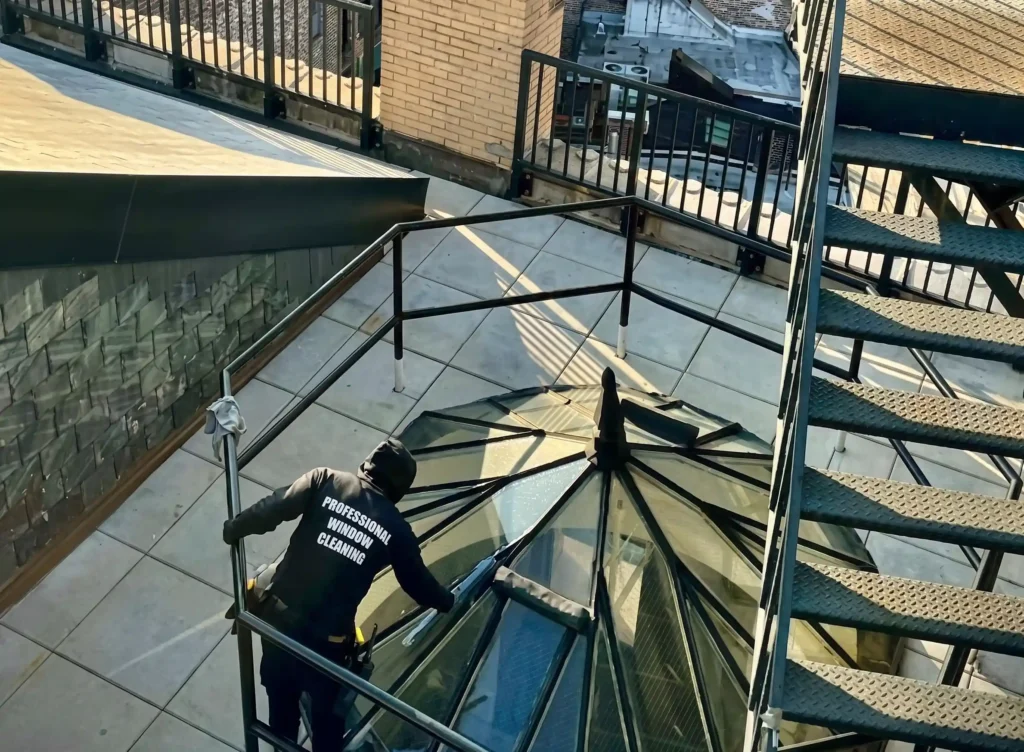
Professional window cleaners who service roof lanterns use water-fed pole systems, rope access equipment, and boom lifts depending on the building’s architecture. In New York, companies like Big Apple Window Cleaning bring SPRAT-certified technicians and the specialized roof lantern cleaning tools required for safe, thorough results. Professional cleaning also includes inspecting seals, gaskets, and drainage channels – maintenance tasks that extend the life of your lantern significantly.

You should also call a professional if you notice condensation forming regularly between the glass panes, cracked or deteriorating seals, or chips in the glass. These issues go beyond cleaning and may indicate that your roof lantern needs repair or resealing before water damage becomes a costly problem.
Seasonal Roof Lantern Cleaning Schedule
How to clean a roof lantern effectively depends partly on the time of year. Each season brings different challenges, and adjusting your approach accordingly keeps the lantern performing at its best year-round.
Spring is the ideal time for a thorough deep clean after winter. Inspect the glass and frame for any damage caused by frost or ice, clear debris from drainage channels, and wash both interior and exterior surfaces. Pollen season in the Northeast typically peaks between April and June, so expect to wipe down the interior more frequently during those months.
Summer offers the longest daylight hours and the best conditions for self-cleaning glass to work. Focus on seal checks and glass polishing during this period. If it has not rained for more than two weeks, spray the exterior with a garden hose to help the self-cleaning coating do its job.
Autumn demands attention to falling leaves and debris that can accumulate around the lantern base and clog drainage channels. A blocked channel leads to water pooling, which increases the risk of leaks and accelerates seal deterioration.
Winter shifts your focus indoors. Condensation becomes the primary concern as warm, moist air from cooking and heating meets the cold glass surface. Use extractor fans in kitchens and bathrooms, open windows briefly for ventilation when possible, and consider running a dehumidifier in the room below the lantern. Clean condensation residue promptly – the mineral deposits it leaves behind are harder to remove once they dry and accumulate.
Keep Looking Up
A clean roof lantern transforms a room. It is one of those home maintenance tasks where the payoff is immediate and visible – literally. Whether you handle roof lantern cleaning yourself with a bucket and a squeegee or bring in a professional team with water-fed poles and purified water systems, the key is consistency. Stick to a regular schedule, use the right tools, and your lantern will keep doing what it was designed to do: fill your home with light.
FURTHER READING

Article by Dayne Watkins



How to Clean the Outside of Your Apartment Windows in NYC
In most New York apartments the outside of the glass is cleaned from inside. Double-hung windows put in since the 1980s usually tilt in, and once the sash tilts, the outside face is a foot from your hands. When a window won’t tilt, the reason is usually a seized latch or a dead balance, not […]
Explore more
Six Windows, One $350 Minimum: Three Ways NYC Residents Get Exterior Glass Cleaned Without Overpaying
If you asked for a quote on your apartment and the number came back higher than you expected for six windows, nothing went wrong. You are running into a visit minimum, and in New York most apartments sit below it. Ours is published: $350 for residential work. That is not a markup for small jobs. […]
Explore more
Your Building Replaced the Windows and Left You With No Screens: Whose Bill Is It, and How to Get Custom Screens (NYC)
You are not crazy, and you are not stuck: the “screen orphan” problem explained It usually happens like this. Your building runs a window replacement project, the crew swaps your old slide-up windows for shiny new casement or crank-out windows, and then they leave. No screens. No paperwork. No phone number for where to buy […]
Explore more