
House Facade Cleaning: A No-Nonsense Guide for Homeowners Who’d Rather Not Watch Their Walls Crumble
By Dayne Watkins
Contents
- What's Actually Eating Your Walls
- House Facade Cleaning Methods: Choose Wisely or Pay Twice
- The Real Danger of DIY House Facade Cleaning
- When Should You Schedule House Facade Cleaning?
- How House Facade Cleaning Connects to Local Law 11
- A Clean Facade Is Money in Your Pocket
- Choosing the Right Professional
DO YOU HAVE AN URGENT NEED?
Our fast response service can fix your urgent problem. We have teams ready for action.
AND GET A FREE QUOTE
Get monthly window insight
Your home’s facade does a thankless job. Day after day, it stands between your family and everything the urban environment throws at it – diesel exhaust from delivery trucks, pigeon droppings with the pH of battery acid, mysterious black streaks that seem to appear overnight, and that persistent green fuzz on the north-facing wall that no amount of wishful thinking will remove.
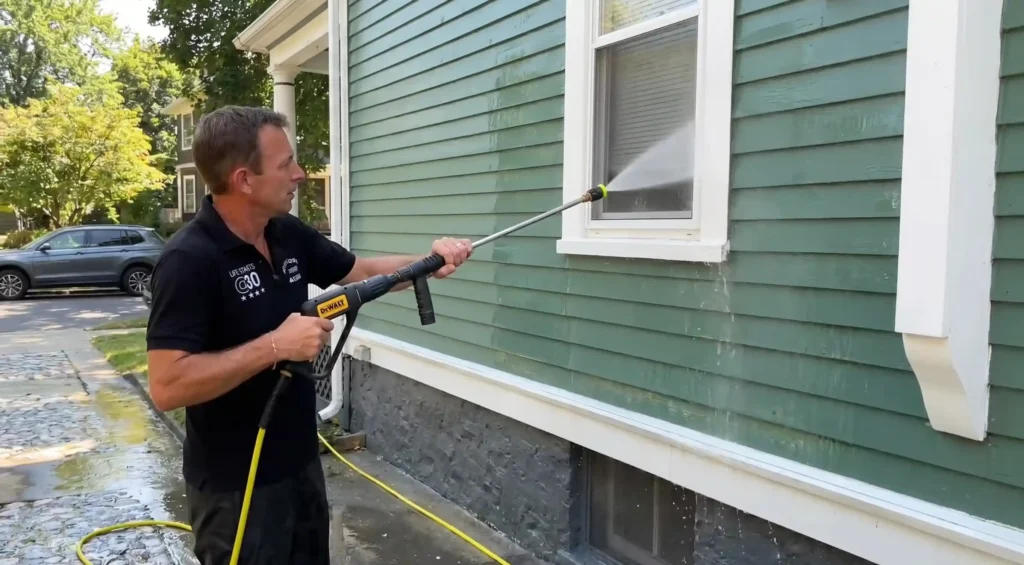
House facade cleaning is one of those maintenance tasks that homeowners tend to postpone until the building starts looking like a backdrop for a post-apocalyptic film. The logic usually goes something like this: “It’s just dirt. It’ll wash off in the rain.” Spoiler alert – it won’t. Rain actually makes things worse by depositing more pollutants onto the surface and feeding the biological colonies that have already set up camp on your exterior walls.
If you live in Brooklyn Heights or anywhere along the waterfront, salt air adds another layer of complexity. Homes in Park Slope deal with a unique combination of century-old brownstone facades and modern pollution that their original builders never anticipated. The reality is that a dirty facade isn’t just an eyesore – it’s actively degrading your building materials, lowering your property value, and potentially creating health hazards for everyone inside.
What’s Actually Eating Your Walls
Before you reach for the pressure washer, it helps to understand what you’re dealing with. Not all facade grime is created equal, and treating the wrong type of contamination with the wrong method is a fast track to expensive repairs.
Atmospheric deposits are the most common culprit in densely populated boroughs. Soot from heating systems, carbon particles from vehicle exhaust, and fine construction dust bond to porous materials like brick and limestone over time. These deposits don’t just sit on the surface – they penetrate into the pores of the masonry and chemically interact with the stone.
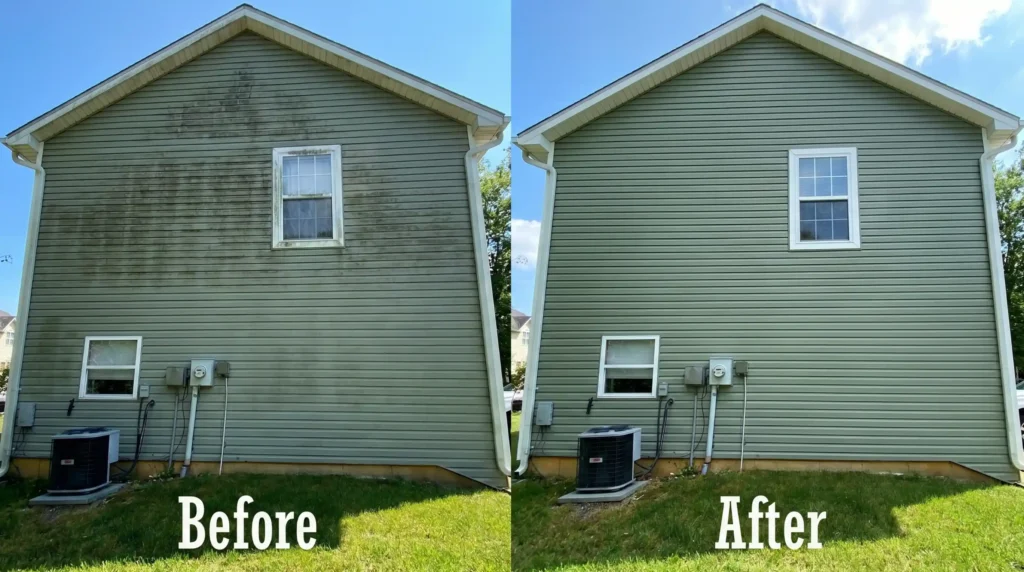
Biological growth – algae, mold, mildew, moss, and lichen – thrives on facades that stay damp for extended periods. The north side of your building almost certainly has more biological growth than the south side because it receives less direct sunlight, and moisture lingers longer after rain.
Mineral staining is the sneaky one. Efflorescence appears as a white, powdery substance when water pulls salts from within the masonry to the surface. Rust staining from fire escapes, metal railings, and aging window guards leaves orange-brown trails that get harder to remove the longer they sit. Copper flashings and gutters can deposit greenish residue that runs down the facade during rainstorms.
House Facade Cleaning Methods: Choose Wisely or Pay Twice
Choosing the right cleaning method is arguably more important than the cleaning itself. The wrong approach can cause permanent damage that costs far more to repair than the original grime ever would have.
| Method | Best For | Pressure Range | Risk Level | Approximate Cost |
| Soft washing | Vinyl siding, wood, stucco, painted surfaces | Under 500 PSI | Low | $250 – $600 |
| Pressure washing | Concrete, hard brick, stone pathways | 1,000 – 3,000 PSI | Medium-High | $300 – $1,000 |
| Chemical cleaning | Rust stains, graffiti, heavy biological growth | Varies | Medium | $400 – $800 |
| Steam cleaning | Delicate stone, historic masonry, limestone | Low pressure | Low | $500 – $1,200 |
| Dry ice blasting | Landmark buildings, sensitive surfaces | Compressed air | Very Low | $1,000+ |
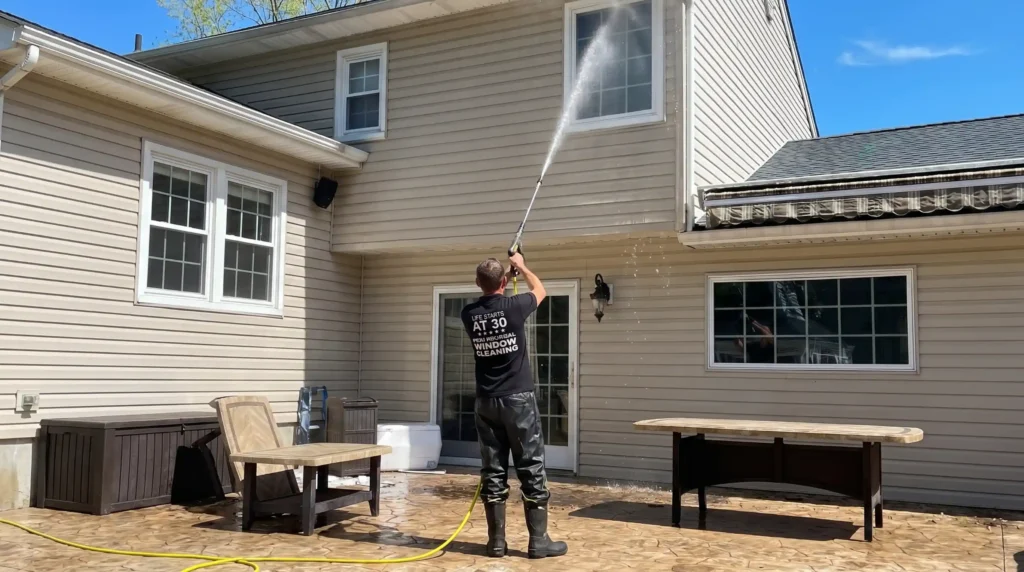
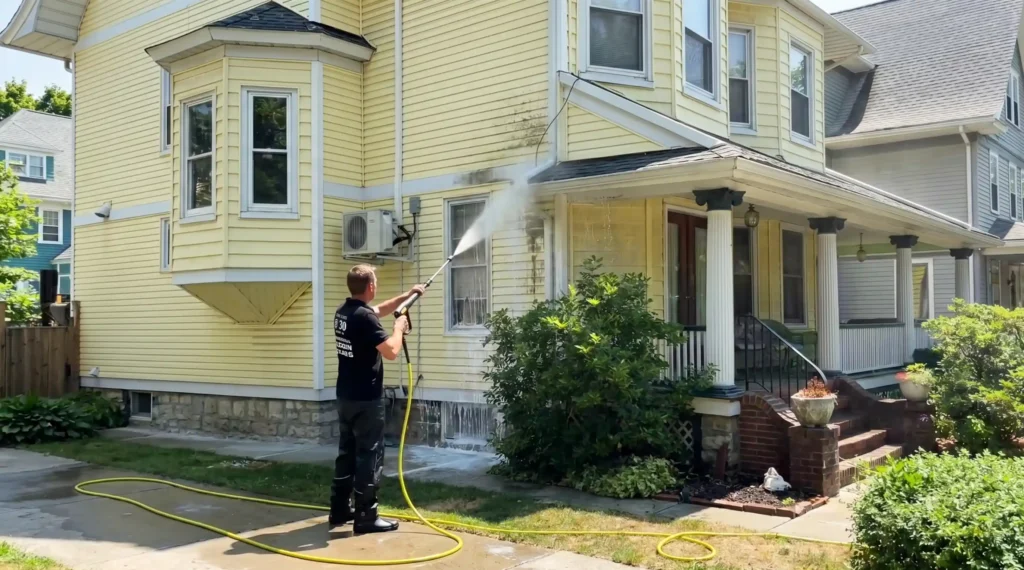
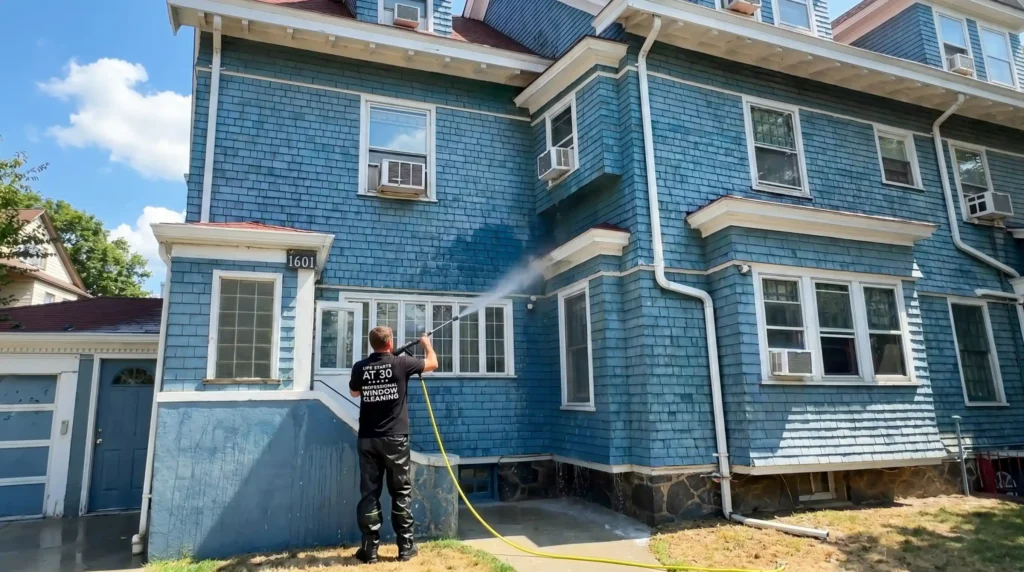
Soft washing has become the preferred method for most residential house facade cleaning projects, and for good reason. Instead of relying on brute force, it uses low-pressure water combined with biodegradable cleaning solutions that kill mold and algae at the root. The result lasts significantly longer than pressure washing alone because the organisms are actually eliminated rather than just blasted off the surface.
Pressure washing still has its place – primarily on hard surfaces like concrete driveways, stone pathways, and robust brick that can handle the force. However, pointing a 3,000 PSI stream at old mortar joints or soft limestone is roughly as smart as using a sledgehammer to hang a picture frame.
Steam cleaning deserves special mention for homeowners with older properties. It uses minimal water, kills biological spores on contact, and is gentle enough for the most delicate architectural details. If your building has ornate terra cotta moldings or carved stone elements, steam is often the safest bet.
The Real Danger of DIY House Facade Cleaning
Here’s where things get serious. The internet is full of weekend warriors who rented a pressure washer from the hardware store and went to town on their home’s exterior. Some of those stories end well. Many do not.
The National Park Service – which literally wrote the book on preserving historic buildings – warns against abrasive cleaning methods and specifically notes that old brick loses its protective outer skin when subjected to aggressive techniques. Once that skin is gone, the softer interior of the brick is exposed to moisture, freeze-thaw cycles, and accelerated deterioration.
Limestone facades are especially vulnerable. A single session with the wrong pressure setting or an acidic cleaning solution can permanently etch the surface. There’s a well-documented case from Chicago where a three-million-dollar home built in 2023 had its entire limestone facade ruined in 2024 because someone who specialized in window cleaning – not masonry – attempted to pressure wash it.
The risks of amateur house facade cleaning include:
- Water forced behind siding panels, leading to mold growth inside walls
- Mortar joints blown out of brick facades, requiring full repointing
- Paint stripped from surfaces that weren’t meant to be cleaned with high pressure
- Cracked or shattered windows from misdirected spray
- Etched and dulled limestone or marble that cannot be restored
At Big Apple Window Cleaning, we’ve seen all of these scenarios firsthand when called in to assess damage from previous DIY attempts. The general rule in the facade cleaning industry is straightforward: it is always better to underclean than to overclean.
When Should You Schedule House Facade Cleaning?
Timing matters more than most homeowners realize. The ideal window for residential house facade cleaning falls in late spring or early fall, when temperatures are consistently above 50°F and freezing weather isn’t lurking around the corner.
Why does temperature matter? Water-based cleaning should never be performed when temperatures are below 45°F. Water that seeps into cracks and mortar joints can freeze, expand, and cause spalling – a fancy term for chunks of your facade popping off. Chemical cleaning agents also lose effectiveness in cold weather.
A masonry wall can take a week or longer to dry completely after a thorough cleaning. If you clean your facade in late October and a cold snap hits three days later, you’ve essentially created the perfect conditions for freeze-thaw damage.
Most professionals – including our team at Big Apple Window Cleaning – recommend cleaning your home’s exterior once or twice a year. Properties in areas with heavier pollution, significant tree coverage, or proximity to the waterfront may benefit from cleaning every six to nine months.
How House Facade Cleaning Connects to Local Law 11
If your building is taller than six stories, you’re already familiar with the Facade Inspection and Safety Program, commonly known as Local Law 11. This regulation requires periodic inspections by a Qualified Exterior Wall Inspector every five years, and Cycle 10 kicked off in February 2025.
Here’s what many property owners don’t realize: professional house facade cleaning before a scheduled FISP inspection is one of the smartest investments you can make. Clean surfaces allow the inspector to see hairline cracks, spalling, deteriorating mortar joints, and other defects that layers of grime would otherwise hide. Catching these problems early – when they’re classified as “Safe with a Repair and Maintenance Program” rather than “Unsafe” – can save tens of thousands of dollars in emergency repairs and avoid the dreaded sidewalk shed installation.
Buildings classified as Unsafe must complete repairs within 90 days. Late filing penalties start at $1,000 per month, and failure to file can result in $5,000 annual charges. A proactive approach to facade maintenance, starting with regular cleaning, keeps you ahead of the enforcement curve.
A Clean Facade Is Money in Your Pocket
Let’s talk numbers. According to The Journal of Real Estate Finance and Economics, good curb appeal can raise a property’s value by up to seven percent. For a home worth $800,000, that’s a potential increase of $56,000 – not bad for a service that typically costs a fraction of that amount.
Real estate professionals consistently report that house and window washing, combined with cleaning the driveway and sidewalks, can increase a listing’s value by approximately $10,000. In a competitive market like the Upper West Side, where buyers scrutinize every detail, a sparkling facade signals that the property has been meticulously maintained – inside and out.
Beyond resale value, regular facade cleaning prevents the kind of long-term material degradation that leads to five-figure repair bills. Removing biological growth before it penetrates deep into porous stone, clearing mineral deposits before they crystallize permanently, and washing away corrosive pigeon droppings before they eat into your pointing – these are all examples of small investments that prevent massive expenses.
Choosing the Right Professional
Not every cleaning company understands the nuances of different facade materials. When evaluating contractors for house facade cleaning, ask these questions before signing anything:
Do they adjust their methods based on the specific materials on your building? A company that uses the same pressure setting on brownstone limestone as they do on poured concrete is a company you should avoid. Do they carry adequate insurance? Facade cleaning often involves working at heights and using equipment that can cause damage if mishandled. Do they have experience with buildings similar to yours? A crew that mostly handles vinyl-sided suburban homes may not be the right fit for a pre-war masonry building.
The team at Big Apple Window Cleaning works with everything from residential brownstones to high-rise glass facades across all five boroughs and Long Island, using material-specific protocols that protect your building while delivering results. Whether your home needs gentle steam cleaning for historic limestone or a thorough soft wash for modern siding, matching the method to the material is what separates professional facade care from expensive guesswork.
Your facade is the first thing people see, the last line of defense against the elements, and – if you play your cards right – a significant contributor to your property’s value. Don’t let it become the thing that silently drains your wallet while you’re busy worrying about what’s happening inside. Give it the attention it deserves, and it will return the favor for decades to come.
FURTHER READING

Article by Dayne Watkins


How to Clean the Outside of Your Apartment Windows in NYC
In most New York apartments the outside of the glass is cleaned from inside. Double-hung windows put in since the 1980s usually tilt in, and once the sash tilts, the outside face is a foot from your hands. When a window won’t tilt, the reason is usually a seized latch or a dead balance, not […]
Explore more
Six Windows, One $350 Minimum: Three Ways NYC Residents Get Exterior Glass Cleaned Without Overpaying
If you asked for a quote on your apartment and the number came back higher than you expected for six windows, nothing went wrong. You are running into a visit minimum, and in New York most apartments sit below it. Ours is published: $350 for residential work. That is not a markup for small jobs. […]
Explore more
Your Building Replaced the Windows and Left You With No Screens: Whose Bill Is It, and How to Get Custom Screens (NYC)
You are not crazy, and you are not stuck: the “screen orphan” problem explained It usually happens like this. Your building runs a window replacement project, the crew swaps your old slide-up windows for shiny new casement or crank-out windows, and then they leave. No screens. No paperwork. No phone number for where to buy […]
Explore more