
Window Screens for Pella Windows: What New York City Homeowners Need to Know
By Dayne Watkins
Contents
DO YOU HAVE AN URGENT NEED?
Our fast response service can fix your urgent problem. We have teams ready for action.
AND GET A FREE QUOTE
Get monthly window insight
If you have Pella windows at home, you already know the brand stands for quality. But when a screen gets torn, bent, or simply disappears during a move, finding the right replacement is rarely as simple as a trip to the hardware store. Window screens for Pella windows are not universal – they vary by series, window style, and hardware type. For homeowners across New York City, where summer brings real pressure from mosquitoes, flies, and urban pollen, getting this right matters more than most people expect.
Why Pella Screens Are Different from Generic Replacements
Pella has been building screens longer than almost any other window brand. The company was founded in 1925 specifically as the Rolscreen Company – a manufacturer of retractable window screens – before it ever produced a single window frame. That history of screen innovation means that today, Pella offers several distinct screen technologies, each tied to a specific product line.
Unlike a generic fiberglass screen you can trim to fit, window screens for Pella windows are engineered to work with the series they come from. Some rely on proprietary “butterfly” or “knife” latches that simply are not available on the open market. Others use plunger bolts that require precisely placed holes in the window frame. If you live in a pre-war brownstone in Cobble Hill or a newer condominium in Long Island City, this distinction has real consequences for how you approach replacement.
A Look at Pella’s Screen Technologies
Before ordering anything, it helps to know what type of screen your windows were originally designed to carry. According to Pella’s official screen guide, there are four main screen options across the product line:
| Screen Type | Compatible Windows | How It Works | Key Advantage |
| Hidden Screen | Pella 250 Series, Lifestyle Series – single-hung, double-hung, sliding | Folds away when window closes; reappears when opened | 44% more natural light vs. standard screen when closed; tested to 9,400 open/close cycles |
| Integrated Rolscreen® | Pella Reserve – Traditional only (single-hung, double-hung) | Rolls into sill on closing; high-strength magnets reconnect it on opening | Fully invisible when not in use; 10-year transferable limited warranty |
| Rolscreen® Retractable | Select wood series – Architect Series, Lifestyle Series casement and awning | Rolls up like a shade; stored in a cartridge outside the frame | Eliminates seasonal screen storage; high-transparency InView™ mesh standard |
| InView™ Standard Screen | Most vinyl, fiberglass, and wood Pella windows | Flat screen; always visible in the frame | 14% more light and 8% better airflow than conventional fiberglass screens |
To identify your specific series, look for a laser-etched serial number in the corner of the glass unit. That number can be used to confirm compatibility before ordering any replacement parts.
Full Screen or Half Screen: It Depends on Your Window Type
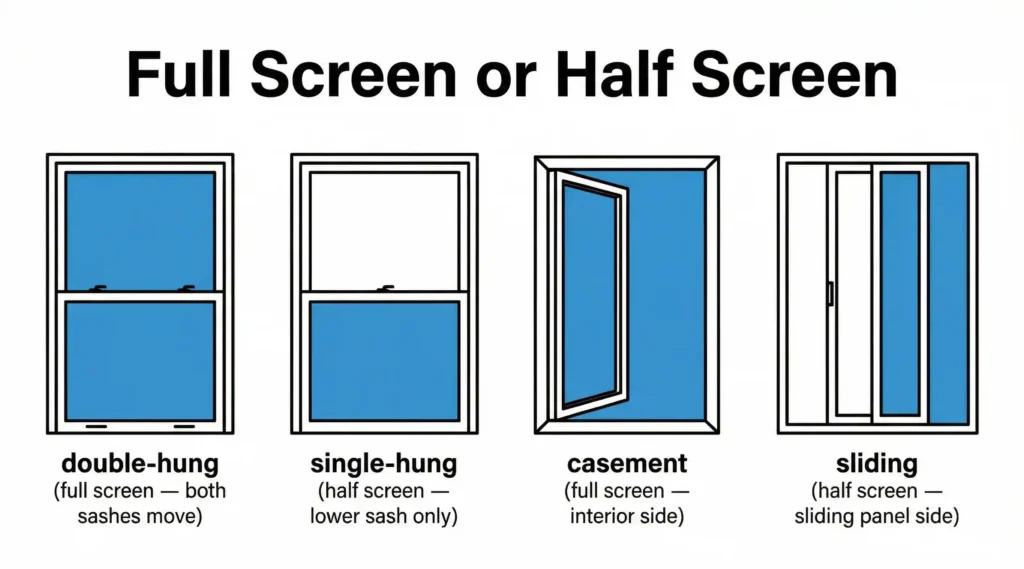
One detail that catches many homeowners off guard is that the screen size relative to the opening is not the same across all window types.
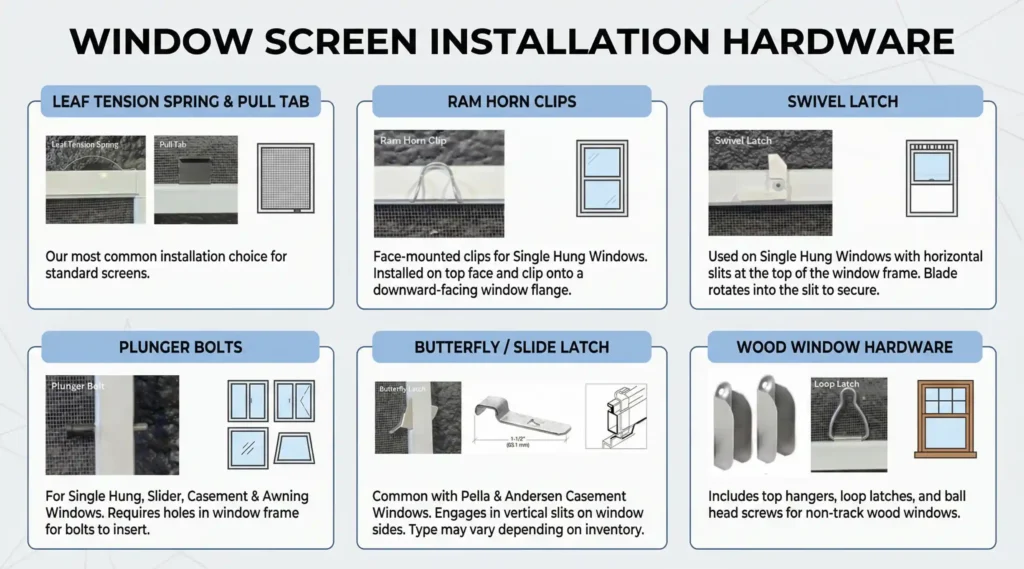
Double-hung windows require a full screen because both the upper and lower sashes operate. The screen covers the entire opening and is typically accessed through lever plungers located near each corner of the frame. This is by far the most common window configuration in New York City multi-family buildings and townhouses.
Single-hung windows use a half screen, since only the lower sash moves. Installing a full-size screen on a single-hung unit will not sit correctly and can put stress on the frame hardware.
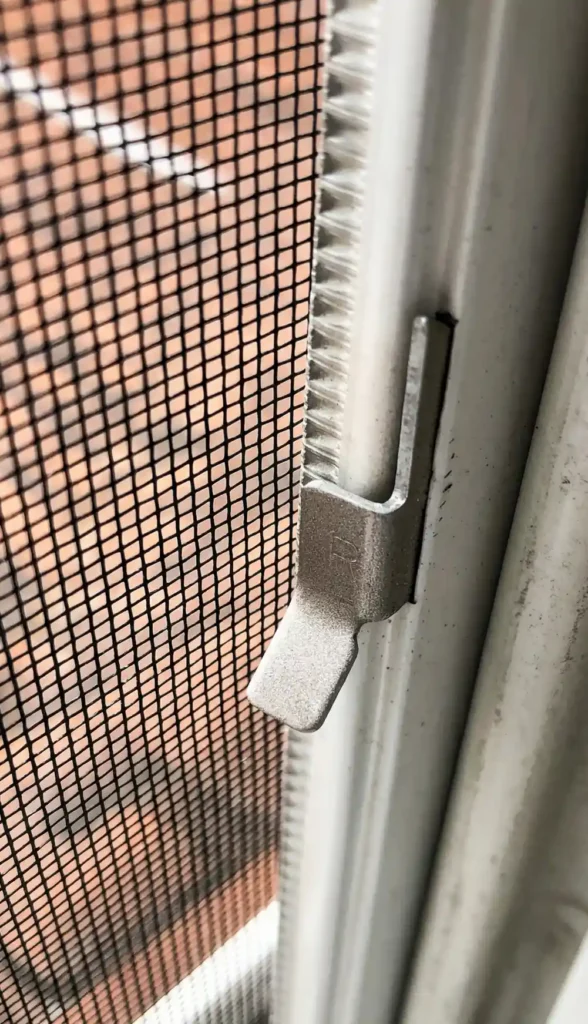
Casement and awning windows require a full screen installed from the interior side. The screen engages through latch clips that rotate into grooves along the sides of the window frame – a mechanism that is precise by design and leaves little room for error with non-original hardware.
Sliding windows use a half screen on the side of the unit that moves along the track.
Ordering the wrong configuration is one of the most common mistakes homeowners make when attempting to source window screens for Pella windows independently.
Why DIY Replacement Tends to Go Wrong
There are a few recurring problems that come up when homeowners attempt to replace Pella window screens without professional help.
The first is the latch compatibility issue. Pella casement windows, in particular, often use butterfly slide latches that engage in vertical slits along the window frame sides. These latches are not widely available aftermarket. Attempting to substitute a different hardware type usually results in a screen that either doesn’t lock into place or puts pressure on the original frame slots.
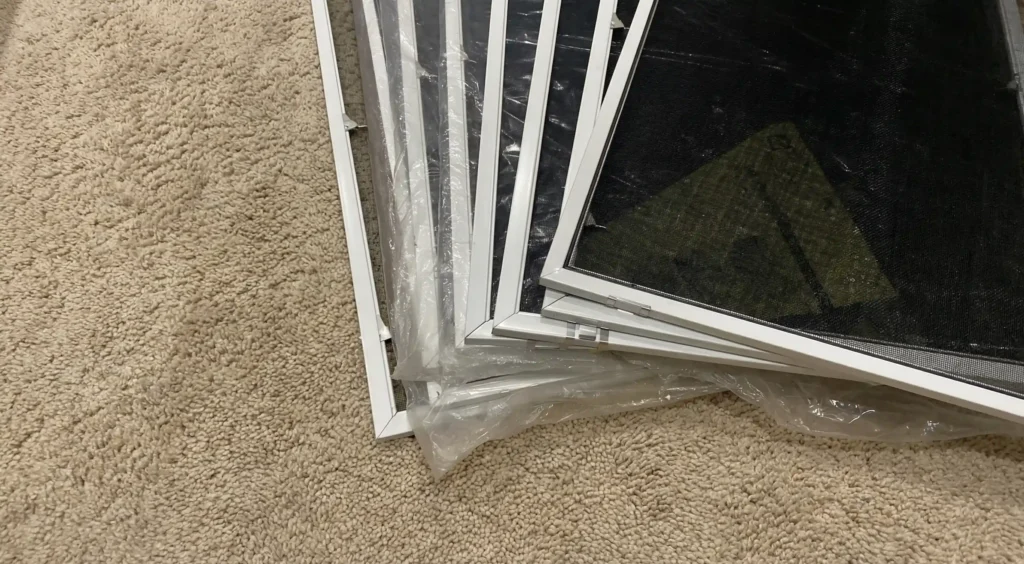
The second issue is sizing precision. Pella produces many different series, and two windows that appear visually identical in your apartment can require screens with different frame depths or profile widths. Measuring frame-end to frame-end is the starting point, but hardware placement still has to match the original installation.
The third issue applies specifically to older homes. For buildings where Pella windows were installed in the 1980s or 1990s, the manufacturer no longer provides parts for many of those older configurations. Independent professionals with hands-on Pella experience are often the only reliable option in these cases.
Getting It Done Right in New York City
For most New York City homeowners, the most practical approach to replacing or installing window screens for Pella windows is to work with a professional service that knows the brand. Big Apple Window Cleaning handles screen installation and replacement across all five boroughs, including proper measurement, hardware matching, and installation for Pella windows of various series and ages. The Big Apple Window Cleaning company offers a full range of window screen services – repair, re-screening, and custom fitting for non-standard openings – all outlined at bigapplewindowcleaning.com/window-screen-repairs/.
A professional visit typically takes less time than multiple hardware store trips and the frustration of a screen that doesn’t fit, doesn’t lock, or damages the frame on the way in.
Frequently Asked Questions
For newer Pella double-hung windows with standard lever plunger hardware, a careful DIY replacement is possible if you have accurate measurements and the correct hardware type. For casement windows, older series, or any unit with butterfly latches, professional service is the safer and more reliable option.
Pella builds windows across many product lines, each with slightly different frame depths, hardware locations, and latch types. A screen sized for the Pella 250 Series will not necessarily fit a Pella Architect Series unit with the same visible opening dimensions.
Look for a laser-etched code in the corner of the glass unit. You can contact Pella’s customer support with that code to confirm the series and compatible accessories.
The Hidden Screen and Integrated Rolscreen are low-maintenance by design – neither requires seasonal removal. However, in an urban environment like New York City, the screen cartridge and mesh should be inspected once a year, as airborne grime and pollen can accumulate in the housing and affect the folding mechanism over time.
New York City’s Housing Maintenance Code does not require landlords to provide window screens for insect protection. Window guards for child safety (required when children under 10 are present) are a separate legal obligation. This means most New York City residents – whether renters or owners – are responsible for sourcing and installing their own screens.
FURTHER READING

Article by Dayne Watkins



How to Clean the Outside of Your Apartment Windows in NYC
In most New York apartments the outside of the glass is cleaned from inside. Double-hung windows put in since the 1980s usually tilt in, and once the sash tilts, the outside face is a foot from your hands. When a window won’t tilt, the reason is usually a seized latch or a dead balance, not […]
Explore more
Six Windows, One $350 Minimum: Three Ways NYC Residents Get Exterior Glass Cleaned Without Overpaying
If you asked for a quote on your apartment and the number came back higher than you expected for six windows, nothing went wrong. You are running into a visit minimum, and in New York most apartments sit below it. Ours is published: $350 for residential work. That is not a markup for small jobs. […]
Explore more
Your Building Replaced the Windows and Left You With No Screens: Whose Bill Is It, and How to Get Custom Screens (NYC)
You are not crazy, and you are not stuck: the “screen orphan” problem explained It usually happens like this. Your building runs a window replacement project, the crew swaps your old slide-up windows for shiny new casement or crank-out windows, and then they leave. No screens. No paperwork. No phone number for where to buy […]
Explore more