
Glass Graffiti Repair: How to Save Your Windows Without Replacing Them
By Dayne Watkins
Contents
- Not All Glass Graffiti Is Created Equal
- Why This Problem Hits Harder in the Five Boroughs
- The Three-Step Restoration Process
- Step 1: Grinding
- Step 2: Pre-Polishing
- Step 3: Polishing with Cerium Oxide
- The Math: Repair vs. Replacement
- Prevention: Anti-Graffiti Film
- When Restoration Is Not Enough
- Take Action Before It Gets Worse
DO YOU HAVE AN URGENT NEED?
Our fast response service can fix your urgent problem. We have teams ready for action.
AND GET A FREE QUOTE
Get monthly window insight
You walk up to your storefront on a Monday morning, coffee in hand, ready to start the week – and there it is. Somebody decided your window was the perfect canvas for their artistic ambitions. Except this is not spray paint you can wipe off with a rag. This is acid-etched or scratched graffiti burned right into the glass. Your stomach drops, and the first thought is: how much is a new window going to cost me?
Here is the good news. Glass graffiti repair has come a long way in the last two decades. In most cases, a skilled technician can restore your damaged window to near-original clarity for a fraction of the replacement price. Before you call a glazier and write a four-figure check, let us walk you through what actually happens to glass when vandals hit it, how the repair process works, and why removing graffiti from glass is almost always the smarter move.
Not All Glass Graffiti Is Created Equal
The word “graffiti” comes from the Italian graffito, which literally means “a scratch.” That etymology is oddly perfect because scratching is exactly what modern glass vandals do – just with nastier tools than the Romans had.
There are two main types of damage you will encounter, and understanding the difference matters for glass graffiti repair outcomes.
Scratched graffiti is the physical kind. Vandals use keys, rocks, carbide-tipped tools, or even diamond-point pens to carve tags directly into the surface. The depth ranges from hairline marks you can barely feel to deep gouges that catch your fingernail. Storefronts along Atlantic Avenue in Brooklyn and commercial corridors in the Lower East Side see this constantly.
Acid etch graffiti is the chemical kind – and it is far more destructive. Vandals apply hydrofluoric acid or, more commonly, craft-store etching products based on ammonium bifluoride. They squeeze the paste from refillable markers or shoe-polish bottles, leave their tag, and walk away. The acid chemically dissolves the glass surface, creating frosted white marks with characteristic drip tails along the bottom edges. You cannot scrub this off. You cannot clean it with any product on earth. The damage is molecular.
A third type – spray paint and marker graffiti – sits on the glass surface and can usually be removed with solvents. That is the easy one, and it is not what keeps property owners up at night.
Why This Problem Hits Harder in the Five Boroughs
Glass etching as a vandalism method reportedly first appeared during the 1999 Battle of Seattle and quickly spread down the West Coast. By the mid-2000s, it had arrived in full force on the East Coast. An NPR report from 2006 described acid etching as the “new tool du jour” among taggers in the subway system, where acid mixed with shoe polish left indelible marks on train windows.
The city fought back. In 2009, the City Council passed legislation requiring retailers to record the personal details of anyone purchasing etching acid – name, address, ID type, and amount – and keep those records for a year. Under New York Penal Law § 145.60, making graffiti is a Class A misdemeanor carrying up to 364 days in jail and a $1,000 fine. If the damage exceeds $250, it escalates to a Class E felony.
But here is what many property owners do not realize: under NYC Administrative Code § 10-117.3, building owners are legally required to keep their property free of graffiti. After a 311 report, you get 35 days to remove it or request an extension. The city’s Graffiti-Free NYC program will come paint over tags on walls for free – but acid damage on glass? That is entirely on you. The program does not restore etched windows. That means you are either paying for glass graffiti repair or paying for a brand-new panel.
Central and Southwest Brooklyn consistently generate the highest volume of graffiti complaints citywide, followed by East Williamsburg and parts of Lower Manhattan. If your storefront sits anywhere along these corridors, the odds of getting tagged at some point are uncomfortably high.
The Three-Step Restoration Process
Professional graffiti scratch repair follows a systematic process that has been refined over years of field practice. It is not magic – it is controlled abrasion, and when done right, the results are genuinely impressive. Whether you are dealing with a single acid tag on a Williamsburg cafe window or a dozen scratched panels along a Flatbush Avenue retail strip, the graffiti scratch repair approach remains the same.
Step 1: Grinding
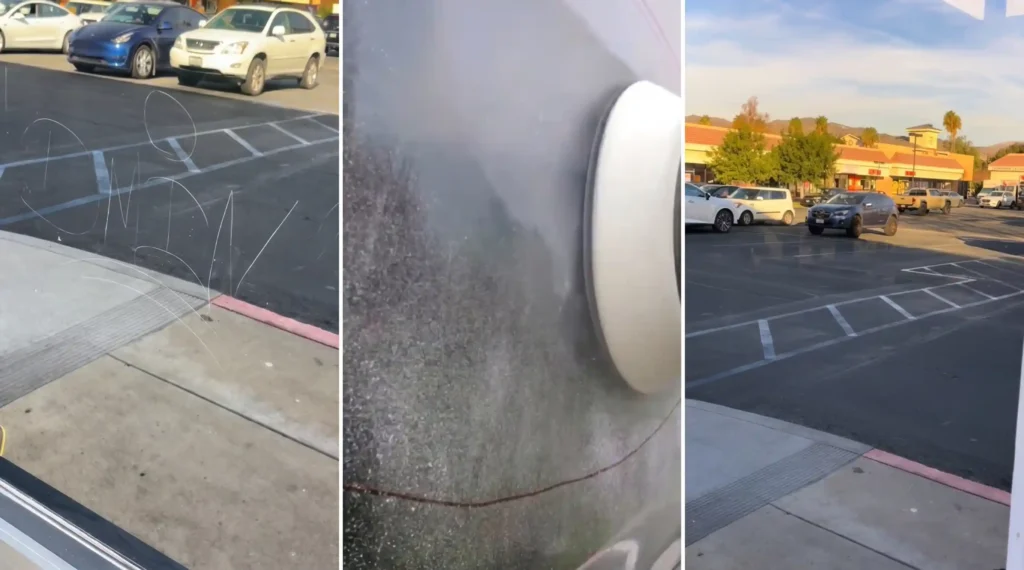
A technician uses silicon carbide abrasive discs mounted on a variable-speed rotary polisher, typically running at around 1,800 RPM. The goal is to grind the glass surface below the depth of the damage. For acid etch graffiti, this is critical – the visible white frosting is just the surface layer, and the chemical erosion often extends deeper than it appears. Technicians work in overlapping grid patterns, left to right and top to bottom, to ensure uniform material removal.
Step 2: Pre-Polishing
Finer abrasive discs smooth out the marks left by the initial grinding stage. This transitional step prevents the final polish from having to do too much heavy lifting and ensures there is no visible haze or waviness when you look through the glass at an angle.
Step 3: Polishing with Cerium Oxide
This is where the glass gets its clarity back. Cerium oxide – a soft rare-earth compound that has been the industry standard for glass polishing since the 19th century – is mixed with water into a slurry and applied using a felt pad. The compound restores optical transparency without scratching the surface. When done properly, the repaired area is virtually indistinguishable from the surrounding glass.
One thing that separates a competent technician from someone who will make your problem worse is temperature management. Tempered glass – the kind required by building code in most storefront applications – can shatter if the temperature differential between the work area and the rest of the pane exceeds approximately 120°F. Annealed glass, common in older residential buildings across Park Slope, the Upper West Side, and other pre-war neighborhoods, has an even lower threshold at around 80°F. A careless operator with a heavy hand can crack a $2,000 panel in seconds.
The Math: Repair vs. Replacement
This is where glass graffiti repair really makes sense. Let us look at some numbers.
Replacing a single tempered storefront glass panel in the five boroughs typically costs between $500 and $3,000, depending on size, glass type, and accessibility. Large custom panels can run well over $5,000 when you factor in union labor, permits if needed, and the lead time for custom-cut glass. And if your building is landmarked or has specific co-op board requirements for matching glass type, the price climbs even higher.
Professional graffiti scratch repair on that same panel? Industry averages run $200 to $500 per panel, with most jobs completed in about 90 minutes. That is a savings of 50% to 90% compared to replacement. For a storefront with multiple tagged panels – not uncommon after a busy weekend in Bushwick or along the Bowery – the difference can easily reach five figures.
At Big Apple Window Cleaning, we handle glass graffiti repair across all five boroughs and Long Island, and we consistently see clients save thousands by choosing restoration over replacement. The process is faster, less disruptive to your business, and in the vast majority of cases delivers results that are indistinguishable from new glass.
“If graffiti changed anything, it would be legal.” – Banksy. But since it does not change anything except your repair bill, let us keep going.
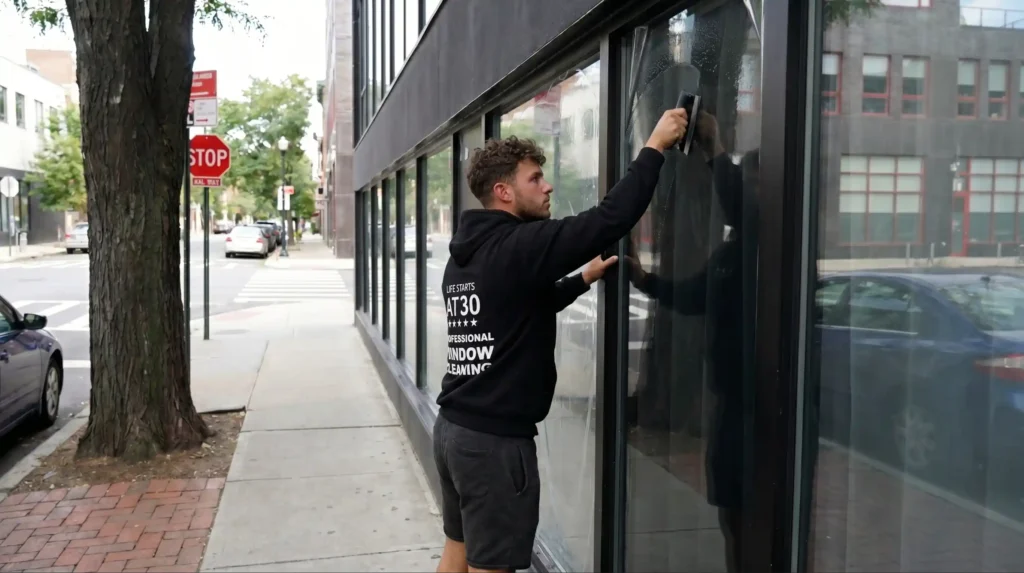
Prevention: Anti-Graffiti Film
Once you have gone through the process of removing graffiti from glass, the last thing you want is to do it again three months later. And if your storefront sits in a high-traffic tagging zone, repeat incidents are not a question of “if” but “when.”
Anti-graffiti window film is a clear, sacrificial layer applied to the exterior surface of the glass. If a vandal tags the film – whether with acid, a scratcher, or spray paint – you peel the damaged film off and apply a new one. The glass underneath stays pristine. Replacing a film layer costs roughly $6 to $10 per square foot, compared to hundreds or thousands for glass graffiti repair or replacement. Major brands like 3M offer both 4-mil interior and 6-mil exterior versions. The film blocks up to 99% of UV rays while transmitting about 90% of visible light, so it is practically invisible.
Some of the biggest names in retail have already adopted this approach for their storefronts. MTA transit stations, including the Oculus hub downtown, use anti-graffiti film across their glass surfaces. It is one of the most cost-effective investments a property owner can make in neighborhoods where graffiti scratch repair would otherwise become a recurring line item.
When Restoration Is Not Enough
Honesty matters, so here it is: not every damaged panel can be saved. If the acid etching is extremely deep, if there are structural cracks running through the damage zone, or if the glass has been tagged and repaired multiple times to the point of thinning, replacement becomes the safer and smarter option. A reputable glass graffiti repair professional will tell you this upfront rather than attempt a restoration that leaves you with wavy, distorted glass.
The rule of thumb is simple. If the damage is surface-level – and the vast majority of scratched and acid-etched graffiti falls into this category – restoration works beautifully. If the damage has compromised the structural integrity of the pane, it is time for new glass.
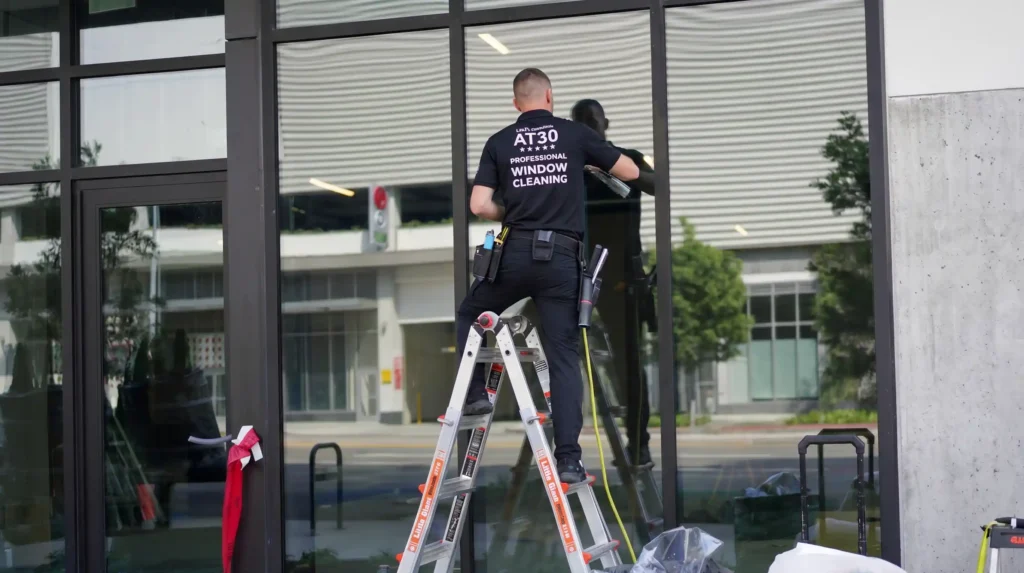
Take Action Before It Gets Worse
There is a well-documented psychological principle at work here: unrepaired graffiti attracts more graffiti. Vandals see an existing tag and view it as an invitation – either to add their own or to one-up the competition. Removing graffiti from glass quickly breaks this cycle and signals that the property is actively maintained. Prompt glass graffiti repair is not just about aesthetics – it is a proven deterrent.
If your windows have been hit, do not wait. Document the damage with photos, file a police report for your records and insurance, and contact a professional who specializes in removing graffiti from glass. The Big Apple Window Cleaning team provides glass restoration services with free on-site estimates, and we have been restoring windows across the city since 2006.
Your storefront glass is the first thing customers see. Make sure what they see is your business – not somebody else’s tag.
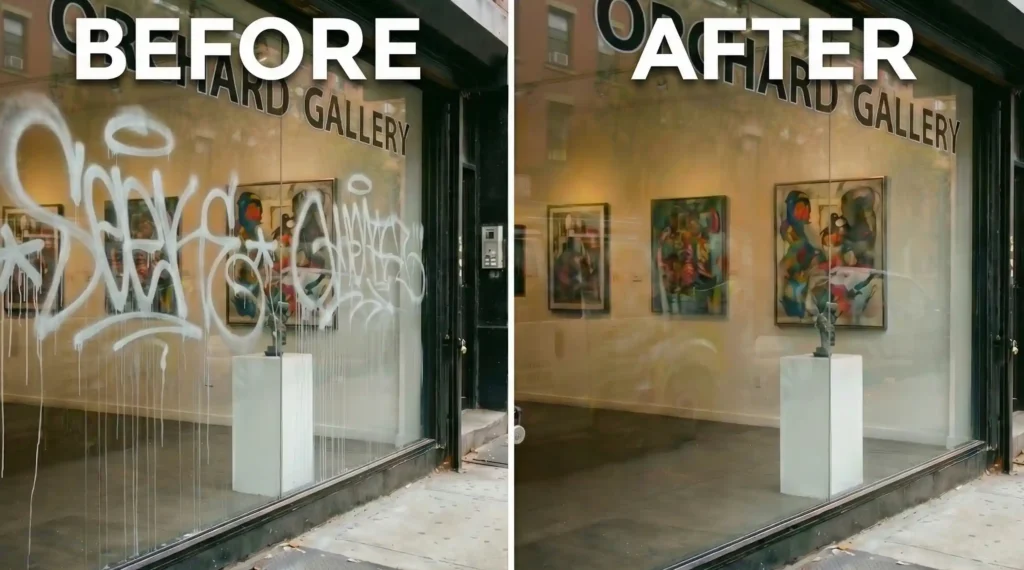
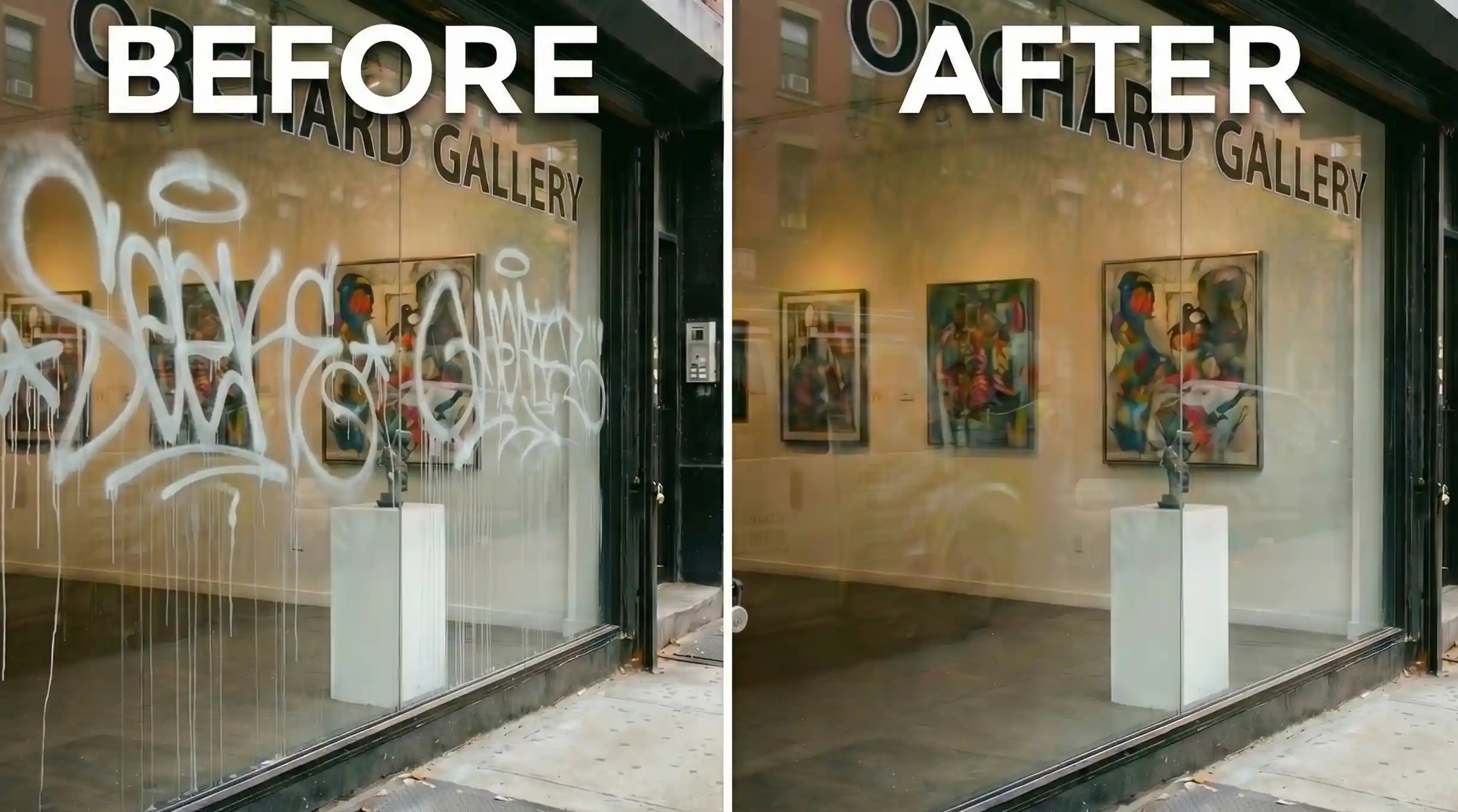
Side-by-side before and after comparison of professional graffiti removal from the large storefront window of an art gallery on Orchard Street in Manhattan’s Lower East Side. The before panel shows heavy white spray paint tags with characteristic drip tails covering most of the glass surface. The after panel shows the same window fully restored – clear glass revealing colorful paintings and a sculpture on a white plinth inside the gallery. This type of spray paint graffiti, which sits on the glass surface rather than etching into it, is removable with professional solvents without damaging the underlying glass.
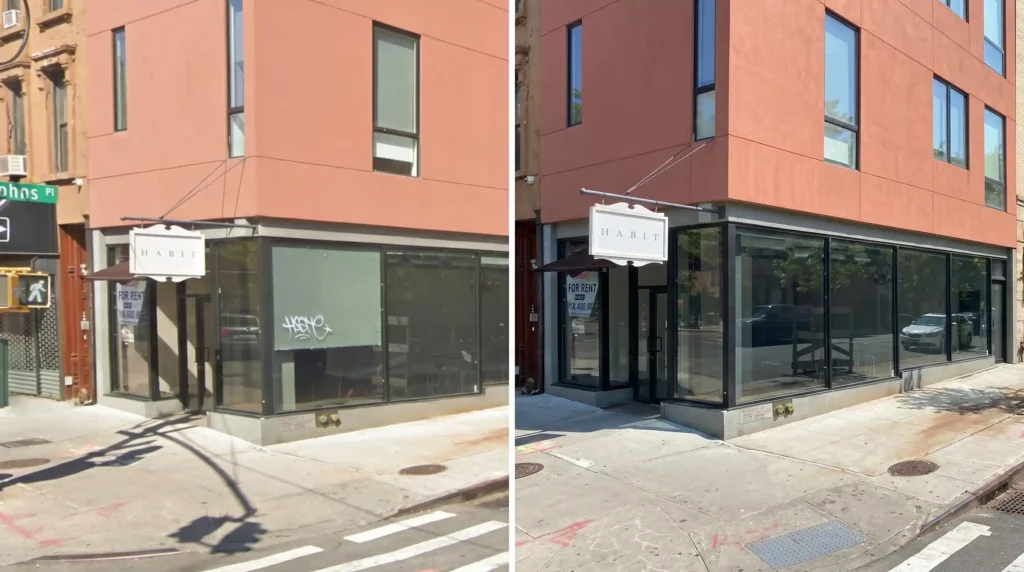
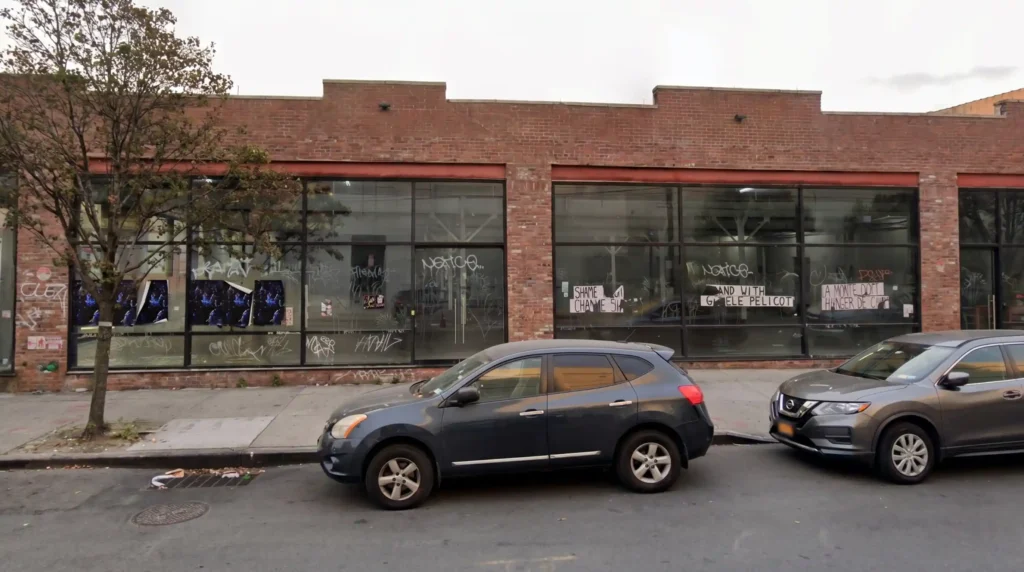
Street-level before and after comparison of graffiti removal from the large storefront windows of a corner retail space on Johns Place in Brooklyn. The before panel shows a white graffiti tag applied to the glass of the vacant “Habit” storefront at a busy intersection. The after panel shows the same corner with the glass fully restored – clear, clean, and ready for a new tenant. This type of repair is common along Brooklyn’s commercial corridors, where vacant storefronts are frequent targets and property owners face a legal obligation under NYC Administrative Code Section 10-117.3 to remove graffiti within 35 days of a 311 report.
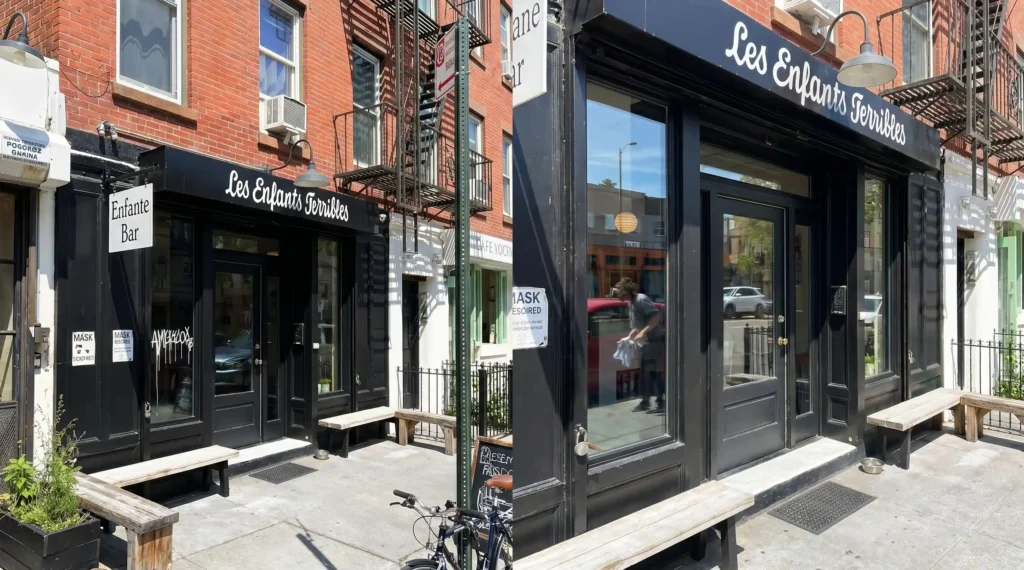
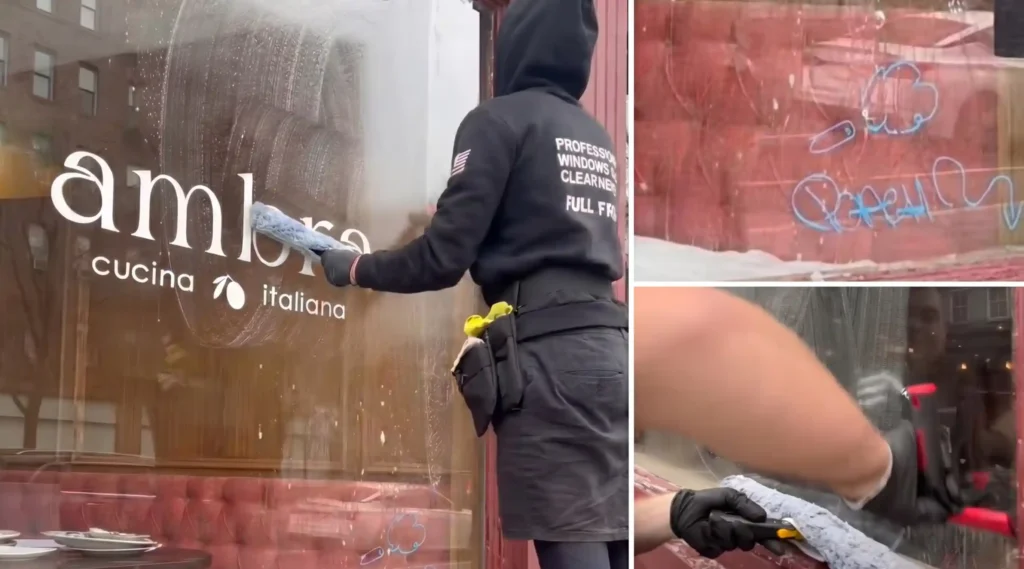
Street-level before and after comparison of graffiti removal from the storefront windows of Les Enfants Terribles, a restaurant and bar in Upper Manhattan. The before panel shows a white spray paint tag with drip marks applied to the lower section of the dark-framed window. The after panel shows the same facade with the glass fully restored – clear reflections, no residue, and the restaurant’s interior visible through clean glass.
FURTHER READING

Article by Dayne Watkins


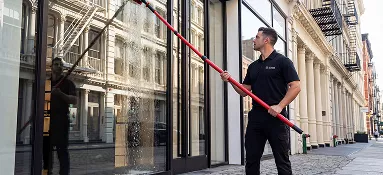
How to Clean the Outside of Your Apartment Windows in NYC
In most New York apartments the outside of the glass is cleaned from inside. Double-hung windows put in since the 1980s usually tilt in, and once the sash tilts, the outside face is a foot from your hands. When a window won’t tilt, the reason is usually a seized latch or a dead balance, not […]
Explore more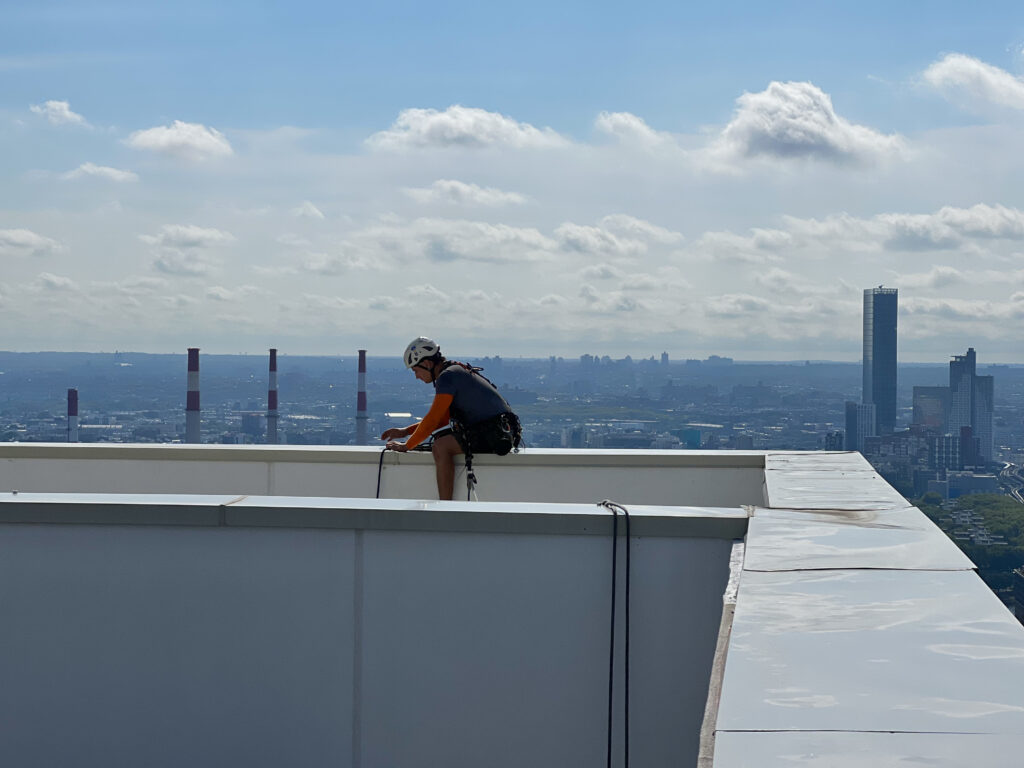
Six Windows, One $350 Minimum: Three Ways NYC Residents Get Exterior Glass Cleaned Without Overpaying
If you asked for a quote on your apartment and the number came back higher than you expected for six windows, nothing went wrong. You are running into a visit minimum, and in New York most apartments sit below it. Ours is published: $350 for residential work. That is not a markup for small jobs. […]
Explore more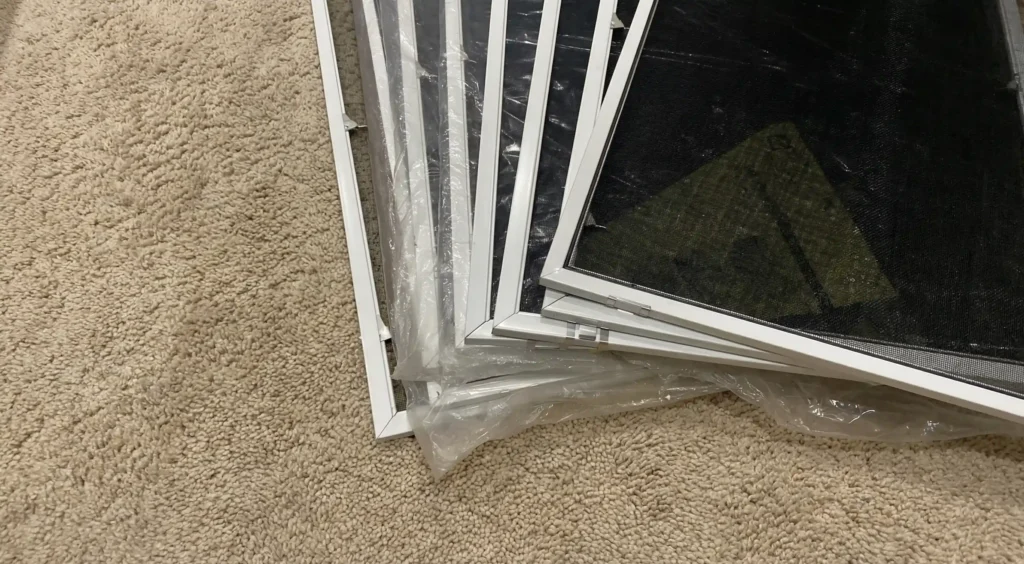
Your Building Replaced the Windows and Left You With No Screens: Whose Bill Is It, and How to Get Custom Screens (NYC)
You are not crazy, and you are not stuck: the “screen orphan” problem explained It usually happens like this. Your building runs a window replacement project, the crew swaps your old slide-up windows for shiny new casement or crank-out windows, and then they leave. No screens. No paperwork. No phone number for where to buy […]
Explore more