
Sliding Window Replacement: What Every Urban Homeowner Should Know Before Calling a Contractor
By Dayne Watkins
Contents
- How a Sliding Window Fails (and Why You Should Care)
- Repair or Replace: A Decision That Saves You Money
- What Sliding Window Replacement Actually Costs
- The 36 x 36 Sliding Window Replacement
- Sliding Glass Window Replacement vs. Sliding Glass Door Glass Replacement Cost
- How the Replacement Process Works
- Energy Ratings Worth Understanding
- Building Approvals You Cannot Skip
DO YOU HAVE AN URGENT NEED?
Our fast response service can fix your urgent problem. We have teams ready for action.
AND GET A FREE QUOTE
Get monthly window insight
If your sliding window requires a full-body workout just to open six inches, this article is for you. Sliding windows are everywhere – in kitchens above the sink, in bedrooms facing fire escapes, in living rooms where a double-hung simply would not fit. They are practical, space-saving, and honestly underappreciated – until the day they stop sliding.
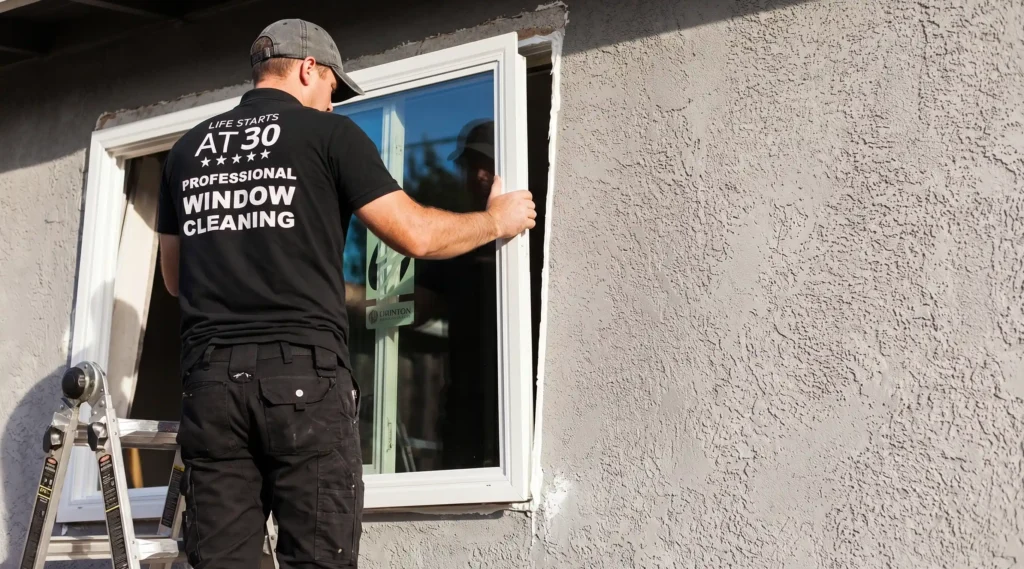
This guide covers the full scope of sliding window replacement, from recognizing the warning signs to understanding what the job actually costs in a dense urban environment. Whether you live in a brownstone in Brooklyn or a postwar co-op in Queens, the details matter more than most contractors will tell you.
How a Sliding Window Fails (and Why You Should Care)
A sliding window has fewer moving parts than a double-hung or casement, which is both its strength and its weakness. There are no springs, no pulleys, no crank mechanisms. The sash rides on a track with small rollers, and gravity does the rest. When it works, it works beautifully. When it does not, you are left with a window that either refuses to budge or rattles like a subway car at rush hour.
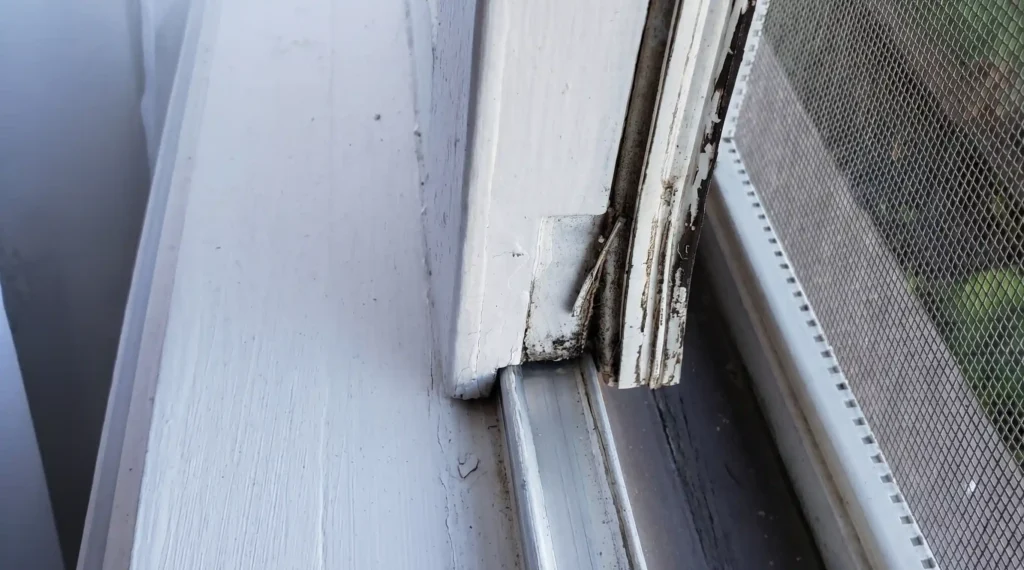
The most common failure points include dirty or corroded tracks, worn-out rollers, damaged weatherstripping, and seal failure between double-pane glass. In a city environment, these problems accelerate. Construction dust, exhaust particulates, and plain old grime pack into tracks far faster than they would in suburban settings. If you have ever cleaned a windowsill and found a layer of black residue thick enough to write your name in, you already understand the problem.
“A sliding window is a lot like a cab in traffic – if you have to force it, something has already gone wrong.“
Fogging between the panes is another telltale sign. That cloudy haze is not dirt you can wipe off. It means the insulated glass unit’s seal has failed, and the argon gas between the panes has escaped. At that point, the window is no longer insulating your apartment properly, and your energy bills are quietly climbing.
Repair or Replace: A Decision That Saves You Money
Not every stiff slider needs a full sliding window replacement. Sometimes a $15 tube of silicone lubricant and 20 minutes of track cleaning will restore smooth operation. But there is a line, and crossing it means throwing money at repairs that will not last.
Here is how to think about it:
| Problem | Fix It | Replace It |
| Dirty tracks, minor debris | Clean and lubricate the track | – |
| Worn rollers | Replace rollers ($20 – $50 per set) | If frame is also damaged |
| Drafts around the sash | Replace weatherstripping ($30 – $80) | If frame is warped or rotted |
| Foggy glass (seal failure) | Replace the insulated glass unit ($150 – $500) | If the frame is over 20 years old |
| Cracked or broken glass | Replace the pane ($150 – $400) | If double-pane seal also failed |
| Frame rot, warping, or corrosion | – | Full sliding window replacement |
| Single-pane glass | – | Upgrade to double-pane |
| Lock or latch will not engage | Try adjusting the sash alignment first | If hardware is discontinued |
The general rule is simple. If the frame is structurally sound and the hardware is still available, repair makes sense. If the frame is compromised, or if you are dealing with single-pane glass in a building where energy costs are already brutal, a full replacement pays for itself within a few years.
What Sliding Window Replacement Actually Costs
National averages hover around $600 to $1,150 per window, including materials and labor. But national averages are almost useless if you live in a major metropolitan area. Urban installation carries a premium that most online calculators do not account for.
Here is why your costs run higher in a dense city:
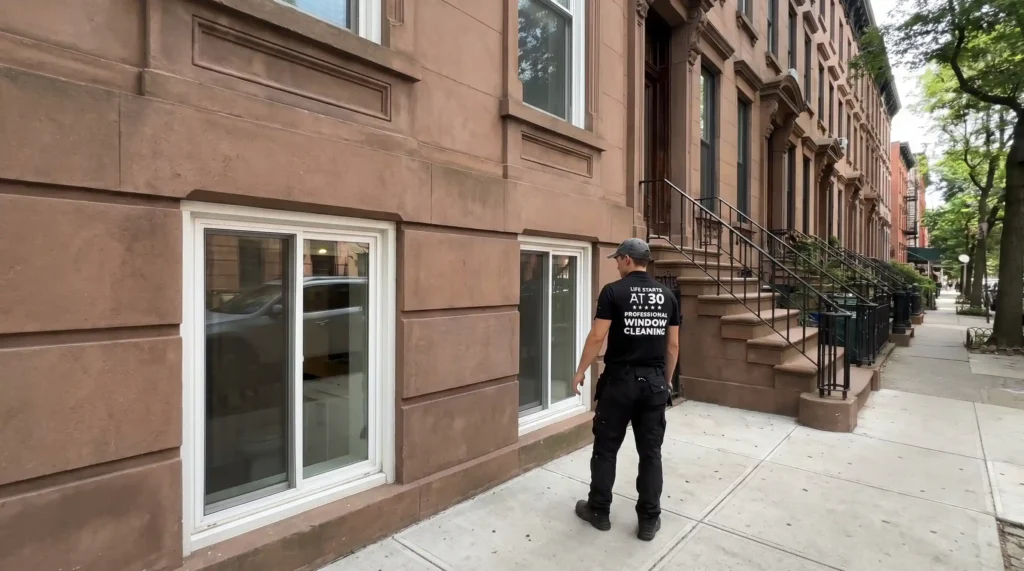
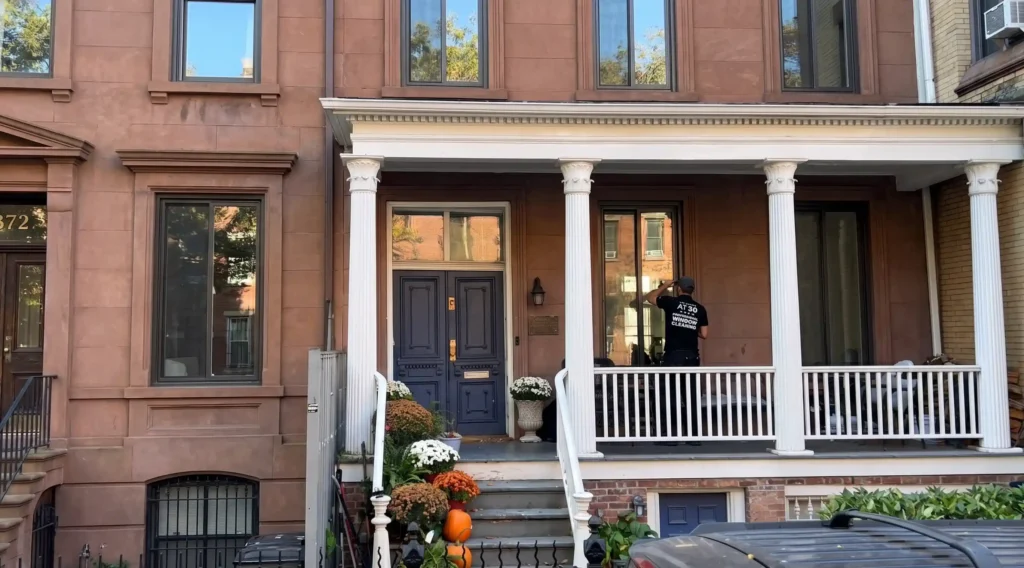
Building access logistics add time and money. A contractor replacing windows in a third-floor walkup has to carry materials up narrow stairwells, protect common hallways, and coordinate with building management for freight elevator access. Co-op and condo boards often require insurance certificates, alteration agreements, and sometimes even board approval before any work begins. If your building sits in a landmarked historic district, the Landmarks Preservation Commission may need to approve the replacement windows to ensure they match the original configuration, material, and finish.
For a standard vinyl sliding window replacement in this kind of urban context, expect to pay $800 to $1,800 per window installed. Fiberglass frames push that range to $1,200 to $2,400. Custom sizes – common in pre-war buildings with non-standard openings – add another 15% to 30%.
The 36 x 36 Sliding Window Replacement
If you have a kitchen window above the sink or a bathroom window that seems perfectly square, there is a good chance it measures 36 by 36 inches. The 36 x 36 sliding window replacement is one of the most common projects we see, and for good reason – this size appears in thousands of residential buildings across every borough.
The good news about a 36 x 36 sliding window replacement is that it is a standard size. Manufacturers like JELD-WEN, MI Windows, and Simonton all produce stock units in this dimension, which keeps material costs lower than custom orders. A basic vinyl 36 x 36 sliding window replacement runs $300 to $600 for the unit alone, with installation adding $150 to $350 depending on the complexity of the opening.
However, “standard size” can be misleading. Replacement windows are not the same dimensions as new construction windows. You need to measure the existing opening at three points across the width and three points along the height, then use the smallest measurement. Pre-war buildings are notorious for openings that have settled unevenly over decades, so a 36 x 36 sliding window replacement might actually require a unit sized at 35-3/4 by 35-1/2 to fit properly.
At Big Apple Window Cleaning, we handle 36 x 36 sliding window replacement projects regularly, and the measurement step alone prevents more headaches than any other part of the process.
Sliding Glass Window Replacement vs. Sliding Glass Door Glass Replacement Cost
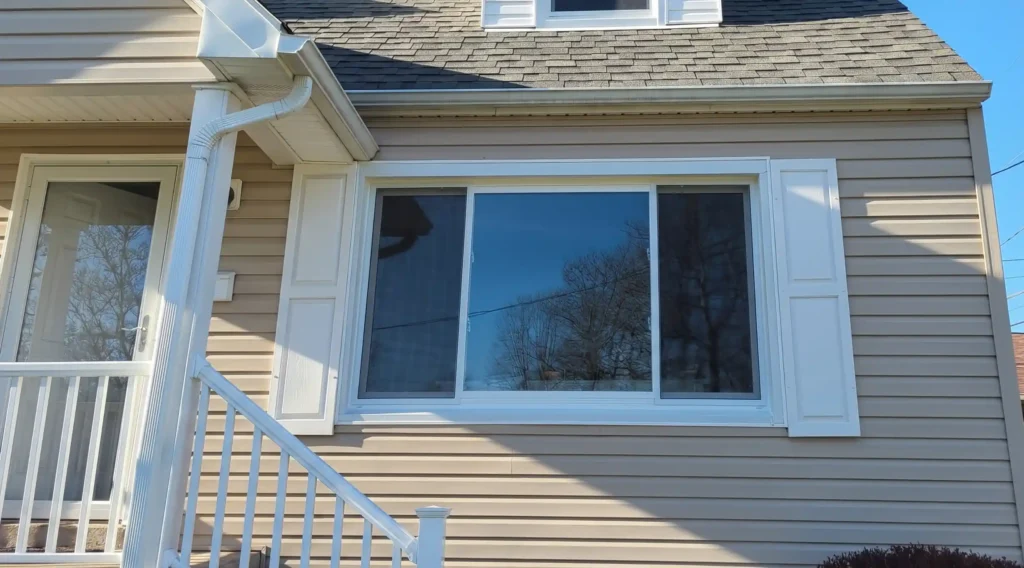
These two jobs sound similar, but the scope and pricing are quite different. A sliding glass window replacement involves a wall-mounted window unit – typically 36 to 84 inches wide – where the sash moves horizontally on a track. A sliding glass door, on the other hand, is a full-height entry point, usually 72 to 96 inches tall, with much heavier panels and a different structural footprint.
For a sliding glass window replacement, glass-only repair ranges from $150 to $500, while a complete unit replacement runs $600 to $1,800 depending on size and frame material. A second sliding glass window replacement in the same room often qualifies for a small discount since the contractor is already on site.
The sliding glass door glass replacement cost is a different conversation. Replacing just the glass panel in a sliding door averages $250 to $1,000 nationally, but in a metro area, expect $400 to $1,400. The sliding glass door glass replacement cost climbs higher if the door requires tempered or laminated safety glass, which building codes mandate for any glazing within 24 inches of a door opening. If the entire door unit needs replacement rather than just the glass, the sliding glass door glass replacement cost can reach $2,500 to $4,500 installed. Factors include the frame material, the number of panels, and whether the unit requires hurricane-rated or impact-resistant glazing.
How the Replacement Process Works
Whether you are tackling a small bathroom slider or a wide living room unit, the process follows a predictable sequence. Here is what a professional installation looks like from start to finish:
- The installer measures the existing opening at multiple points to confirm the replacement unit will fit.
- The old sliding sash is removed first by lifting it into the upper track and tilting the bottom outward.
- The fixed panel is released by removing the center bar or retaining clips, then lifted out the same way.
- The old frame is inspected for rot, water damage, or structural issues that need repair before the new window goes in.
- Flashing tape is applied around the perimeter of the opening to create a waterproof barrier.
- The new window is dry-fitted to check alignment before any sealant is applied.
- A continuous bead of exterior-grade caulk is applied to the sill and the face of the existing frame.
- The new window is pressed into position, leveled, and shimmed as needed.
- Fastening screws go into the side jambs only – never into the sill, which can distort the frame.
- Gaps between the frame and the rough opening are insulated with low-expansion foam (too much foam can warp the frame).
- Interior trim is reinstalled or replaced, and the exterior is sealed with a final bead of caulk, leaving weep holes open for drainage.
The entire job typically takes two to four hours per window. In a high-rise or a building with restricted elevator access, add time for logistics.
Energy Ratings Worth Understanding
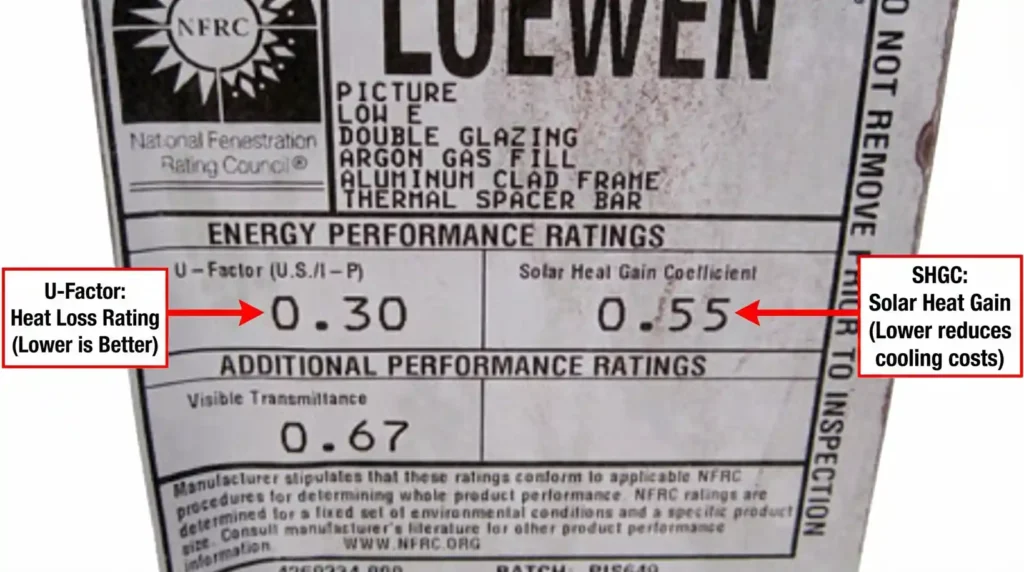
Every replacement window carries an NFRC label with four key numbers. Two of them matter most for residential purposes.
The U-Factor measures how well the window resists heat transfer. Lower is better. For a northern climate zone, aim for 0.30 or below to keep heated air inside during winter. The Solar Heat Gain Coefficient, or SHGC, indicates how much solar heat passes through the glass. In a mixed climate where you both heat and cool your home, a balanced SHGC around 0.30 to 0.40 works well – low enough to prevent overheating in summer but high enough to capture some passive solar warmth in winter.
Sliding windows are inherently less airtight than casement or awning windows because the sash does not compress against the frame when closed. This makes quality weatherstripping and tight roller adjustment critical. Choosing a double-pane unit with Low-E coating and argon gas fill closes most of the efficiency gap, and the U.S. Department of Energy estimates that upgrading from old single-pane windows can reduce heating and cooling energy use by 25% to 30%.
Building Approvals You Cannot Skip
Replacing a window with one of the same size typically does not require a Department of Buildings permit – the opening is not being altered, and the structural envelope stays intact. But “no DOB permit” does not mean “no approvals.”
If your building is a co-op, you almost certainly need board approval and a signed alteration agreement before any contractor touches your windows. Many condo associations have similar requirements. The board may also dictate the approved brands, colors, and configurations to maintain a uniform facade.
Landmarked buildings add another layer. The Landmarks Preservation Commission requires replacement windows on primary facades to match the historic originals in configuration, operation, material, and finish. Simulated divided lights are generally accepted in place of true divided lights, but the glazing area cannot shrink more than 10% for metal windows or 6% for wood.
Our team at Big Apple Window Cleaning works with boards and building managers regularly and can help navigate these requirements so the project does not stall over paperwork.
A sliding window replacement is not the most glamorous home improvement, but it is one of the most impactful. A window that seals properly, slides smoothly, and insulates efficiently changes how a room feels every single day. Whether you need a straightforward 36 x 36 sliding window replacement for your kitchen or a full sliding glass window replacement for a living room with a view, the right contractor and the right product make all the difference. Do the research, get your measurements right, and do not let anyone talk you into paying for a new construction window when a properly sized replacement insert will do the job for half the cost.
FURTHER READING

Article by Dayne Watkins



How to Clean the Outside of Your Apartment Windows in NYC
In most New York apartments the outside of the glass is cleaned from inside. Double-hung windows put in since the 1980s usually tilt in, and once the sash tilts, the outside face is a foot from your hands. When a window won’t tilt, the reason is usually a seized latch or a dead balance, not […]
Explore more
Six Windows, One $350 Minimum: Three Ways NYC Residents Get Exterior Glass Cleaned Without Overpaying
If you asked for a quote on your apartment and the number came back higher than you expected for six windows, nothing went wrong. You are running into a visit minimum, and in New York most apartments sit below it. Ours is published: $350 for residential work. That is not a markup for small jobs. […]
Explore more
Your Building Replaced the Windows and Left You With No Screens: Whose Bill Is It, and How to Get Custom Screens (NYC)
You are not crazy, and you are not stuck: the “screen orphan” problem explained It usually happens like this. Your building runs a window replacement project, the crew swaps your old slide-up windows for shiny new casement or crank-out windows, and then they leave. No screens. No paperwork. No phone number for where to buy […]
Explore more