
Window Spring Replacement: What Every NYC Homeowner Should Know Before Calling for Help
By Dayne Watkins
Contents
DO YOU HAVE AN URGENT NEED?
Our fast response service can fix your urgent problem. We have teams ready for action.
AND GET A FREE QUOTE
Get monthly window insight
You raise the window, and it slides right back down. You prop it open with a book, a can of soup, whatever is within reach. For a while, that works. But eventually, the book slips, the sash drops, and you are left with a window that might as well be bolted shut. Sound familiar? If you live in a pre-war walk-up in Park Slope or a high-rise anywhere in Manhattan, chances are you have dealt with this problem at least once.

The culprit is almost always a worn-out balance spring – the hidden mechanism inside the window frame that holds the sash in place when you open it. The fix? Window spring replacement. It is one of the most common and cost-effective window repairs in existence, yet most people know surprisingly little about how it works, what it costs, or when to attempt it on their own versus when to call a professional.
This guide breaks it all down.
How a Window Balance Spring Works
Every single-hung and double-hung window relies on a balance system to counteract gravity. Without it, the movable sash – the part you actually slide up and down – would have nothing holding it in position. The balance spring provides an equal and opposite force to the weight of the glass and frame, letting you park the window at any height you like.
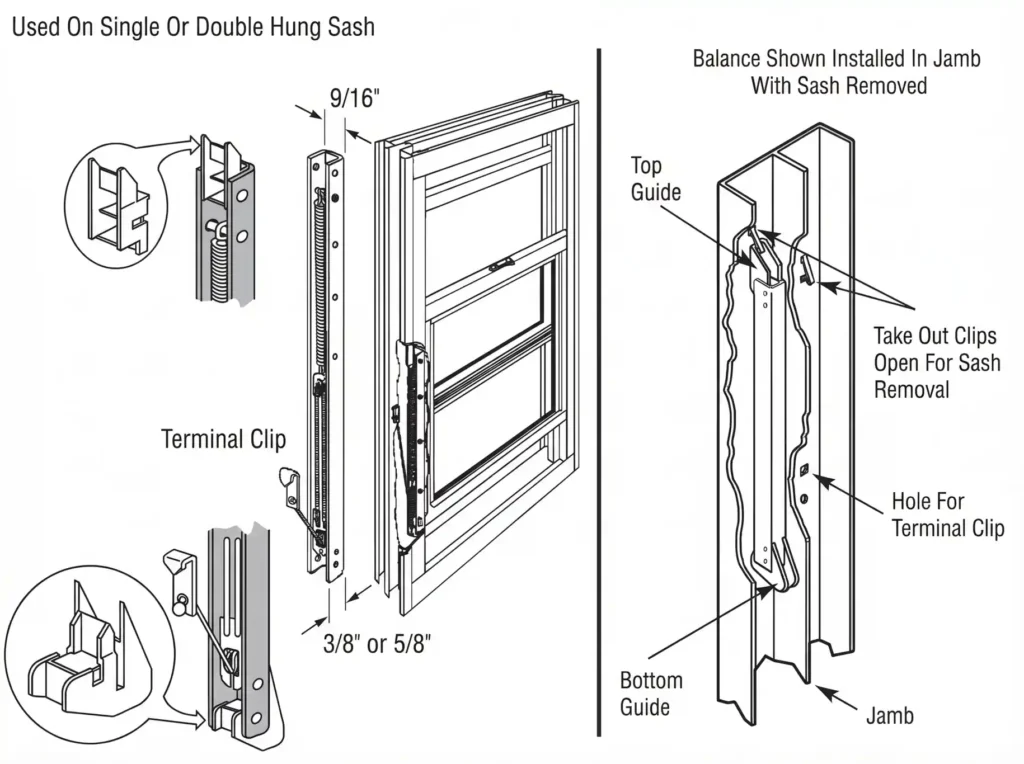
The concept is simple, but the engineering has evolved considerably over the past century. There are four distinct types of balance systems found in New York City buildings, and identifying yours is the essential first step before any window spring replacement project.
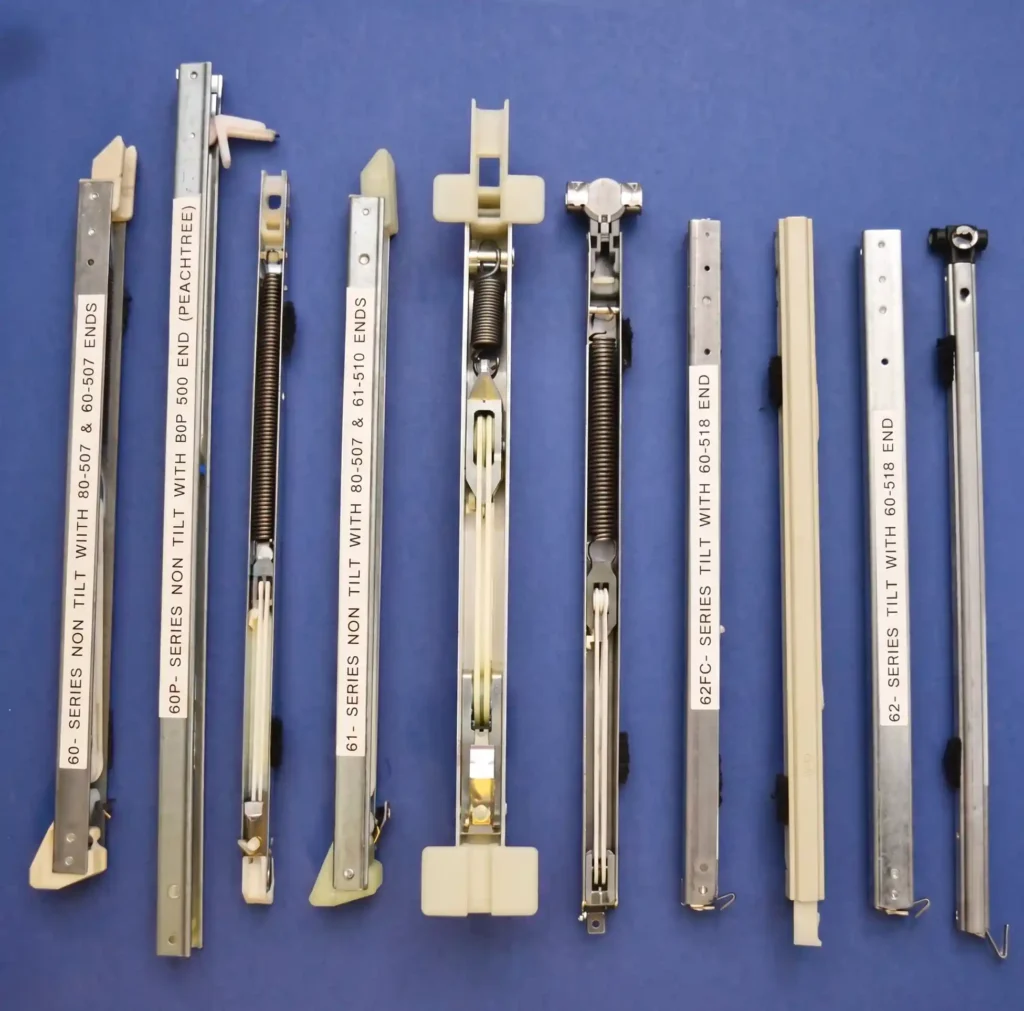
The Four Balance Systems You Will Find in NYC
Cord and weight balances are the oldest design still in active use. If your building went up before 1940 – and tens of thousands of NYC apartments fall into that category – this is probably what is hiding inside your walls. Cast iron or lead weights hang in a cavity beside the window frame, connected to the sash by cotton cords that run over small pulleys. The weights match the sash weight, creating a perfect counterbalance. The weak link is the cord itself: cotton deteriorates, especially when exposed to decades of temperature swings and humidity. When it snaps, the sash loses all support and the window becomes nearly impossible to keep open. Restringing the cords is an option, but many homeowners use this as an opportunity to upgrade to a modern spring system and insulate the newly empty wall cavity in the process.
Spiral balances replaced cord and weight systems starting in the 1970s. A coiled metal rod sits inside a tube, attached to a spring that can be tightened or loosened with a special tensioning tool. These are cheaper and simpler than their predecessors, but they have a significant drawback – the spring loses tension with every cycle of use. After roughly 1,000 openings and closings, performance starts to drop. A broken spiral spring cannot be repaired; complete window spring replacement is the only solution.
Block and tackle balances are the most common system in windows manufactured from the late 1990s onward. They use a pulley, a cord, and a coil spring housed inside a metal channel. The first patent for this design was filed in 1997, and it quickly became the industry standard. Block and tackle systems handle heavier sashes better than spirals, do not require regular lubrication, and tend to last significantly longer. When they do fail, it is usually because the cord has worn through or the spring has corroded.
Constant force balances represent the cutting edge. They use a rolled stainless steel coil that operates like a tape measure – extending and retracting smoothly, providing consistent tension across the full range of motion. Most manufacturers rate these for over 15,000 cycles and back them with a lifetime parts warranty. The stainless steel construction resists rust and corrosion, which is a meaningful advantage in humid coastal climates like New York’s. You will find constant force systems primarily in modern vinyl windows.
How to Tell Your Balance Spring Has Failed
Some symptoms are dramatic, others are gradual. Pay attention to these warning signs:
- The sash slides down on its own after you raise it, either immediately or within a few minutes.
- Opening the window requires significantly more force than it used to.
- One side of the window operates smoothly while the other sticks, creating a visible tilt.
- You hear a metallic snap or a thud inside the wall – a sign that a spring or cord has broken loose.
- The window creeps upward on its own when closed, which indicates an overly strong balance was installed previously.
- You can see visible damage – a disconnected cord, a bent rod, or a cracked housing – when you remove the sash.
In a city governed by strict window safety regulations, ignoring these signs is not just inconvenient – it can be a genuine hazard. New York City Health Code Section 131.15 requires landlords in buildings with three or more units to install window guards in apartments where a child aged 10 or younger lives. A faulty balance spring makes any window less predictable, and unpredictable windows near children are exactly what this law was designed to prevent. Updated rules effective in 2026 expand these requirements to cover more window types and carry per-unit penalties for noncompliance.
What Window Spring Replacement Actually Costs
Here is where the numbers tell a compelling story.
DIY replacement parts – the springs themselves – typically run between $15 and $50 each, depending on the type and brand. If you hire a professional, expect to pay $50 to $100 per window for a standard window balance spring replacement, according to recent estimates from HomeGuide and HomeAdvisor. The job usually takes 30 minutes to two hours per window.

Now compare that to full window replacement. The national average sits around $554 per window, with a typical range of $338 to $897 depending on the frame material, glass type, and installation complexity. In New York City, labor costs push those figures even higher. Replacing 10 double-hung vinyl windows in an average apartment can run upward of $20,000.
The takeaway is clear: if your frame and glass are in good shape, window spring replacement saves you five to ten times the cost of a full swap. It is the kind of repair that property managers and co-op boards love, because it restores full functionality at a fraction of the price.
Should You Do It Yourself?
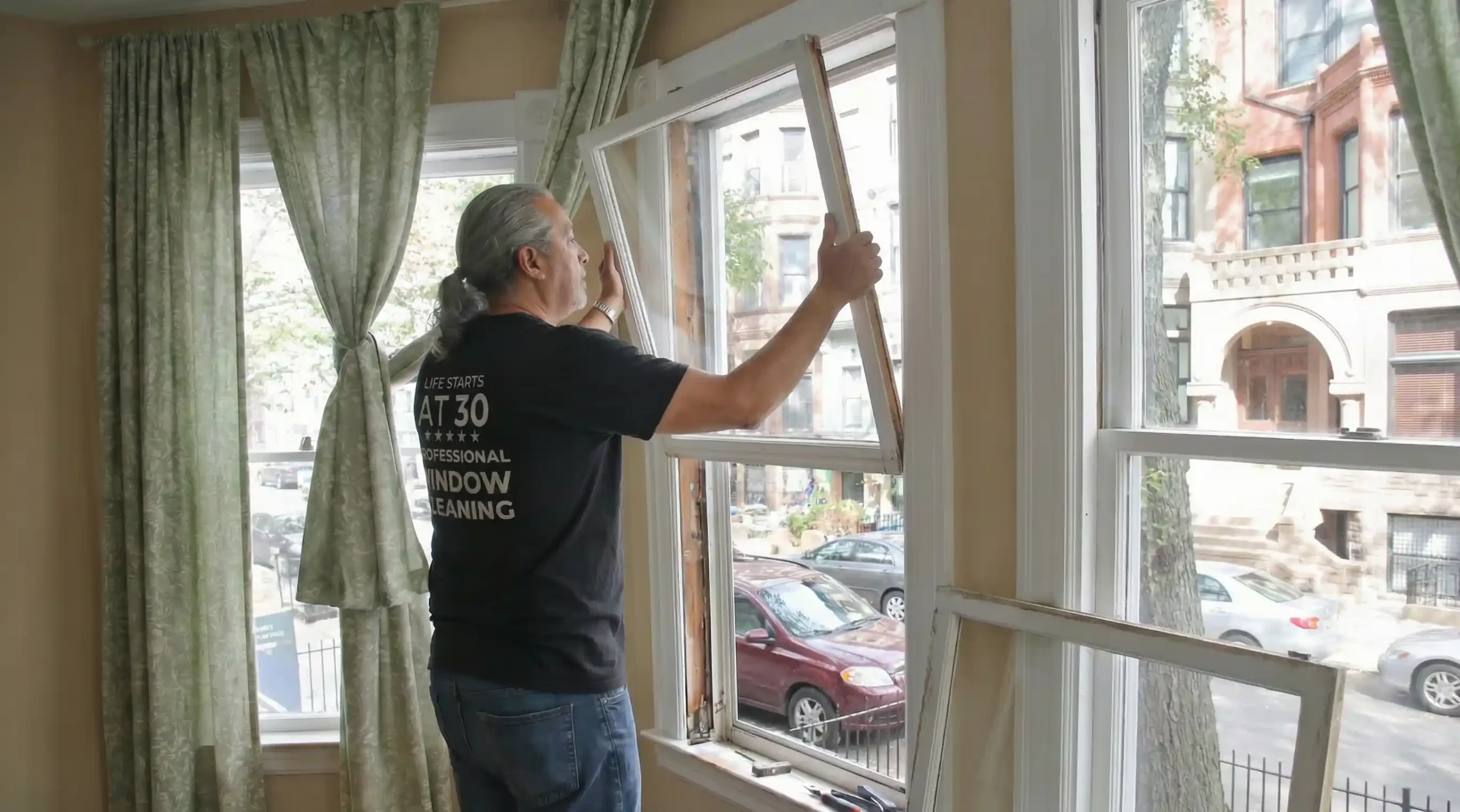
For someone comfortable with basic tools – a screwdriver, pliers, a putty knife, and a bathroom scale – replacing a window balance spring is a realistic weekend project. The general process involves removing the sash, disconnecting the old balance, matching the replacement to your sash weight, installing the new spring, and reinstalling the sash.
SWISCO (swisco.com), one of the largest window hardware suppliers in the United States, offers detailed identification wizards, video tutorials, and a customer forum where experts help homeowners match their existing hardware to the right replacement part. Window Hardware Direct (windowhardwaredirect.com) is another excellent resource, with an extensive catalog covering spiral, block and tackle, coil spring, and constant force balances for virtually every window brand on the market.
However, there are situations where calling a professional is the smarter move. If your pre-war building still uses a cord and weight system and you want to upgrade to spring balances, the job involves modifying the jamb, removing old weights, and potentially insulating the cavity – a multi-step process that goes beyond a simple swap. If the window is large, heavy, or located above the first floor, safety becomes a serious factor. Balance springs are under tension, and mishandling them during removal or installation can cause injury. Heavier sashes in older NYC buildings sometimes weigh 30 pounds or more, making removal a two-person job at minimum.
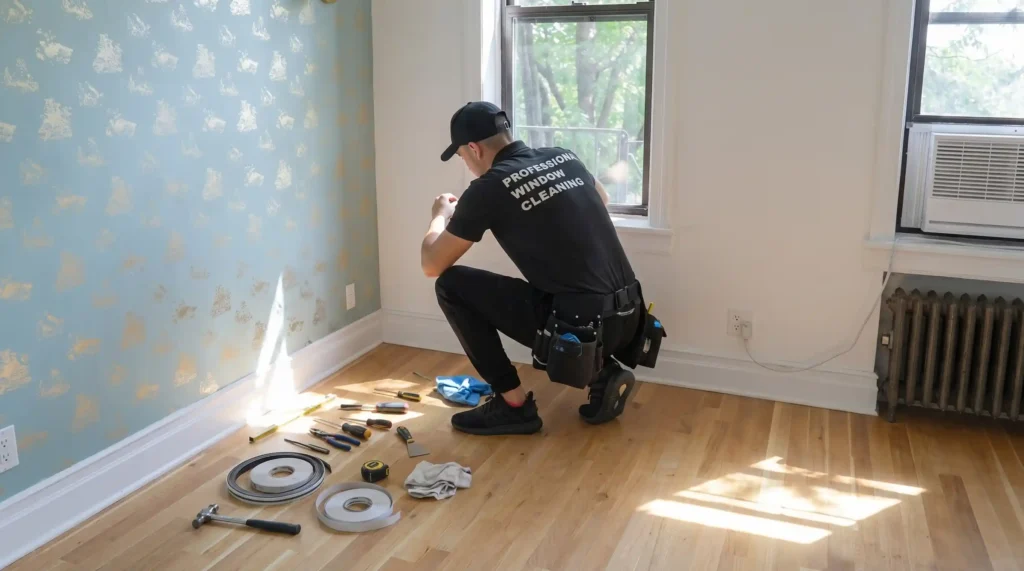
At Big Apple Window Cleaning, we handle window spring replacement across all five boroughs as part of our full range of window repair services. If you are unsure about the type of balance system in your windows or the scope of the repair feels beyond a simple DIY project, our team can identify the hardware, source the correct parts, and complete the installation efficiently. When in doubt, it is always better to bring in a professional than to risk damaging the window or working unsafely with a tensioned spring.
Tips That Save Time, Money, and Frustration
Replace both springs at the same time. This is the single most important rule in any window spring replacement job. Pairing a new spring with an old, weakened one creates an uneven load – the new spring wears out faster, and the sash operates unevenly. Every reputable parts supplier will tell you the same thing.
Weigh the sash before ordering. Each balance spring supports half the total sash weight. A spring that is too strong makes the window difficult to close or causes it to rise on its own. A spring that is too weak lets the sash drift downward. Remove the sash, place it on a bathroom scale, and divide by two. That number is what each spring needs to support.
Document everything before disassembly. Photograph the balance system from multiple angles, note any stamp codes on the hardware, and mark which side is which. This makes reassembly straightforward and helps you order exact replacements if needed.
Lubricate during reassembly. A silicone-based spray on the tracks reduces friction, quiets operation, and protects metal components from the humidity that is unavoidable in a coastal city like New York.
When Replacing the Spring Is Not Enough
A new balance spring only makes sense when the rest of the window is structurally sound. If the wooden frame is rotting, the sash is warped, or moisture has fogged the space between double-pane glass (indicating seal failure), then the issue goes deeper than the spring. In those cases, a full sash replacement or complete window replacement is the more responsible investment.
On the other hand, if your pre-war co-op has solid wooden frames and original single-pane glass in decent condition, upgrading from a cord and weight system to modern constant force or block and tackle balances can extend the functional life of those windows by 15 to 20 years – all without the cost or disruption of tearing out the entire unit. For buildings trying to preserve historic character while improving day-to-day livability, that upgrade is the sweet spot.
Window balance springs are one of those invisible components that nobody thinks about until they fail. But in New York City, where we depend on our windows for ventilation, daylight, and whatever breeze we can catch on a humid July evening, keeping them operational is worth every dollar.
Window spring replacement is fast, affordable, and dramatically effective. Whether you tackle it yourself with parts from a trusted supplier or bring in a professional crew, the result is the same: windows that stay exactly where you put them. Big Apple Window Cleaning is always here to help if you need expert assistance with your window spring replacement or any other window repair across New York City. Get in touch for a free estimate – and retire that soup can for good.
FURTHER READING

Article by Dayne Watkins



How to Clean the Outside of Your Apartment Windows in NYC
In most New York apartments the outside of the glass is cleaned from inside. Double-hung windows put in since the 1980s usually tilt in, and once the sash tilts, the outside face is a foot from your hands. When a window won’t tilt, the reason is usually a seized latch or a dead balance, not […]
Explore more
Six Windows, One $350 Minimum: Three Ways NYC Residents Get Exterior Glass Cleaned Without Overpaying
If you asked for a quote on your apartment and the number came back higher than you expected for six windows, nothing went wrong. You are running into a visit minimum, and in New York most apartments sit below it. Ours is published: $350 for residential work. That is not a markup for small jobs. […]
Explore more
Your Building Replaced the Windows and Left You With No Screens: Whose Bill Is It, and How to Get Custom Screens (NYC)
You are not crazy, and you are not stuck: the “screen orphan” problem explained It usually happens like this. Your building runs a window replacement project, the crew swaps your old slide-up windows for shiny new casement or crank-out windows, and then they leave. No screens. No paperwork. No phone number for where to buy […]
Explore more