
Double Hung Window Repairs in NYC: A Practical Guide for Every Borough
Contents
- What Makes Double Hung Windows Tick (and What Makes Them Stop)
- The Five Most Common Problems (and What Is Behind Them)
- NYC Buildings and Their Window Personalities
- How to Fix a Double Hung Window: Where DIY Ends and Professionals Begin
- The Lead Paint Factor: Do Not Skip This
- Repair vs. Replace: The NYC Math
- When to Schedule Your Repairs
- Seasonal Maintenance That Saves You Money
DO YOU HAVE AN URGENT NEED?
Our fast response service can fix your urgent problem. We have teams ready for action.
AND GET A FREE QUOTE
Get monthly window insight
If you live in New York City long enough, you develop a sixth sense for things that are about to break. The subway door that hesitates. The radiator that clanks one too many times. And the double hung window that used to glide open but now requires the kind of force usually reserved for opening a pickle jar.
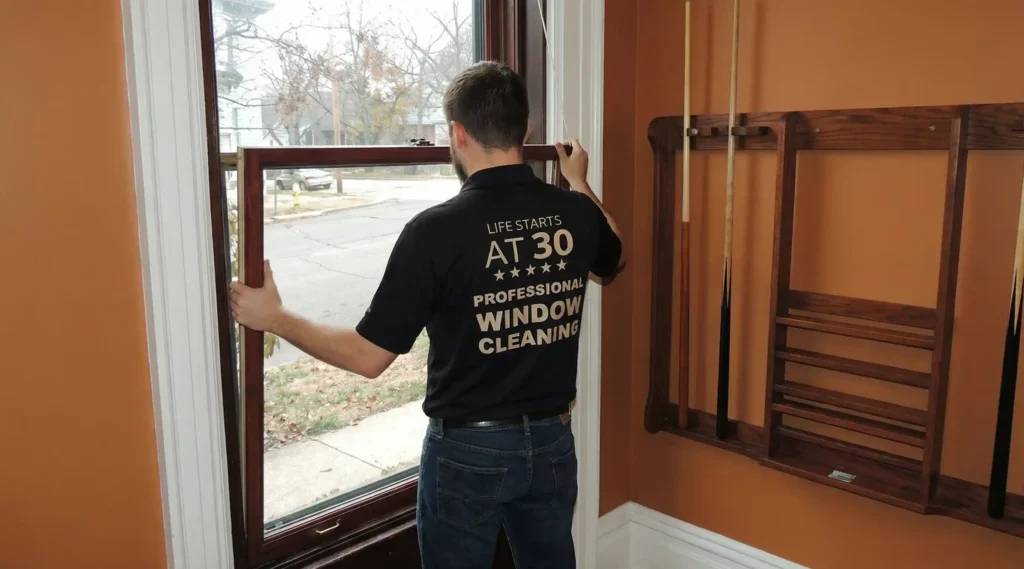
Double hung windows are everywhere in NYC – from pre-war co-ops on the Upper West Side to brownstones in Park Slope and walk-ups in Astoria. They have been the go-to window style for over a century, and for good reason. Both sashes move independently, allowing air to flow from the top and bottom at the same time – a lifesaver during those humid August nights when your AC is fighting a losing battle.
But here is the thing about double hung windows: they have a lot of moving parts. And moving parts, especially in a city where buildings shake every time the Q train passes underneath, eventually need attention. The good news is that double hung window repairs are often simpler and far cheaper than a full replacement. The trick is knowing what is actually wrong, what you can handle yourself, and when it is time to call in the pros.
What Makes Double Hung Windows Tick (and What Makes Them Stop)
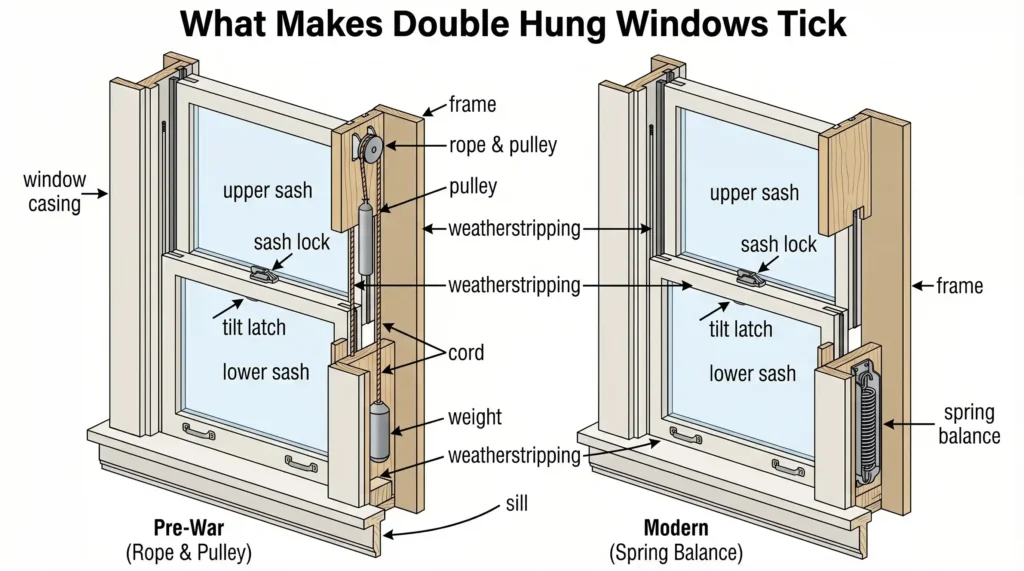
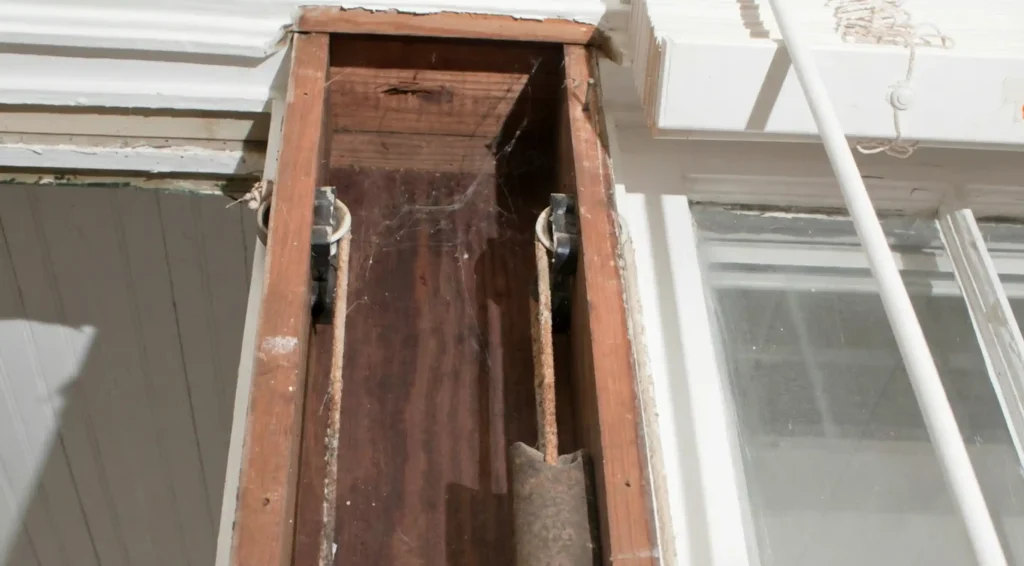
Before you grab a screwdriver and start poking around, it helps to understand the basic anatomy. A double hung window has two sashes – upper and lower – that slide vertically within a frame. Hidden inside the frame is a balance system that counteracts gravity and keeps your sash wherever you leave it. Older NYC buildings typically use a rope-and-pulley system with cast iron counterweights tucked inside the wall cavity. Newer windows rely on spring-loaded balances – either spiral, block-and-tackle, or constant force types.
The frame, sashes, balance system, weatherstripping, hardware, and glass all work together. When one component fails, it often creates a chain reaction. A broken sash cord leads to a window that slams shut, which damages the lock, which creates a gap, which lets in that lovely January wind off the Hudson.
The Five Most Common Problems (and What Is Behind Them)
After years of exposure to NYC weather – the freeze-thaw cycles, the coastal humidity, the occasional nor’easter that turns your street into a wind tunnel – double hung windows develop predictable issues. Here are the ones you are most likely to encounter:
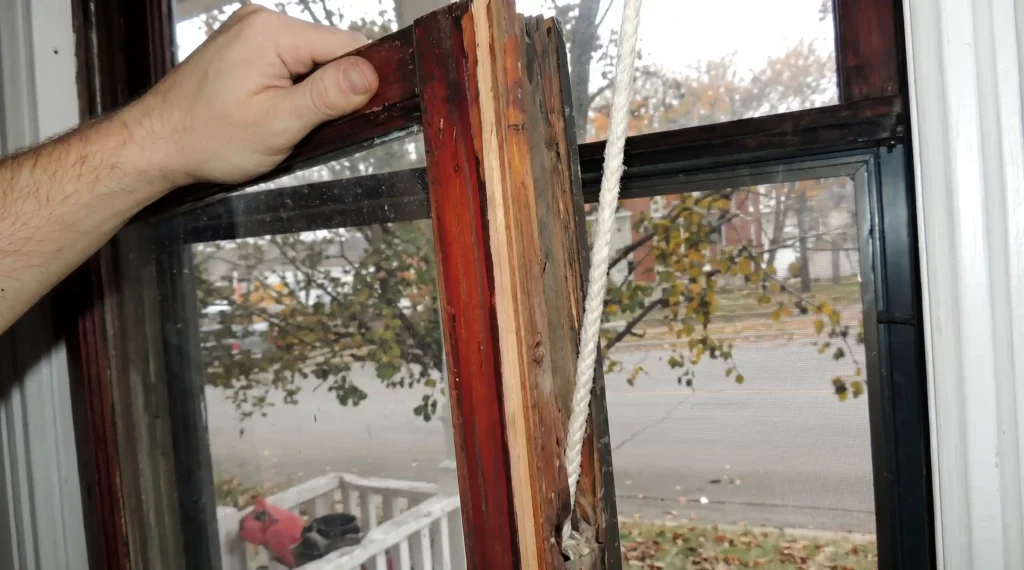
- The sash will not stay open. This is the number one complaint. In older buildings, a broken or stretched sash cord is usually the culprit. In newer windows, the spring balance may have failed or the balance shoe has shifted out of position. Either way, gravity wins and the window slides shut – sometimes gently, sometimes with a bang that startles your cat off the windowsill.
- The window is stuck or hard to move. Decades of paint buildup is the classic cause in pre-war apartments. Layers upon layers of latex and oil paint can essentially glue a sash to its frame. Wood swelling from humidity changes runs a close second, followed by dirt and debris clogging the tracks.
- Drafts and air leaks. If you feel cold air near your windows during winter, worn weatherstripping or failed seals are likely to blame. According to the U.S. Department of Energy, air leaks through windows and doors account for 25 to 30 percent of residential heating and cooling energy use. In a city where heat season runs from October 1 through May 31, that adds up fast.
- Foggy or condensation between glass panes. This means the seal between your double-pane glass has failed. Moisture gets trapped between the panes and no amount of Windex will fix it. The glass unit needs replacement – but not necessarily the whole window.
- Hardware failures. Broken sash locks, worn lift handles, and damaged tilt latches are all common in windows that see daily use. These are usually the easiest and cheapest repairs.
"I asked my super to fix my double hung window. He looked at it, jiggled the sash twice, said 'yeah that's broken,' and left. That was three months ago." - Overheard in a Brooklyn coffee shop, probably.
NYC Buildings and Their Window Personalities
Not all double hung window repairs are the same, and in New York City the type of building you live in shapes the problems you will face. Here is a quick breakdown:
| Building Type | Typical Window Age | Common Issues | Repair Complexity |
| Pre-war co-op (pre-1940) | 40 – 100+ years | Broken sash cords, paint-sealed sashes, wood rot, single-pane glass | Moderate to high |
| Post-war rental (1945 – 1980) | 30 – 60 years | Failed spring balances, worn weatherstripping, aluminum frame corrosion | Low to moderate |
| Brownstone / townhouse | 50 – 150 years | Rope-and-pulley failures, wood decay, historic hardware damage | High (often landmark) |
| Modern high-rise (1990+) | 10 – 30 years | Seal failure, balance mechanism wear, hardware fatigue from wind pressure | Low to moderate |
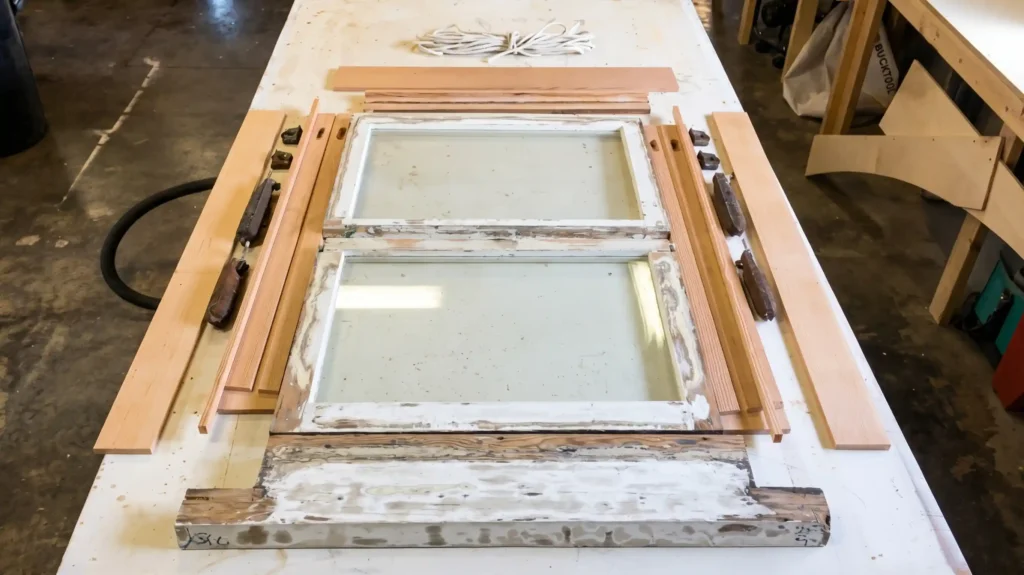
Pre-war buildings deserve special attention. Those original wooden double hung windows were built with old-growth lumber that modern manufacturers cannot match. The wood is denser, more resistant to rot, and – when properly maintained – can easily outlast the newer vinyl or aluminum replacements. That is why the NYC Landmarks Preservation Commission actively encourages repair over replacement for historic windows. And here is a practical bonus: basic repairs like glass replacement, caulking, weatherstripping, and sash cord replacement do not require an LPC permit. A full window replacement does.
How to Fix a Double Hung Window: Where DIY Ends and Professionals Begin
Some double hung window repairs are genuinely easy to handle yourself. Cleaning the tracks with a vacuum and brush, applying silicone lubricant, replacing simple hardware, and adding new weatherstripping are all weekend-friendly tasks. If your window is painted shut, carefully scoring the paint line with a utility knife and gently working the sash free is something most handy New Yorkers can manage.
Adjusting a displaced balance shoe is also doable if you have a flathead screwdriver and some patience. The process involves locating the tilt pin – a small U-shaped metal piece on either side of the sash – unlocking it by turning it 45 degrees into a C-shape, repositioning the shoe about two inches from the bottom of the lower sash, and relocking the pin. There are solid tutorials available from manufacturers like Marvin that walk through the process step by step.
But some repairs cross into professional territory, especially in NYC. If you need to fix double hung window issues involving a traditional rope-and-pulley counterweight system, you are dealing with accessing weight pockets inside the wall – a process that can go sideways quickly in a 100-year-old building. Balance spring repairs also carry real risk: those springs operate under significant tension, and an accidental release can cause injury.
Then there is the height factor. If your apartment is above the third floor, attempting window repairs while leaning out over a city street is not just risky – it is a genuinely bad idea. At Big Apple Window Cleaning, we handle double hung window repairs and restoration across all five boroughs and Long Island, including buildings where access requires specialized equipment and SPRAT-certified technicians. When the window is on the 15th floor of a Midtown high-rise, this is not the time for DIY heroics.
The Lead Paint Factor: Do Not Skip This
If your NYC building was constructed before 1978, there is a strong chance your window frames contain lead paint. Sanding, scraping, or disturbing lead paint without proper precautions is a serious health hazard – especially if children live in the home. New York City’s Local Law 1 requires building owners to address lead paint hazards in apartments where children under six reside.
Before you start any repair work on older windows, either test for lead paint using a home test kit or hire an EPA-certified renovator. This is not overcaution – it is common sense in a city where many buildings predate the lead paint ban by decades.
Repair vs. Replace: The NYC Math
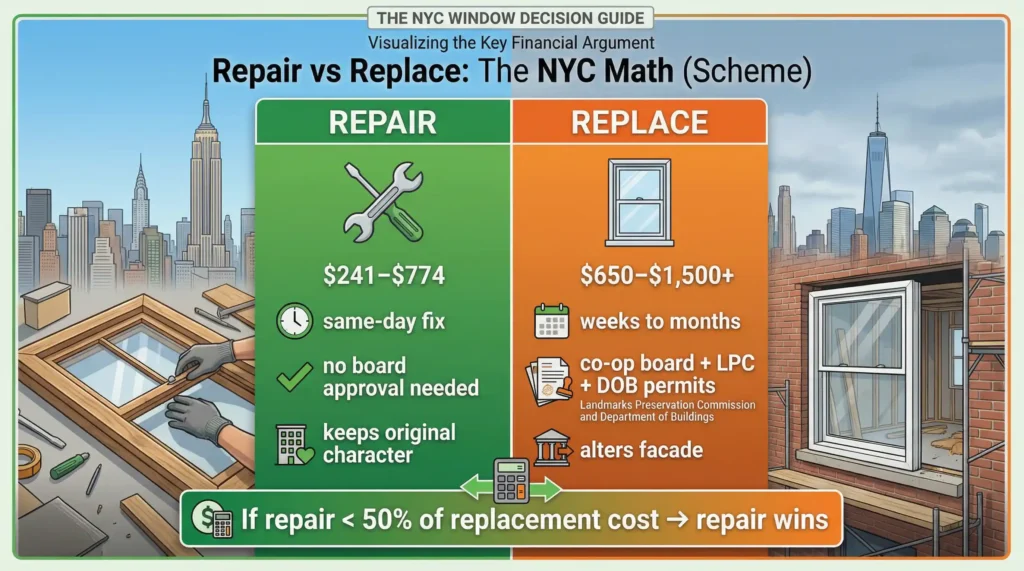
The instinct when a window gives you trouble is to think about replacing it entirely. But the numbers often favor repair, especially in New York City where replacement costs run 20 to 30 percent higher than the national average.
A typical double hung window repair in NYC costs between $241 and $774 per window, with an average around $499. Compare that to replacement costs of $650 to $1,250 per window for standard vinyl or fiberglass – and significantly more for wood-clad windows in landmark buildings, where custom work can push costs north of $1,500 per unit. If your repair bill is less than half the cost of a replacement, repair almost always makes more sense.
There is also the time factor. A repair can often be completed in a single visit. A full replacement – especially in a co-op where you need board approval, an alteration agreement, and possibly LPC review – can stretch across weeks or months.
When to Schedule Your Repairs
Timing matters. The best time for double hung window repairs in NYC is late spring or early fall – after the worst winter weather but before contractors get booked up for the season. Scheduling before October 1, when NYC’s heat season officially begins, means your windows will be sealed and functioning before you actually need them to keep the cold out.
Emergency window repairs during a January cold snap are possible but expect to pay premium rates – sometimes double or triple the normal hourly cost. A little preventive maintenance goes a long way.
Seasonal Maintenance That Saves You Money
You do not need to be a window expert to keep your double hung windows working well. A simple routine twice a year can prevent most common failures:
In spring, clean the tracks and channels, check the weatherstripping for wear, lubricate moving parts with silicone spray (never WD-40 – it attracts dust), and test both sashes for smooth operation. In fall, inspect caulking around the exterior frame, check for any glass seal failures, make sure locks engage fully, and consider adding storm windows if your building allows them.
Buildings near the coast – think Brighton Beach, the Rockaways, or Staten Island’s eastern shore – should pay extra attention to salt air corrosion on metal components. And if you are close to a subway line, periodic hardware tightening is worth the effort. Those daily vibrations loosen things over time.
Double hung window repairs are one of those home maintenance tasks that pay for themselves quickly – in comfort, energy savings, and avoided replacement costs. Most issues are well-documented and repairable, whether you are dealing with a stubborn sash in a Harlem brownstone or a drafty seal in a Long Island City condo.
For straightforward fixes – cleaning, lubricating, minor hardware swaps – grab your tools and get to work. But when it is time to fix double hung window problems involving complex balance systems, high floors, lead paint concerns, or landmark-regulated buildings, professional help is the smart call. Our team at Big Apple Window Cleaning has been handling double hung window repairs across New York City since 2008, with the equipment, insurance, and certification to work safely at any height and on any building type.
Your windows have been protecting your home for decades. A little attention now keeps them doing their job for decades more.
FURTHER READING

Article by Dayne Watkins


Roof Lantern Cleaning: A Professional Guide for New York Homeowners
Roof Lantern Cleaning: A Professional Guide for New York Homeowners Your roof lantern was supposed to flood the room with light. Instead, it is flooding the room with guilt every time you look up and see a layer of grime that could double as modern art. If you live in Brooklyn or Manhattan, you already […]
Explore more
House Facade Cleaning: A No-Nonsense Guide for Homeowners Who’d Rather Not Watch Their Walls Crumble
Your home’s facade does a thankless job. Day after day, it stands between your family and everything the urban environment throws at it – diesel exhaust from delivery trucks, pigeon droppings with the pH of battery acid, mysterious black streaks that seem to appear overnight, and that persistent green fuzz on the north-facing wall that […]
Explore more
Commercial Facade Cleaning: What Every Building Owner in New York City Needs to Know
Your building talks about you before you ever open your mouth. A grimy exterior covered in soot, pigeon souvenirs, and mysterious streaks tells visitors, tenants, and potential buyers exactly one thing – nobody here cares. Research shows it takes roughly seven seconds to form a first impression, and in a city where commercial real estate […]
Explore more