
Driveway Power Washing: A New Yorker’s No-Nonsense Guide to a Cleaner Home
Contents
DO YOU HAVE AN URGENT NEED?
Our fast response service can fix your urgent problem. We have teams ready for action.
AND GET A FREE QUOTE
Get monthly window insight
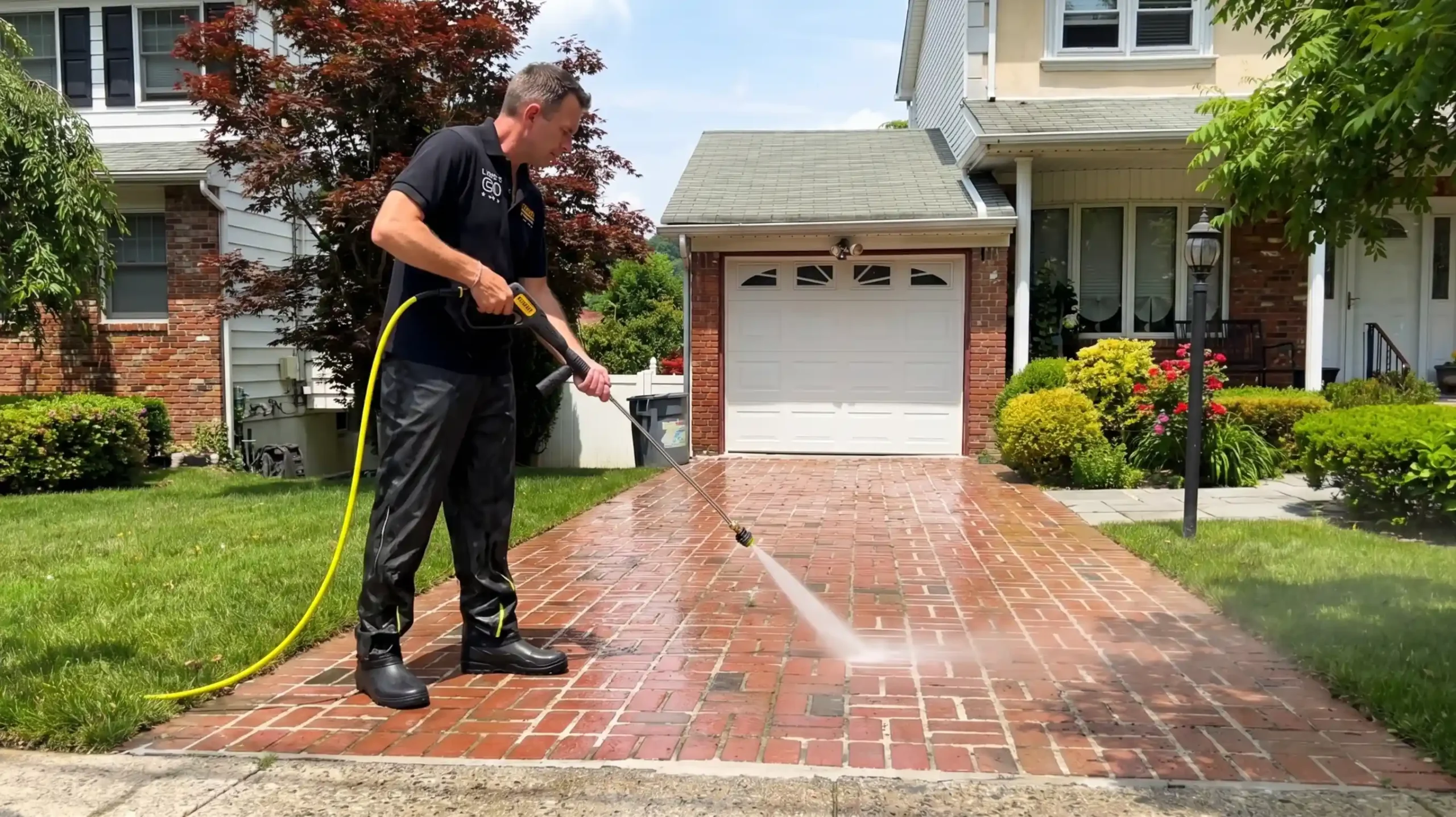
Your driveway is the first thing visitors see – and in New York, first impressions happen fast. Whether you live in a quiet corner of Staten Island or a tree-lined block in Bay Ridge, that concrete slab out front says a lot about your property before anyone reaches the door. Driveway power washing is one of the simplest ways to turn a stained, neglected surface into something that actually looks like it belongs to a well-maintained home.
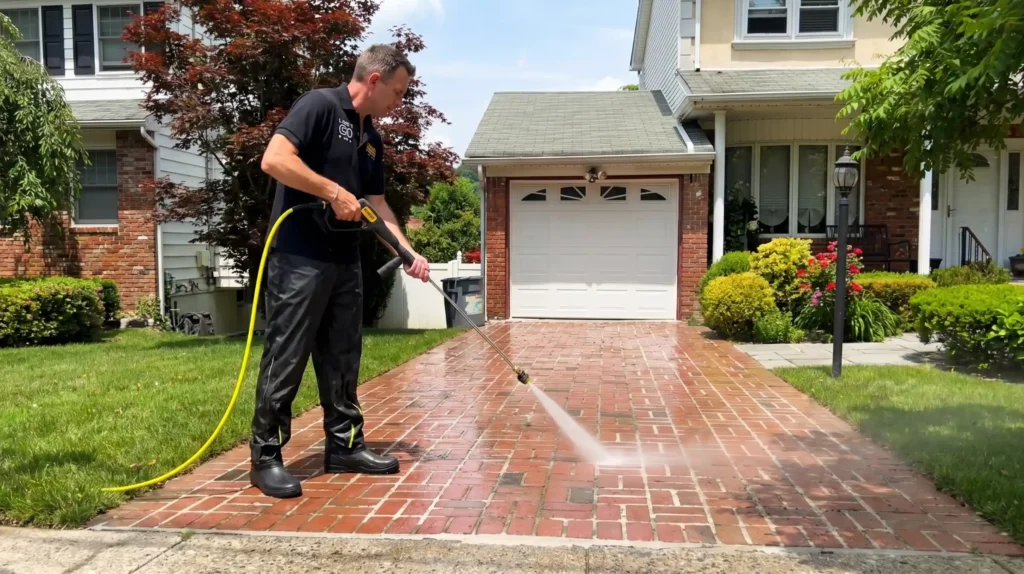
But here is the thing most homeowners get wrong: they either ignore their driveway for years or grab a rented pressure washer and end up doing more harm than good. This guide will walk you through everything you need to know about driveway power washing – from the science behind dirty concrete to the mistakes that can cost you thousands in repairs.
Why Your NYC Driveway Looks Worse Than Everyone Else’s
New York driveways take a unique beating. Road salt from winter plowing, exhaust residue from idling delivery trucks, pollen from spring blooms, and oil drips from parked cars – all of it adds up faster than you might expect. The city’s freeze-thaw cycles are especially brutal. Water seeps into the pores of the concrete, freezes overnight, expands, and slowly cracks the surface from within. Year after year, this process accelerates, turning hairline fractures into real structural problems.
“A dirty driveway is like a bad haircut – you stop noticing it until someone else points it out.”
On top of that, mold and algae love the shaded, damp conditions found in many New York neighborhoods. These organisms do not just look bad – they create slippery, hazardous surfaces that can lead to falls. If you have ever stepped on a green-tinted patch of concrete after rain, you already know the feeling. Regular driveway pressure washing removes these biological threats before they compromise both safety and surface integrity.
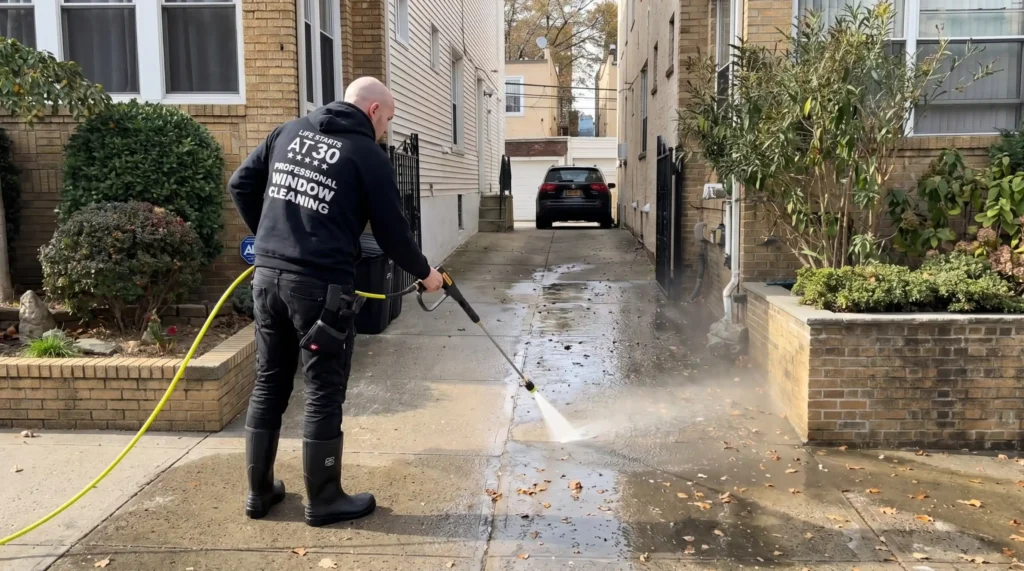
According to the National Association of Realtors, homes with strong curb appeal sell for 5% to 11% more than comparable properties with less attractive exteriors. Simply cleaning the driveway and walkways can add an estimated $10,000 to a home’s listing value. That is a remarkable return on a service that typically costs between $100 and $350.
Not All Driveways Are the Same – and That Matters
One of the biggest mistakes homeowners make with concrete power washing is treating every surface identically. Different driveway materials demand different approaches, and ignoring those differences is exactly how damage happens.
Poured concrete – the most common type in the New York area – handles driveway power washing well when done correctly. A pressure setting between 2,000 and 3,000 PSI with a 25-degree nozzle will clean most standard driveways without causing harm. The key is maintaining a consistent distance of 12 to 18 inches from the surface and keeping the wand in constant motion.
Stamped concrete requires a completely different strategy. Power washing concrete that has been stamped and sealed with an acrylic finish can strip away the protective coating, leaving the pattern exposed and vulnerable. For stamped surfaces, professionals rely on low-pressure washing combined with gentle cleaning solutions rather than brute force.
Pavers present their own challenges. A pressure washer cement-level blast will wash away the fine particles on the paver surface, removing both color and texture. It will also blow out the polymeric sand between the joints, destabilizing the entire driveway. The professional approach for pavers involves lower pressure settings and re-sanding after the cleaning is complete.
Exposed aggregate driveways trap dirt in their textured surface more readily than smooth concrete. Concrete pressure cleaning on aggregate requires more time and patience, working section by section to ensure an even result. Rushing through it leaves a patchy, inconsistent appearance.
The Right Way to Power Wash a Concrete Driveway
Whether you hire a professional or tackle the job yourself, the process for effective concrete power washing follows a consistent sequence. Here is what a proper driveway pressure cleaning job looks like from start to finish:
- Clear the entire driveway of vehicles, furniture, toys, and loose debris. Use a broom or leaf blower to remove dirt and leaves.
- Cover nearby plants, garage doors, and walls with plastic sheeting. Detergents and high-pressure spray can damage vegetation and strip paint from surfaces.
- Pre-treat stubborn stains. Oil spots, rust, and tire marks respond best to a targeted degreaser applied 10 to 15 minutes before washing.
- Apply a concrete-specific detergent using the low-pressure soap nozzle. Let the cleaning solution dwell for several minutes to break down embedded grime.
- Switch to the 25-degree nozzle and wash the surface in overlapping passes, working from the highest point of the driveway downward.
- Rinse thoroughly and inspect the results. Heavily stained areas may require a second pass.
- Allow the driveway to dry for 24 to 48 hours before applying a sealer.
One piece of equipment that makes a dramatic difference is a surface cleaner attachment. This disc-shaped tool houses spinning nozzles inside a protective housing, delivering even pressure across a wide swath. It eliminates the “tiger stripes” that plague DIY power washing concrete jobs – those uneven lines left behind when a handheld wand wobbles at different distances from the surface.
“Using a wand on a 600-square-foot driveway is like mowing your lawn with scissors. It technically works, but your neighbors will have questions.”
Sealing: The Step Most Homeowners Skip
Concrete power washing opens up the pores of the surface, making it the perfect time to apply a sealer. Think of your driveway like a sponge – once it is clean, those pores are ready to absorb whatever comes next. Without a sealer, that means oil, road salt, and moisture. With a sealer, you create an invisible barrier that repels stains and slows down the freeze-thaw damage cycle.
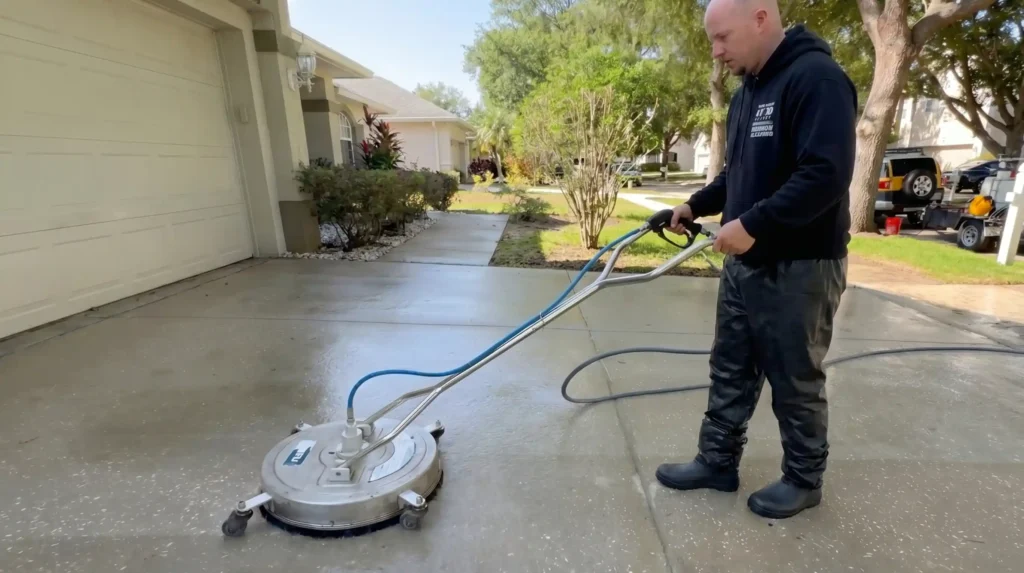
There are two main types of sealers to consider. Penetrating sealers made with silane and siloxane soak into the concrete and protect from within. They do not change the appearance of the surface and typically last 5 to 10 years. Film-forming sealers, such as acrylics, sit on top of the surface and add a visible sheen. They look great but require reapplication every 2 to 3 years and can become slippery when wet.
For most New York driveways, a penetrating sealer is the better choice. It handles the region’s freeze-thaw cycles effectively and does not create a slip hazard during winter. The team at Lowe’s offers a solid overview of the sealing process and product options if you want to explore the specifics.
A simple test tells you whether your driveway is ready for sealer or still has an active coating: sprinkle a few drops of water on the surface. If the water absorbs into the concrete, it is ready. If the water beads up, the existing sealer is still working.
What the Runoff Rules Mean for You
Here is something most driveway power washing guides never mention: where does all that dirty water go? In New York and across the country, wash water that enters storm drains flows directly into rivers, bays, and oceans without treatment. Even water-only driveway pressure washing – no chemicals at all – can carry oil, heavy metals, and sediment into local waterways.
Municipalities regulate this runoff. The best practice is to direct your wash water onto a lawn or landscaped area where soil acts as a natural filter. Block any nearby storm drains before you begin, and never allow detergent-laden water to flow into the street. Professional power washing services manage this with water recovery systems and careful site planning – another reason hiring experts makes sense for many homeowners.
When to Call a Professional
Concrete power washing sounds straightforward, but the margin between “clean” and “damaged” is thinner than most people realize. A 3,100 PSI pressure washer with a zero-degree nozzle held six inches from the surface can carve a crater into concrete in under a minute. Even experienced DIY homeowners regularly end up with etched surfaces, uneven cleaning, and visible wand marks they cannot undo.
Professional driveway power washing makes particular sense in these situations: when your driveway is made of stamped concrete or pavers that require specialized technique, when stubborn oil stains have penetrated deep into the surface, when the concrete is relatively new and the curing layer is still fragile, or when the driveway is large enough that a handheld wand would take an entire weekend to finish.
Here in New York, homeowners throughout Queens, Brooklyn, and the Bronx rely on Big Apple Window Cleaning for professional driveway power washing that protects their investment. With SPRAT-certified technicians and commercial-grade equipment, our team handles everything from concrete power washing on standard driveways to delicate paver restoration – and we manage the runoff properly every time.
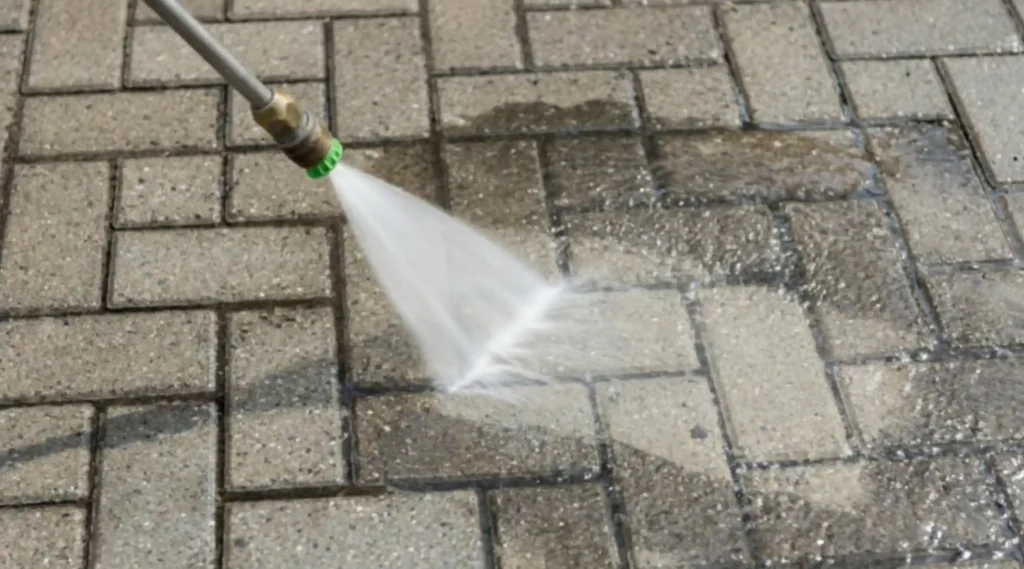
Paver driveways need careful pressure washing to clean the surface without washing out joint sand or damaging the texture.
How Often Should You Power Wash Your Driveway?
For most New York properties, once a year is the right frequency. Spring is the ideal season – it clears away the road salt, sand, and grime from winter before those contaminants have a chance to set permanently into the concrete. Early fall is the second-best window, giving your driveway a clean slate before freezing temperatures arrive.
Start the job in the morning so the surface has plenty of time to dry before evening. And if you plan to seal the driveway afterward, check the forecast – you need at least two dry days after application for the sealer to cure properly.
Homeowners in high-humidity areas or those with heavy tree coverage may benefit from a second cleaning in the fall to address mold and leaf-stain buildup. If your driveway sees heavy vehicle traffic or frequent oil exposure, more frequent concrete power washing will prevent stains from becoming permanent.
Driveway power washing is not glamorous, but it is one of the most cost-effective things you can do for your property. A clean driveway prevents structural damage, eliminates safety hazards, and boosts your home’s curb appeal in a city where every square foot of real estate matters. Whether you tackle the job yourself or hand it off to a professional crew like Big Apple Window Cleaning, the important thing is not to let another year go by while salt, oil, and weather slowly destroy the surface in front of your home.
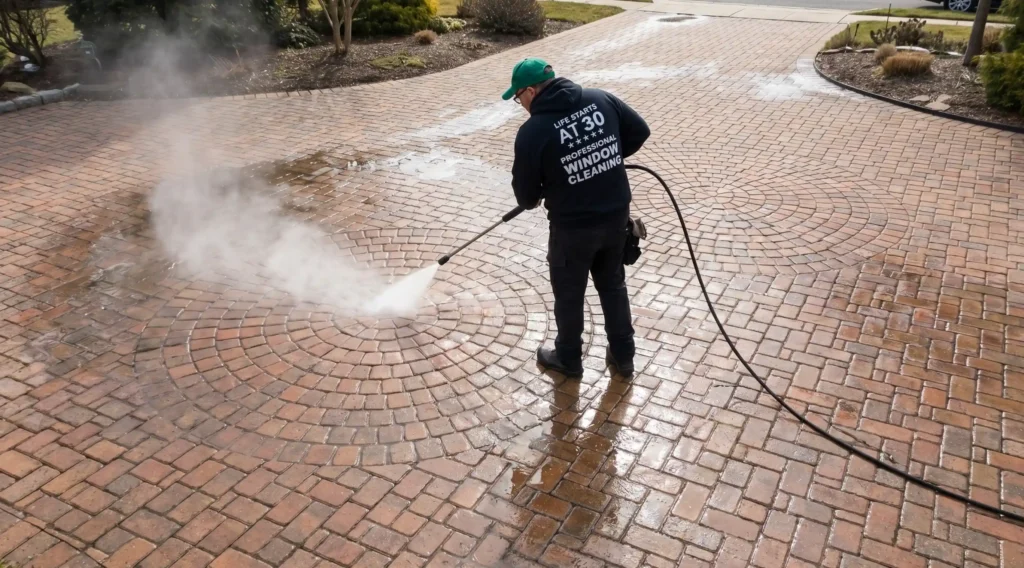
Your driveway earned that cleaning. Give it one!
FURTHER READING

Article by Dayne Watkins


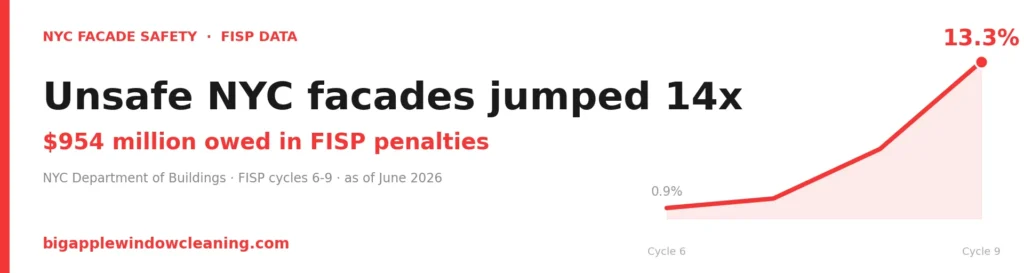
Unsafe NYC Facades Jumped 14x. The $954 Million Reason Owners Hide Them Instead of Fixing Them
On May 16, 1979, a 17-year-old Barnard student named Grace Gold was walking near Broadway and 115th Street when a piece of masonry broke loose from the eighth floor of a Columbia-owned building and killed her. Her death produced Local Law 10 of 1980, the first law in New York City requiring periodic facade inspections […]
Explore more
Roof Lantern Cleaning: A Professional Guide for New York Homeowners
Your roof lantern was supposed to flood the room with light. Instead, it is flooding the room with guilt every time you look up and see a layer of grime that could double as modern art. If you live in Brooklyn or Manhattan, you already know that city air does not play fair with glass […]
Explore more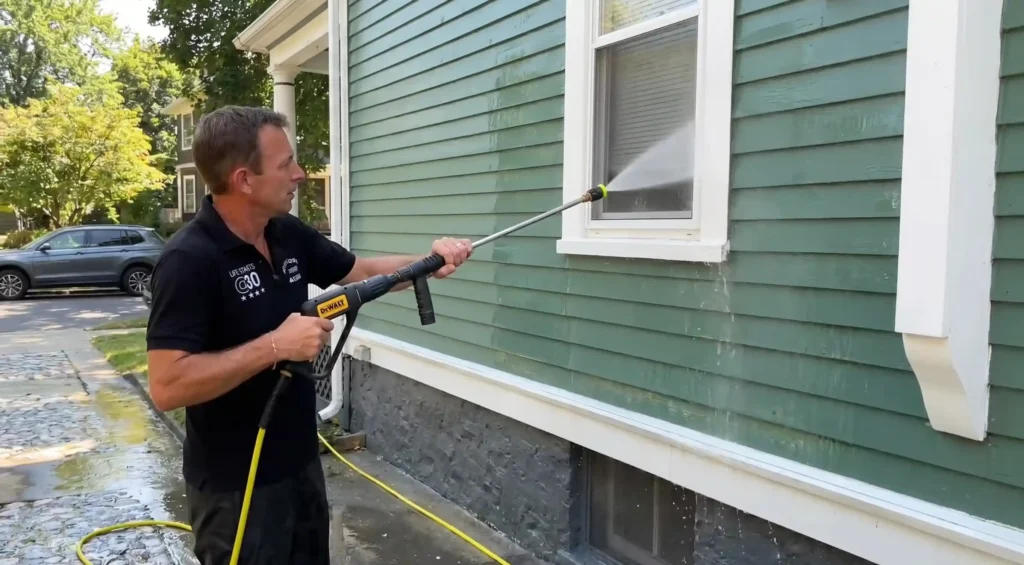
House Facade Cleaning: A No-Nonsense Guide for Homeowners Who’d Rather Not Watch Their Walls Crumble
Your home’s facade does a thankless job. Day after day, it stands between your family and everything the urban environment throws at it – diesel exhaust from delivery trucks, pigeon droppings with the pH of battery acid, mysterious black streaks that seem to appear overnight, and that persistent green fuzz on the north-facing wall that […]
Explore more