
Glass Scratch Removal: What Actually Works (And What’s a Waste of Time)
By Dayne Watkins
Contents
- The Fingernail Test: Your First Move
- Why NYC Glass Gets Scratched More Than You'd Think
- DIY Methods: An Honest Assessment
- What Nobody Tells You About Removing Scratches from Glass
- When Professional Glass Scratch Removal Makes Sense
- Prevention: Cheaper Than Any Fix
- Repair or Replace? A Quick Decision Guide
- FAQ: Removing Scratches from Glass
DO YOU HAVE AN URGENT NEED?
Our fast response service can fix your urgent problem. We have teams ready for action.
AND GET A FREE QUOTE
Get monthly window insight
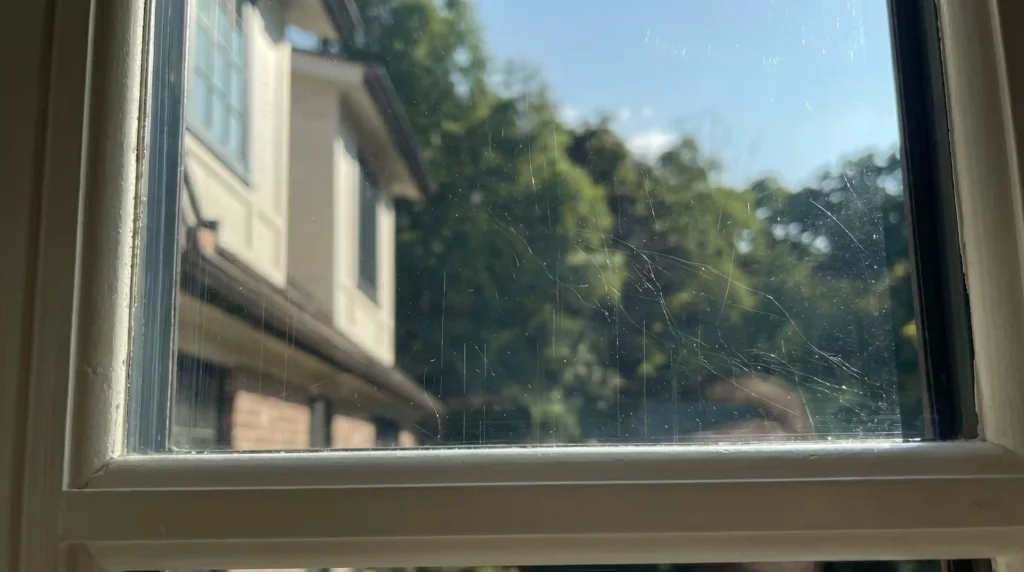
You notice it on a Tuesday morning. The light hits your window at just the right angle, and there it is – a scratch running across the glass like an uninvited guest who refuses to leave. If you live in New York City, scratched glass is practically a rite of passage. Between construction dust drifting from the building next door, delivery carts bumping into storefronts, and the mysterious damage that appears overnight on ground-floor windows in Brooklyn, the need for glass scratch removal is everywhere.
But here’s the thing most articles about removing scratches from glass won’t tell you: not every scratch can be fixed the same way, and some popular DIY methods can make things dramatically worse. Before you grab the baking soda from your kitchen cabinet, let’s talk about what glass scratch removal actually involves – and when it’s time to call someone who does this for a living.
The Fingernail Test: Your First Move
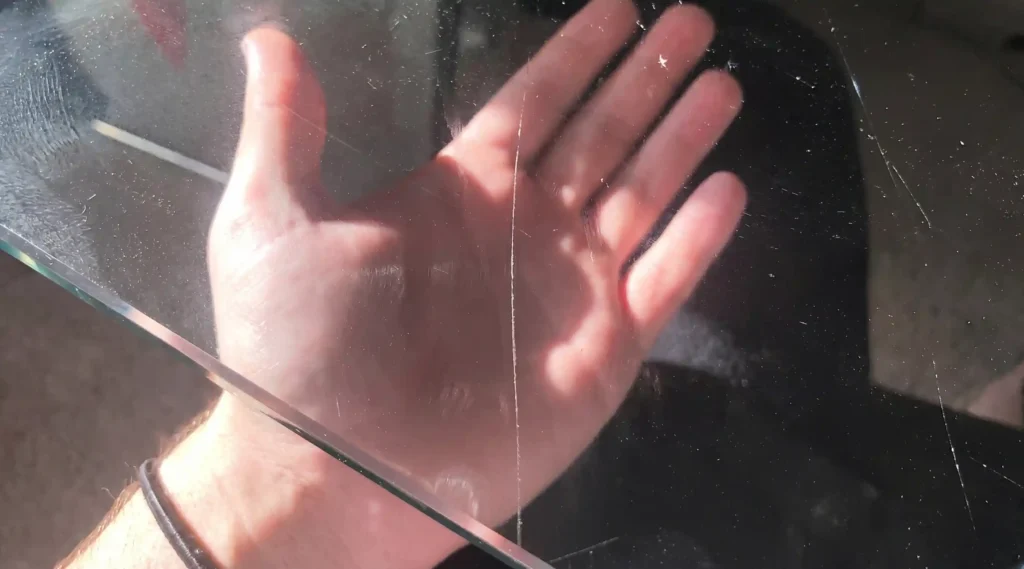
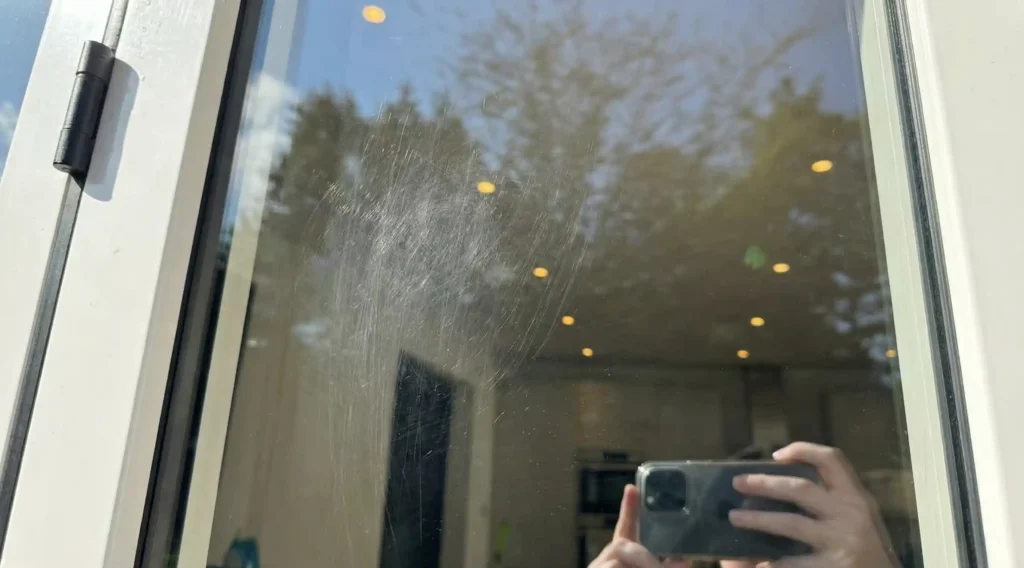
Anyone trying to fix glass scratches should start here. Before you do anything else, run your fingernail across the scratch. This simple test tells you almost everything you need to know.
If your nail glides right over it, you’re dealing with a surface scratch. These are the only type where DIY methods have a real shot at working. If your nail catches – even slightly – the scratch has penetrated deeper into the glass. At that point, household remedies are unlikely to help, and you risk making the damage worse by trying.
This matters more than most people realize. A deep scratch isn’t just a cosmetic issue – it’s a sign that basic glass scratch removal methods won’t cut it. The scratch creates a stress point in the glass that can eventually develop into a crack, especially in a city where temperature swings between seasons are brutal and subway vibrations are a constant companion for lower Manhattan apartments.
Why NYC Glass Gets Scratched More Than You’d Think
Living in New York means your windows face threats that suburban glass never encounters. Construction debris is the biggest offender – and with cranes on practically every other block, airborne particles of concrete dust, metal shavings, and sand constantly settle on glass surfaces. When someone wipes that grit off with a cloth or squeegee without rinsing first, they’re essentially dragging sandpaper across the window.
Then there’s the graffiti problem. Acid-etched graffiti – where vandals use chemicals to permanently mark storefront glass – is a persistent headache for business owners in Manhattan, Brooklyn, and Queens. Regular scratch graffiti from keys and stones adds to the damage. According to NYC-based restoration companies, acid-etched vandalism and post-construction scratches account for the majority of commercial glass scratch removal jobs in the city. For many property owners, removing scratches from glass becomes a recurring expense rather than a one-time fix.
"A New Yorker will tolerate a 400-square-foot apartment, a 45-minute subway delay, and pizza at $7 a slice - but a scratch on the window blocking their skyline view? That's where we draw the line".
DIY Methods: An Honest Assessment
Let’s be real about what household products can and can’t do when it comes to removing scratches from glass. Every article online promises easy fixes, but results vary wildly depending on the scratch depth and glass type. Here are the most common approaches people try for glass scratch removal, ranked by actual effectiveness:
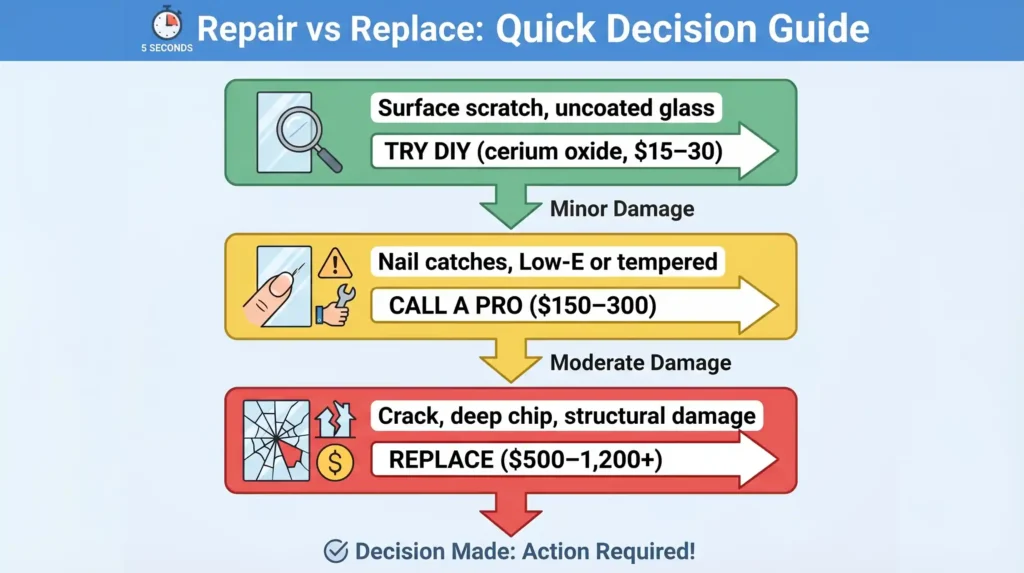
- Cerium oxide compound – the only DIY option that professionals also use. Mix the powder with water to create a slurry, apply with a felt pad, and polish in circular motions. It works through a combination of chemical reaction and gentle abrasion. C.R. Laurence, a major glass industry supplier, notes that cerium oxide polishing depends on maintaining the right concentration (2-10%), consistent pressure, and keeping the surface wet at all times. Average particle size is about 3 microns. This is effective for light scratches but requires patience and proper technique.
- Baking soda paste – mix equal parts baking soda and water, apply to the scratch with a microfiber cloth in circular motions. Works only on the lightest surface marks. Don’t expect miracles.
- Non-gel white toothpaste – similar principle to baking soda, using mild abrasives to buff the surface. Marginally effective on hairline scratches, completely useless on anything deeper.
- Clear nail polish – this doesn’t remove anything. It fills the scratch with a transparent layer to make it less visible. Think of it as concealer for glass – the scratch is still there, just hiding.
- Metal polish (Brasso) – can work on very light marks, but apply once only. Multiple applications can create haziness worse than the original scratch.
- Steel wool (#0000) – the nuclear option. Even the finest grade steel wool can irreparably damage coated or tempered glass. Consider this a last resort for plain annealed glass only, and test on an inconspicuous area first.
What Nobody Tells You About Removing Scratches from Glass
Here’s where it gets important for NYC residents specifically. Most guides about how to fix glass scratches assume you’re working with plain, uncoated window glass. But the vast majority of windows installed in New York buildings over the past two decades feature either Low-E coatings or tempered glass – often both.
Low-E (low-emissivity) glass has a microscopically thin metallic coating that reflects heat. It’s the reason your energy bills aren’t even more terrifying than they already are. The problem? Any abrasive – baking soda, toothpaste, cerium oxide, steel wool – will strip that coating right off. You can’t see it, you can’t feel it, but once it’s gone, your window loses its energy efficiency permanently. And there’s no way to reapply it.
Tempered glass is engineered with internal tension that makes it stronger but also volatile. Aggressive polishing near the edges can release that tension and cause the entire pane to shatter into thousands of small pieces. This is particularly relevant for glass doors, shower enclosures, and balcony panels – all common in NYC high-rises. Removing scratches from glass of this type without professional equipment is a gamble most people shouldn’t take.
So before you start trying to fix glass scratches with a YouTube tutorial, ask yourself: do you know what type of glass your windows are? If the answer is no – and for most people it is – DIY glass scratch removal methods carry real risk.
When Professional Glass Scratch Removal Makes Sense
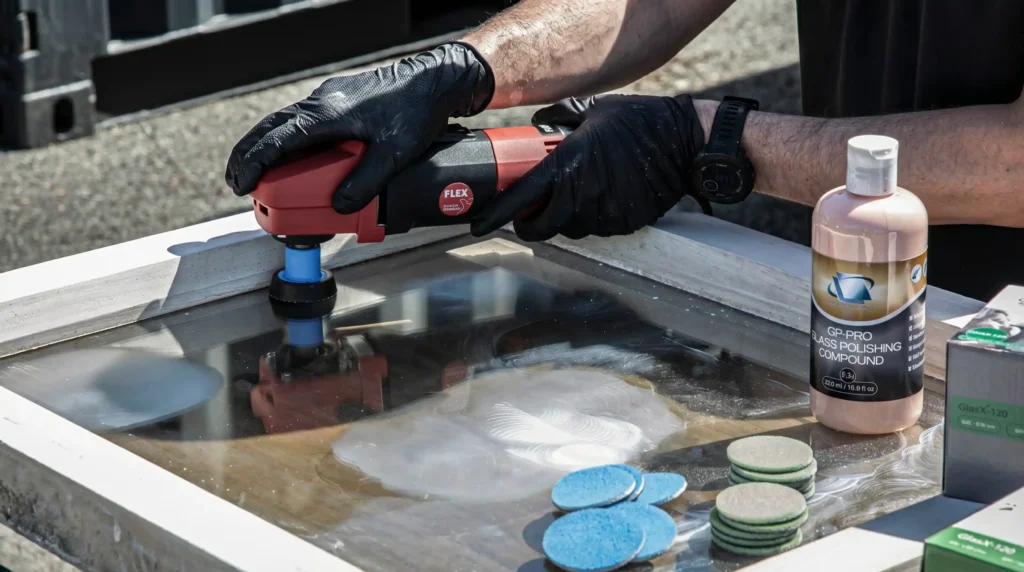
Professional glass scratch removal isn’t just “the same thing but more expensive.” It’s a fundamentally different process that can fix glass scratches DIY methods simply cannot touch.
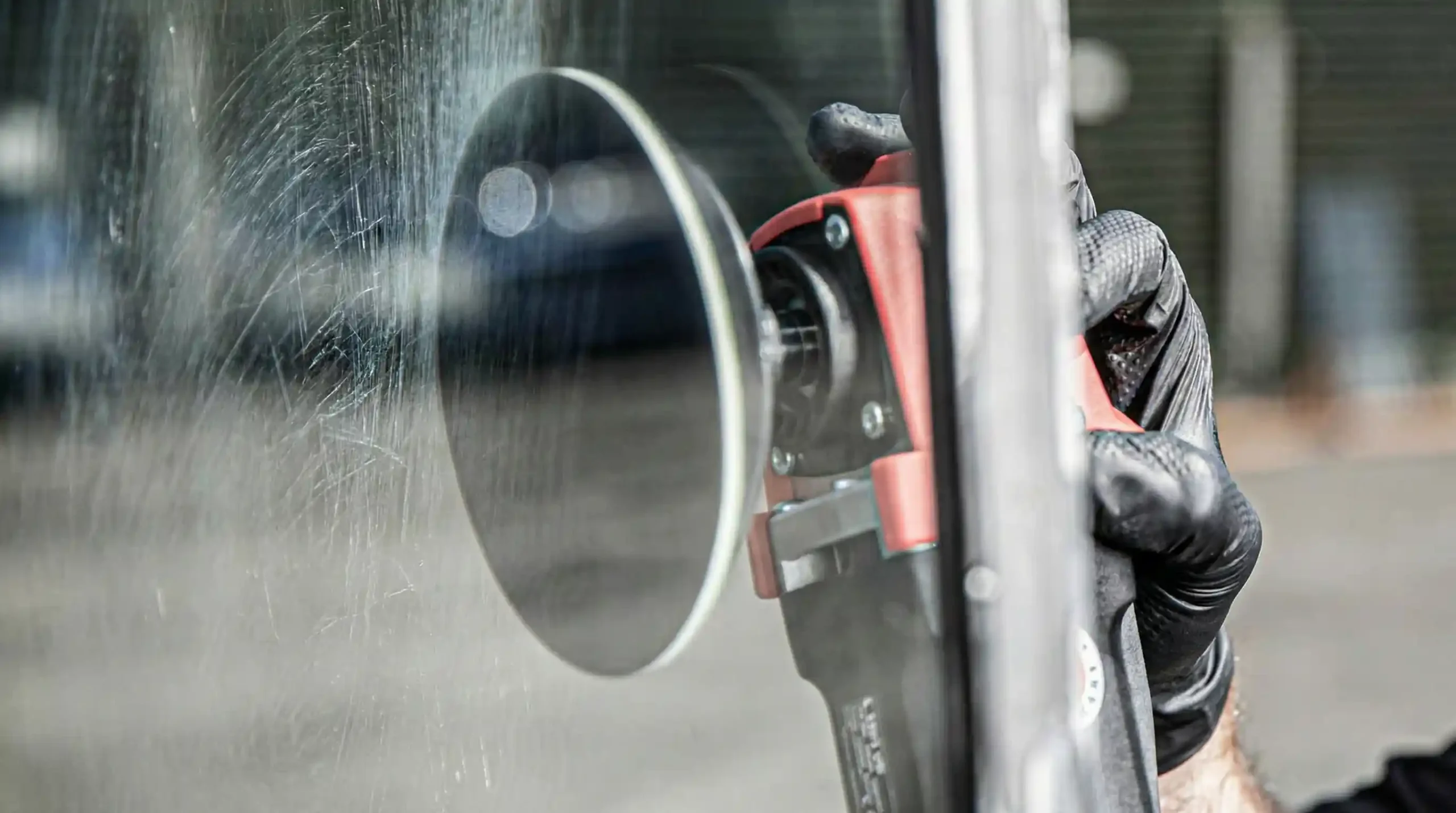
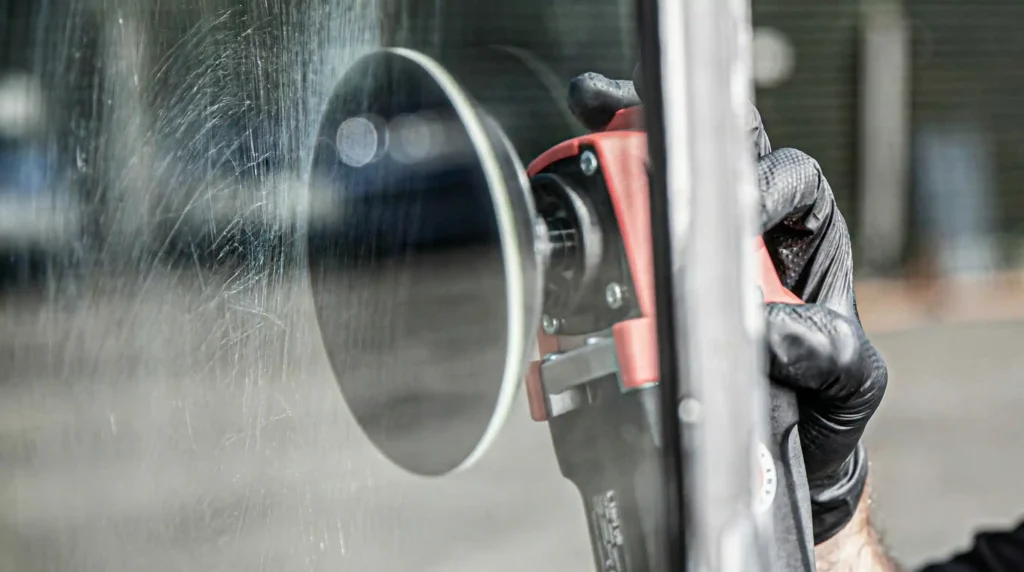
Trained technicians start by identifying the glass type and coating – a step that separates professional glass scratch removal from amateur attempts at removing scratches from glass with household products. They measure scratch depth – sometimes using specialized lighting that reveals damage invisible to the naked eye. For moderate scratches, professionals use variable-speed rotary tools with felt or foam pads and cerium oxide slurry, maintaining precise control over temperature, pressure, and moisture. For deeper scratches, they employ progressive diamond paste polishing – starting at 3 microns and working down to 0.5 microns before finishing with cerium oxide. According to GlasWeld, a manufacturer of professional glass restoration systems, their tools use heat and friction rather than aggressive abrasion, removing the scratch at a molecular level without creating optical distortion.
The economics are straightforward. Professional glass scratch removal typically costs 70-80% less than full glass replacement. A single window replacement in a NYC high-rise can run $500 to $1,200 or more when you factor in the cost of the glass itself, the labor for removal and installation in a multi-story building, potential scaffolding or boom lift rental, and building management coordination. Professional glass scratch removal for the same window? Often $150 to $300.
At Big Apple Window Cleaning, we handle glass scratch removal across all five boroughs, working with everything from brownstone window panes in Park Slope to floor-to-ceiling panels in Midtown towers. Our SPRAT-certified technicians assess the glass type and scratch severity before recommending the right approach – because sometimes the honest answer is that replacement makes more sense than repair.
Prevention: Cheaper Than Any Fix
Protecting your glass is always easier and cheaper than removing scratches from glass after the damage is done. For NYC storefronts vulnerable to vandalism, anti-graffiti window film acts as a sacrificial layer – if someone scratches or acid-etches the film, you peel it off and replace it for a fraction of what glass replacement would cost. Major retailers across the city already use this approach.
For residential windows, the basics matter: use microfiber cloths instead of paper towels, rinse away grit before wiping, and never let construction dust sit on glass surfaces. If your building is undergoing renovation, insist that contractors protect windows with adhesive film during the work. These simple steps dramatically reduce the chances you’ll ever need to fix glass scratches in the first place.
And here’s a tip specific to NYC apartment dwellers: if you’re hiring a window cleaning service, ask whether they use razor blades on your glass. A clean blade on annealed glass is generally fine. A blade on tempered glass with fabricating debris? That’s how you get the kind of scratches that send you searching for ways to fix glass scratches at midnight.
Repair or Replace? A Quick Decision Guide
Not sure whether glass scratch removal or full replacement is the right call? Think about it this way. If the scratch is surface-level and on uncoated glass, try a DIY approach first. If the scratch catches your fingernail, is on Low-E or tempered glass, or affects visibility, go professional. If the glass is cracked, has deep chips from welding or grinding, or is structurally compromised, replacement is likely the only safe option.
For landmark buildings and pre-war co-ops – common across the Upper West Side, Greenwich Village, and Brooklyn Heights – replacement isn’t always even possible without Landmarks Preservation Commission approval. In those situations, professional glass scratch removal becomes the only viable path. Our team at Big Apple Window Cleaning works with property managers across NYC to fix glass scratches on historic and protected buildings where maintaining original materials is a requirement, not a preference.
FAQ: Removing Scratches from Glass
Yes, but it depends on depth and glass type. Surface scratches on plain glass can be polished out with cerium oxide. Deep scratches or damage on coated glass usually require professional repair or replacement.
No. WD-40 is a lubricant that temporarily fills the scratch and makes it less visible. Once it evaporates, the scratch returns unchanged. It removes nothing from the glass surface.
Only the lightest surface marks on uncoated glass. Mix it into a paste and rub gently. For anything you can feel with your fingernail, baking soda won’t make a meaningful difference.
Brasso can reduce the appearance of minor surface scratches. Apply once with a soft cloth in circular motions. Do not reapply multiple times – overuse creates haze that looks worse than the original scratch.
With extreme caution, yes – but only surface-level scratches. Aggressive polishing near edges can cause tempered glass to shatter. Professional handling is strongly recommended for this glass type.
Most glass scratch removal jobs range from $75 to $300 per area, depending on scratch severity and accessibility. This is typically 70-80% cheaper than full glass replacement, which can exceed $1,000 per window in NYC high-rises.
It masks them, not fixes them. Nail polish fills the groove and makes the scratch less visible, but the glass itself remains damaged. Consider it a temporary cosmetic solution, not a repair.
FURTHER READING

Article by Dayne Watkins


How to Clean the Outside of Your Apartment Windows in NYC
In most New York apartments the outside of the glass is cleaned from inside. Double-hung windows put in since the 1980s usually tilt in, and once the sash tilts, the outside face is a foot from your hands. When a window won’t tilt, the reason is usually a seized latch or a dead balance, not […]
Explore more
Six Windows, One $350 Minimum: Three Ways NYC Residents Get Exterior Glass Cleaned Without Overpaying
If you asked for a quote on your apartment and the number came back higher than you expected for six windows, nothing went wrong. You are running into a visit minimum, and in New York most apartments sit below it. Ours is published: $350 for residential work. That is not a markup for small jobs. […]
Explore more
Your Building Replaced the Windows and Left You With No Screens: Whose Bill Is It, and How to Get Custom Screens (NYC)
You are not crazy, and you are not stuck: the “screen orphan” problem explained It usually happens like this. Your building runs a window replacement project, the crew swaps your old slide-up windows for shiny new casement or crank-out windows, and then they leave. No screens. No paperwork. No phone number for where to buy […]
Explore more