
Why Your Sliding Door Feels Like It Weighs a Ton – And What NYC Residents Should Know About Roller Wheels
Contents
- What Sliding Door Roller Wheels Actually Do
- How NYC's Climate Destroys Your Rollers Faster
- Signs Your Rollers Need Replacement
- Why Roller Replacement in NYC Isn't a Typical DIY Project
- Choosing the Right Replacement Rollers for Your Door
- Maintenance That Actually Extends Roller Life in NYC
- When to Call a Professional
DO YOU HAVE AN URGENT NEED?
Our fast response service can fix your urgent problem. We have teams ready for action.
AND GET A FREE QUOTE
Get monthly window insight
You used to open your patio door with one finger. Now it takes both hands, a solid stance, and maybe a few words you wouldn’t say in front of your grandmother. If that sounds familiar, your sliding door roller wheels are probably the problem. These small but critical components carry the full weight of your glass panel – often 80 to 150 pounds in NYC apartments – and when they fail, everything grinds to a halt. Literally.
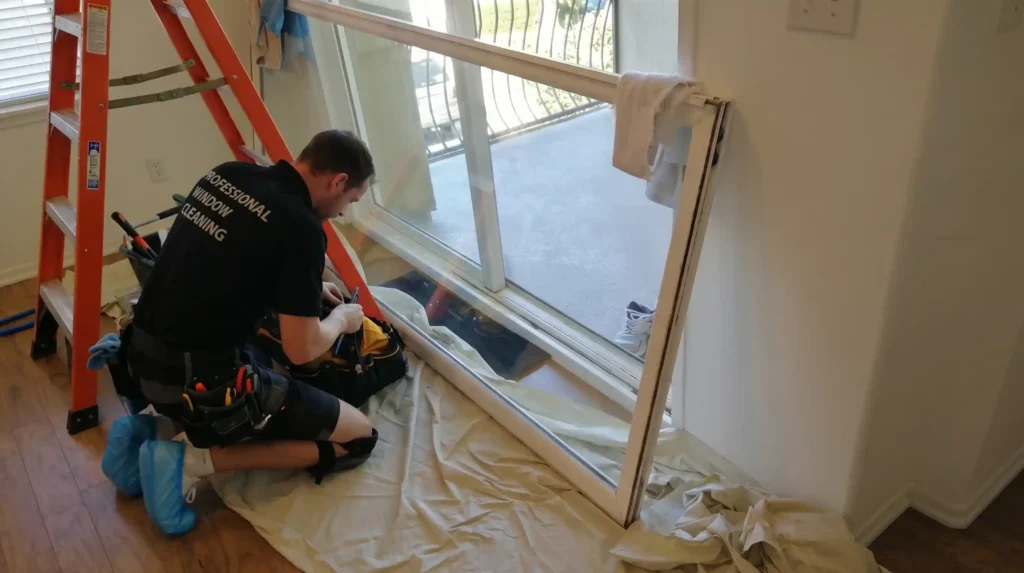
Living in New York City means your doors deal with conditions that most generic repair guides completely ignore. This article breaks down what’s actually happening inside your door frame, why the city’s climate destroys rollers faster than you’d expect, and how to handle replacement the right way.
What Sliding Door Roller Wheels Actually Do
Every sliding glass door rides on a pair of roller assemblies mounted at the bottom of the movable panel. These sliding glass door wheels sit inside the lower track and allow a heavy glass panel to glide with minimal effort. When they work, you barely think about them. When they don’t, your door becomes a daily frustration.
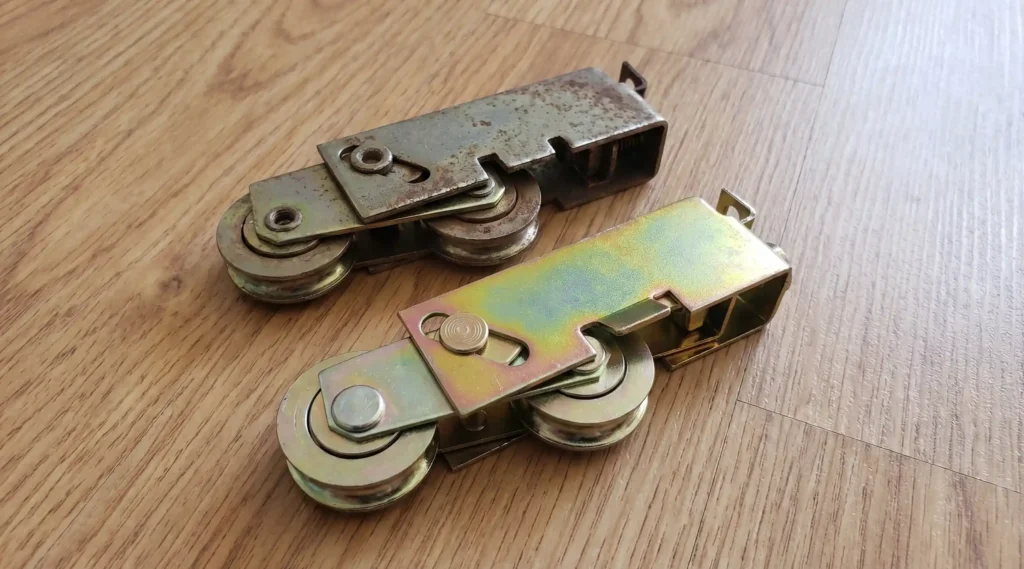
The rollers for patio sliding door systems come in several configurations. Most residential doors use tandem rollers – two wheels mounted on a single housing that distribute the door’s weight evenly across the track. Single-wheel designs exist for lighter applications, but they’re increasingly rare in modern construction. Commercial storefronts and high-rise lobby doors often use quad-roller systems with four wheels per assembly, built for panels that can exceed 300 pounds.
Material matters more than most people realize. According to Anthony Innovations (https://anthonyinnovations.com/blog/how-to-identify-the-best-door-roller-for-your-sliding-glass-door/), a leading roller manufacturer, the two primary options are steel ball bearing wheels and nylon composite wheels. Steel lasts longer and handles heavier loads, but it can accelerate track wear over time – a real concern with the heavy insulated glass panels common in NYC buildings. Nylon runs quieter and is gentler on tracks, but may not hold up as long under extreme weight. Stainless steel variants offer the best corrosion resistance, which becomes relevant when we talk about what New York weather does to your hardware.
How NYC’s Climate Destroys Your Rollers Faster
Here’s where most online guides fall short. They tell you to clean your tracks and lubricate your rollers, which is fine advice for a house in suburban Ohio. But if you live in a Brooklyn waterfront condo, a Staten Island home near the shore, or a Manhattan high-rise where humidity gets trapped between buildings, your sliding door roller wheels face a completely different battle.
New York City averages around 70 percent relative humidity during July and August. The city gets approximately 46 inches of rain per year. And then winter arrives with freeze-thaw cycles that occur over 100 times annually across the metro area. This constant expansion and contraction works its way into every metal component of your door system – rollers, tracks, adjustment screws, housing assemblies.
For buildings near the coast – and in a city surrounded by water, that’s a lot of buildings – salt air compounds the problem. Salt particles settle on metal surfaces and accelerate corrosion, turning steel rollers into grinding, seizing obstacles within just a few years. The NYC Department of Buildings has noted that complaints about door and window issues spike by nearly 30 percent during winter months, when the cumulative effects of seasonal stress catch up with aging hardware.
Your patio sliding glass door roller doesn’t just wear out from use. In New York, it corrodes from the inside out while simultaneously being hammered by temperature swings that the manufacturer never tested for. That’s why a roller rated for 15 years in a mild climate might last only 7 or 8 in an NYC apartment.
Signs Your Rollers Need Replacement
Not every sticky door means dead rollers. Sometimes you just need to clean the track. But here are the signals that point specifically to worn or damaged sliding door roller wheels:
- The door requires significant force to open or close, even after you’ve cleaned the track and applied lubricant
- You hear grinding, scraping, or crunching sounds during operation – not the smooth whoosh of a healthy system
- The door sits unevenly in the frame, with visible gaps at the top or bottom on one side
- The panel wobbles or rocks when you slide it, suggesting the wheels no longer make consistent contact with the track
- Your door handle has cracked or broken – this is often a secondary symptom caused by people yanking too hard on a door that won’t budge
- The door has jumped off the track entirely, which in a high-rise with heavy insulated glass is a genuine safety hazard
If you’re noticing two or more of these signs, adjustment alone probably won’t fix the problem. The rollers themselves need to come out.
Why Roller Replacement in NYC Isn’t a Typical DIY Project
Look, we get it. There are dozens of YouTube videos showing someone swapping rollers in twenty minutes on a standard suburban patio door. But there are several factors that make NYC different.
First, the weight. Sliding glass doors in New York apartments – especially those installed in post-2000 construction – often feature double-pane insulated glass for energy efficiency and noise reduction. These panels commonly weigh 100 pounds or more. Removing a door that heavy from its track requires at least two people and proper technique. Drop it, and you’re looking at shattered glass in your living room and a repair bill that makes roller replacement look like pocket change.
Second, the identification challenge. This is the part that trips up most DIYers. Patio sliding glass door roller assemblies are not universal. As SWISCO, one of the most respected sliding door hardware suppliers in the country, explains on their identification guide – you cannot determine the correct replacement roller from the door manufacturer alone. Most manufacturers use generic parts, and the only reliable way to match a roller is to fully remove the old one from the door and measure its wheel diameter, housing width, housing height, wheel material, and mounting style. Get any of those wrong, and you’ll be taking the door off the track again.
Third, the building factor. In NYC co-ops and condos, you may need board approval before performing work that affects shared structural elements. Many buildings require licensed professionals for any repair that involves removing exterior-facing doors. If you damage the track, the frame, or the threshold, you could be responsible for costs that extend beyond your own unit.
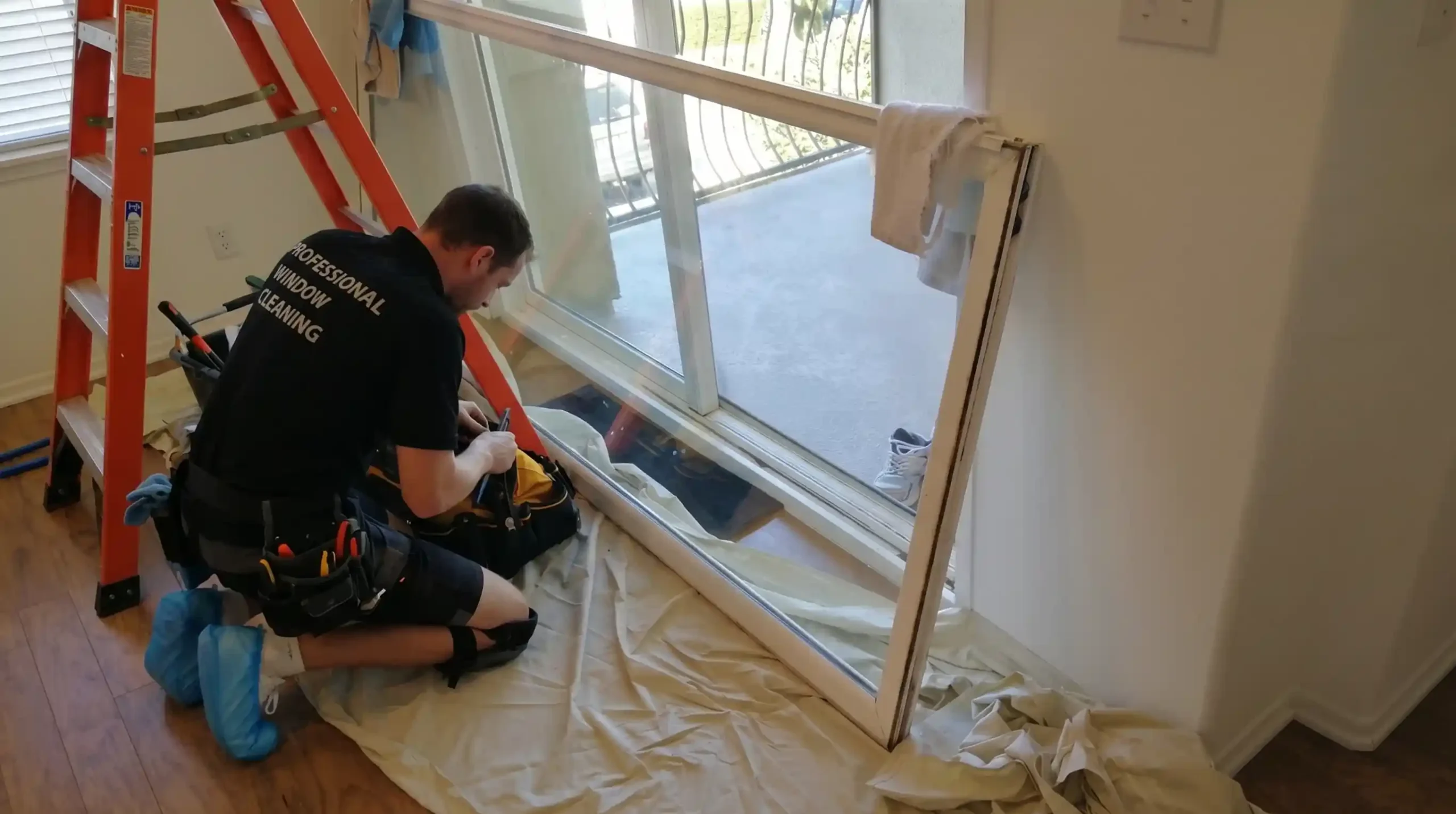
At Big Apple Window Cleaning, we handle sliding door roller wheels replacement across all five boroughs and understand these NYC-specific challenges firsthand. Our technicians carry a range of roller types and can identify the correct match on-site, eliminating the guesswork and repeat trips that plague DIY attempts.
Choosing the Right Replacement Rollers for Your Door
If you do decide to tackle this yourself – or if you simply want to understand what your repair professional is recommending – here’s what to consider when selecting new sliding glass door wheels.
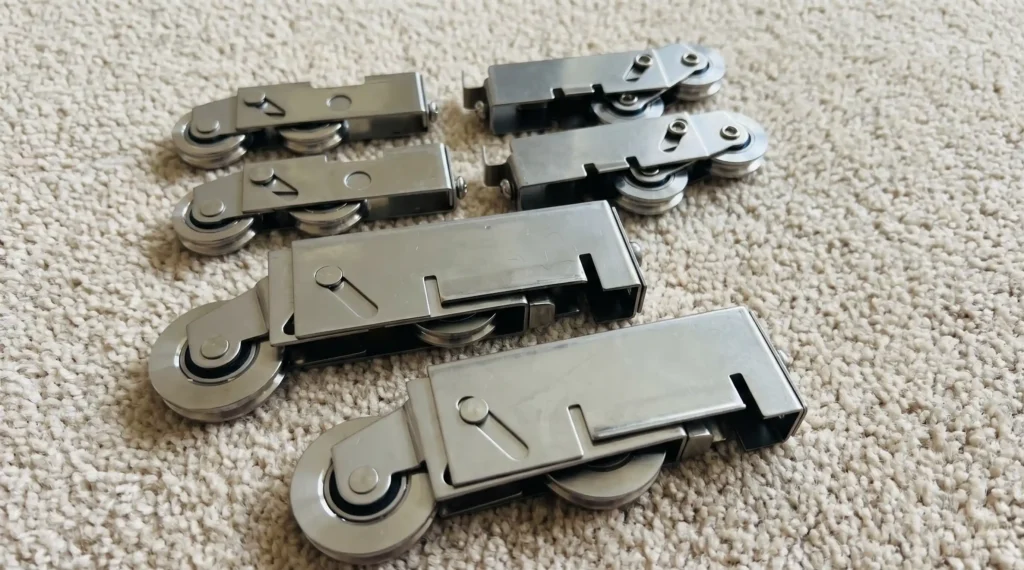
The wheel diameter must match your existing rollers. Common residential sizes include 1-1/8 inch, 1-1/4 inch, and 1-1/2 inch. Even a small mismatch will prevent proper seating in the track or create clearance issues with the frame.
For material selection in NYC conditions, stainless steel wheels with sealed bearings offer the best longevity, particularly for doors exposed to outdoor air. Nylon works well for interior sliding doors or buildings with climate-controlled common areas. Standard carbon steel is the most affordable option but corrodes fastest in humid or coastal environments – exactly the conditions most NYC buildings face.
Always replace both roller assemblies at the same time. Mixing a worn roller with a new one creates uneven weight distribution, which accelerates wear on the new hardware and can throw your door out of alignment.
Maintenance That Actually Extends Roller Life in NYC
Once you have fresh rollers in place – whether you installed them yourself or had a professional do it – regular maintenance keeps them running smoothly. Given the demands of the NYC climate, here’s a realistic schedule.
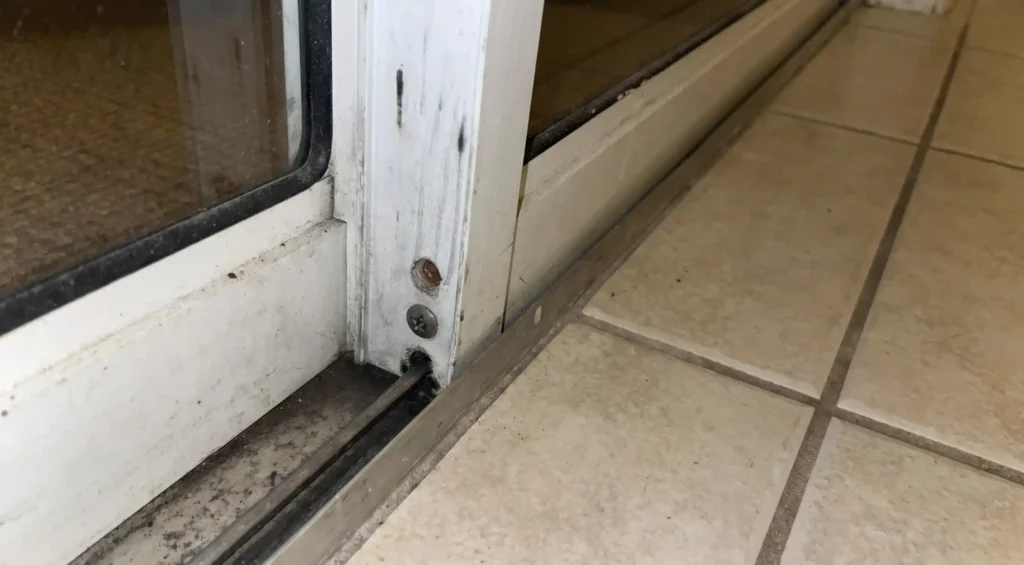
Vacuum the lower track every two to three months. City dust, construction debris, and grit from nearby streets accumulate faster than in suburban settings. A narrow vacuum attachment works best.
Apply silicone-based lubricant to the track and rollers every six months. This is critical – never use WD-40 or oil-based products. They attract dirt and create a sticky residue that makes things worse. Silicone stays clean and reduces friction without buildup.
Inspect your rollers annually for visible cracks, flat spots, or signs of corrosion on the housing. Catching a failing roller early prevents damage to the track, which is a much more expensive repair.
For buildings near the water – Rockaway, Coney Island, the waterfront areas of Brooklyn and Queens, parts of the Bronx along the Sound – consider wiping down exposed hardware with a damp cloth quarterly to remove salt residue before it causes pitting.
When to Call a Professional
Sometimes the smartest move is knowing when not to do it yourself. If your door is particularly heavy, if the building is older with non-standard construction, or if you simply don’t want to deal with the hassle of identifying the right rollers for patio sliding door replacement, professional service makes sense. The typical cost for roller replacement runs between $100 and $300 including parts and labor – a fraction of what you’d spend replacing the entire door.
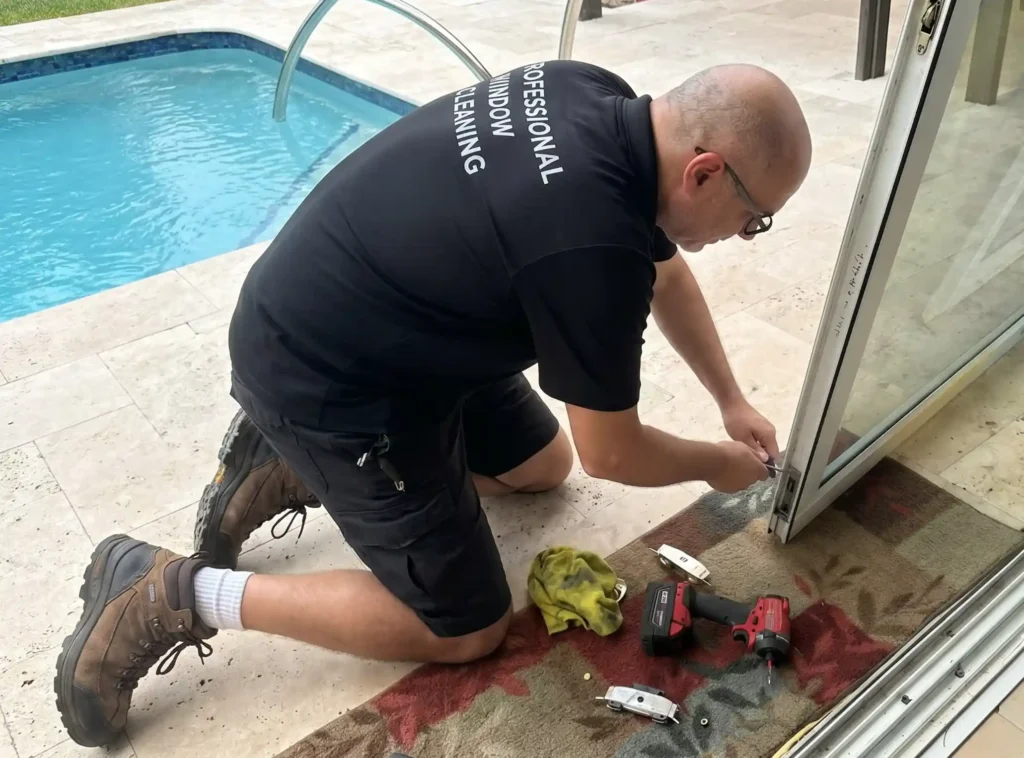
Big Apple Window Cleaning provides professional sliding door roller wheels service throughout New York City. We work with residential and commercial properties across Manhattan, Brooklyn, Queens, the Bronx, Staten Island, and Long Island. If your sliding door has turned into a wrestling match, give us a call – we’ll get it gliding again.
Your sliding door should open with one hand. If it doesn’t, the fix is usually simpler and more affordable than you think. The key is matching the right rollers to your specific door and NYC conditions – and making sure the job is done once, done right.
FURTHER READING

Article by Dayne Watkins


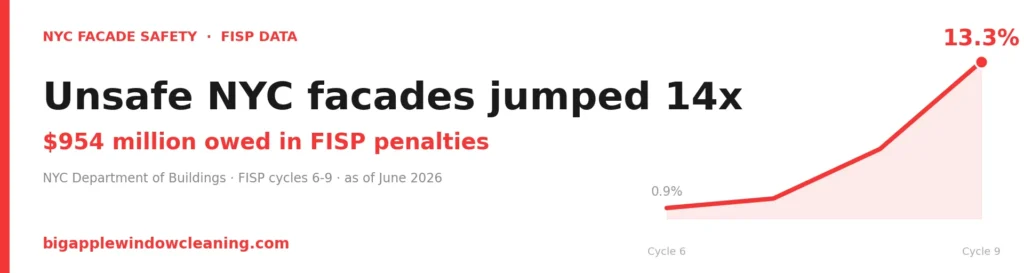
Unsafe NYC Facades Jumped 14x. The $954 Million Reason Owners Hide Them Instead of Fixing Them
On May 16, 1979, a 17-year-old Barnard student named Grace Gold was walking near Broadway and 115th Street when a piece of masonry broke loose from the eighth floor of a Columbia-owned building and killed her. Her death produced Local Law 10 of 1980, the first law in New York City requiring periodic facade inspections […]
Explore more
Roof Lantern Cleaning: A Professional Guide for New York Homeowners
Your roof lantern was supposed to flood the room with light. Instead, it is flooding the room with guilt every time you look up and see a layer of grime that could double as modern art. If you live in Brooklyn or Manhattan, you already know that city air does not play fair with glass […]
Explore more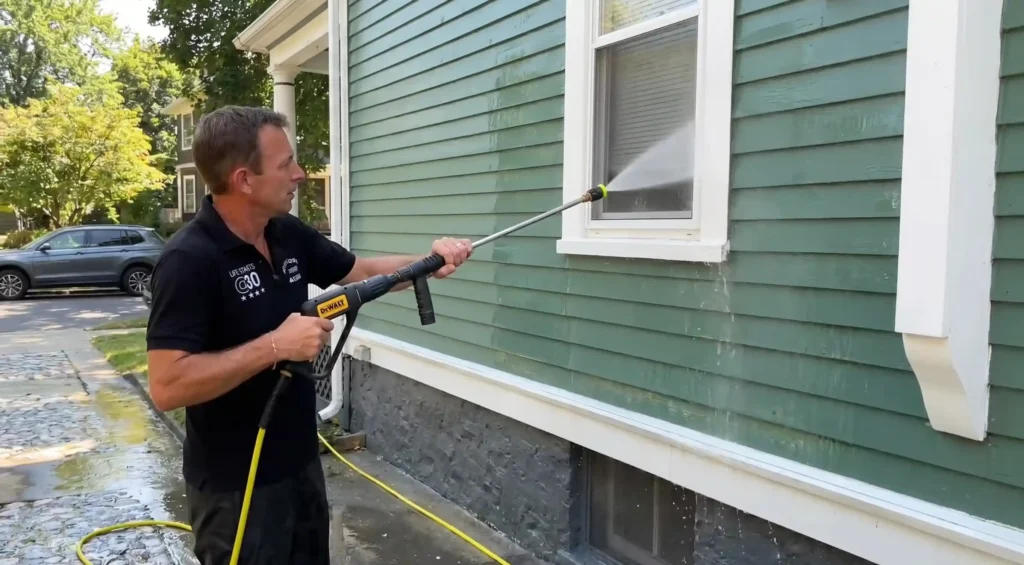
House Facade Cleaning: A No-Nonsense Guide for Homeowners Who’d Rather Not Watch Their Walls Crumble
Your home’s facade does a thankless job. Day after day, it stands between your family and everything the urban environment throws at it – diesel exhaust from delivery trucks, pigeon droppings with the pH of battery acid, mysterious black streaks that seem to appear overnight, and that persistent green fuzz on the north-facing wall that […]
Explore more