
The Best Window Cleaner for Every Job: A 2026 New York City Guide
Contents
- How to Choose the Right Window Cleaner
- The Best Window Cleaner for Every Job
- Everyday Cleaning: Your Daily Streak-Free Window Cleaner
- Good Alternatives
- Seasonal Deep Cleaning: Twice-a-Year Exterior Window Washing
- A Good Alternative: The Kärcher Window Vacuum
- Post-Renovation Cleanup: Paint, Adhesive, and Construction Film
- When You Need a Pro: Cement and Stucco Splatter
- Hard Water and Mineral Deposits
- Good Alternatives and Pro-Grade Options
- Organic Stains: Bird Droppings, Tree Sap, Mildew, and Pollen
- A Good Alternative: Enzyme Cleaners
- What's New in 2026: Robotic Window Cleaners and Window Vacuums
- ECOVACS WINBOT W3 OMNI
- HOBOT and the Frameless Specialists
- Window Vacuums
- The Honest Limitations
- Best Window Cleaner Quick Picks for 2026
- When a Window Cleaner Is Not Enough
- Frequently Asked Questions
DO YOU HAVE AN URGENT NEED?
Our fast response service can fix your urgent problem. We have teams ready for action.
AND GET A FREE QUOTE
Get monthly window insight
Two apartments in the same Brooklyn building can have completely different glass problems. One has light fingerprints and a film of city dust. The other has spray paint overspray from a hallway renovation, mineral spots from an air conditioner that drips all summer, and a green smudge of mildew in the shaded corner that never sees the sun. Reaching for the same bottle on both is why so many people decide they “just cannot get a streak-free finish.”
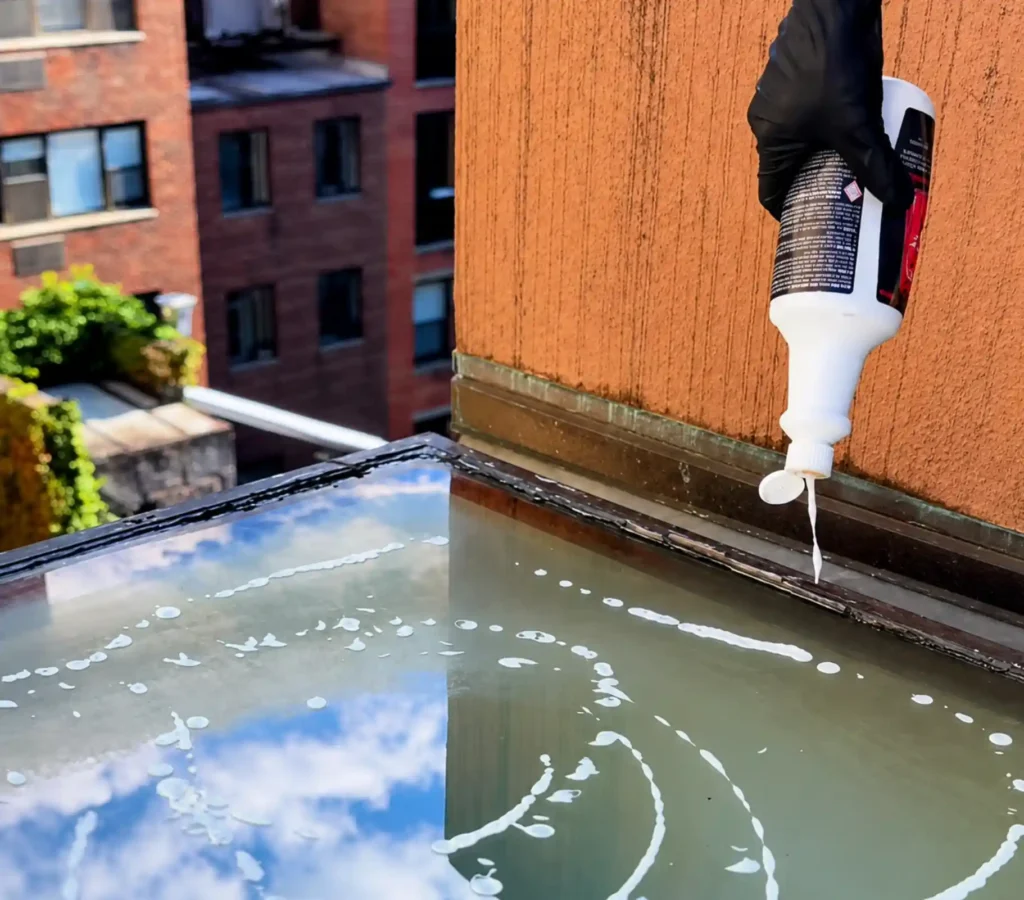
The truth is simpler. There is no single best window cleaner. There is a best window cleaner for the specific mess in front of you. New York City glass collects grime that homeowners in quieter places rarely see all at once: diesel soot, brake dust, masonry runoff from limestone and brick facades, salt air blowing off the Atlantic, and a yellow dusting of London plane pollen every spring. Match the product to the job and a clean, streak-free window stops being a mystery. For larger jobs, exterior glass, or hard-to-reach windows, professional window cleaning in NYC is often safer and more effective than trying to solve everything with a retail spray bottle.
This guide breaks the choice down by scenario. Five real cleaning jobs, two tested picks for each, a bonus alternative when one exists, and the breakthrough tools arriving in 2026 that are changing how people think about window washing.
How to Choose the Right Window Cleaner
Before any window cleaner list, three factors decide whether you get a clear pane or a smeared one.
Ingredients. Most commercial glass cleaner works through one of two systems: ammonia or a blend of solvents and surfactants. Ammonia evaporates fast and leaves a sharp shine, which is why it has been the classic choice for generations. The catch is that ammonia can crack, peel, and fade tinted film and low-emissivity coatings, both common on newer windows across the five boroughs. If your glass is tinted or coated, an ammonia-free window cleaner is the safer pick.
Tools. The window cleaner matters less than the cloth. Paper towels shed lint and push grime around. A flat-weave microfiber cloth, free of fabric softener, is what professionals use for a reason. For large panes and storefront glass, a quality squeegee beats any spray-and-wipe routine.
Technique. Spray the cleaner, wipe the loosened grime with one cloth, then dry with a second clean cloth. Work out of direct sunlight so the solution does not flash-dry into streaks before you can finish.
| Cleaner type | Best for | Watch out for |
| Ammonia-based | Heavy indoor grime, fast shine | Tinted or low-E glass, strong odor |
| Ammonia-free | Tinted glass, daily use, homes with pets | Slightly more wiping on baked-on grime |
| Plant-based | Eco-conscious homes, mild messes | Less power on stuck-on residue |
| Acidic or abrasive | Mineral deposits, construction film | Etching risk, needs careful handling |
The Best Window Cleaner for Every Job
Here is the full lineup at a glance. Every price below is approximate and varies by retailer, size, and season, so treat the figures as a guide rather than a quote.
| Scenario | Top pick | Approx. price | Best for |
| Everyday cleaning | Invisible Glass | $5 | Daily streak-free shine, tinted glass |
| Seasonal deep clean | Windex Outdoor | $8 to $12 | Whole-house exterior window washing |
| Post-renovation | Goo Gone Pro-Power | $8 to $10 | Paint, adhesive, and caulk residue |
| Hard water spots | CLR | $5 to $8 | Calcium and lime mineral deposits |
| Organic stains | RMR-86 | $15 to $20 | Mold, mildew, and shaded-window grime |
Everyday Cleaning: Your Daily Streak-Free Window Cleaner
This is the bottle that lives under the sink. It handles fingerprints, dust, the smudge a dog leaves on the balcony door, and the thin gray film that settles on any window facing a busy street in Manhattan or Queens. You want a fast, reliable streak-free cleaner that does not punish you for using it three times a week.
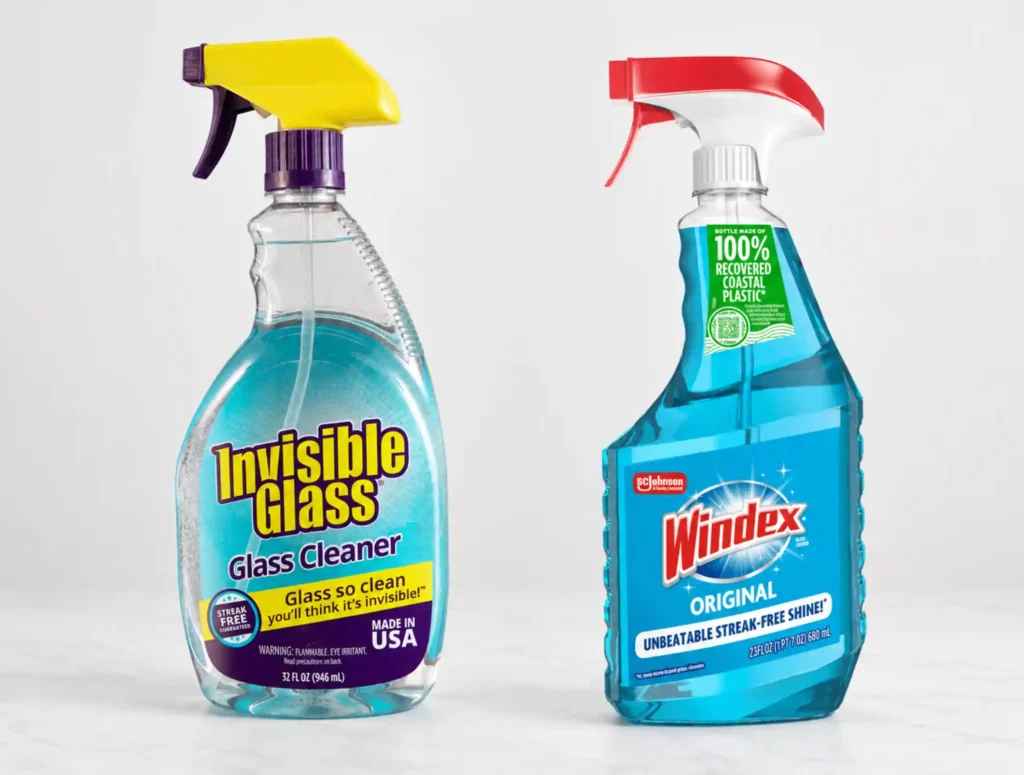
Top pick: Invisible Glass (Stoner) – around $5. In its 2026 testing, HGTV named this the best overall glass cleaner, and it is easy to see why. The formula is ammonia-free, which makes it safe on tinted and coated glass, and it removes fingerprints, grease, and smudges without leaving a haze or residue. The brand backs it with a streak-free money-back guarantee. For the price, it is hard to beat as an everyday window cleaner.
Runner-up: Windex Original – around $4. The name everyone grew up with earns its place. It carries more than 24,000 reviews and a 4.8-star rating on Amazon, and it delivers a clean, streak-free finish on light-duty jobs. One caution: it contains ammonia and a strong masking scent, so keep it off tinted windows and use it where there is airflow.
| Product | Type | Approx. price | Standout trait |
| Invisible Glass | Ammonia-free spray | $5 | Tint-safe, streak-free guarantee |
| Windex Original | Ammonia spray | $4 | Huge track record, fast shine |
Good Alternatives
Not every everyday job is identical, and these spotted picks round out the category. Hope’s Perfect Glass (around $15) is the one to keep near mirrors, where it clears toothpaste splatter and fingerprints without the faint haze mirrors often hold. ECOS Plant-Powered Window Cleaner (around $10) is the choice for homes that want a plant-based, low-fume glass cleaner and still expect a genuine streak-free result. For households that hate paying to ship water, Grove Co. Glass Cleaner Concentrate lets you mix a full bottle of window cleaning solution at home for a few dollars.
Seasonal Deep Cleaning: Twice-a-Year Exterior Window Washing
Twice a year, usually in spring and fall, exterior glass needs more than a wipe. Spring brings a heavy coat of pollen, and the end of winter leaves a salt and grit film behind, especially near the water in places like the Rockaways, Coney Island, and the coastal edges of Staten Island and Long Island. This is whole-house window washing, and the right tool reaches the glass without a ladder for every pane. For apartments, brownstones, townhouses, and private homes where exterior access is difficult, residential window cleaning can handle the seasonal buildup without ladders, streaks, or damaged screens.
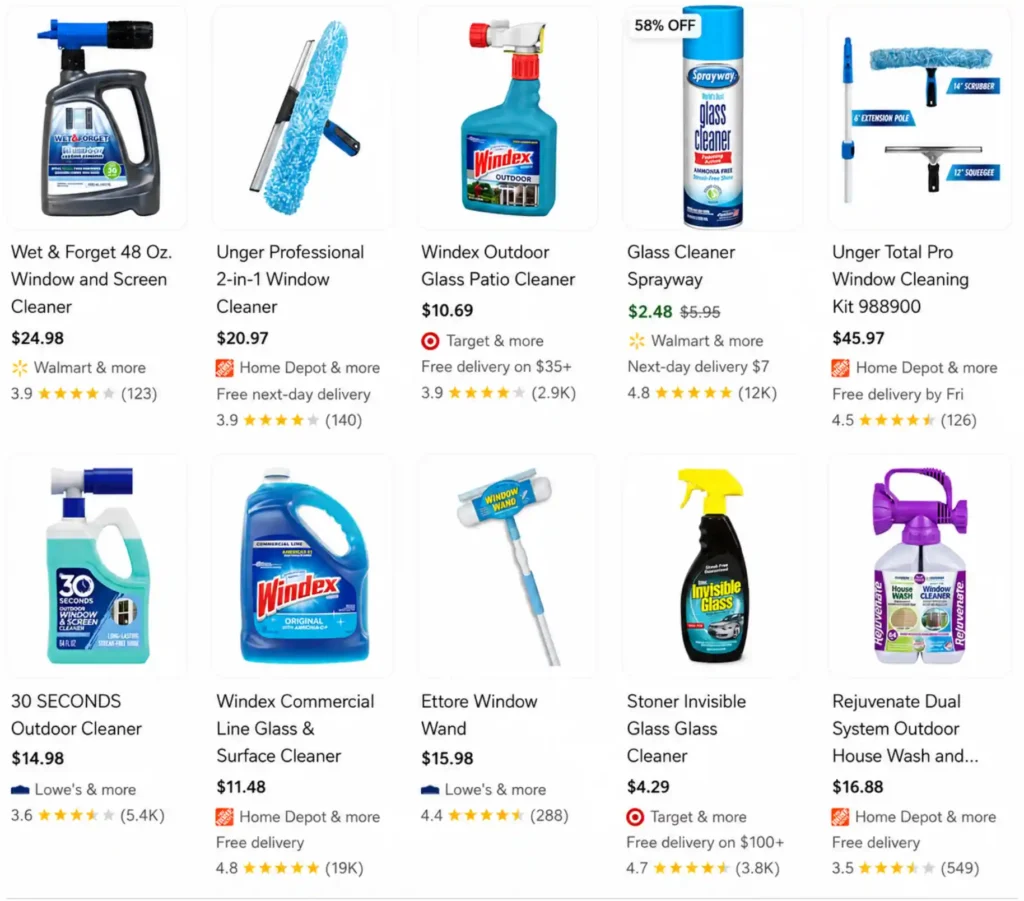
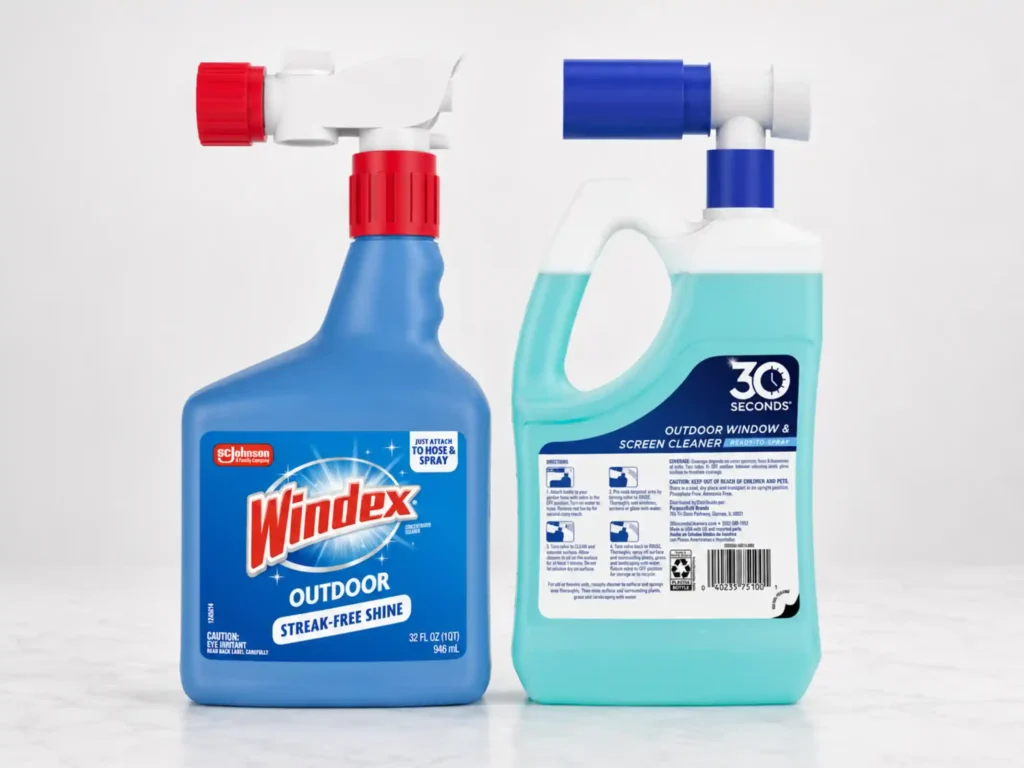
Top pick: Windex Outdoor – around $8 to $12. The hose-end and all-in-one outdoor versions are built for exactly this. You apply, and in many cases the rinse does the rest, so you are not climbing to dry every window by hand. It is the simplest path to clean windows across an entire ground-floor or low-rise exterior.
Runner-up: 30 Seconds Outdoor Window and Screen Cleaner – around $15 to $20 for the 64-ounce hose-end bottle. Rated 3.8 stars across more than 500 reviews at Lowe’s, it strips pollen, the powdery winter film, and the general haze that outdoor glass collects over a season. It also handles screens, which trap their own layer of grime.
| Product | Format | Approx. price | Best use |
| Windex Outdoor | Hose-end or concentrate | $8 to $12 | Quick whole-house exterior |
| 30 Seconds Outdoor | 64 oz hose-end | $15 to $20 | Pollen and winter film, plus screens |
A Good Alternative: The Kärcher Window Vacuum
For interior glass, condensation, and a genuinely drip-free finish, a window vacuum is a smart spotted alternative. The Kärcher WV line, which cleaning editors have praised, lifts the loosened water off the glass with a powered squeegee instead of a cloth, so there are no runs and no soaked windowsills. It will not reach the outside of an upper-floor window, but for accessible glass it is a clean upgrade over spray and wipe.
Post-Renovation Cleanup: Paint, Adhesive, and Construction Film
Gut renovations of brownstones in Brooklyn and Manhattan, co-op and condo alteration projects, and new-construction handovers all leave the same calling cards on glass: paint overspray, dried caulk, adhesive from protective film, and a chalky construction haze. A standard window cleaner barely touches any of it.
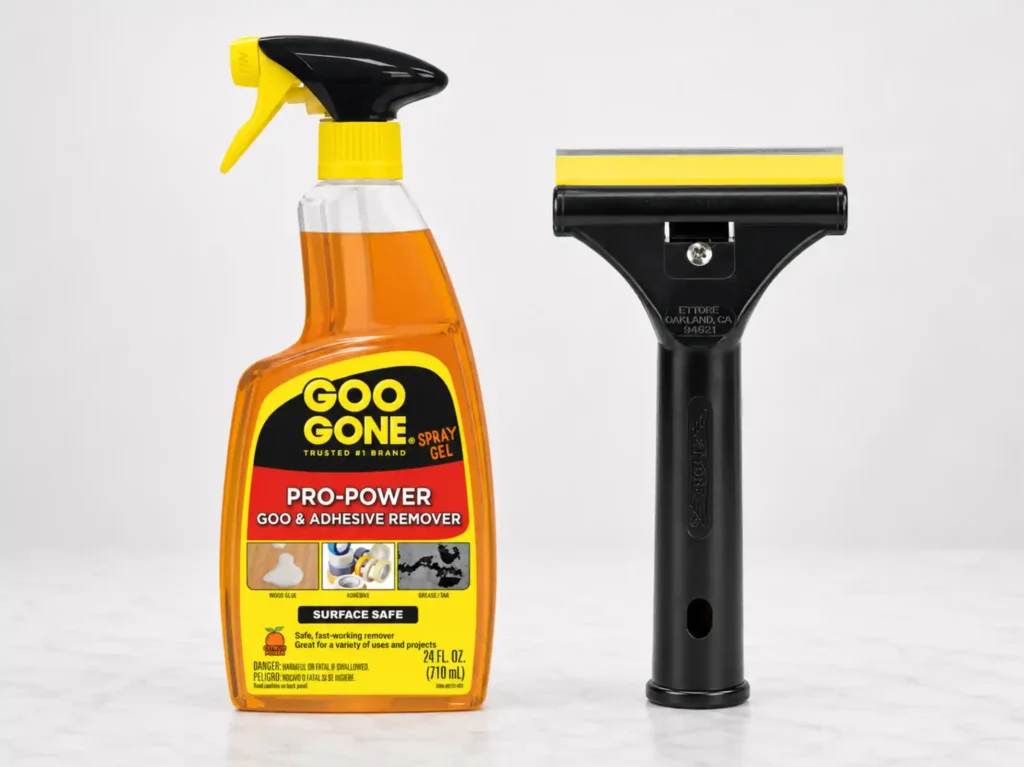
Top pick: Goo Gone Pro-Power – around $8 to $10. This is the workhorse for adhesive, dried caulk, tar, sticker residue, and many paint splatters. It softens the bond so the gunk lifts instead of smearing, then a normal window cleaner finishes the surface.
Runner-up: A glass-safe razor scraper – around $8 to $12 for a quality holder such as an Ettore. For fully cured paint and hard flecks, a single-edge razor in a proper scraper is the most effective tool there is. The technique matters: wet the glass with a few drops of dish soap in water first so the blade glides, then hold it at a low angle and push in short, firm strokes. Glass is tougher than people fear, but always start in a test corner.
| Product | Tackles | Approx. price | Note |
| Goo Gone Pro-Power | Adhesive, caulk, paint residue | $8 to $10 | Softens, then wipe and re-clean |
| Razor scraper (Ettore) | Cured paint, hard flecks | $8 to $12 | Use a soapy lubricant film |
When You Need a Pro: Cement and Stucco Splatter
Cement, mortar, and stucco overspray is a different animal. The professional answer is an acid or specialized abrasive such as Titan CementOff or Winsol Crystal Clear 550, products powerful enough to dissolve mineral splatter but aggressive enough to etch glass and damage frames if used incorrectly. On a high pane, on tempered glass, or across an entire facade after a build, this is a job to hand off to a professional crew like the team at Big Apple Window Cleaning rather than experiment with.
Hard Water and Mineral Deposits
Here is a fact that surprises a lot of residents. According to the New York City Department of Environmental Protection, the city’s tap water is predominantly soft, drawn from the Catskill and Delaware watersheds, with only the Croton system running moderately harder. So if you are fighting white, chalky, teardrop-shaped spots on your glass, the water from your faucet is rarely the culprit.
The mineral deposits on New York City windows almost always come from outside the glass: runoff carrying minerals off limestone and brick facades on pre-war buildings, the steady drip of an air conditioner, overflow from a rooftop water tank, and lawn sprinklers in the outer boroughs and on Long Island. These spots are alkaline, so they need a mild acid to dissolve them.
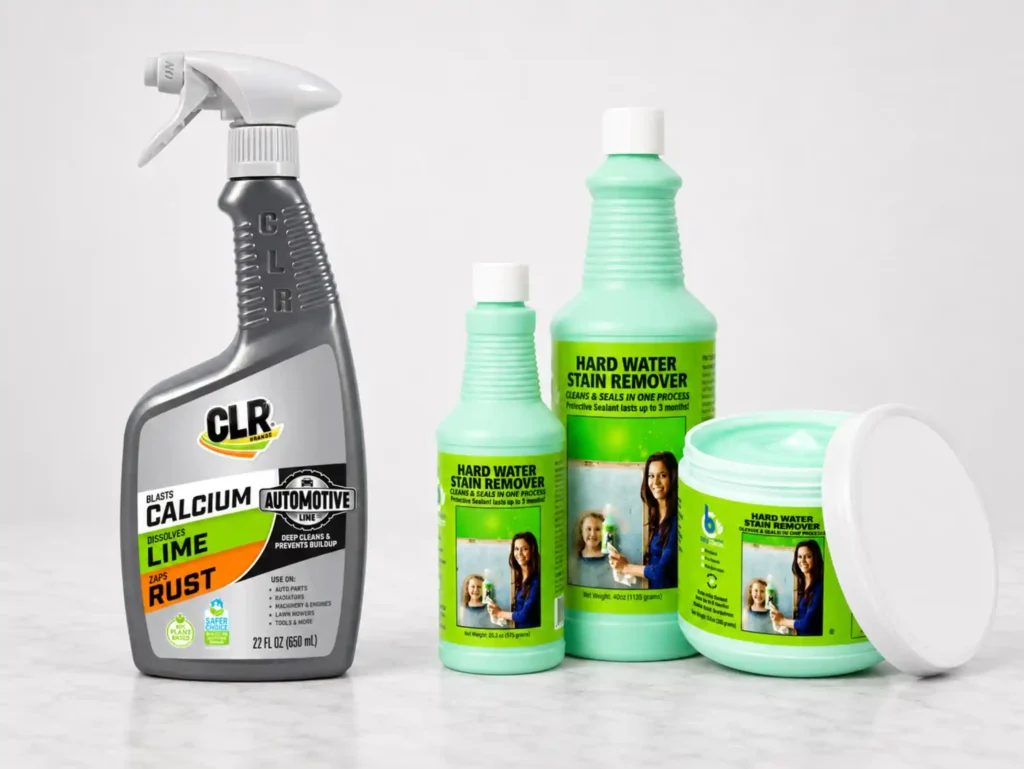
Top pick: CLR (Calcium, Lime, Rust) – around $5 to $8. Widely available and reliable, CLR cuts calcium and lime deposits that an ordinary window cleaner cannot. Apply with a damp microfiber cloth, work it in, and rinse thoroughly. Never let it dwell on the glass, and keep it off coated surfaces.
Runner-up: Bio-Clean Hard Water Stain Remover – around $20. A favorite for shower doors and windows alike, this mild abrasive paste lifts stubborn mineral buildup with a little patient scrubbing and is gentler on surrounding surfaces than a strong acid.
| Product | Form | Approx. price | Best for |
| CLR | Liquid | $5 to $8 | Calcium and lime spotting |
| Bio-Clean | Abrasive paste | $20 | Thick, baked-on mineral buildup |
Good Alternatives and Pro-Grade Options
For a light mineral haze rather than hard spots, Bar Keepers Friend is an inexpensive spotted alternative that polishes glass clear. At the other extreme, deposits that have been baking on for years may need professional-grade removers such as EaCo Chem OneRestore or a Titan hard water product. These work with little scrubbing, but they carry a real etching risk and call for gloves, eye protection, and experience. If the spots resist a household acid, that resistance is your signal to bring in a professional rather than reach for something stronger.
If mineral deposits have been baking into the glass for years or household acids no longer work, glass restoration in NYC is usually the right next step before assuming the window has to be replaced.
Organic Stains: Bird Droppings, Tree Sap, Mildew, and Pollen
Shaded and north-facing windows, glass under trees, and panes near the water grow their own film of living grime: mildew, algae, tree sap, and pollen. This category rewards a window cleaner built to break down organic matter rather than just wipe it.
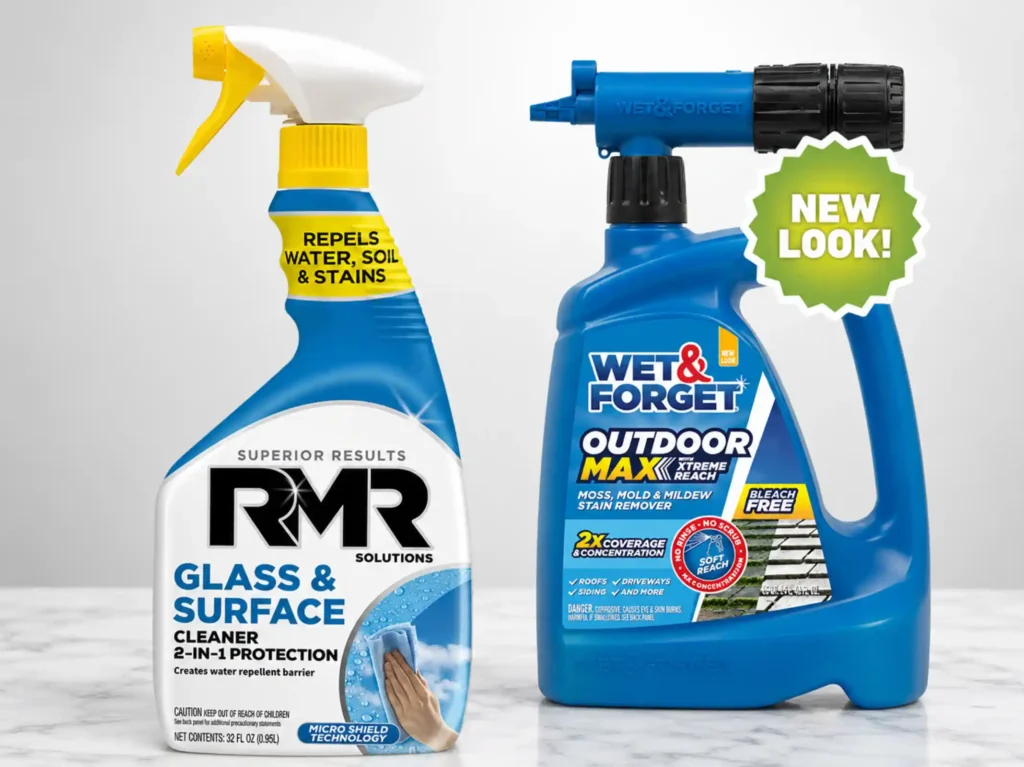
Top pick: RMR-86 Instant Mold and Mildew Stain Remover – around $15 to $20. Fast and popular, it clears mildew and the greenish stain that settles into the corner of a shaded window, the kind common on garden-level apartments and tree-lined streets across the Bronx and Brooklyn.
Runner-up: Wet and Forget Outdoor – around $22 to $30. A no-scrub formula for mold, mildew, and algae, you apply it and let weather and time rinse it away. It is gentle, which makes it a good fit for larger exterior surfaces where scrubbing every pane is not realistic.
A note on tree sap specifically: a little isopropyl alcohol on a cloth dissolves sap quickly before you switch back to your everyday window cleaner.
| Product | Targets | Approx. price | Method |
| RMR-86 | Mold, mildew, stains | $15 to $20 | Spray, dwell, rinse |
| Wet and Forget Outdoor | Mold, algae, mildew | $22 to $30 | No-scrub, weather rinses |
A Good Alternative: Enzyme Cleaners
For mixed organic mess, including bird droppings and tree residue, a natural enzyme cleaner is a gentler spotted option. Enzyme formulas digest the organic material instead of bleaching it, which makes them a safer choice around pets, plants, and the people sharing a fire escape garden.
What’s New in 2026: Robotic Window Cleaners and Window Vacuums
This is the part of the market that is actually moving. Window-cleaning robots have crossed from niche gadget to genuine smart-home category, with sales reportedly climbing more than 20 percent in 2026 as the technology gets easier to use and more affordable. For the first time, “what window cleaner should I buy” might mean a machine rather than a bottle.
ECOVACS WINBOT W3 OMNI
Unveiled at CES 2026 and billed by the company as a breakthrough in robotic window cleaning, the WINBOT W3 OMNI is the headline product. It runs on the WIN-SLAM 5.0 navigation system with multi-sensor obstacle avoidance, plans its own cleaning path, and uses a triple-nozzle wide-angle spray that lays down an even mist before a high-speed scrubbing pad does the work. A self-cleaning station washes the pad between passes, so the machine handles the messy part on its own.
HOBOT and the Frameless Specialists
HOBOT remains the name to know for frameless glass. Its 2026 models build a “virtual frame” with laser and pressure sensors, detecting the edge of the pane with millimeter accuracy so the robot cleans corner to corner without sliding off. Steam-equipped versions are aimed squarely at high-pollen homes and post-construction haze.
Window Vacuums
A step below full robots, window vacuums like the Kärcher WV mentioned earlier give you a powered squeegee that suctions water off the glass for a drip-free finish. They are cheaper, simpler, and excellent for interior glass and condensation.
The Honest Limitations
The breakthrough is real, but so are the limits, and any honest window cleaner guide has to name them.
| Strength | Limitation |
| Hands-off cleaning of accessible glass | Struggles with very dirty or post-winter windows |
| Excellent on large interior panes | Cannot clean the exterior of high-rise glass |
| Smart edge detection on modern windows | Trips up on the non-standard windows in brownstones and walk-ups |
| Saves you a weekend | Premium price, with most window robots running roughly $300 to $600 |
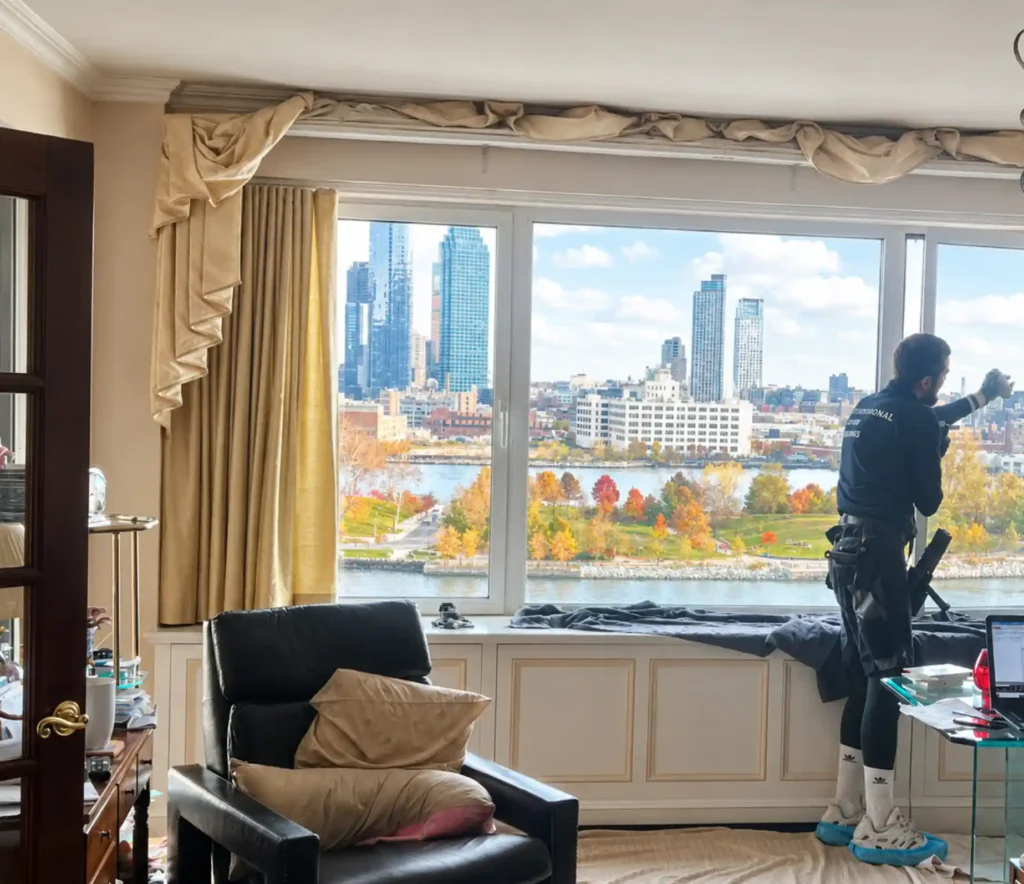
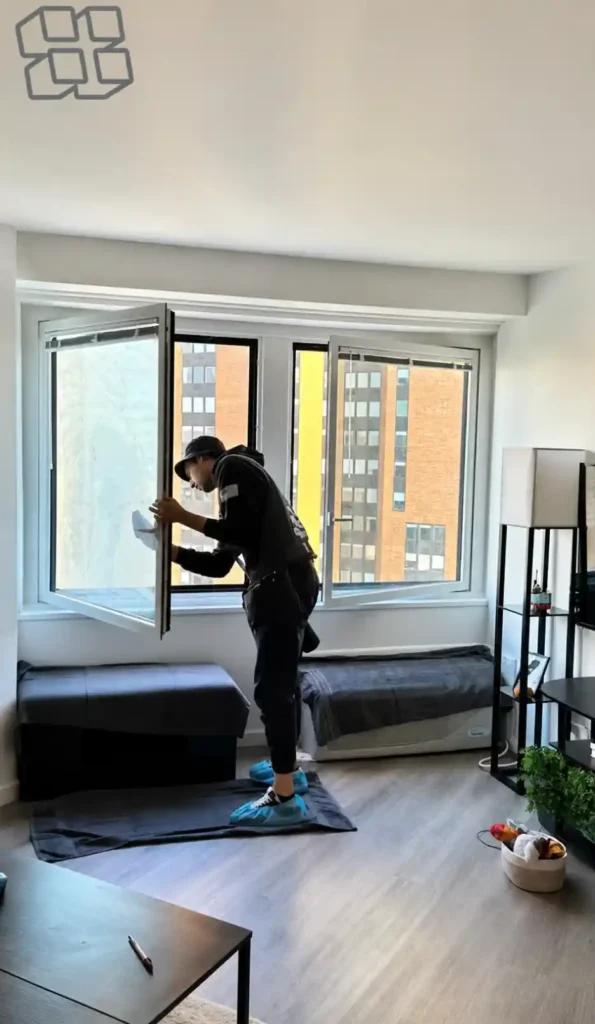
In other words, a robot is a great fit for the inside of a floor-to-ceiling apartment window. It is no help at all for the outside of a tenth-floor pane, the kind of glass that defines so much of the New York City skyline.
Best Window Cleaner Quick Picks for 2026
If you came here for the fast answer, start here. The best window cleaner depends on the kind of dirt you are trying to remove, the type of glass you have, and whether the job is indoors, outdoors, routine, seasonal, or closer to restoration work. A bottle that works beautifully on fingerprints may do almost nothing against mineral deposits. A strong hard-water remover may be completely wrong for tinted or coated glass.
Here are the best window cleaner picks for 2026 by job type:
| Job | Best Window Cleaner | Why It Works |
| Everyday streak-free cleaning | Invisible Glass | Ammonia-free, tint-safe, inexpensive, and reliable for fingerprints, smudges, and light city dust |
| Budget glass cleaning | Windex Original | Fast shine on ordinary glass and easy to find almost anywhere |
| Tinted or coated windows | Invisible Glass or another ammonia-free window cleaner | Safer for tinted film, low-E coatings, and newer residential glass |
| Outdoor seasonal washing | Windex Outdoor | Built for exterior glass, pollen, light grime, and whole-house window washing |
| Screens and exterior haze | 30 Seconds Outdoor Window and Screen Cleaner | Useful for pollen, winter film, and screen buildup |
| Post-renovation adhesive and paint residue | Goo Gone Pro-Power | Softens sticker residue, dried adhesive, caulk, and many paint splatters |
| Cured paint flecks | Glass-safe razor scraper | The right tool when residue is bonded to the glass surface, but only when used carefully on wet glass |
| Hard water spots | CLR | Dissolves calcium and lime deposits that regular glass cleaner cannot remove |
| Heavy mineral buildup | Bio-Clean Hard Water Stain Remover | A mild abrasive paste for thicker, baked-on mineral stains |
| Mold and mildew stains | RMR-86 | Fast option for organic staining on shaded or damp window areas |
| Algae and outdoor organic film | Wet and Forget Outdoor | No-scrub option for larger exterior areas affected by mold, mildew, and algae |
| Interior glass and condensation | Kärcher Window Vacuum | Removes loosened water from glass for a drip-free finish |
| Accessible modern glass | Robotic window cleaner | Useful for large interior panes, but not a solution for high-rise exterior glass |
| High, unsafe, etched, or post-construction glass | Professional window cleaning | Best when the problem involves height, risk, coatings, cement, stucco, severe mineral deposits, or large-scale exterior access |
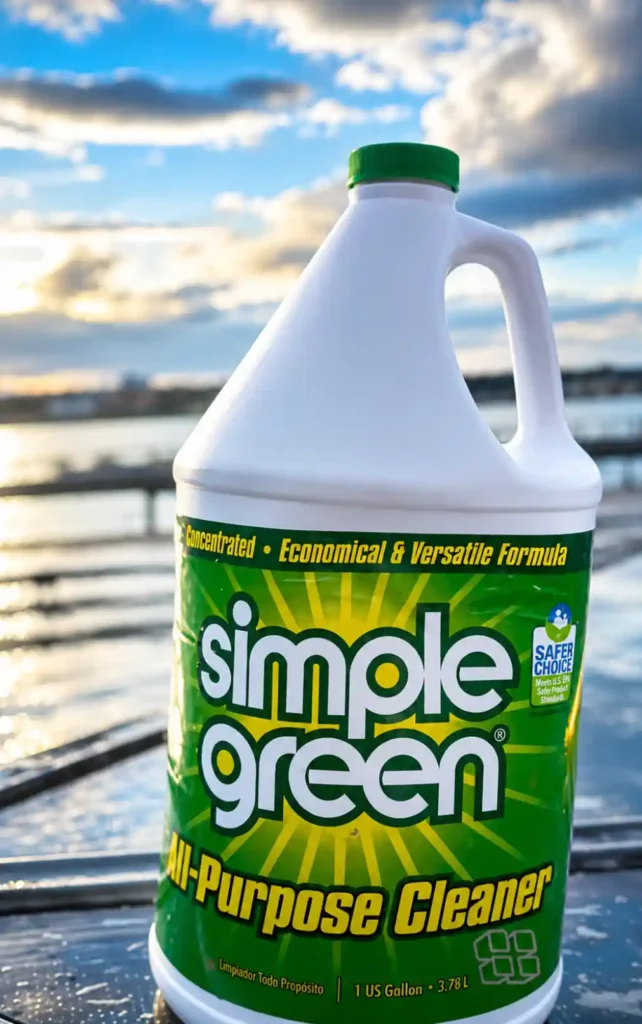
The short version: for most New York apartments, Invisible Glass is the best everyday window cleaner. For whole-house exterior washing, Windex Outdoor is the practical pick. For hard water spots, start with CLR or Bio-Clean. For renovation residue, use Goo Gone Pro-Power before reaching for a scraper. And if the glass is high, coated, badly stained, or affected by construction debris, the best window cleaner is not a stronger chemical – it is the right professional process.
When a Window Cleaner Is Not Enough
A bottle and a microfiber cloth solve the everyday. They do not solve height, scale, or stubborn damage. The exterior of a high-rise window, facade glass tied into a Local Law 11 and Facade Inspection Safety Program cycle, a full post-construction cleanup, or mineral deposits that have started to etch the glass all sit beyond what any consumer window cleaner can do safely.
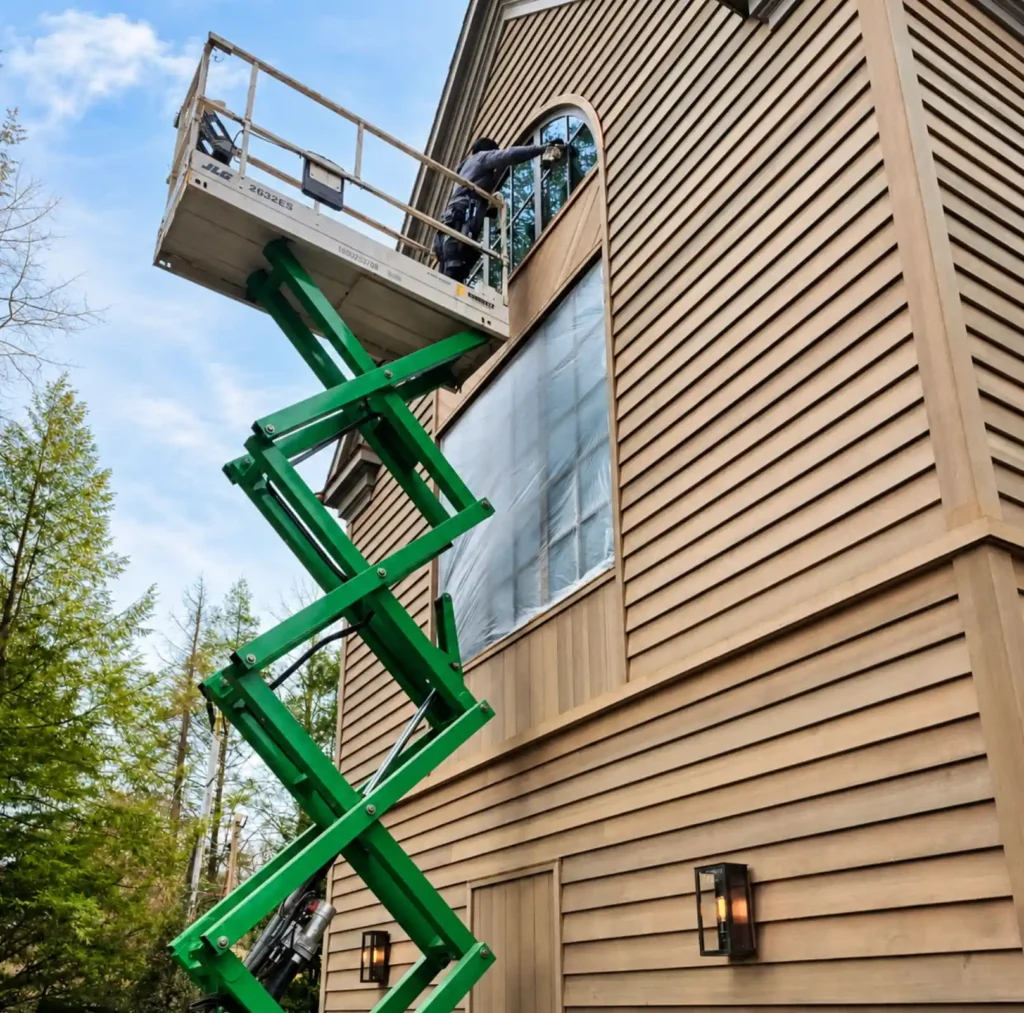
That is the line where a professional service earns its keep. A company like Big Apple Window Cleaning works the glass that a spray bottle and a robot cannot reach, across all five boroughs and on Long Island, with the equipment, certification, and insurance that high and hard-to-access windows require. The smart approach is to handle the routine glass yourself and call in the professionals for everything that involves real height or real risk.
Product prices and ratings are approximate and current as of 2026; they vary by retailer, size, and season.
Frequently Asked Questions
For everyday glass, Invisible Glass is the strongest all-around pick. It is ammonia-free, safe on tinted and coated windows, inexpensive, and rated the best overall glass cleaner in HGTV’s 2026 testing. If you only buy one window cleaner, that is the one.
It depends on your glass. Ammonia delivers a fast shine on plain glass, but it can crack and fade tinted film and low-emissivity coatings. If any of your windows are tinted or coated, an ammonia-free window cleaner is clearly the safer choice, and the cleaning results are just as good.
Usually the cloth, not the window cleaner. Paper towels leave lint, and an overloaded cloth just spreads grime. Use a clean microfiber cloth, dry with a second one, and work out of direct sunlight so the window cleaning solution does not dry before you wipe it.
For light jobs, yes. But seasonal exterior grime, pollen, and winter salt film respond far better to a dedicated outdoor window cleaner like Windex Outdoor or 30 Seconds, which are built for hose-end application across a whole exterior.
For interior glass and large accessible panes, they are increasingly worth it, and 2026 models like the ECOVACS WINBOT W3 OMNI are a real step forward. They are not a fit for very dirty windows or any exterior glass above the ground floor, and they carry a premium price.
Interior glass benefits from a wipe every week or two. Exterior glass usually needs a deep clean twice a year, in spring after the pollen settles and in fall before winter. High-rise and facade glass follows its own professional schedule, often tied to building inspection cycles, and a service such as Big Apple Window Cleaning can set the right cleaning interval for that kind of window.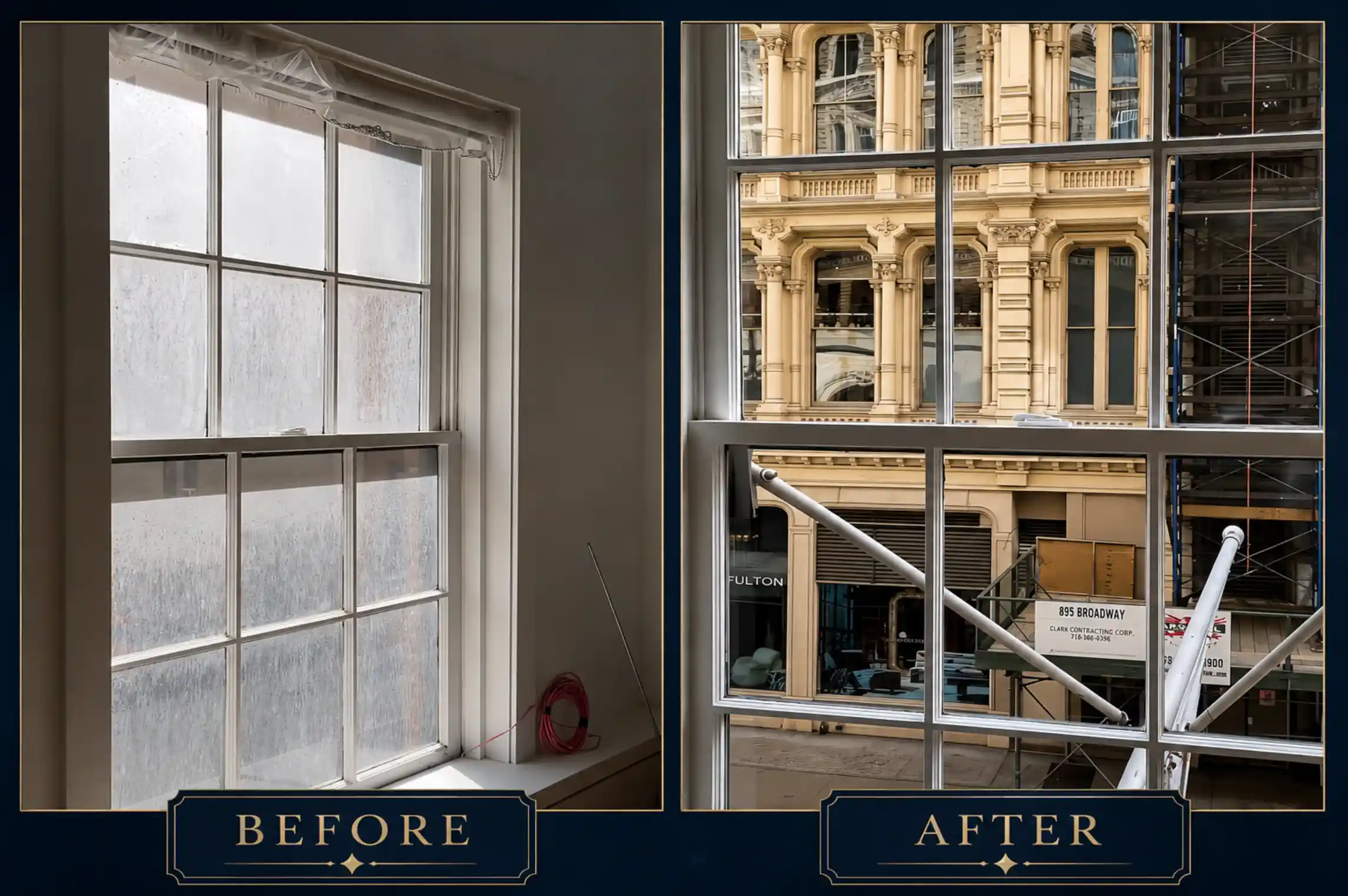
Problem: Fingerprints, handprints, dog nose marks, light dust, and ordinary indoor smudges.
Best product: Invisible Glass or another ammonia-free window cleaner.
Why it works: An ammonia-free formula is strong enough for daily grime but safer for tinted glass, coated windows, mirrors, balcony doors, and modern residential glass. It also leaves less odor than traditional ammonia-based sprays.
What not to use: Do not use paper towels if you want a streak-free finish. They leave lint and often spread oily fingerprints instead of lifting them. Use two microfiber cloths: one to clean and one to dry.
Problem: Tinted glass, window film, or low-E coated windows that need cleaning without damaging the surface.
Best product: An ammonia-free window cleaner such as Invisible Glass, Hope’s Perfect Glass, or a tint-safe glass cleaner.
Why it works: Ammonia can damage some window films and coatings over time, causing fading, peeling, clouding, or edge failure. Ammonia-free cleaners reduce that risk while still removing fingerprints, dust, and light grease.
What not to use: Do not use Windex Original or other ammonia-based cleaners on tinted windows unless the film manufacturer specifically says it is safe.
Problem: Yellow spring pollen, tree dust, light outdoor grime, and seasonal haze on exterior glass.
Best product: Windex Outdoor or 30 Seconds Outdoor Window and Screen Cleaner.
Why it works: Outdoor window cleaners are designed for larger exterior surfaces and hose-end application. They help loosen pollen and light dirt without requiring you to wipe every pane by hand.
What not to use: Do not clean exterior windows in direct sun if you can avoid it. The solution can dry too quickly and leave streaks before the rinse is complete.
Problem: Gray-white winter residue, road salt mist, grit, and dirty film on windows after cold months.
Best product: Windex Outdoor for light seasonal buildup, or a professional exterior window washing service for larger homes, upper floors, or heavy residue.
Why it works: Outdoor window cleaners are better suited to broad exterior washing than indoor sprays. They help rinse away loose salt and city grime before it bonds more deeply to the glass and frames.
What not to use: Do not use abrasive pads on exterior glass. They may seem helpful on salt film, but they can scratch the surface or damage coated glass.
Problem: White, chalky, teardrop-shaped spots caused by mineral deposits from air conditioner drips, sprinklers, facade runoff, or rooftop water.
Best product: CLR for light to moderate calcium and lime spots, or Bio-Clean Hard Water Stain Remover for thicker buildup.
Why it works: Mineral deposits are usually alkaline, so mild acidic cleaners like CLR can dissolve them. Bio-Clean adds gentle abrasion for deposits that need more physical polishing.
What not to use: Do not leave acidic cleaners sitting on glass, frames, stone, metal trim, or painted surfaces. Apply carefully, work in small areas, rinse thoroughly, and test first.
Problem: Mineral spots that have been baking onto the glass for months or years and no longer respond to household cleaners.
Best product: Professional glass restoration, or a pro-grade hard water remover used by an experienced technician.
Why it works: Long-term mineral deposits can start bonding to the glass surface. At that point, the job may require controlled chemical treatment, polishing, or restoration rather than ordinary cleaning.
What not to use: Do not keep escalating to stronger acids at home. If CLR or Bio-Clean does not work, stronger products can etch glass, stain frames, damage stone, or create permanent marks.
Problem: Fine paint mist, renovation specks, or dried paint dots on glass after painting or remodeling.
Best product: Goo Gone Pro-Power for softening residue, followed by a glass-safe razor scraper used on wet glass.
Why it works: Goo Gone helps loosen adhesive and paint residue, while a sharp single-edge scraper can remove cured specks cleanly when used correctly with a soapy lubricant film.
What not to use: Do not scrape dry glass. Do not use an old, rusty, or dull blade. Do not scrape tinted, coated, or unknown glass without testing first.
Problem: Sticky label residue, old tape marks, protective film adhesive, or glue left on glass after renovation or delivery.
Best product: Goo Gone Pro-Power.
Why it works: Adhesive residue needs a solvent-based cleaner that softens the bond before wiping. Once the sticky layer is removed, a regular ammonia-free window cleaner can finish the glass.
What not to use: Do not use a dry rag and pressure alone. That usually spreads adhesive into a cloudy smear and makes the cleanup take longer.
Problem: Green, black, or gray staining around shaded windows, garden-level glass, bathroom windows, or damp corners.
Best product: RMR-86 for fast mold and mildew stain removal, or Wet and Forget Outdoor for slower no-scrub exterior treatment.
Why it works: Mold and mildew are organic stains. They need a cleaner designed to break down biological growth, not just a general glass spray.
What not to use: Do not mix mold removers with ammonia-based glass cleaners. Mixing cleaning chemicals can produce dangerous fumes. Use one product at a time and rinse thoroughly before switching.
Problem: Bird droppings on exterior glass, balcony doors, ledges, or upper-floor windows.
Best product: A mild enzyme cleaner or warm soapy water first, followed by an ammonia-free window cleaner.
Why it works: Bird droppings are organic and can be acidic. Softening them first reduces the need for aggressive scraping and lowers the risk of scratching the glass.
What not to use: Do not scrape dry bird droppings with a blade or abrasive pad. Dry particles can drag across the glass and leave scratches.
Problem: Grease film, cooking vapor, fingerprints, and oily buildup on restaurant frontage, kitchen-adjacent windows, or interior glass near vents.
Best product: A degreasing glass-safe cleaner, followed by a standard streak-free window cleaner for the final finish.
Why it works: Grease needs to be broken down before the glass can be polished. A normal glass spray often smears grease instead of removing it completely.
What not to use: Do not use too much detergent. Heavy soap residue attracts dust and can make the window look dirty again within a day or two.
Problem: Exterior glass above safe reach, especially on apartment towers, condos, co-ops, office buildings, and hard-to-access facades.
Best product: Professional window cleaning, not a retail bottle or consumer robot.
Why it works: The real problem is not the cleaning formula. It is access, height, safety, insurance, glass condition, and the correct method for the building. Professional crews can use rope access, water-fed poles, aerial lifts, suspended platforms, or interior methods depending on the job.
What not to use: Do not lean out of windows, climb onto balconies, use improvised poles, or try to clean exterior high-rise glass with a consumer robot. If the glass cannot be reached safely from inside, it is not a DIY job.
FURTHER READING

Article by Dayne Watkins


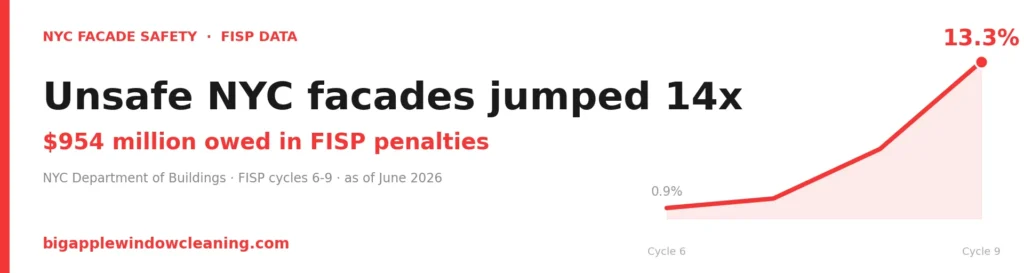
Unsafe NYC Facades Jumped 14x. The $954 Million Reason Owners Hide Them Instead of Fixing Them
On May 16, 1979, a 17-year-old Barnard student named Grace Gold was walking near Broadway and 115th Street when a piece of masonry broke loose from the eighth floor of a Columbia-owned building and killed her. Her death produced Local Law 10 of 1980, the first law in New York City requiring periodic facade inspections […]
Explore more
Roof Lantern Cleaning: A Professional Guide for New York Homeowners
Your roof lantern was supposed to flood the room with light. Instead, it is flooding the room with guilt every time you look up and see a layer of grime that could double as modern art. If you live in Brooklyn or Manhattan, you already know that city air does not play fair with glass […]
Explore more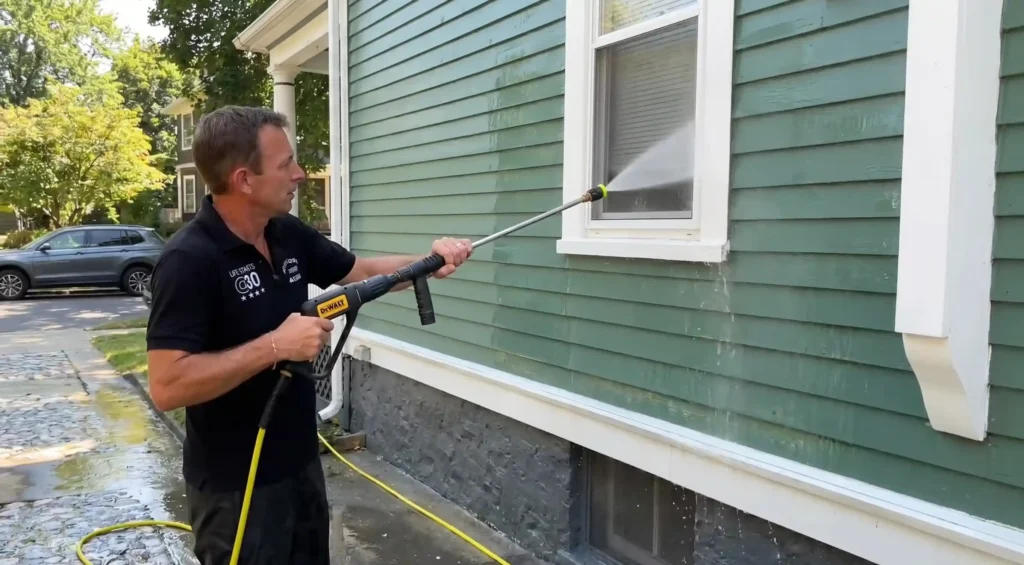
House Facade Cleaning: A No-Nonsense Guide for Homeowners Who’d Rather Not Watch Their Walls Crumble
Your home’s facade does a thankless job. Day after day, it stands between your family and everything the urban environment throws at it – diesel exhaust from delivery trucks, pigeon droppings with the pH of battery acid, mysterious black streaks that seem to appear overnight, and that persistent green fuzz on the north-facing wall that […]
Explore more