
Windows Wash 101: How To Escape Streaks Once And For All
Contents
DO YOU HAVE AN URGENT NEED?
Our fast response service can fix your urgent problem. We have teams ready for action.
AND GET A FREE QUOTE
Get monthly window insight
Is it possible to clean windows just like a professional? In theory, yes, but in practice, it takes a lot of time and effort. The chemicals, equipment, and cleaning technique – those stand out professionals. You can spend many hours; finish washing, and find treacherous streaks on the glass. Let us figure out how to wash windows without streaks.
Streakless Window Washing Steps
A prerequisite for a successful wash is to follow the sequence of steps. Follow the steps step by step, consistently and thoroughly. Here is a list of steps:
- Wash the frames.
Although the frequency of washing may vary depending on the material, it is advisable to wash the frames and rubbers between often enough. If you do not, the first time it rains, your window will be as dirty as if you had not washed it. Always start with the frames and rubbers first.
- Window Washing (Water).
At this stage, your task is to wash away all the dirt with a soapy solution. Do not use special chemicals. It is enough to thoroughly wipe the glass, changing the rag if necessary (if it gets too dirty).
- Rinse off the soapy solution.
Use a garden hose or a bucket of warm, clean water. Take a soft rag in your hands, have patience, and rinse off the rinse until the water is clear.
- Clean the window (Chemicals).
Ideally, the window should be slightly damp (do not dry it 100%). Start washing after applying the chemicals. Be ready for a lot of water dripping. Lay a little towel under the window to absorb extra water and mud.
- Thorough polishing.
Last but not least: get your hands on a soft yet dense microfiber rag. The optimum density is 300-500 GSM (grams per square meter).
Why Do Streaks Appear On My Windows?
Streaks may appear because of several factors. Here is the list:
- You have not washed off the excess dirt properly. The slightest dirt remainder causes white lines after drying: this might happen for two reasons. First, you wash too fast, paying not enough attention. Another possible reason is a poor technique: always hold the rubber firmly against the glass when cleaning.
- If it is too hot outside, the chances are there will be streaks on the glass. There are two ways to avoid them: either wash your windows quickly or go through several rounds of washing. The fact is that in the sun, the product dries much faster, leaving chemicals on the surface. A similar situation occurs during strong winds. Therefore, take into account the weather outside the window.
- Poor polishing may cause white strips. You can still get rid of streaks and fix the situation if you have failed one of the previous steps. Use a soft, thick cloth and a leisurely straight motion to dry the window.
If you follow all the instructions, there will be no streaks on your windows. The main factors that affect the presence of lines are your technique, speed, and accuracy. The cleaner plays a secondary role in this process.
Streakless Wash Key Takeaways
- Be aware of the effects of the weather.
Direct sunshine and strong winds can significantly mess up your plans. Cloudy, slightly warm weather with moderate humidity is a solid option for a light wash.
- Take care of the frames.
Plastic and wood frames need to be washed more often than aluminum frames. Do not forget the rubber bands.
- Wash in stages.
First, get rid of the initial dirt. Use soapy water and a bucket of clean water. Use a stiff rag for stubborn dirt (do not use a stiff brush). Rinse the window with clean water until it is clean. Then apply a specialized chemical that will remove the invisible dirt. Use a straight downward motion, pressing the rubber band firmly against the glass. Avoid circular motions as these can make washing difficult.
- Polish the window as thoroughly as possible.
If you make a mistake in one of the first steps, it is not too late to correct it. A dense and soft microfiber can remove chemical residue and finally dry the window. Use only clean rags. Wash them before each wash for best results.
Streakless Wash Equipment
You need a couple of terry clothes, a microfiber cloth, soapy water, and chemicals to wash your windows. Now let us dive into details.
Chemicals
There are two basic options when it comes to window cleaning chemicals: DIY chemicals and professional chemicals. Even though both have pros and cons, PRO chemicals win most of the time. Of course, you can save a little bit using homemade chemicals, but sometimes it is better to spend an extra $20 to get the best result.
PRO Chemicals
According to the statistics, the most popular laundry detergents are (in descending order): Tide, Gain, Arm & Hammer, Purex, Persil, Xtra, etc. Most of them are alcohol-based and contain aggressive surfactants (surface active agents). Surfactants react and, consequently, remove the dirt. The same rule applies to dishwashing soaps. You can also mix both.
The best mix so far is a combination of liquid Jet Dry and some detergent. For instance, dissolve 1 tablespoon liquid Jet Dry in 12 gallons of water. Give it 15-20 seconds to settle and add some detergent. It can be either laundry detergent (Tide, Gain, etc.) or dish soap like Dawn. The perfect dosage for the latter is 2-3 tablespoons. Bear in mind that detergents have a better ability to dissolve in water. (takes less time).
Tip: All detergents perform equally in terms of window cleaning. Price does not significantly affect their cleaning ability. So you can save some money, buying less pricey products.
Homemade Chemicals
The main advantage of DIY chemicals is the price. You can find most of the components at your place. They are less effective than PRO chemicals; however, if windows are not super dirty, you can save some money. Here is the list:
- Soapy water and white paper. Soapy water is responsible for the chemistry part, while the newspaper is analog for terry cloth. If your windows are slightly dirty, this is a way to go.
- Vinegar is a stable substance to complete your wash. Dissolve 1.5 ounces in a glass of room water. Spray the solution onto the window and take it off with wet wipes. Vinegar can also protect your windows from insects (for a short period, though)
- Ammonia & Manganese Solution. Equally great substitutes for PRO chemicals. Make sure to stir the solution for a while. Otherwise, your windows will haze pink.
- Alcohol is the base element of some dish soaps, detergents. No surprises, it cleans well. Apply it for a perfect finish.
- Starch is a reliable fighter against caked-on stains. Dissolve 2 tablespoons of starch in 12 gallons of water and spray the solution onto the window.
Streakless Washing Equipment
Here is what you need for a perfect wash:
- Bucket for soapy water (you can use a garden hose with a special nozzle instead). Any container is suitable as long as it is big enough. Small buckets force you to change water frequently.
- A dense terry cloth. Make sure it is not oversized. If so, you can mop the window.
- Squeegee is a special cleaning brush. This is a must-have for every professional window cleaner. Why do you think it is?
- Microfiber cloth is a perfect tool to complete your wash. Consider clothes with 300 GSM or more. They are dense and soft enough to soak all the moisture from the window’s surface.
Outside Windows Streakless Washing
You can use glider-magnetic tools, mop, or order professional cleaning services. The glider is a device with magnets. It helps to wash both inside and outside simultaneously. The mop is the oldest cleaning method, yet it is inconvenient. The safest and most effective way to clean the outside windows is professional services: cleaners bring all the equipment to wash your windows. You can get a free quote here.
Streakless Windows Wash During The Winter
Winter wash may be a tricky business, especially if the outside weather is 35 °F or even colder. Sludgy, cold weather with high humidity affect washing badly; but if you still want to do so, here is the list of some recommendations:
- Put on warm gloves or mittens. On top of that, wear another pair of disposable gloves. Otherwise, you can frostbite your hands.
- Make sure there is no ice on the window before cleaning. You can use a car scraper if there is any.
- Use hot water for a soapy solution. Clean as fast as you can. The point is, soapy water can freeze quickly.
- Choose special detergents for sub-zero temperatures. Standard laundry detergents or dish soaps do not remove dirt well in sub-zero temperatures.
- Perform polish: make it promptly and thoroughly.
Wood Frames Streakless Washing
Aluminum and plastic frames are not as delicate as wood frames. Follow these tips to clean wood sparingly:
- Do not use overly aggressive chemicals: avoid acetone, abrasive powder, acids.
- Metal squeegees and fine-grained sponges can damage the paintwork. Consequently, parasites will populate the crevices.
- Use as little water as possible. Wood and water do not get along: excess humidity is a no-no.
FURTHER READING
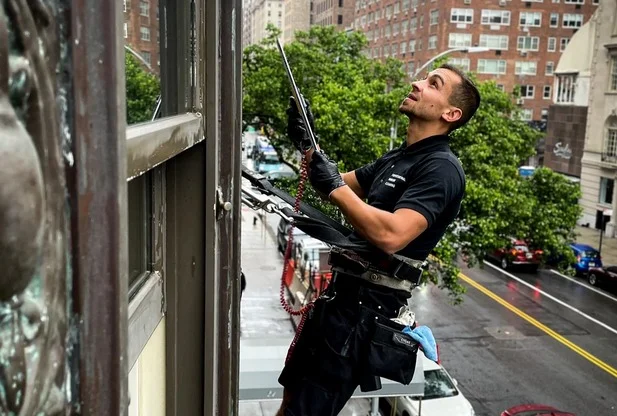
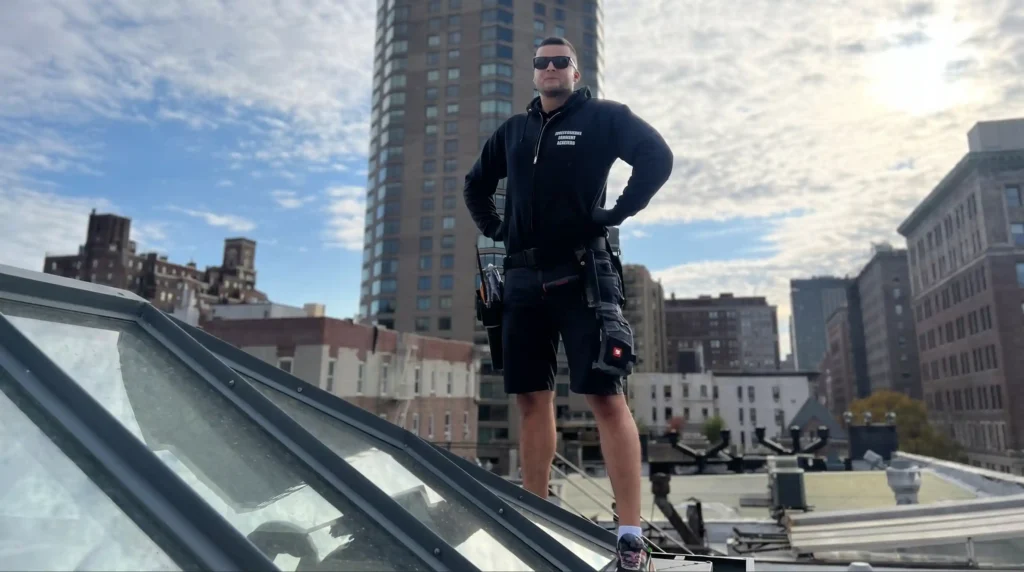
Roof Lantern Cleaning: A Professional Guide for New York Homeowners
Roof Lantern Cleaning: A Professional Guide for New York Homeowners Your roof lantern was supposed to flood the room with light. Instead, it is flooding the room with guilt every time you look up and see a layer of grime that could double as modern art. If you live in Brooklyn or Manhattan, you already […]
Explore more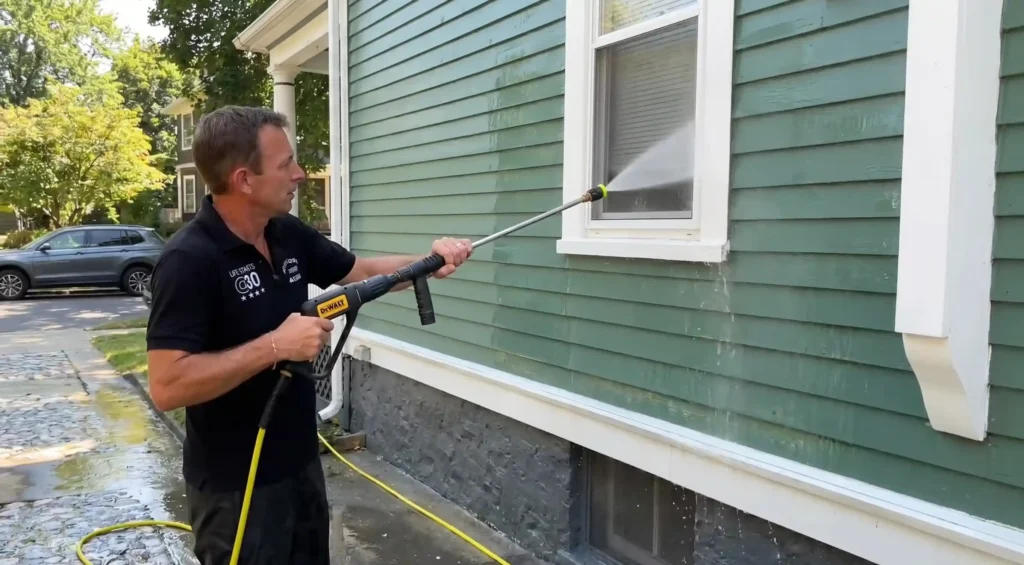
House Facade Cleaning: A No-Nonsense Guide for Homeowners Who’d Rather Not Watch Their Walls Crumble
Your home’s facade does a thankless job. Day after day, it stands between your family and everything the urban environment throws at it – diesel exhaust from delivery trucks, pigeon droppings with the pH of battery acid, mysterious black streaks that seem to appear overnight, and that persistent green fuzz on the north-facing wall that […]
Explore more
Commercial Facade Cleaning: What Every Building Owner in New York City Needs to Know
Your building talks about you before you ever open your mouth. A grimy exterior covered in soot, pigeon souvenirs, and mysterious streaks tells visitors, tenants, and potential buyers exactly one thing – nobody here cares. Research shows it takes roughly seven seconds to form a first impression, and in a city where commercial real estate […]
Explore more