
Your window cleaner’s Certificate of Insurance might not cover work at height. Here is what your board must check.
By bigapplewindows
Contents
- What a COI is, and why your board requires one
- The endorsements NYC boards should require
- Trap 1. The height and equipment exclusion
- Trap 2. The Action Over exclusion and New York's Scaffold Law
- How to verify, not just collect
- What to ask your window cleaner (board checklist)
- How Big Apple Window Cleaning handles it
DO YOU HAVE AN URGENT NEED?
Our fast response service can fix your urgent problem. We have teams ready for action.
AND GET A FREE QUOTE
Get monthly window insight
If you sit on a co-op or condo board, or manage one, you already know the rule: no vendor touches the building until a Certificate of Insurance is on file. Movers, contractors, and window cleaners all send one before the first visit.
Here is the problem. A COI that looks complete can still leave your building exposed for the one thing window cleaning always involves: work at height. Two gaps hide behind a clean-looking certificate, and under New York law both land on the building, not the contractor. This guide shows you exactly what to require and how to verify it.
This is general information, not legal or insurance advice. Confirm your building’s specific requirements with your managing agent, insurance broker, or attorney.
What a COI is, and why your board requires one
A Certificate of Insurance is a one-page snapshot proving a vendor carries liability coverage. For a co-op or condo, it exists to move risk off the building. If a worker is hurt or property is damaged, the vendor’s policy should respond first, not the building’s.
The catch is that the certificate itself is only a summary. It confirms a policy exists. It does not, on its own, prove that your building is actually protected. That gap is where window cleaning gets dangerous.
The endorsements NYC boards should require
Most well-run buildings ask for more than a policy number. The standard requirements are:
- Additional Insured. The certificate should name the co-op corporation or condo association, the board, and the managing agent as additional insureds. This is what extends the vendor’s coverage to your building.
- Primary and Non-Contributory. This wording says the vendor’s policy pays first, before the building’s own insurance.
- Waiver of Subrogation. The vendor’s insurer agrees not to come after the building later to recover what it paid.
- Notice of Cancellation. Written notice, commonly 30 days, if the policy lapses.
- Adequate limits. Many buildings require general liability of $1 million per occurrence and $2 million aggregate, with umbrella or excess coverage on top. High-rise, landmark, and luxury buildings often require $5 million to $10 million or more.
These are the boxes most boards check. They are necessary. For window cleaning, they are not sufficient.
Trap 1. The height and equipment exclusion
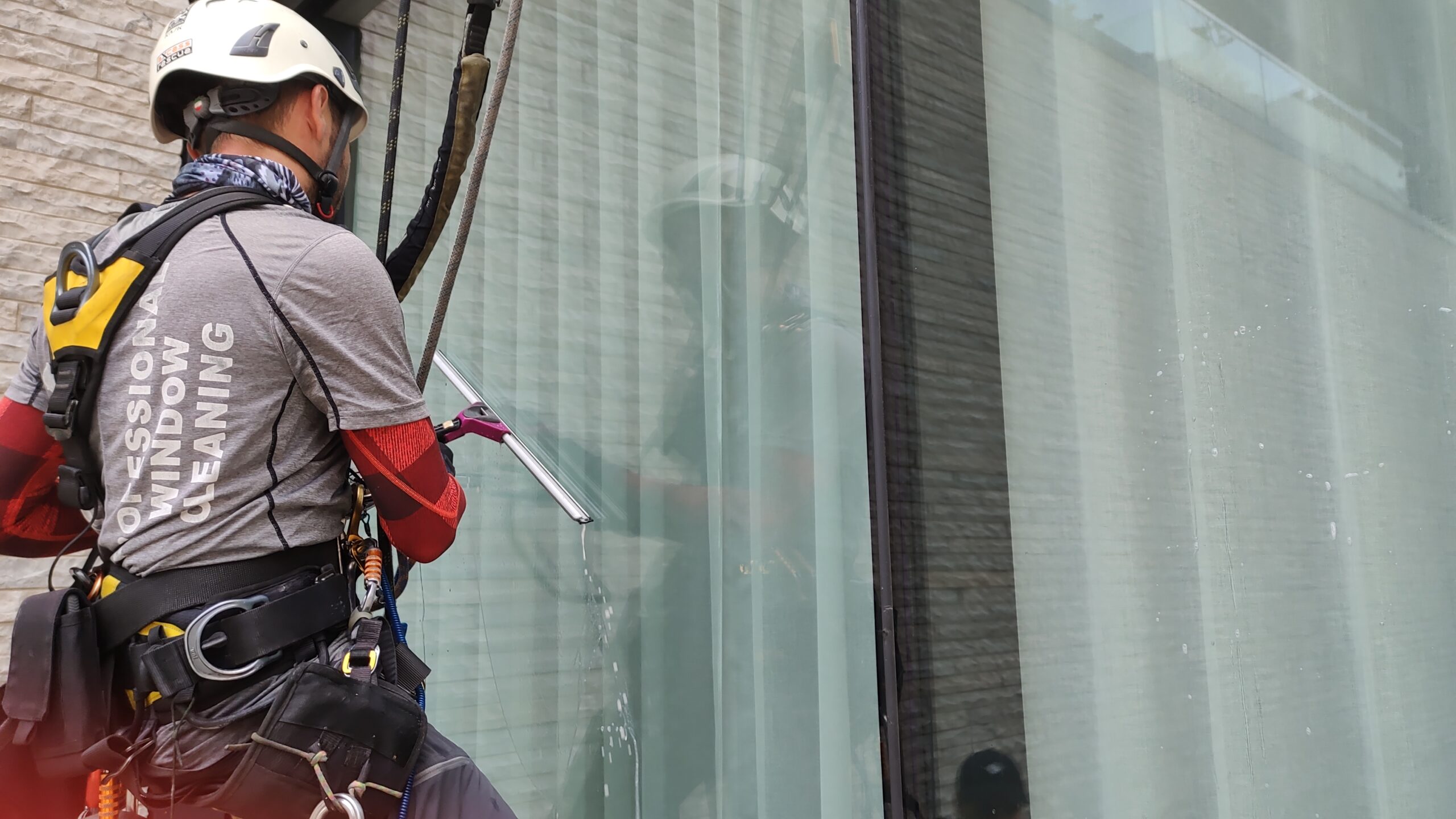
Window cleaning is not floor mopping. It happens on ladders, water-fed poles, boom lifts, swing stages, and rope access lines, sometimes dozens of stories up. Many general cleaning liability policies are written for interior janitorial work, and they quietly exclude work above a certain height, or exclude the specific equipment used to reach exterior glass.
So a cleaning company can hand your board a valid COI with the right limits and the right endorsements, and still have a policy that does not cover a technician on a rope 20 floors up. If something happens during exactly the work you hired them for, the coverage you were counting on may not be there.
You cannot see this on the face of the certificate. It lives in the policy exclusions.
Trap 2. The Action Over exclusion and New York’s Scaffold Law
This is the one almost no one checks, and in New York it is the most important.
New York Labor Law Sections 240 and 241, known together as the Scaffold Law, place a high level of responsibility on building owners for gravity-related injuries to workers. If a window cleaner falls, the building owner can be pulled into the claim even when the owner did nothing wrong.
Now add an Action Over exclusion. This is a clause in some liability policies that blocks coverage when an injured worker sues a third party, such as the building owner, and that owner then turns to the contractor’s policy for protection. Put the two together and the picture is stark: a fall at height, a Scaffold Law claim against your building, and a contractor policy that excludes exactly that scenario. The exposure lands on the building.
A window cleaner working on your property should carry a policy with no Action Over exclusion and no height limitation. Most general cleaning policies are silent on both, which is not the same as being covered.
How to verify, not just collect
Do not accept the certificate at face value. To actually protect the building:
1. Request the additional insured endorsement, not just the COI. In New York, an Acord 855 NY form or a copy of the endorsement page shows whether your building was truly added as an additional insured, with primary and non-contributory wording.
2. Ask, in writing, whether the policy excludes work at height or the equipment used. Rope access, swing stages, and boom lifts should be covered, not excluded.
3. Ask whether the policy contains an Action Over exclusion. For at-height work in New York, this is the question that matters most.
4. Have your insurance broker or attorney review it. For a building of any size, this ten-minute review is cheap insurance against a very expensive gap.
What to ask your window cleaner (board checklist)
– Are the co-op or condo, board, and managing agent named as additional insureds, primary and non-contributory?
– Does your general liability policy exclude work at height or the equipment you use?
– Does your policy contain an Action Over exclusion?
– What are your general liability and umbrella limits?
– Are your at-height technicians certified for rope access work?
– How quickly can you provide a COI naming our building?
If a vendor cannot answer these clearly, that is your answer.
Co-op & Condo Window Cleaner COI Check
Check a window cleaning vendor's Certificate of Insurance against what your building actually needs. Takes one minute.
Answer the items above
How Big Apple Window Cleaning handles it
We work at height every day, so our coverage is built for it, not adapted to it. Our protection totals over $11 million per project: $10 million commercial umbrella, $1 million general liability, $1 million workers’ compensation, and $1 million commercial auto. The policy is specifically underwritten for high-rise access work, with zero height limitations and no Action Over exclusions, and window cleaning is named in the policy rather than excluded. Our technicians are OSHA and SPRAT certified for rope access.
When your building needs a Certificate of Insurance naming the co-op or condo, board, and managing agent as additional insureds, we provide it in 24 to 48 hours.
If your board is reviewing window cleaning vendors, or you want your building’s requirements checked against a real policy, request a compliant COI from us or see how we work with property managers and boards. For exterior and high-rise window cleaning, the coverage behind the crew matters as much as the work.
Almost always yes. Most NYC co-ops and many condos require a Certificate of Insurance naming the building as additional insured before any exterior work begins.
It extends the vendor’s liability coverage to your building, so if something goes wrong during their work, their policy protects the co-op or condo, not just the vendor.
Yes. A general cleaning policy can exclude work above a certain height or the equipment used to reach exterior glass. The certificate can look complete while the policy excludes the actual job.
New York Labor Law 240 and 241 hold building owners responsible for many gravity-related worker injuries. If a window cleaner’s policy has an Action Over exclusion, your building can be left exposed for a fall it did not cause.
It varies by company. Big Apple Window Cleaning provides a COI naming your building as additional insured within 24 to 48 hours of the request.
FURTHER READING
How to Clean the Outside of Your Apartment Windows in NYC
In most New York apartments the outside of the glass is cleaned from inside. Double-hung windows put in since the 1980s usually tilt in, and once the sash tilts, the outside face is a foot from your hands. When a window won’t tilt, the reason is usually a seized latch or a dead balance, not […]
Explore more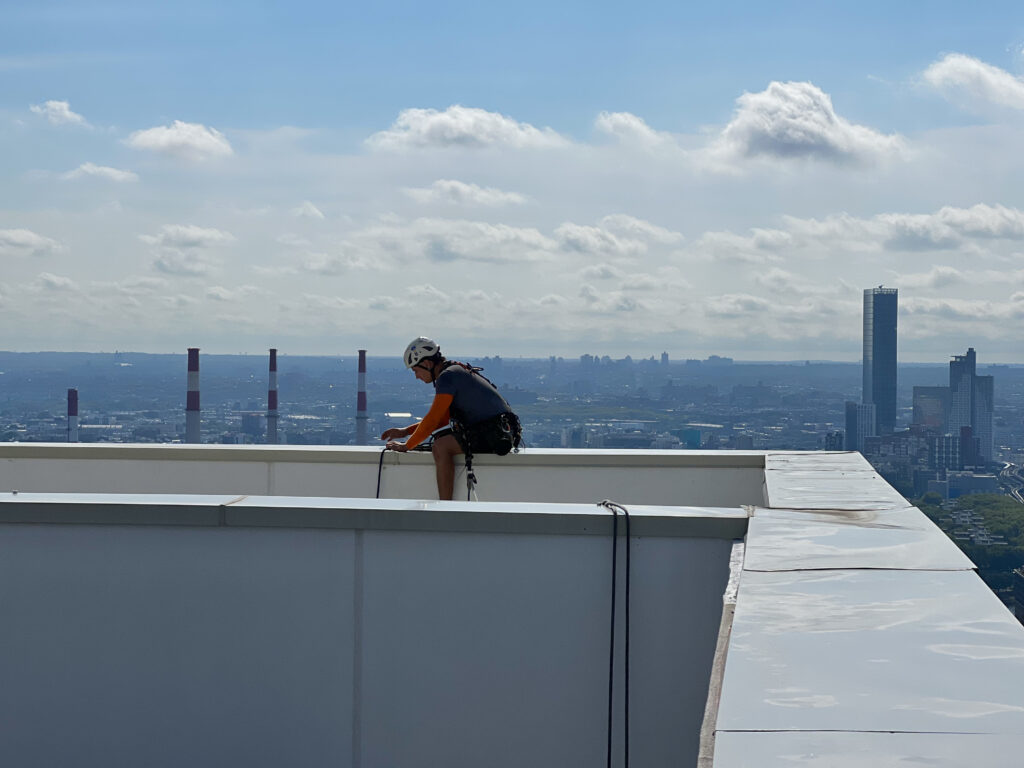
Six Windows, One $350 Minimum: Three Ways NYC Residents Get Exterior Glass Cleaned Without Overpaying
If you asked for a quote on your apartment and the number came back higher than you expected for six windows, nothing went wrong. You are running into a visit minimum, and in New York most apartments sit below it. Ours is published: $350 for residential work. That is not a markup for small jobs. […]
Explore more
Your Building Replaced the Windows and Left You With No Screens: Whose Bill Is It, and How to Get Custom Screens (NYC)
You are not crazy, and you are not stuck: the “screen orphan” problem explained It usually happens like this. Your building runs a window replacement project, the crew swaps your old slide-up windows for shiny new casement or crank-out windows, and then they leave. No screens. No paperwork. No phone number for where to buy […]
Explore more