Inside Commercial Window Washing: How Crews Actually Clean New York Buildings

By Dayne Watkins

28.05.2026
14–20 minutes
read
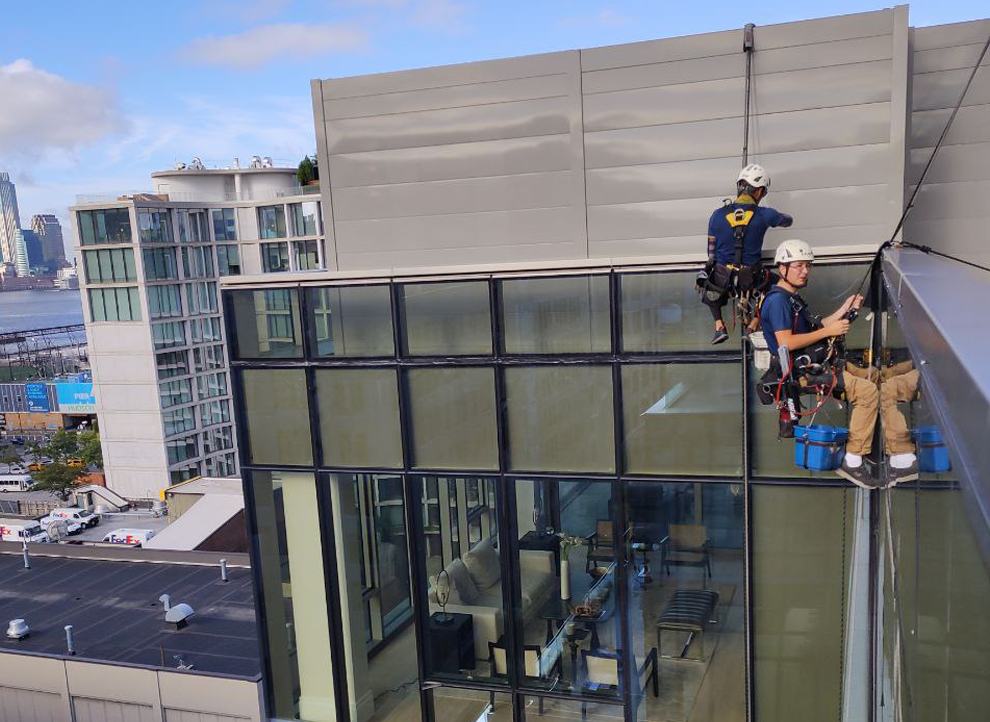
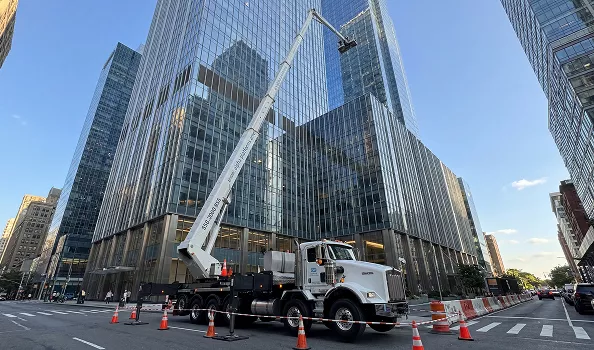
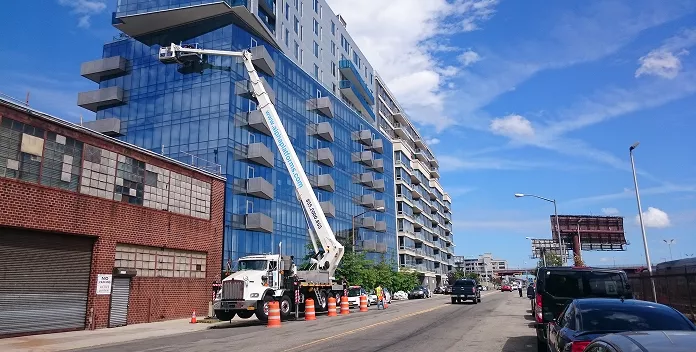
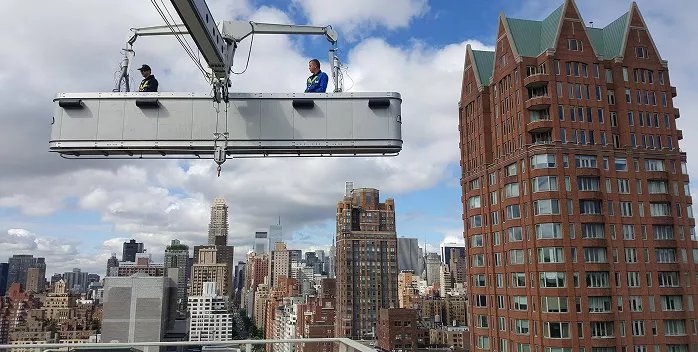
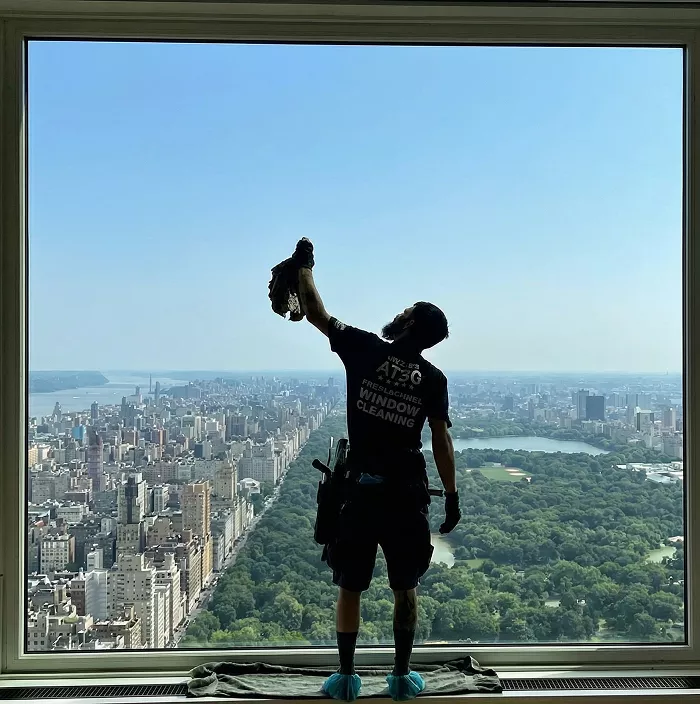
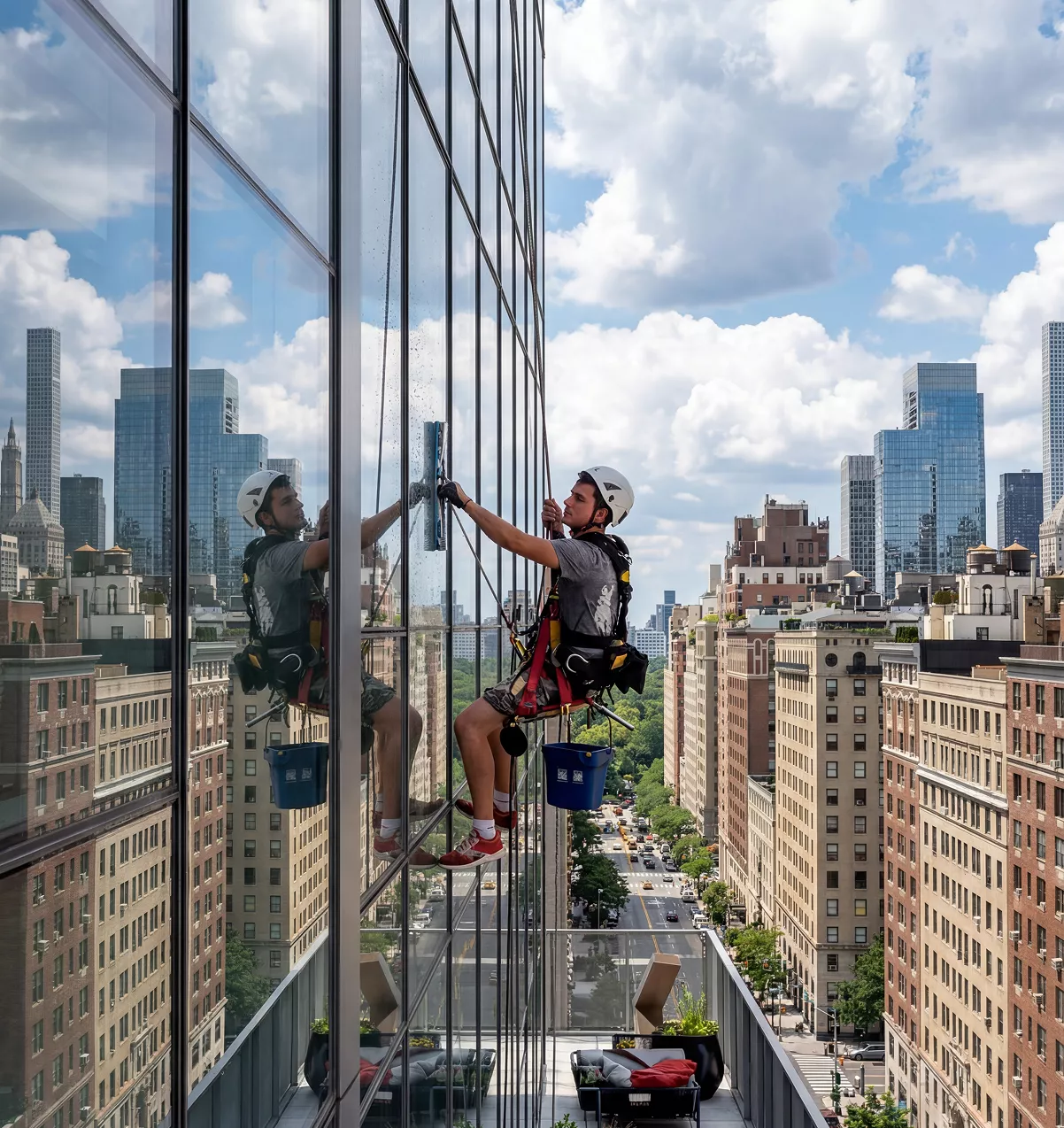
Boom lift access used for commercial window washing on glass buildings

DO YOU HAVE AN URGENT NEED?

Our fast response service can fix your urgent problem. We have teams ready for action.

CALL NOW 212-365-8007

AND GET A FREE QUOTE

Get monthly window insight

    A property manager once asked a foreman a fair question: why does it take half a day to wash the same set of windows that one of his tenants cleans on the inside in fifteen minutes with a paper towel?

    Boom lift access used for commercial window washing on glass buildings
    Commercial window washing often starts with choosing the right access method before the crew ever touches the glass.

    The honest answer is that they are not doing the same job. A tenant inside an office in NoMad is wiping a few square feet of dry glass with a glass cleaner. A commercial window washing crew arriving at the same building at six in the morning is doing something closer to controlled fieldwork: sequencing access points across multiple elevations, generating purified water on site, decoding the residue history of fifteen-year-old curtain wall, deciding whether a razor blade can safely touch a particular pane, and getting all of it done before the sidewalk fills up with pedestrians from Madison Square Park.

    This is the article that tries to demystify what actually happens between the bid and the clean glass. It is not about who to hire or how much to pay. It is about what a crew is doing when they are working, why the order matters, and why the same job that looks identical from the street can take five hours on one tower and two days on another.

    If you are still comparing vendors rather than looking at the work itself, start with our guide to commercial window cleaning in New York. It explains the insurance, DOB, OSHA, FISP, access-method, and bid-verification issues building owners should check before signing a contract. This article goes inside the actual cleaning process – what crews do before, during, and after the job.

    Infographic showing how commercial window washing crews sequence a New York City building by sun, shade, wind, and facade direction
    Commercial window washing starts with sequencing the building – crews plan around shade, sun exposure, wind, facade direction, and ground-floor traffic.

    The Day Before: Why Sequencing Decides Everything

    Real commercial window washing in New York City starts the day before the crew shows up. Someone, usually the foreman, walks the building. They count panes by elevation. They check which exposures are blocked by sidewalk sheds, scaffold tagging, or neighboring construction. They look at the prevailing wind for the next morning and at the position of the sun. They confirm anchor certifications if the access plan involves rope descent or suspended scaffolds. And they decide what the running order will be.

    That last decision is where the inexperienced contractors lose hours. The textbook rule is to work top-down on each elevation, but the practical rule is more nuanced. You start with the elevation that will be in shade longest, because hot glass dries too fast and turns even pure water into a streak source. You finish with the elevation that catches the afternoon sun. You leave the lobby and ground-floor storefronts for last, because foot traffic kicks up dust that will settle on whatever is still wet. On a curtain wall tower in the Theater District, that calculus might mean the south face is washed before sunrise and the lobby is washed at noon, even though it would feel more orderly to do them in the opposite order.

    “Anyone can wash a window. Sequencing the building is the actual job. The squeegee is the easy part.”
    – a foreman in Midtown South, after a third pre-dawn rinse on the same west-facing facade

    The other variable that gets decided the day before is water. A high-rise contract that uses water-fed poles for the upper-mezzanine returns and rope descent for the curtain wall needs a specific volume of purified water generated and tanked. Generating that volume is not instantaneous. A shop that shows up planning to filter water on the spot and discovers the tank capacity is short by a hundred gallons is not going to finish the building that day, regardless of how skilled the crew is.

    Infographic showing pure water filtration for commercial window washing with carbon filter, reverse osmosis, and DI resin
    Pure water systems remove dissolved minerals before washing, helping commercial glass dry without spots or detergent film.

    The Water Question: Why Pure Beats Soap Almost Every Time

    Visitors to New York like to point out that the local tap water is famously good. Citywide hardness averages about 1.8 grains per gallon (CaCO3), which the NYC Department of Environmental Protection itself classifies as soft to slightly hard. Compared to Las Vegas or Phoenix, the city’s source water from the Catskill, Delaware, and Croton watersheds is unusually clean, which is part of why this is one of the few major American cities whose municipal water supply is unfiltered at the source.

    That softness is real, and it makes commercial window washing in New York measurably easier than it is in cities with hard groundwater. But it does not eliminate the problem. The professional standard for spot-free glass is total dissolved solids below 10 parts per million, ideally near zero. Even at the city average of 40-75 ppm of calcium carbonate, that is roughly five to ten times the threshold for streak-free drying. Tap water on glass leaves behind a chalky shadow when it evaporates, and that shadow shows up exactly when the building owner is about to look out the window.

    The professional answer to that arithmetic is purification on site. Most serious commercial window washing operations in the city run a portable two- or three-stage system: a carbon pre-filter to remove chlorine, a reverse osmosis membrane that pulls out roughly ninety-five percent of dissolved solids, and a deionization resin stage that polishes the rest down to zero. The water that comes out the other end is aggressive in a useful way. It actively wants to dissolve mineral deposits, which means it does most of the work the crew used to do with detergents.

    Pure water gets pumped through a hose, up an insulated pole, and through a soft brush at the top. The technician scrubs the glass to break up dirt, then rinses thoroughly with the same pure water, then walks away. Nothing else touches the surface. As the water evaporates, there is nothing in it to leave behind. On a five-story commercial building in Chelsea, this is the fastest and safest method available, because nobody is on a ladder.

    There are limits. Pure water systems do not handle post-construction debris, hard mineral deposits already baked into the glass, or razor work. They also do not handle hot glass well: in direct sun on a summer afternoon in the Meatpacking District, even zero-TDS water can flash-dry before it has properly rinsed. That is why traditional squeegee technique is still the backbone of commercial window washing on most occupied buildings, especially the high-rise exterior work that requires a worker to be physically present at the pane.

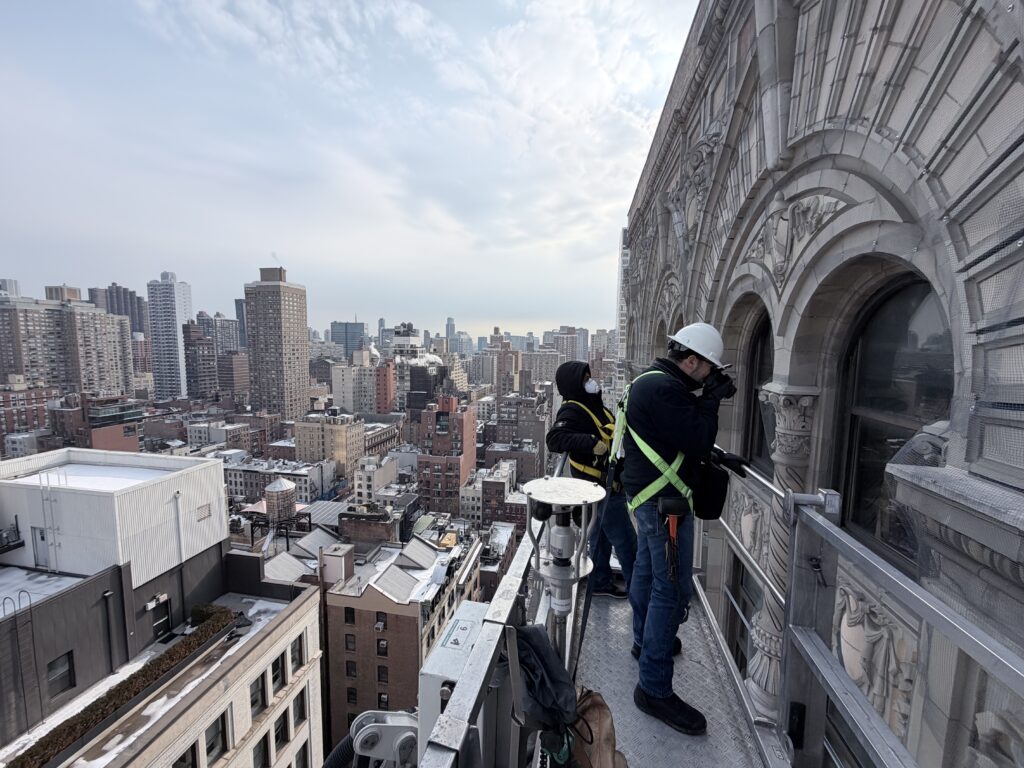
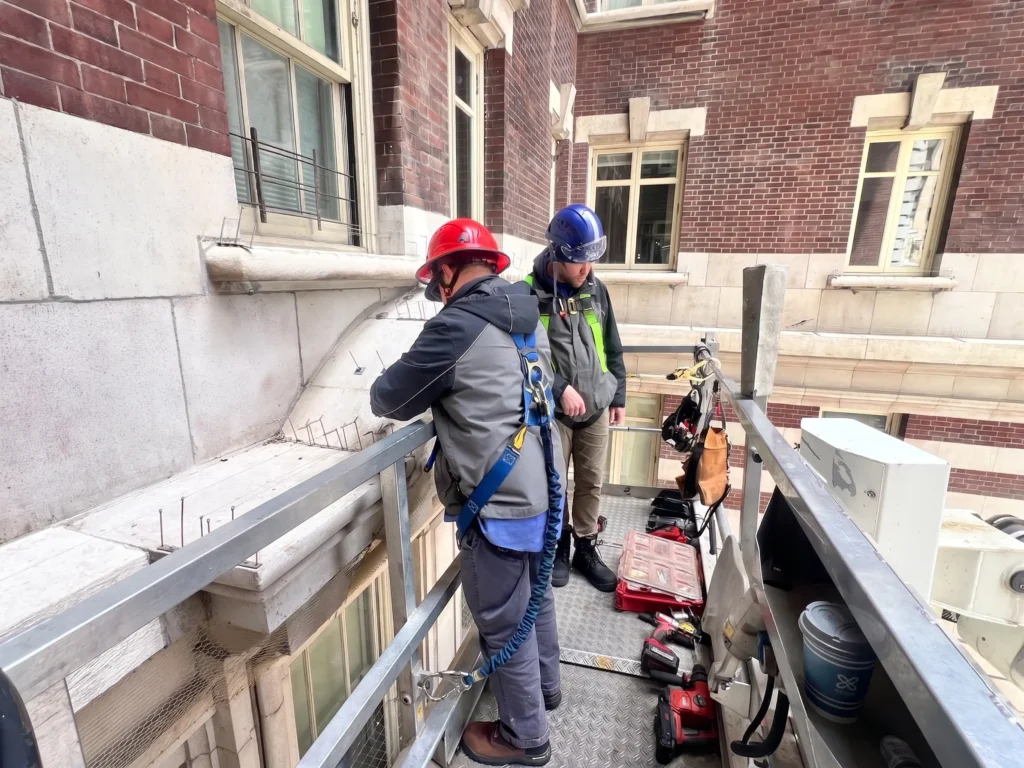
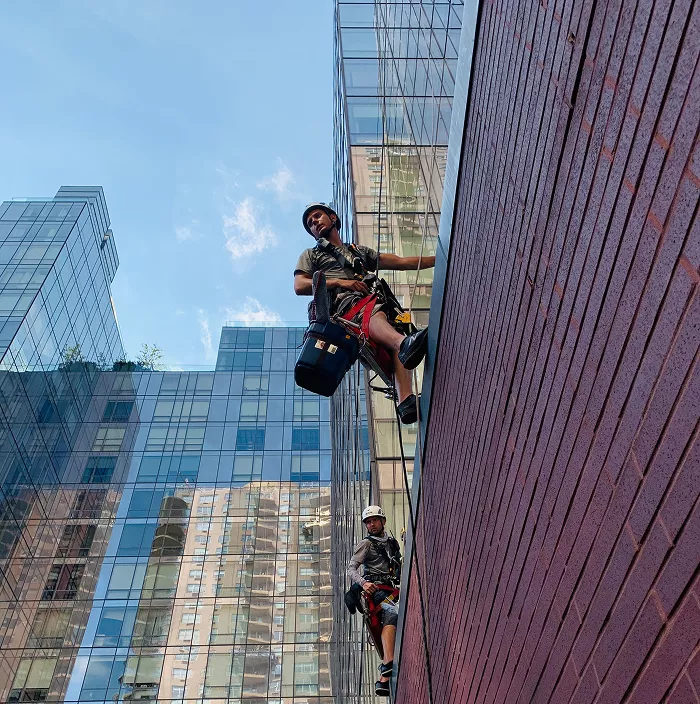
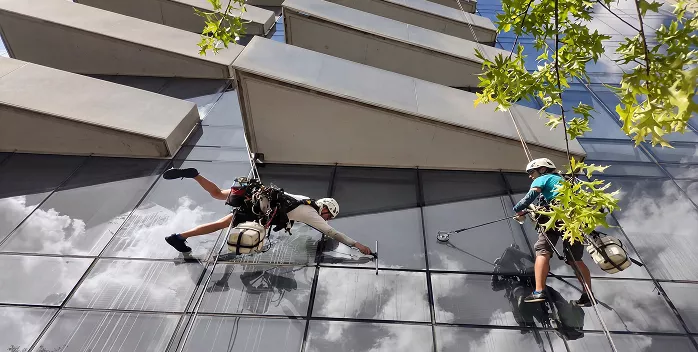
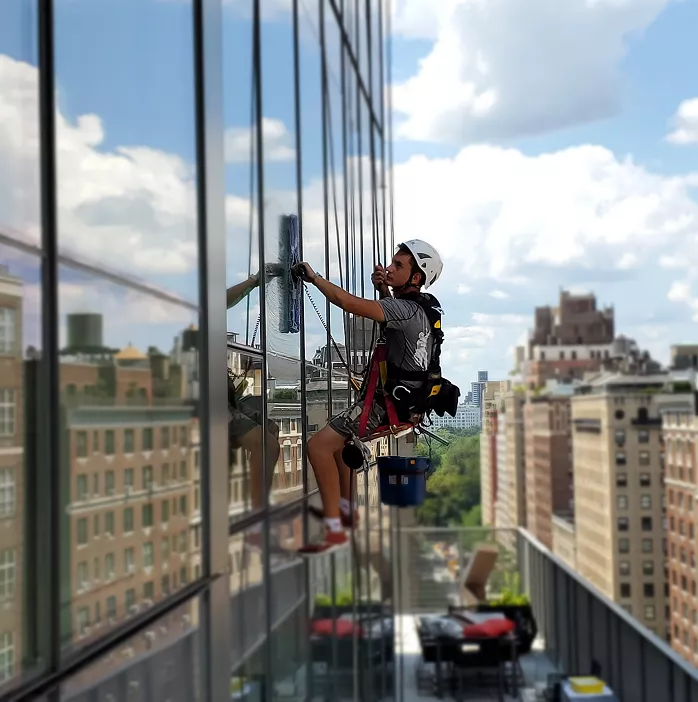
    Big Apple Window Cleaning company rope access team washing windows on a high-rise building in New York
    Large commercial buildings often require coordinated rope access work, with crews sequencing multiple elevations instead of cleaning windows one by one from the ground.

    The Squeegee, The Scraper, The Argument About Razor Blades

    Commercial window washing technique is older than most people assume. The modern squeegee was patented in 1936 by Ettore Steccone, an Italian immigrant working in Oakland, and the basic geometry of the tool has barely changed in nine decades. A professional working at a window in the Garment District today is using a metal channel, a rubber blade trimmed at a specific angle, and a wet sleeve loaded with a mild surfactant. The motion is a continuous arc – usually a fan stroke from a corner, occasionally a straight pull on a tall narrow pane – that pushes a wave of water and dirt off the glass without losing contact with the surface. Done right, the glass goes from soaked to dry in one pass and does not need to be touched again.

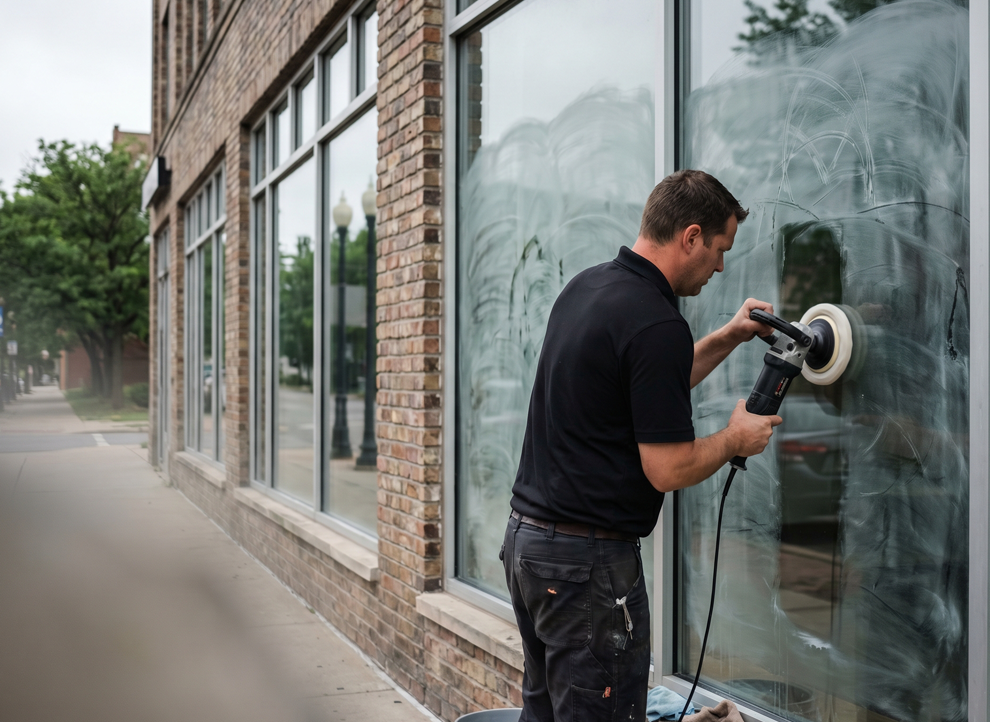
    The scraper is more controversial. Razor-blade scraping is the standard professional response to construction debris, paint overspray, sticker residue, mineral deposits, and the hardened sealant runoff that creeps down a curtain wall from the top floor over time. It also works on bird droppings, which are mildly acidic and can permanently etch glass if left on hot panes for more than a few days. But scraping has a real risk, and it is one that has been the subject of industry-wide warnings for decades. Some tempered and heat-strengthened glass contains tiny fabricating debris (small inclusions of glass dust or nickel sulfide) that, once disturbed by a blade dragged across the surface, leave permanent fine scratches that look like comet trails when sunlight hits them at a low angle. The damage is not always visible at the time of cleaning. It can show up two weeks later when the property manager walks the lobby on a clear morning and starts asking questions.

    Professional protocols for razor work in commercial window washing now include verifying glass type before scraping, working only when the glass is wet, using new blades on each panel to avoid drag from accumulated debris, and refusing to scrape any glass with surface coatings that the blade could damage. The newer tempered glass on Class A office towers in the Financial District is mostly fine. The annealed glass on a 1970s commercial building near Columbus Circle is usually safer. The reflective- or low-E-coated glass on certain newer towers requires its own evaluation. A bidder who tells you the crew “scrapes everything” is a bidder who has not had a problem yet.

    BAWC technician washing commercial skylight glass with a water-fed pole
    Commercial window washing often includes skylights, atrium glass, and angled panes that require the right sequence, water quality, and cleaning technique.

    Post-Construction Is Not Cleaning – It’s Restoration

    The most demanding form of commercial window washing in New York City is not the recurring quarterly visit. It is post-construction cleanup, the cleaning that happens after a renovation, a build-out, or a new construction handover. The work is essentially a different service that happens to involve glass.

    A building near Rockefeller Center finishing a tenant fit-out will leave behind: drywall dust on every horizontal surface and inside every track, paint overspray on glass and frames, sticker glue from the protective film that was supposed to peel off cleanly and did not, joint compound splatter on lower panels, concrete grout on storefront sills, sealant skin on butt joints, and adhesive transfer from temporary signage. None of this comes off with pure water and a brush. Most of it does not come off with a squeegee and detergent either. The crew has to identify each contaminant, choose a solvent that will not damage the substrate, dwell, scrape, rinse, and only then move into normal squeegee work to leave a finished surface. Commercial window washing on a fresh fit-out is more like surface restoration than maintenance.

    For an experienced operation like Big Apple Window Cleaning, post-construction commercial window washing is treated as a separate scope from maintenance, with its own pricing structure and its own crew configuration. A general cleaning crew dropped onto a post-construction job will produce work that looks acceptable on the day and reveals problems later. The standard time multiplier on the same square footage is usually two to four times longer than recurring work, depending on the contractor mix and how protective they were of the glass during the build.

    Big Apple Window Cleaning company technician washing large commercial lobby glass panels in New York
    Commercial window washing often includes lobby glass, entrances, interior-facing panes, ledges, and visible presentation areas that affect the building’s first impression.

    Restaurants, Storefronts, and the Theater of Daily Glass

    A different category of commercial window washing in NYC is the storefront and restaurant frontage that lives or dies by visibility from the street. A bistro in the East Village or a flagship retailer on Fifth Avenue does not measure success in quarterly inspections. It measures success in foot traffic that pauses at the window. The expectation is that the glass looks invisible, every morning, before the first customer walks in.

    That expectation drives a different operational rhythm. Storefront crews work overnight or in early morning windows, often between three and six in the morning. They handle exterior and interior in the same visit. They pay attention to ledges, transom bars, and door handles, which retail tenants tend to forget but which photograph badly. They handle the awkward surfaces that come with the territory: mirrored vestibule walls, glass display cases, etched signage panels, brass kick plates that streak if rinsed with anything mineralized. On an old building in Greenwich Village, the storefront and the apartment lobby behind it might use four different glass types in three different installation eras, and a competent crew has to handle all of them in one visit without leaving evidence of the others.

    Restaurants add another layer: cooking grease and steam transfer from interior equipment migrate onto the inside of the front glass and onto exterior surfaces near vent terminations. A ventilation hood on the alley side of a commercial kitchen near Bryant Park can leave a grease film on neighboring exterior windows that no amount of water will touch without a degreasing solvent. Restaurant-frontage commercial window washing is a chemistry problem at least as much as a water problem. Established New York City contractors like Big Apple Window Cleaning maintain separate solvent kits for restaurant and hospitality work for exactly this reason.

    Infographic showing common commercial window washing problems including streaks, mineral haze, scratches, soap film, and water spots
    Common commercial window washing problems often reveal what went wrong with water quality, scraping, sun exposure, detailing, or cleaning technique.

    What Goes Wrong (and What It Tells You)

    The failures in commercial window washing are usually not dramatic. They are small, accumulating problems that surface days or weeks after the visit, and they reveal where the crew cut corners.

    The classic streak pattern across the bottom third of every pane on a building means the squeegee was dragged through pooled water on the sill on every stroke – the crew did not detail-towel the sill before moving up. A diagonal line of mineral haze across an entire elevation means the crew used tap water to top off the tank when the DI water ran short. Comet-trail scratches that appear under low sun two weeks after the visit mean the scraper was used on glass that should not have been scraped, or used on dry glass, or used with a dull blade. Soap film on a Theater District storefront window that was reportedly pure-water cleaned means somebody mixed in a detergent because the surface looked stubborn and they thought nobody would notice.

    Visible problemLikely causeWhen it shows up
    Streaks along bottom third of every paneWet sill not detailed before squeegee workSame day, in afternoon light
    Diagonal mineral haze across an elevationTap water topped into the DI tankOne to three days, after the first rain
    Faint comet-trail scratches under low sunRazor scraping on coated or unverified glassTwo weeks to two months later
    Soap film picking up dust on a clean storefrontDetergent added to a pure-water rinseWithin forty-eight hours
    Spots only on the south or west elevationCrew worked in direct sun, glass flash-driedVisible the same afternoon

    “Half of complaint calls are not about something that’s wrong. They’re about something that’s right but in the wrong light. The other half are about something that’s wrong, and the foreman knows it before the call.”
    – a customer service lead at a window cleaning company on the Lower East Side

    The most expensive failures involve weather. A morning that starts clear in NoMad can turn into a forty-mile-per-hour wind gust off the Hudson by noon. A crew that pushes through a wind advisory rather than calling it ends up with sand and grit embedded in wet glass, which then has to be rewashed at the contractor’s expense. A summer thunderstorm at three in the afternoon can rinse a freshly-cleaned commercial facade with rooftop runoff carrying weeks of debris, leaving the building dirtier than it started. The standard professional response is to walk away and reschedule, which is sometimes a hard conversation with a property manager who watched the crew arrive at six and now has to explain why the windows are spotted at four. Cleaning specifications under industry guidance such as ANSI/IWCA I-14.1 exist partly to give crews a defensible reason to stop work when conditions warrant it.

    A reference point for property managers reviewing water-related questions is the city’s own water quality reporting at nyc.gov. Understanding the source water is occasionally useful when explaining why a contractor is generating water on site rather than running a hose from the building’s spigot.

    FAQ

    How long does a typical commercial window washing visit take?

    For a recurring contract on a low-rise commercial property in the outer boroughs, two technicians typically complete an exterior wash in three to six hours. A mid-rise office in Midtown East might take a full day with a crew of three. A high-rise curtain wall tower can take two to four days depending on access method. Post-construction cleanup runs two to four times longer than recurring work on the same square footage.

    Why do crews use deionized water instead of tap water and detergent?

    Tap water leaves dissolved minerals on the glass when it evaporates, even in a soft-water city. Detergent leaves a film that attracts dust and accelerates the next cleaning cycle. Deionized water, with total dissolved solids near zero, dries without spotting and uses brush agitation alone to lift dirt. The result is a longer service interval and a cleaner surface.

    Is razor scraping safe for all commercial windows?

    No. Some tempered and heat-strengthened glass contains fabricating debris that, when disturbed by a blade, leaves permanent fine scratches. Glass with surface coatings (low-E, anti-reflective, mirrored) can also be damaged. Professional protocols require identifying glass type before scraping, working only on wet glass, and using new blades. A crew that scrapes every surface without verification is taking a risk the building owner will eventually pay for.

    Can commercial window washing be done in any weather?

    No. Direct sun on glass causes flash-drying and streaking. Wind above roughly twenty-five miles per hour makes suspended access unsafe and embeds airborne grit into wet surfaces. Rain rinses fresh work with debris-laden runoff. Temperatures below freezing make water-based cleaning impossible. A reliable contractor reschedules rather than pushing through unsafe or unproductive conditions.

    What is the difference between commercial window washing and post-construction cleanup?

    Maintenance work removes accumulated dirt, pollen, and atmospheric residue from glass that was previously in clean condition. Post-construction cleanup removes paint, sealant, drywall dust, sticker residue, and other build-out contaminants that bond chemically to the glass. The latter requires solvents, scrapers, and significantly more time. They are usually priced and scheduled separately.

    How is interior glass handled differently from exterior?

    Interior glass picks up cooking grease, hand oils, dust from HVAC airflow, and pet contact at lower elevations. It usually requires a different cleaning solution than exterior work and almost never benefits from pure water alone. Lobbies, vestibules, and retail interiors typically need both a detergent wash and a final dry-buff, which is why they are often quoted as a separate line item.

    Does a building need to be empty during commercial window washing?

    Almost never. Exterior commercial window washing is normally invisible to occupants. Interior work in occupied office space can be scheduled around tenants, with crews moving through one floor or wing at a time. Restaurants and retail are usually cleaned in pre-opening hours. A contract that requires the building to be vacated is unusual and would be a red flag rather than a feature.Boom lift set up at night for commercial window washing on a New York City building

    Dayne

    Article by Dayne Watkins

    Dayne is a Senior Copywriter with 8+ years of experience growing Property marketing, and national brands. He's an optimist at heart, taking time to enjoy life's silver linings each day.

    May 29, 2026

    Corporate Window Cleaning Programs in New York: How Class A Buildings and Multi-Tenant Towers Actually Get It Done

    The day a property manager at a Park Avenue trophy tower decides to put the building’s exterior cleaning out to bid is rarely a calm day. The current contractor’s pricing has crept up for the third year running. The board’s facilities subcommittee wants comparison numbers. The chief tenant, a hedge fund occupying eleven floors, has […]

    Explore more
    May 28, 2026

    Commercial Window Cleaning in New York: What Building Owners Actually Need to Know Before Hiring

    The first time a property manager solicits bids for commercial window cleaning on a 14-story tower in Midtown, the spread is usually unsettling. Three quotes come back: $3,400, $11,200, and $19,800. Same building, same scope, same access points. The math does not look like the same service. It is not. The variation in pricing for […]

    Explore more
    May 27, 2026

    Window Cleaning High Rise Buildings in New York Is a Calendar Problem, Not a Cleaning Problem

    Ask any seasoned building manager in Manhattan how often they think about windows and you will get a tired look back. The cleaning itself is the easy part. The hard part is fitting it between a Local Law 11 facade inspection, a co-op board meeting, two storms in April, the spring construction next door, and […]

    Explore more