
Sliding Door Replacement Lock: A New Yorker’s No-Nonsense Guide to Keeping Your Home Secure
Contents
- Why a Broken Sliding Door Lock Is a Bigger Deal Than You Think
- Know Your Lock Type Before You Buy Anything
- The Five Measurements That Actually Matter
- Step-by-Step: Replacing a Mortise Lock
- NYC-Specific Factors That Affect Your Sliding Door Lock
- When a Replacement Lock Is Not Enough
- When to Call a Professional
- What You Should Expect to Pay
- Keep It Working: Quick Maintenance Tips
DO YOU HAVE AN URGENT NEED?
Our fast response service can fix your urgent problem. We have teams ready for action.
AND GET A FREE QUOTE
Get monthly window insight
You know that familiar sound – the rattle and clunk of a sliding door that just won’t lock right. Maybe the thumb-turn spins without catching, or the door jiggles open with a light push. In a city where your sliding glass door might be the only thing between your living room and a fire escape, a balcony, or a ground-floor patio in Brooklyn, a broken lock is not something you can afford to ignore. Finding the right sliding door replacement lock is one of those tasks that sounds simple until you are actually standing in a hardware store staring at dozens of options that all look vaguely the same.
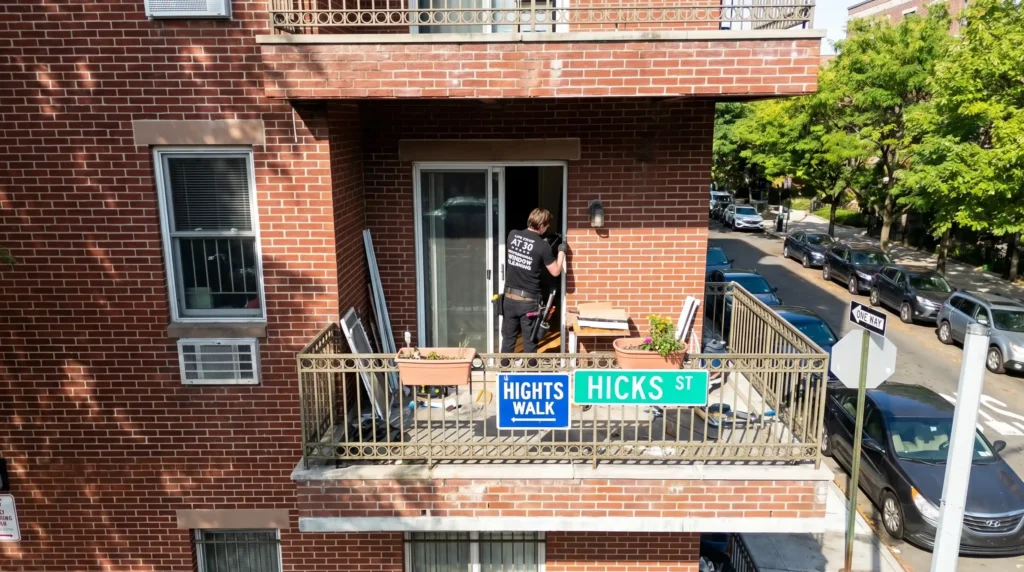
This guide is written specifically for New York City residents. Whether you live in a high-rise condo with a terrace door in Midtown, a brownstone in Park Slope with backyard access, or a ground-floor apartment in Queens with a patio slider, the stakes are real – and the details matter.
Why a Broken Sliding Door Lock Is a Bigger Deal Than You Think
Let us get the uncomfortable part out of the way. According to the FBI’s Uniform Crime Report, sliding glass doors remain one of the most common entry points for residential break-ins nationwide. The standard latch on most sliding doors is little more than a hook that catches on a frame – and experienced intruders can defeat it by simply lifting or jiggling the door panel. The good news for New Yorkers is that the city’s burglary rate sits around 1.2 per 1,000 residents, well below the national average. But that statistic means a lot less if you are the one living on a first-floor apartment with a worn-out patio door replacement lock.
Beyond security, there are practical reasons to deal with a failing lock quickly. A door that does not seal properly lets in street noise, dust from nearby construction, winter drafts, and summer humidity. In NYC, where heating and cooling costs are already brutal, that is money literally escaping through the gap. And if you are in a co-op or condo, a malfunctioning exterior door lock could flag issues during a building inspection or when you try to sell.
Know Your Lock Type Before You Buy Anything
Here is where most people go wrong with a sliding glass door lock replacement – they order something online without understanding what type of lock their door actually uses. Sliding doors do not all use the same mechanism, and buying the wrong replacement means a return trip, wasted time, and an unlocked door for another week.
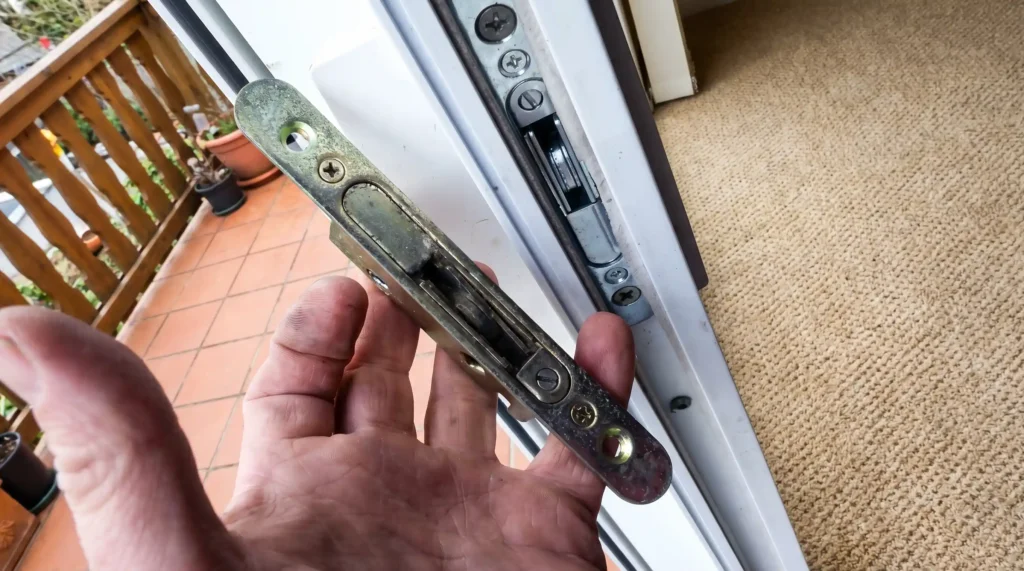
There are six main types of sliding door locks used in residential buildings across New York City. The table below breaks down each one so you can identify what is currently on your door.
| Lock Type | How It Works | Where You Will Find It | Security Level |
| Mortise Lock | Recessed into the door edge in a carved pocket. A hook extends into a keeper on the jamb when the thumb-turn is engaged. | Most common type overall. Found on aluminum, vinyl, and wood sliding doors in apartments, condos, and houses. | Medium to High |
| Hook Style | The hook mechanism is built directly into the handle assembly. | Older patio doors and many standard residential sliders. | Medium |
| Clamp Style | A metal clamp in the handle grips the door frame when engaged. | Aluminum-frame doors, particularly in mid-century and 1970s-era buildings. | Medium |
| Internal Lock | Lock extends from the back of the handle into the door body, connecting to a keeper when the door closes. | Modern vinyl and composite doors in newer construction. | Medium to High |
| Flush Mount | Sits recessed into the door stile, flush with the surface. Designed for approximately 1-inch thick doors. | Older apartment buildings and some townhouses. | Medium |
| Euro Multipoint | Uses a profile cylinder with multiple locking points along the door frame. Brands like Fuhr, Hoppe, and Winkhaus dominate this category. | High-end new construction, luxury condos, and recently renovated buildings. | High |
If you are not sure which type you have, the simplest approach is to open the door, engage the lock, and watch how the mechanism moves. Does a hook pop out from the edge of the door? That is likely a mortise or hook style. Does the handle itself grip the frame? Probably a clamp. Multiple bolts engaging at once? You are looking at a multipoint system.
The Five Measurements That Actually Matter
Once you know your lock type, you need five specific measurements before shopping for a replacement lock for sliding patio door. Skip any of these and you risk buying something that does not fit.
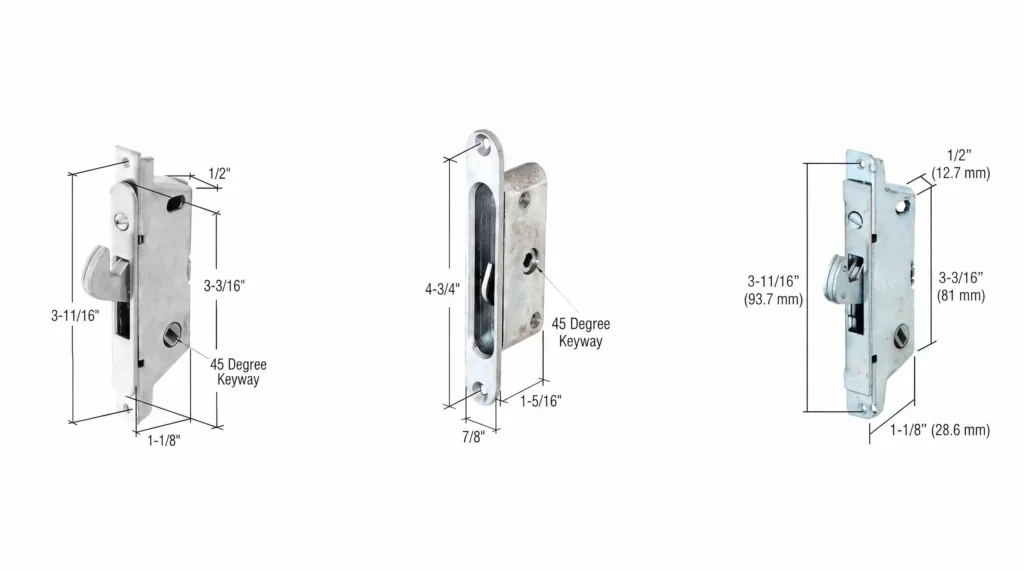
- Face plate shape – is the top and bottom of the plate round or square? Your replacement must match exactly.
- Width of the lock body – measure the full width of the metal housing that sits inside the door.
- Center-to-center screw hole spacing – this is the distance between the mounting screw holes. Even a quarter-inch difference means the lock will not line up.
- Keyway position – look at where the key cylinder sits. It could be vertical, at 45 degrees, or at 22.5 degrees. The new lock must match.
- Drive type – the metal bar on the back of the thumb-lever is either a square drive or flat drive. Check yours before ordering.
One detail that experienced professionals know but most homeowners miss is the adjustable hook projection. Many quality mortise locks have a small slotted screw on the face plate that lets you adjust how far the hook extends into the keeper. This is critical for getting a tight seal – and it is the kind of fine-tuning that makes the difference between a door that rattles in the wind and one that closes like a vault.
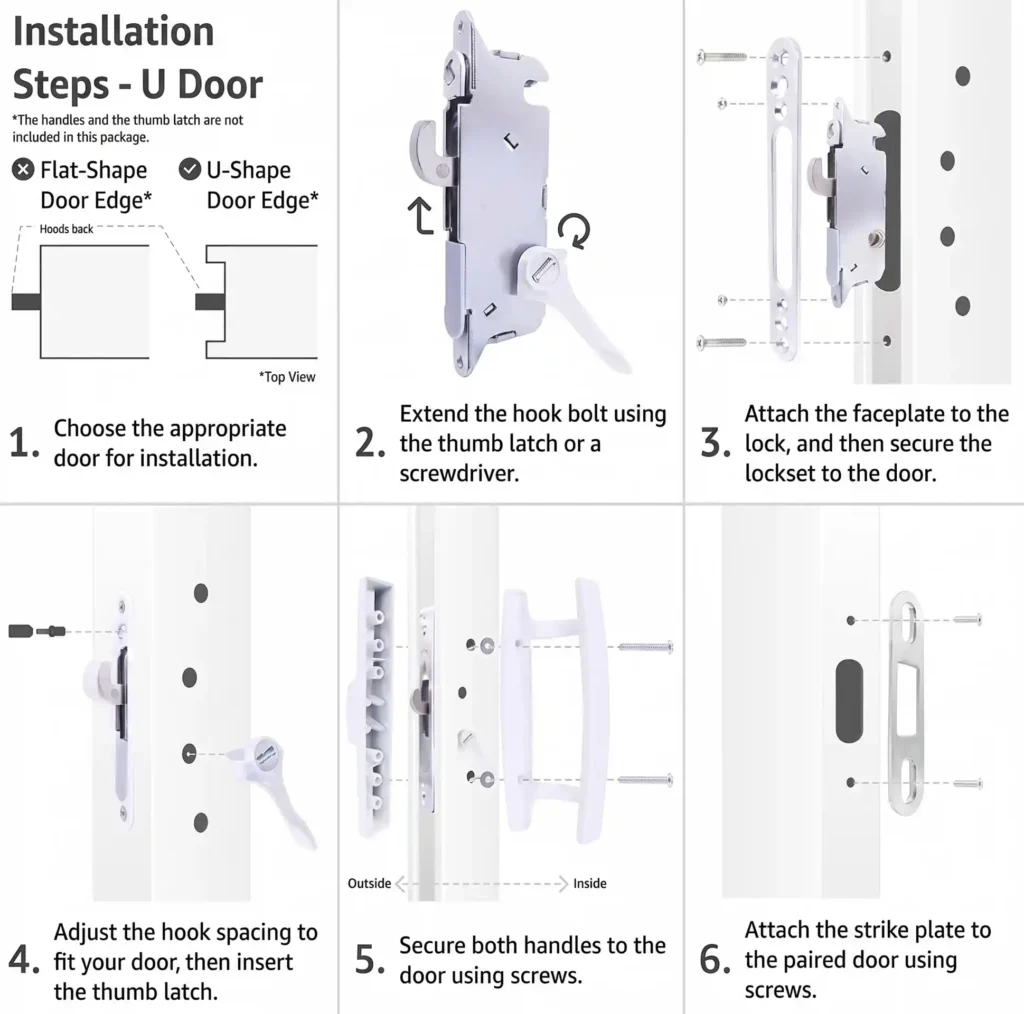
Step-by-Step: Replacing a Mortise Lock
Since mortise locks are by far the most common sliding door replacement lock type in NYC buildings, here is the process for swapping one out. This applies to the standard single-hook and dual-hook mortise locks found on most residential sliding doors.
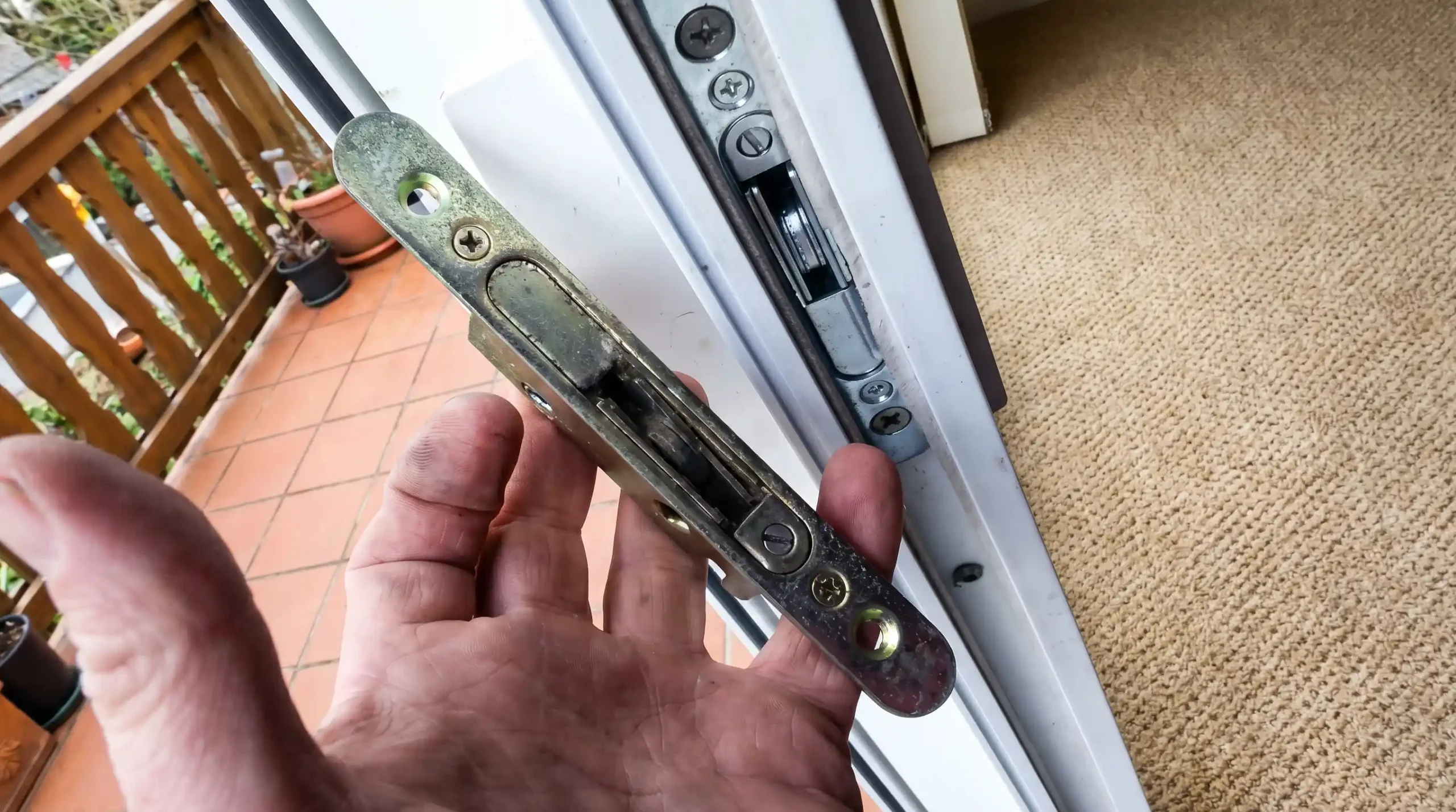
Start by sliding the door fully open. Flip the thumb-turn to the locked position so the hook is visible and extended – this gives you something to grab onto. Remove the two Phillips screws from the interior handle, holding both the inside and outside handles in place so nothing drops. This is important – if you let go, the exterior pull can fall and crack against the track.
Now, before you remove the two screws on the door edge that hold the mortise lock in place, clamp a vice-grip onto the hook. This is the step that separates people who have done this before from those who have not. Without the vice-grip, the mortise lock can slide down inside the door cavity, and fishing it out is a miserable experience.
With the vice-grip secured, remove those edge screws. Push the bottom of the lock toward the glass, then angle the top out at about 45 degrees. Slide the whole assembly down and out through the handle cutout.
Installing the new lock is the reverse. Insert the lock with the hook pointing up, angle it in at 45 degrees, push the top into the cavity, slide everything up until the screw holes align, and fasten the edge screws. Reattach the handles, and test the thumb-turn. The hook should smoothly engage and lock into the keeper when you close the door.
If the hook does not quite reach the keeper, or if the door does not feel snug when locked, you may need to adjust the rollers at the bottom of the door to change its alignment – or reposition the keeper on the jamb. This alignment step is where many DIY replacements stall, because it requires patience and sometimes shimming the keeper with washers.
NYC-Specific Factors That Affect Your Sliding Door Lock
Living in New York City introduces challenges that a homeowner in suburban Texas simply does not face when dealing with a sliding glass door lock replacement.
Salt air and urban pollution accelerate corrosion on metal lock components, particularly in waterfront neighborhoods like Red Hook, Rockaway, City Island, and parts of Staten Island. If your lock feels gritty or the mechanism resists turning, corrosion may be the cause. Stainless steel locks and lock components hold up significantly better than standard steel in these environments.
Temperature swings are another factor. NYC sees everything from single-digit winters to 95-degree summer days with brutal humidity. Metal expands and contracts, door frames shift slightly, and what was perfectly aligned in October might be binding in February. A lock with adjustable hook projection helps compensate for these seasonal changes.
Building regulations also come into play. NYC building code requires heavy-duty lock sets with auxiliary latch bolts on entrance doors in residential buildings. While interior-to-balcony sliding doors are not always classified as entrance doors, many co-op and condo boards apply similar standards to any exterior-facing door. Before you choose a replacement lock for sliding patio door hardware, check with your building management to confirm what is acceptable.
The FISP program – Facade Inspection and Safety Program – requires periodic inspection of building exteriors, including balconies and terraces. If your balcony door hardware is in poor condition, it could be noted during a FISP cycle. Keeping your patio door replacement lock in proper working order is part of responsible building maintenance.
When a Replacement Lock Is Not Enough
Sometimes the lock is only part of the problem. If your sliding door has been forced, dropped off its track, or the frame itself is warped, a new lock will not solve the underlying issue. Here are additional security measures worth considering for NYC apartments.
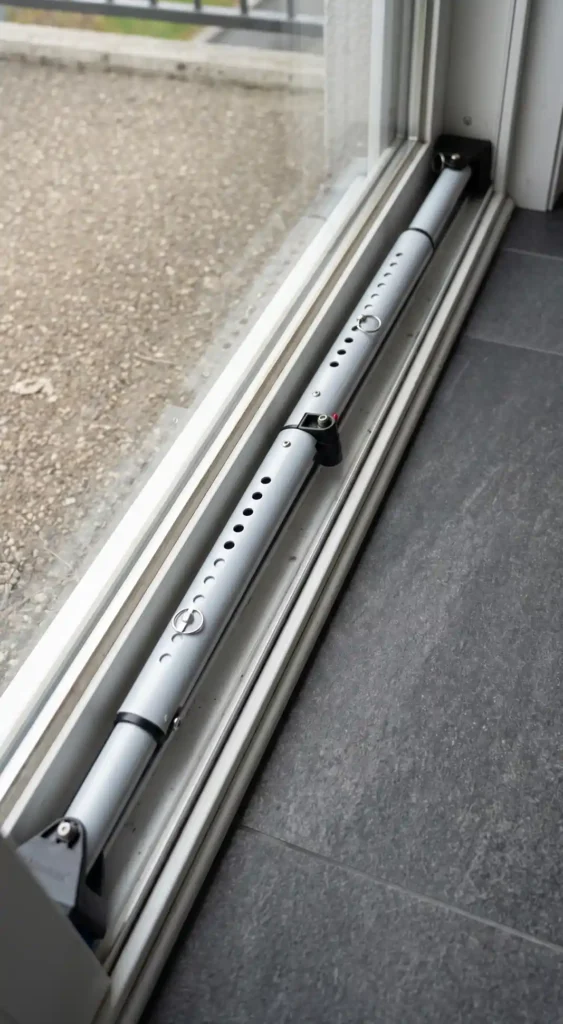
A security bar or Charlie bar placed in the bottom track prevents the door from sliding open even if the lock is compromised. For ground-floor apartments especially, this simple addition is highly effective. Security pins drilled through the overlapping frame sections prevent the door from being lifted out of its track – a common break-in method. Shatterproof film applied to the glass holds the panel together even if struck, buying time and deterring opportunistic intruders. And for tech-savvy New Yorkers, smart locks with remote monitoring capabilities let you check your door’s status from anywhere in the city.
For more technical information about sliding door lock types and specifications, the manufacturer resource page at AllAboutDoors.com offers a comprehensive catalog organized by lock style and brand compatibility.
When to Call a Professional
There is no shame in knowing your limits. A straightforward mortise lock swap on a standard aluminum-frame slider is a reasonable DIY project if you have basic tools and patience. But certain situations call for professional help.
Euro multipoint locking systems are complex and brand-specific – mixing components from different manufacturers can result in a system that fails under stress. High-rise balcony and terrace doors often have specialized hardware that requires experience to service safely. If your door frame is damaged, warped, or the rollers need adjustment along with the lock, you are looking at a job that involves more than just swapping hardware. And in co-op buildings where modifications require board approval, having a licensed professional handle the work provides documentation you may need.
At Big Apple Window Cleaning, we handle sliding door replacement lock installations across all five boroughs. Our technicians work with every type of sliding door found in NYC buildings – from pre-war brownstone patio doors to modern high-rise terrace systems – and we make sure the job meets both building code requirements and your co-op or condo board’s standards.
What You Should Expect to Pay
The lock hardware itself is the least expensive part. A standard mortise lock runs between $15 and $50 depending on the brand and whether it is a single-hook or dual-hook model. Handle sets with integrated locks range from $40 to over $150 for keyed Euro-style systems.
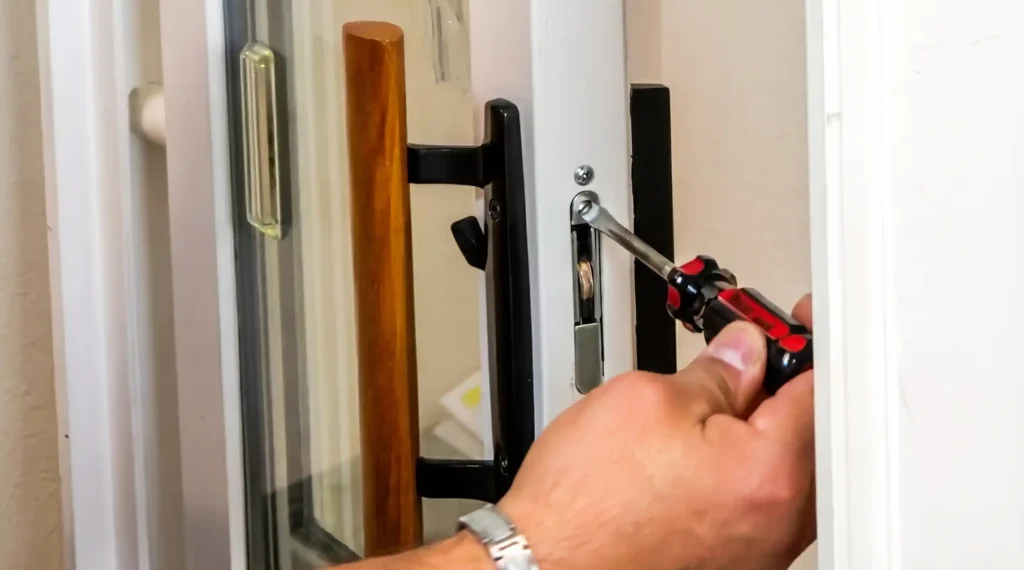
Professional installation typically adds $80 to $200 per door, depending on complexity. In NYC, expect costs to skew toward the higher end due to travel time, parking logistics, and the general cost of doing business in the city. Emergency or after-hours service calls can add another $50 to $150 on top.
Compared to the cost of a break-in – the national average property loss from a burglary is around $2,800, not counting the emotional toll – a sliding door replacement lock is one of the most affordable security upgrades you can make.
Keep It Working: Quick Maintenance Tips
A new lock will last years if you maintain it properly. Apply a silicone-based lubricant to the lock mechanism and track twice a year – once before winter and once after. Avoid WD-40 on lock internals, as it attracts dust and gums up over time. Clean the track regularly to prevent debris from interfering with the door’s alignment. And once a season, test the lock by closing the door and pushing firmly against it from outside. If there is any give or rattling, the hook may need adjustment or the keeper may need repositioning.
A sliding glass door lock replacement is not glamorous home improvement. Nobody is posting before-and-after photos on Instagram. But for New Yorkers, it is one of the most practical things you can do for your home – a small investment that directly impacts your safety, your energy bills, and your peace of mind. Whether you tackle the job yourself or bring in professionals, do not let a broken lock sit. The city moves fast, and so should you.
If your sliding door lock needs attention and you would rather have experienced hands take care of it, Big Apple Window Cleaning is ready to help. We serve Manhattan, Brooklyn, Queens, the Bronx, Staten Island, and Long Island with professional sliding door lock replacement and repair services. Give us a call – your door will thank you!
FURTHER READING

Article by Dayne Watkins


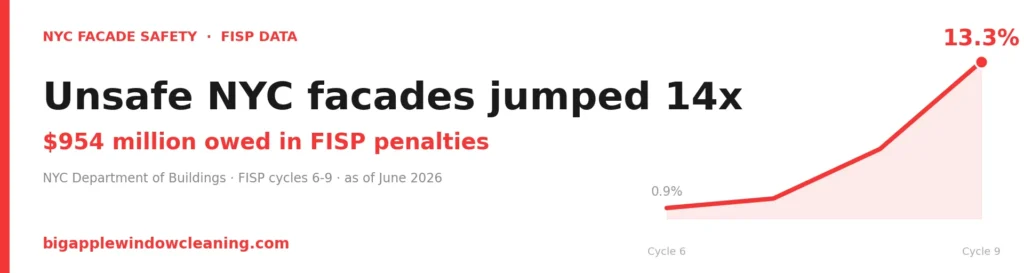
Unsafe NYC Facades Jumped 14x. The $954 Million Reason Owners Hide Them Instead of Fixing Them
On May 16, 1979, a 17-year-old Barnard student named Grace Gold was walking near Broadway and 115th Street when a piece of masonry broke loose from the eighth floor of a Columbia-owned building and killed her. Her death produced Local Law 10 of 1980, the first law in New York City requiring periodic facade inspections […]
Explore more
Roof Lantern Cleaning: A Professional Guide for New York Homeowners
Your roof lantern was supposed to flood the room with light. Instead, it is flooding the room with guilt every time you look up and see a layer of grime that could double as modern art. If you live in Brooklyn or Manhattan, you already know that city air does not play fair with glass […]
Explore more
House Facade Cleaning: A No-Nonsense Guide for Homeowners Who’d Rather Not Watch Their Walls Crumble
Your home’s facade does a thankless job. Day after day, it stands between your family and everything the urban environment throws at it – diesel exhaust from delivery trucks, pigeon droppings with the pH of battery acid, mysterious black streaks that seem to appear overnight, and that persistent green fuzz on the north-facing wall that […]
Explore more