
Corporate Window Cleaning Programs in New York: How Class A Buildings and Multi-Tenant Towers Actually Get It Done
Contents
- What Makes a Building "Corporate" in This Context
- Who Signs the Contract and Why It Matters
- The RFP Process for Building Window Cleaning Programs
- What Goes Into a Corporate Scope of Work
- Insurance, Credentials, and the Documentation Stack
- Tenant Coordination and the After-Hours Question
- Multi-Tenant Towers vs. Single-Tenant Headquarters
- Atriums, Lobbies, and the Curtain Wall Question
- KPIs and How Performance Is Measured
- FAQ
DO YOU HAVE AN URGENT NEED?
Our fast response service can fix your urgent problem. We have teams ready for action.
AND GET A FREE QUOTE
Get monthly window insight
The day a property manager at a Park Avenue trophy tower decides to put the building’s exterior cleaning out to bid is rarely a calm day. The current contractor’s pricing has crept up for the third year running. The board’s facilities subcommittee wants comparison numbers. The chief tenant, a hedge fund occupying eleven floors, has complained twice this quarter about the streaks visible on the southwest corner during morning sun. Everyone wants the cheapest credible vendor. Nobody wants to explain why something went wrong on Park Avenue.
This is the moment when corporate building window cleaning stops being a line item in the operating budget and starts being a procurement project. And it is at this moment that property managers discover something most of them already suspected: window cleaning buildings in the corporate tier of New York City is a fundamentally different exercise from window cleaning buildings of any other kind. The contracts are longer, the documentation is heavier, the coordination is more political, and the consequences of mistakes are reputational as well as financial.
This guide is for the people who manage that complexity day to day. It walks through what serious corporate building window cleaning programs in New York actually look like – how they are procured, how they are structured, who signs what, and why the same scope of work that takes ten minutes to bid on a small commercial property can take three months to bid on a Class A office tower. By the end, the difference between a building window cleaning program that runs cleanly and one that quietly bleeds money should be visible. Window cleaning buildings of this scale rewards property managers who understand the procurement chain and punishes those who do not.
Before a property manager turns window cleaning into a corporate RFP, it helps to understand the broader commercial framework first. Our guide to commercial window cleaning in New York explains the insurance, access-method, DOB, OSHA, FISP, and vendor-verification issues that sit underneath every serious building window cleaning contract.
What Makes a Building “Corporate” in This Context
The word “corporate” has a specific meaning in the New York commercial real estate vocabulary, and it shapes how building window cleaning programs are designed. A corporate building, in this sense, is not just a building with corporate tenants. It is a building with a property management infrastructure – a managing agent or owner-operator with formal vendor procurement processes, a defined chain of approval, insurance and credentialing standards, and a tenant base that expects the physical environment to reflect the rents they are paying.
The classification system that most facility managers and brokers use sorts these buildings into four tiers. Trophy and Class A towers occupy the top two. Class B serves a different market with different expectations.
| Building Class | Typical Rent (Manhattan) | Window Cleaning Profile |
| Trophy | $100-$200+ per sq ft | Quarterly exterior, monthly lobby/atrium, white-glove protocol |
| Class A | $70-$140 per sq ft | Quarterly exterior, monthly common area, full COI/RFP process |
| Class B | $40-$70 per sq ft | Semi-annual exterior, quarterly lobby, lighter procurement |
| Class C | Below $50 per sq ft | Annual or as-needed, single-vendor relationship |
The difference between the tiers is not just the per-pane price. It is the entire operational envelope around the work. A corporate building window cleaning program at a Trophy or Class A address includes contract scope, insurance certifications, credentialing, scheduling protocols, tenant communication, key performance indicators, and reporting requirements. None of that exists in the same form at a Class C address, where the property owner usually calls a vendor when the windows look bad. Window cleaning buildings of the lower tiers operates on a transactional basis. Window cleaning buildings of the upper tiers runs on contracts.
Hedge funds, law firms, private equity shops, and global corporates that lease at addresses like 375 Park Avenue, 30 Rockefeller Plaza, One Bryant Park, or 50 Hudson Yards have a particular set of expectations about the buildings they occupy. They notice when glass is dirty. They complain. They mention it in lease renewal conversations. They sometimes mention it in lease termination conversations. The building window cleaning program is therefore not optional, and it is not a place to save money. Window cleaning buildings of this caliber is treated as an operational expense that property managers protect, not one they squeeze.
Who Signs the Contract and Why It Matters
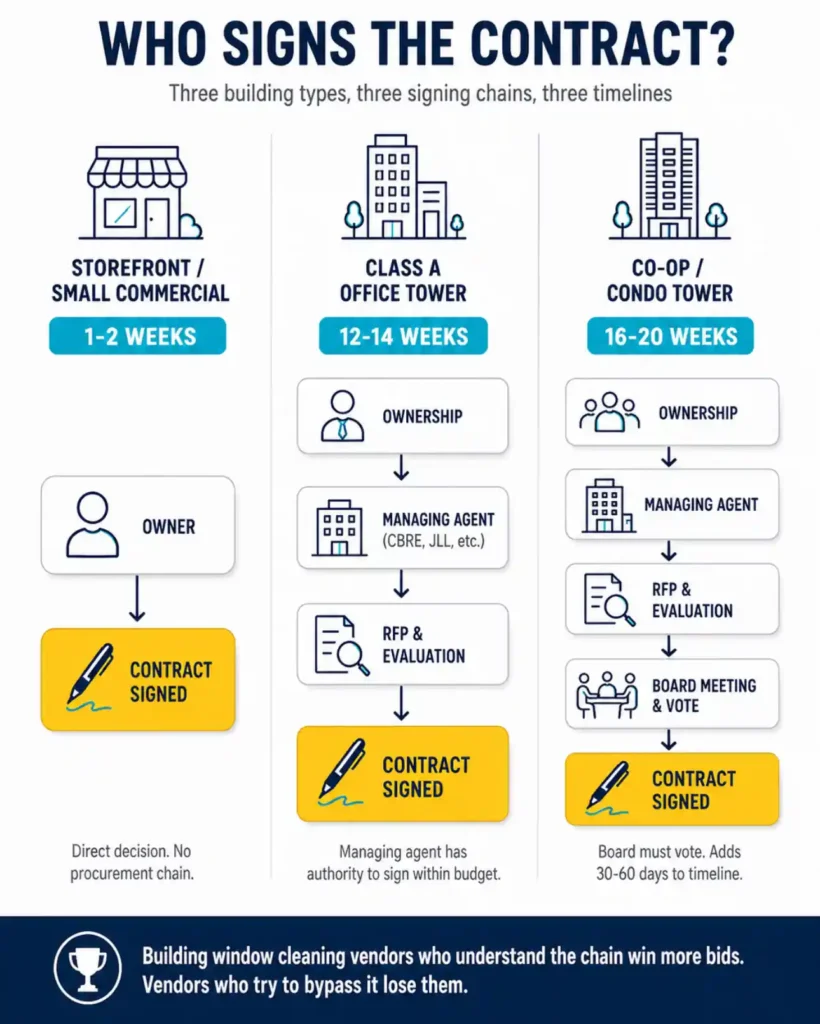
The first thing that distinguishes corporate building window cleaning from any other kind is the signing chain. In a small storefront retail property, the owner signs the contract directly. In a typical mid-market commercial property, the property manager signs on behalf of ownership. In window cleaning buildings of corporate scale, the contract path is longer, slower, and more documented at every step.
For a Class A office tower, the contract is typically signed by the managing agent (the property management firm of record) on behalf of ownership. Common managing agents in the New York City market include CBRE, JLL, Cushman & Wakefield, Tishman Speyer, Brookfield Properties, and Vornado. The managing agent is acting under a property management agreement that specifies what it can and cannot sign without ownership consent. For building window cleaning specifically, most management agreements give the managing agent authority to sign multi-year service contracts without board or owner approval, provided the contract is within budget and follows the procurement protocols specified in the underlying agreement. Building window cleaning falls into the category of recurring operational services that the managing agent is empowered to procure.
For a multi-tenant condo or co-op tower, the path is different. The managing agent prepares the contract, but signature requires board approval – which means the contract has to be presented at a scheduled board meeting, voted on, and minuted before it can be executed. Boards meet monthly or bimonthly. A vendor that wants to start work on a specific date has to be in the procurement pipeline at least 60 to 90 days before that date. Window cleaning buildings under cooperative governance simply do not move faster than the board calendar allows.
This timing reality drives a great deal of the friction that vendors experience when working window cleaning buildings on the corporate side. The “let’s get this done by Friday” tempo that works for a small commercial bid simply does not exist. A property manager at a tower on Sixth Avenue cannot make a unilateral decision to switch contractors mid-cycle, no matter how unhappy they are with current performance. The decision to change building window cleaning vendors has to move through the procurement chain, and the chain has its own pace.
The RFP Process for Building Window Cleaning Programs
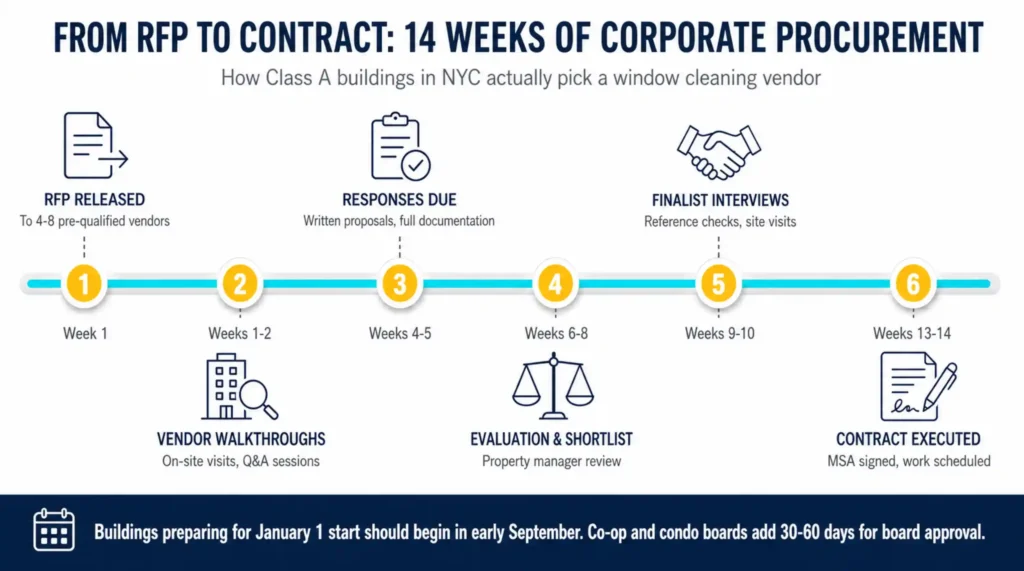
Most corporate building window cleaning programs in New York are procured through a formal Request for Proposal process, often abbreviated RFP. The RFP document specifies the scope of work, the building’s physical characteristics, the access methods available, the insurance and credentialing requirements, the response format, and the evaluation criteria. Vendors who want to bid have to respond in writing, attach all required documentation, and meet the submission deadline. Late submissions are routinely rejected without review.
The standard RFP timeline for window cleaning buildings at the corporate tier in NYC runs roughly:
- Week 1: RFP released to a pre-qualified vendor list (usually 4 to 8 firms)
- Weeks 1-2: Vendor walkthroughs and Q&A
- Week 3: Vendor questions answered in writing and distributed to all bidders
- Weeks 4-5: Vendor responses due
- Weeks 6-8: Property manager evaluation and shortlisting
- Weeks 9-10: Finalist interviews and reference checks
- Weeks 11-12: Contract negotiation
- Weeks 13-14: Contract execution
That is twelve to fourteen weeks from start to finish, and it does not include any internal approval delay on the buyer side. For a property manager preparing to switch vendors at the start of a fiscal year on January 1st, the procurement should begin in early September. Property managers who have been through the building window cleaning RFP cycle more than once start it in August.
The pre-qualified vendor list is the key document. Most managing agents maintain an approved-vendor roster for each major service category, including building window cleaning, and only firms on that roster are invited to bid. Getting onto the roster typically requires demonstrated New York City experience, current insurance documentation at minimum required limits, references from comparable buildings, OSHA-compliant safety records, SPRAT or IRATA certification for any rope-access work, and sometimes a prior successful smaller engagement with the management firm. Established commercial vendors like Big Apple Window Cleaning have spent years maintaining roster status with multiple managing agents precisely because the roster is the gateway to corporate work.
What Goes Into a Corporate Scope of Work
The scope-of-work document for a corporate building window cleaning program is more detailed than property managers from outside New York typically expect. It is not enough to specify “all exterior glass, four times per year.” A serious corporate scope describes:
- Glass surfaces by location and type: curtain wall, vision glass, spandrel, lobby glass, atrium skylights, vestibule, retail storefront, signage glass, transom panels
- Frequency by surface category: typically quarterly for upper-floor exterior, monthly for lobby and ground-floor common, weekly or daily for retail-facing storefront
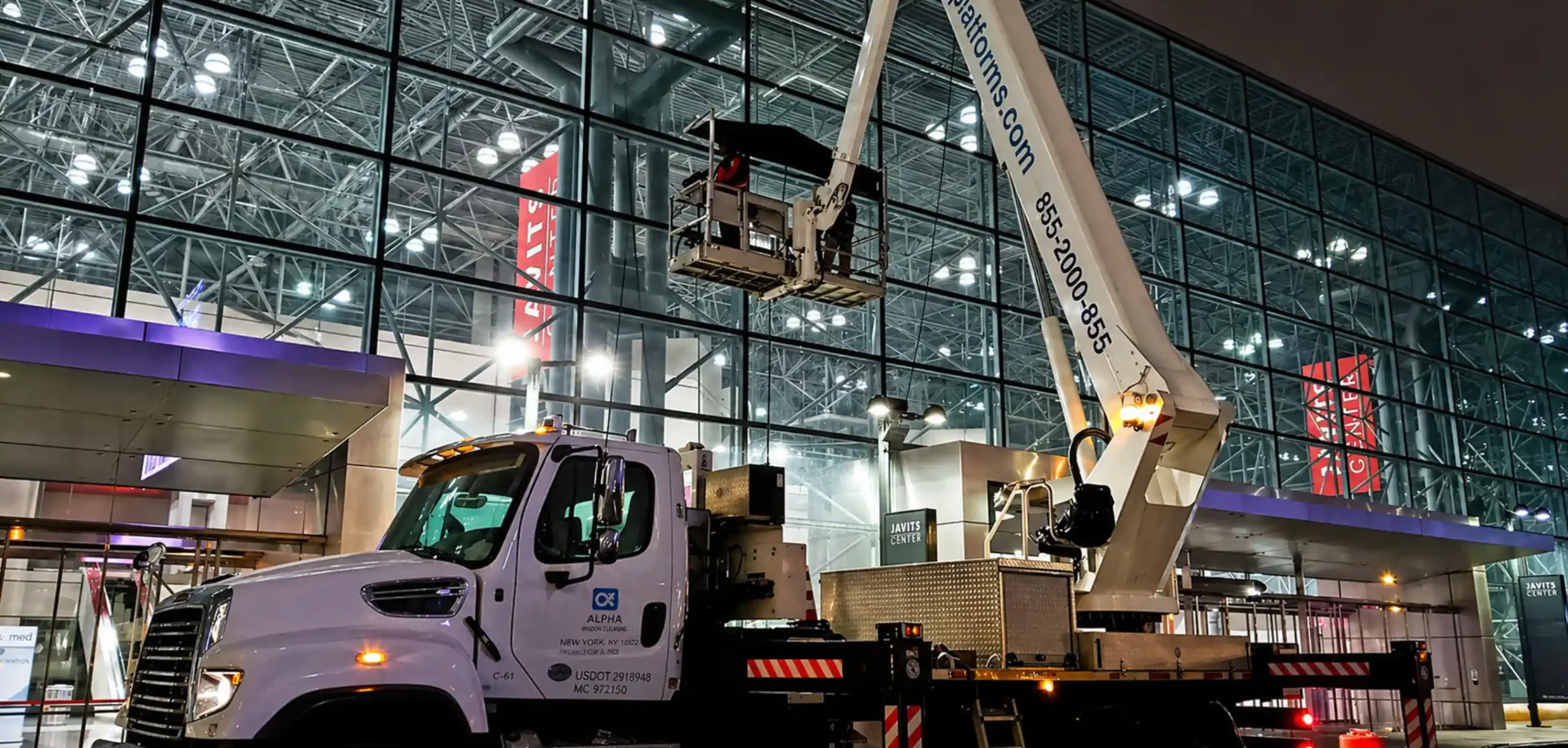
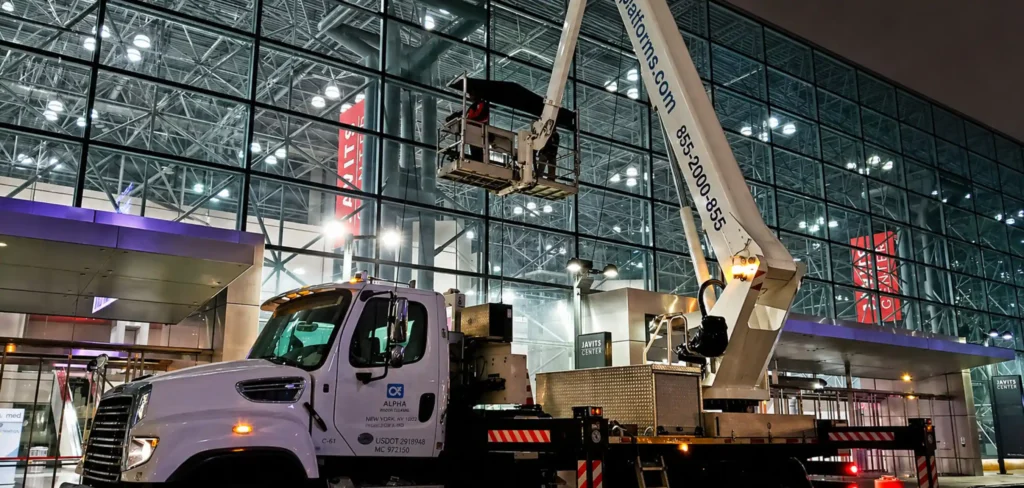
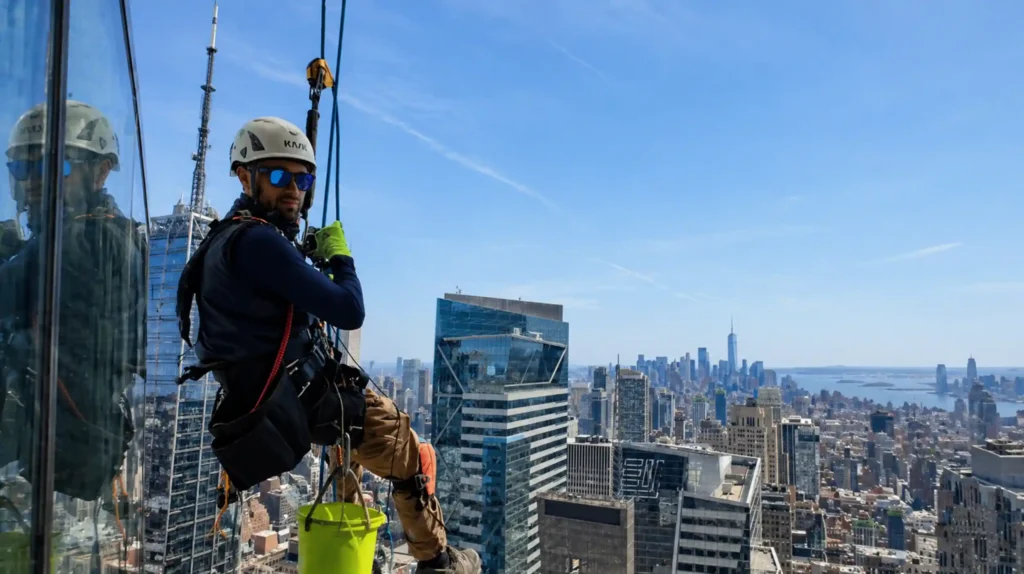
- Access methods authorized for each elevation: rope descent, BMU, suspended scaffold, water-fed pole, aerial lift, interior
- Permitted and excluded work hours: usually overnight or pre-occupancy for interior work, weekend or holiday for exterior work that requires sidewalk closures
- Pre-job and post-job notification requirements: tenant notice, building staff coordination, security desk briefing, sidewalk shed signage
- Documentation deliverables: pre-job inspection log, completed-work confirmation, photo documentation of any damage encountered, monthly KPI report
A good scope for window cleaning buildings of this class also specifies what is excluded. Post-construction cleanup, glass restoration, hard-water deposit removal, and emergency response calls are usually out-of-scope and priced separately. A vendor that quotes a low base price and then bills add-ons for everything that walks through the door is one of the standard failure modes the procurement process is designed to filter out. The scope of work for building window cleaning is, in effect, the contract that determines whether the relationship will be smooth or contentious.
Insurance, Credentials, and the Documentation Stack
Every corporate building window cleaning program in New York City sits on top of a documentation stack that the vendor maintains and updates throughout the contract term. The minimum components for a Class A or Trophy building usually include:
| Document | Typical Requirement | Frequency |
| Certificate of Insurance (COI) | $10M+ general liability with named additional insured | Renewed annually |
| Workers’ Compensation | NY State coverage with disability rider | Renewed annually |
| Commercial Auto | $1M minimum | Renewed annually |
| Bonding | Per contract value, often $250K+ | Project-specific |
| OSHA 1910.27 anchor verification | Building-provided, contractor-acknowledged | Per visit, refreshed annually |
| SPRAT or IRATA certification | All rope-access workers | Continuous, recertified |
| DOB Certificate of Fitness | Foremen and supervisors on suspended scaffold work | Renewed per DOB schedule |
| Method statement | Per access method, per elevation | At contract start; updated for changes |
| W-9 and vendor onboarding paperwork | Per managing agent’s vendor portal | One-time at engagement |
The documentation requirement is not paperwork for its own sake. Each document corresponds to a specific risk that someone in the building’s chain of liability has identified as material. The COI with $10M general liability is the response to New York’s Scaffold Law and the legal exposure it creates for owners. The anchor verification is the OSHA 1910.27 requirement made operational. The method statement is the document that gets pulled out and read aloud when something goes wrong and a regulator or insurance investigator wants to know whether the work was performed as specified.
Property managers who have been at the job for a decade can spot a serious building window cleaning vendor by the speed at which they produce this stack. A vendor who needs two weeks to assemble a current COI, anchor verification, and method statement is a vendor who is not actually running the kind of operation a corporate building requires. The documentation discipline is what separates a vendor that can bid on building window cleaning at corporate scale from a vendor that can only execute single jobs.
Tenant Coordination and the After-Hours Question
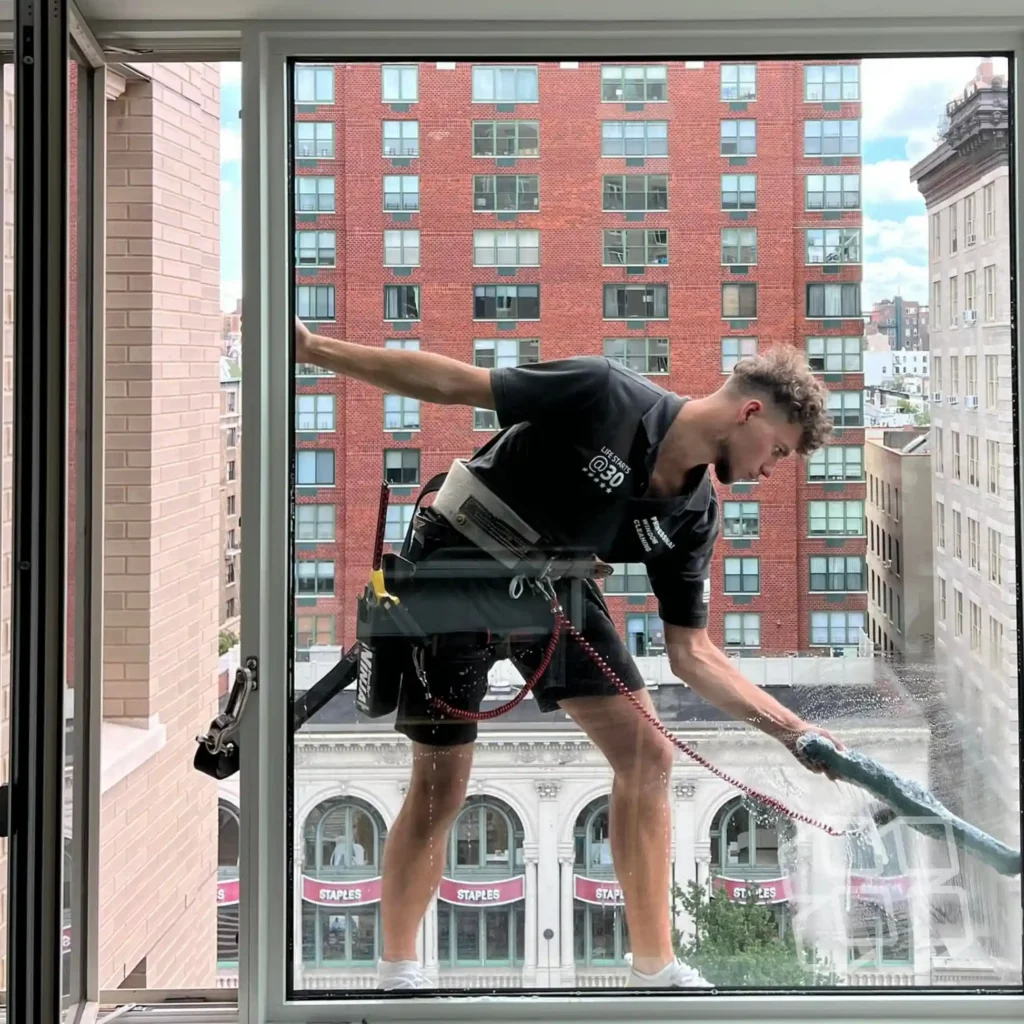
A particular challenge of window cleaning buildings at the corporate level is that they are full of tenants who do not want to be disturbed. A trading floor at a Park Avenue tower cannot tolerate a rope descent system bumping past the windows during market hours. A law firm interviewing partners on the 35th floor does not want a suspended scaffold visible behind the candidate’s chair. A medical office at a tower in Murray Hill has examination rooms with windows that need to be private during patient visits.
The standard solution is after-hours scheduling, but “after hours” in a Class A building is a more constrained window than it sounds. Building management usually wants exterior work done between roughly 6 PM and 6 AM, with some buildings restricting access further to weekend mornings. Lobby and ground-floor work is typically done before 7 AM on weekdays, before the morning tenant traffic. Atrium work, if the atrium is part of a tenant amenity program, has to be coordinated with the amenity schedule – a Saturday morning yoga class on the third-floor terrace at 1095 Avenue of the Americas will not coexist with a water-fed pole crew on the atrium glass. Building window cleaning at this tier is, in many ways, an exercise in calendar negotiation as much as in glass care.
“The cheapest part of corporate building window cleaning is the actual squeegee work. The expensive part is the hour spent coordinating which tenants have to be notified, which security desks have to issue pre-clearance, and which elevators are reserved for the crew.”
– a property manager at a tower in the Plaza District
Tenant notification is a particular sensitivity. In most corporate buildings, tenants get 48 to 72 hours of notice before any exterior work that will affect their views or window access. Notification usually goes out from the property management office, not the contractor, and contains specific information: dates, times, elevations affected, what the tenant might see and hear, and a contact at the property management office for questions or rescheduling requests. A vendor performing window cleaning buildings work that misses a notification deadline and shows up at a tower on Madison Avenue without warning generates complaints that travel up to the managing agent within an hour.
Multi-Tenant Towers vs. Single-Tenant Headquarters
Within the corporate category, there is a meaningful distinction between multi-tenant towers (occupied by many firms under separate leases) and single-tenant headquarters (occupied by one company, usually with its name on the building). The building window cleaning programs are structured differently in each case.
Multi-tenant towers run their cleaning programs through the building’s property management office, which means the program serves the building as a whole and individual tenants do not have independent vendor relationships. A tenant that wants extra cleaning of its own interior glass can either request it through building management (and pay the markup) or hire its own vendor and route them through building access protocols. Window cleaning buildings under multi-tenant management is, in effect, a shared service that has to balance many constituencies.
Single-tenant headquarters operate differently. The building window cleaning program is often direct between the tenant company’s facilities team and the vendor, with the building owner involved only on questions of building infrastructure and roof anchor access. The frequency, scope, and quality bar are set by the tenant company’s brand standards rather than by a property management committee. Some single-tenant headquarters in Manhattan run quarterly exterior cleaning plus weekly lobby and ground-floor maintenance, with daily touch-ups in entrance areas – a level of intensity that a multi-tenant program would consider excessive but that the tenant treats as part of brand presentation. Window cleaning buildings under direct corporate control tends to be more frequent and more visible than the same work under landlord control.
The vendor side of this distinction matters too. A firm that is comfortable working with corporate facility teams at single-tenant headquarters may not have the procurement and scheduling discipline required for a multi-tenant program managed by a major property management firm. Big Apple Window Cleaning and other established New York City vendors that handle both modes maintain separate account-management workflows for each, because the documentation, communication cadence, and escalation paths are not the same. Window cleaning buildings under each model demands a different operational rhythm.
Atriums, Lobbies, and the Curtain Wall Question
Corporate building window cleaning programs in NYC have to handle three distinct physical surface categories that residential and small-commercial work rarely touches at the same scale: monumental lobby glass, atrium and skylight glass, and curtain wall facade glass. Each one has its own technical profile.
Lobby glass at trophy buildings is often two or three stories tall, with very large individual panes, sometimes mounted in highly polished stainless or bronze mullions. Cleaning protocols have to protect the metalwork – mineralized water on polished stainless creates spots that are extremely visible in the highly-lit lobby environment, and acidic cleaners can damage some metal finishes permanently. Reputable vendors performing window cleaning buildings work at this level use deionized water and pH-neutral solutions for these surfaces and document the chemistry in the method statement.
For a closer look at what crews actually do on the glass itself – from sequencing elevations to pure-water systems, squeegee work, scraper decisions, and post-construction conditions – see our guide to inside commercial window washing in New York.
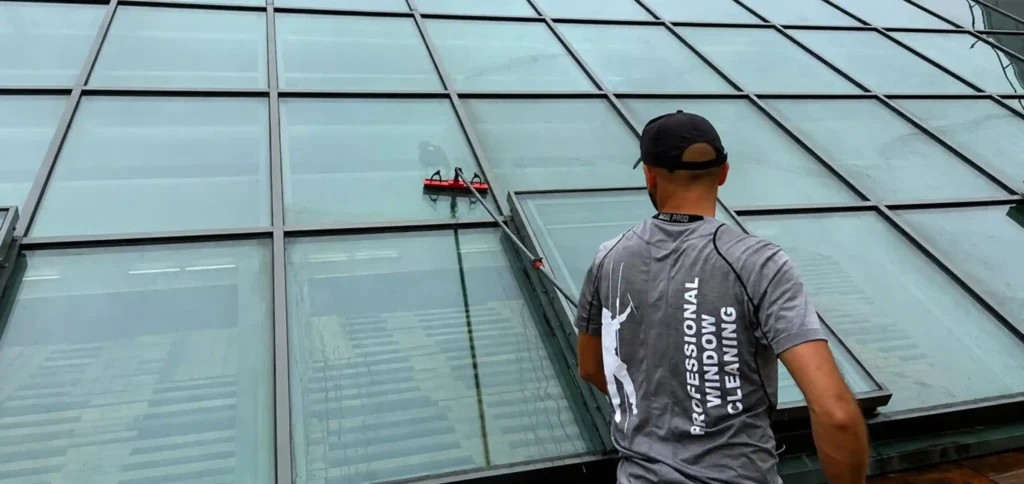
Atrium and skylight glass adds geometry. A sloped atrium roof at a building in Hudson Yards or a barrel-vault skylight at a 1980s Midtown tower requires water-fed pole work from above (with attendant safety harnessing), interior pole work from below (with drop cloths to protect the marble floor), or a custom rigging arrangement. The work is slow, expensive per square foot, and best done outside tenant traffic. Building window cleaning of atrium spaces is one of the technical specialties that distinguishes a corporate-tier vendor from a general commercial cleaner.
Curtain wall facade work is the largest category by area and the most regulated. Anchor certification, rope-descent system protocols, suspended scaffold permits, and all the FISP-cycle considerations apply. The pricing is per pane on the standard floors and per visit on the mechanical and crown levels, and the scope statement has to specify how the corner mullions, the setback panels, and the spandrel sections are handled. Corporate building window cleaning at this scale is essentially an industrial operation conducted on a vertical surface, and window cleaning buildings of this kind requires equipment, training, and supervision that smaller operators cannot field.
“Trophy tenants do not pay $200 a square foot for grimy lobby brass. The building window cleaning program is part of why those rents are defensible, and any property manager who treats it as a commodity service is one bad complaint away from a problem.”
– a building services consultant working with Park Avenue ownership

KPIs and How Performance Is Measured
Corporate building window cleaning programs in New York City almost always carry contractual key performance indicators (KPIs) that the vendor reports on monthly or quarterly. The exact KPIs vary, but a typical Class A program tracks:
- Service completion rate (percent of scheduled visits completed on time)
- Defect rate (number of complaints received per visit, or per thousand square feet of glass)
- Resolution time (hours between complaint and remediation)
- Insurance and credentialing currency (whether all required documents are in date)
- Safety record (incidents, near-misses, OSHA recordables in the contract period)
KPI performance is reviewed during contract renewal. A vendor with a strong track record on a multi-year MSA (Master Service Agreement) often renews without a competitive rebid – the cost of switching exceeds the cost of negotiating new pricing with a known good vendor. A vendor with a weak record gets put back into the RFP pool, regardless of price. The KPI framework is what turns window cleaning buildings from a discretionary service into a measured, manageable program.
For more on the standards and practices that shape building window cleaning programs at the New York City level, the city’s Department of Buildings publishes filing requirements and access guidance at nyc.gov, which managing agents and contractors reference regularly when setting up new programs or modifying existing ones.
Big Apple Window Cleaning offers a comprehensive window cleaning buildings service across NYC – from single-storefront retailers to Class A towers and multi-tenant condominium buildings.
FAQ
Most corporate building window cleaning agreements at Class A and Trophy properties run as multi-year Master Service Agreements (MSAs), typically three to five years with annual scope reviews. The long term reflects the procurement cost of switching vendors and the trust capital that builds up between vendor and property management over time.
Corporate buildings almost always require the named prime contractor to perform the work directly, especially the high-risk exterior portions. Subcontracting of rope access or suspended-scaffold work is usually prohibited or requires explicit written approval and matching documentation from the subcontractor. The owner does not want to discover after an incident that the work was done by a sub whose insurance was thinner than the prime’s.
Pricing for window cleaning buildings of this class varies widely by building height, access method, and scope, but a quarterly exterior cleaning at a midsize Class A tower in Manhattan typically runs $15,000 to $45,000 per visit. Trophy properties with custom rigging, atrium work, or extended lobby protocols can run substantially higher. Annual contract value at Class A buildings typically falls in the $75,000 to $250,000 range, with Trophy contracts exceeding that.
Usually yes for interior glass within the tenant’s leased premises, with restrictions. Most building leases require the tenant’s vendor to be approved by the property management office, carry comparable insurance, and schedule access through building security. Exterior building window cleaning is almost never permitted to be hired separately by tenants – it is the building’s responsibility and is performed by the building-contracted vendor only.
A Master Service Agreement (MSA) is a multi-year framework contract that establishes the relationship, pricing, insurance requirements, and operational protocols between a property manager and a building window cleaning vendor. Individual jobs and scope changes are then issued as work orders or task orders against the MSA. The structure reduces transaction friction on each visit and lets both sides plan operationally, which is why it is the standard structure for window cleaning buildings on the corporate tier.
The shape of window cleaning buildings procurement is similar but the chain of approval is different. In a co-op or condo, the managing agent prepares the procurement package, but the board has to approve the contract before signature. This adds 30 to 60 days to the typical procurement timeline and means that vendor bids often have to remain valid for longer than in commercial procurement. The substantive requirements – insurance, credentialing, scope – are typically the same.
Most MSAs include a cure period (usually 30 to 60 days) during which the vendor is expected to demonstrate corrective action. Repeated misses or unresolved issues can trigger a contract termination clause, which then puts the property back into the building window cleaning RFP cycle. In practice, vendors who reach the cure-period stage often lose the next bid even if they fix the immediate problem – the relationship trust capital is hard to rebuild.
FURTHER READING

Article by Dayne Watkins


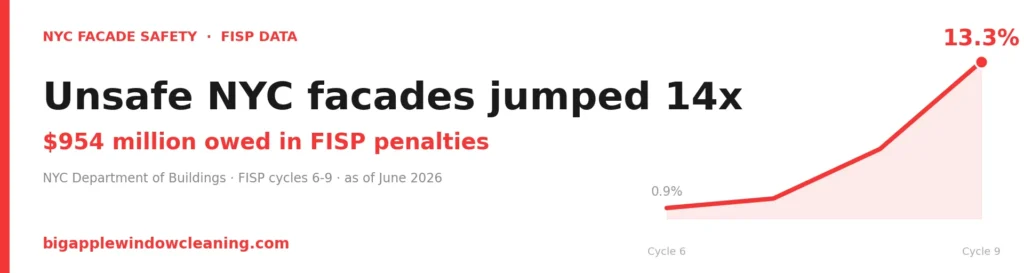
Unsafe NYC Facades Jumped 14x. The $954 Million Reason Owners Hide Them Instead of Fixing Them
On May 16, 1979, a 17-year-old Barnard student named Grace Gold was walking near Broadway and 115th Street when a piece of masonry broke loose from the eighth floor of a Columbia-owned building and killed her. Her death produced Local Law 10 of 1980, the first law in New York City requiring periodic facade inspections […]
Explore more
Roof Lantern Cleaning: A Professional Guide for New York Homeowners
Your roof lantern was supposed to flood the room with light. Instead, it is flooding the room with guilt every time you look up and see a layer of grime that could double as modern art. If you live in Brooklyn or Manhattan, you already know that city air does not play fair with glass […]
Explore more
House Facade Cleaning: A No-Nonsense Guide for Homeowners Who’d Rather Not Watch Their Walls Crumble
Your home’s facade does a thankless job. Day after day, it stands between your family and everything the urban environment throws at it – diesel exhaust from delivery trucks, pigeon droppings with the pH of battery acid, mysterious black streaks that seem to appear overnight, and that persistent green fuzz on the north-facing wall that […]
Explore more